
Make a Payment
850-572-3443
Divorce doesn’t have to mean courtroom battles and bitter disputes. An amicable divorce checklist can guide couples through a more peaceful separation process.
We at Christine Sue Cook, LLC help families navigate collaborative approaches that prioritize cooperation over conflict. This method saves time, reduces costs, and protects children from unnecessary stress during an already difficult transition.
An amicable divorce means both spouses agree on major issues like property division, child custody, and support payments without court intervention. Contested divorces involve disputes that require a judge to make final decisions. The difference costs families significantly: amicable divorces typically cost between $2,500 to $10,000, while contested cases range from $15,000 to $50,000 according to recent legal industry data.
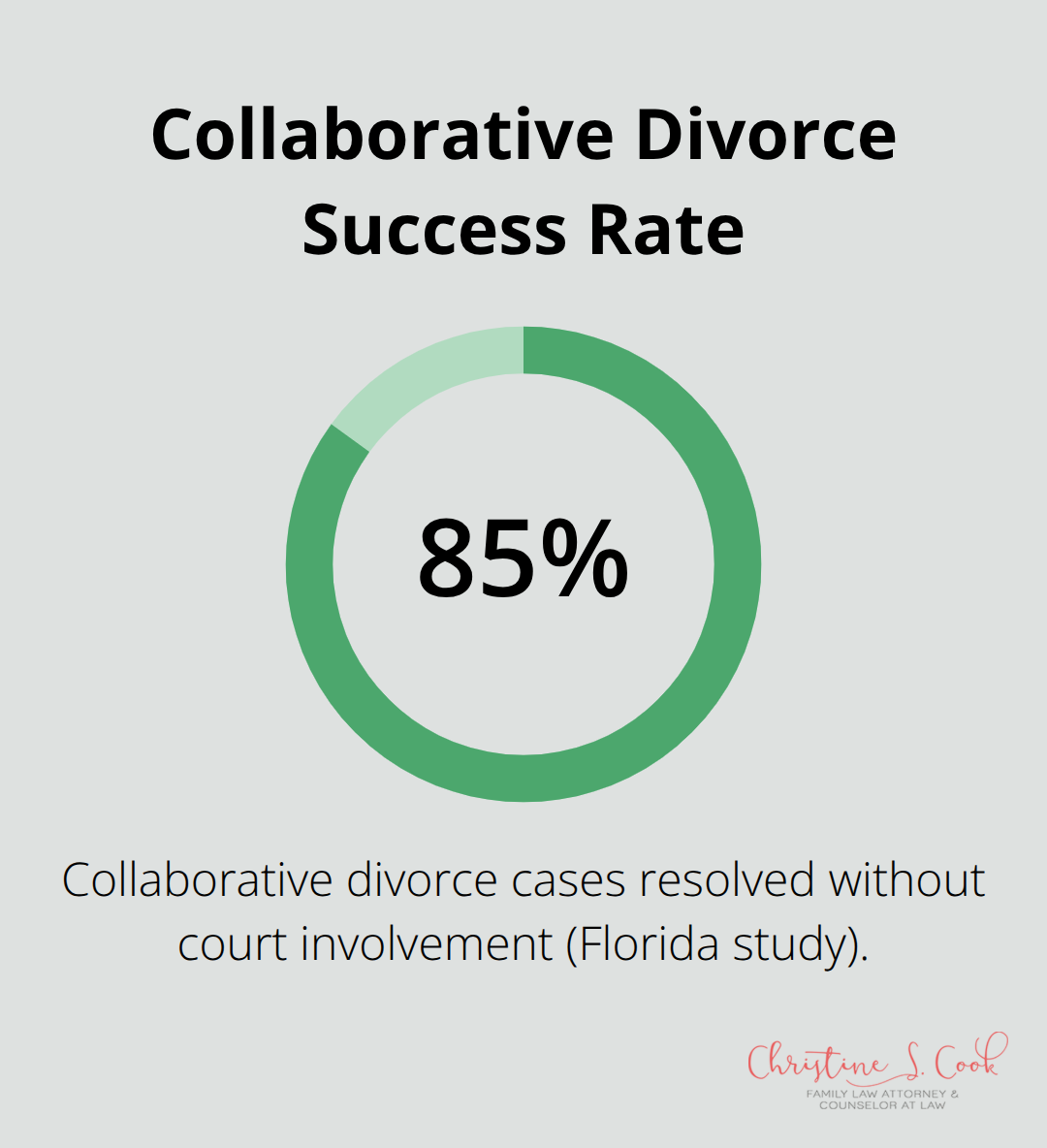
Collaborative divorce involves both spouses who work with trained attorneys committed to stay out of court. Each party signs an agreement that states their lawyers must withdraw if litigation begins. This process resolves 85% of cases without court involvement, according to recent Florida study data. Teams often include financial advisors and child specialists who help create comprehensive solutions. Sessions happen in neutral locations with structured agendas that focus on problem-solving rather than blame.
Divorce mediation uses a neutral third party to facilitate discussions between spouses. Most mediations complete within three to six months, compared to contested divorces that can drag on for 12 to 18 months. Mediators charge $150 to $300 per hour (couples split this cost between them). The process works best when both parties can communicate respectfully and share financial information transparently. Mediation agreements become legally bound once a court approves them, which gives couples the same protection as litigated settlements while they maintain privacy and reduce emotional trauma for children.
Several elements make amicable divorce possible. Both spouses must commit to honest financial disclosure and prioritize their children’s wellbeing over personal grievances. Couples who can separate their emotions from practical decisions typically achieve better outcomes. The willingness to compromise on non-essential issues often leads to creative solutions that benefit everyone involved (especially children who need stability during transitions).
Now that you understand the different amicable divorce options available, the next step involves preparation and documentation to make your chosen process run smoothly.
Successful amicable divorce requires meticulous financial preparation that most couples underestimate. Start to collect bank statements, tax returns, investment accounts, and other financial records. Financial advisors who specialize in divorce report that incomplete documentation delays settlements by an average of four to six weeks. Gather investment account statements, retirement plan documents, insurance policies, and property deeds. Create a comprehensive inventory of personal property that includes vehicles, jewelry, and valuable household items with estimated current values.
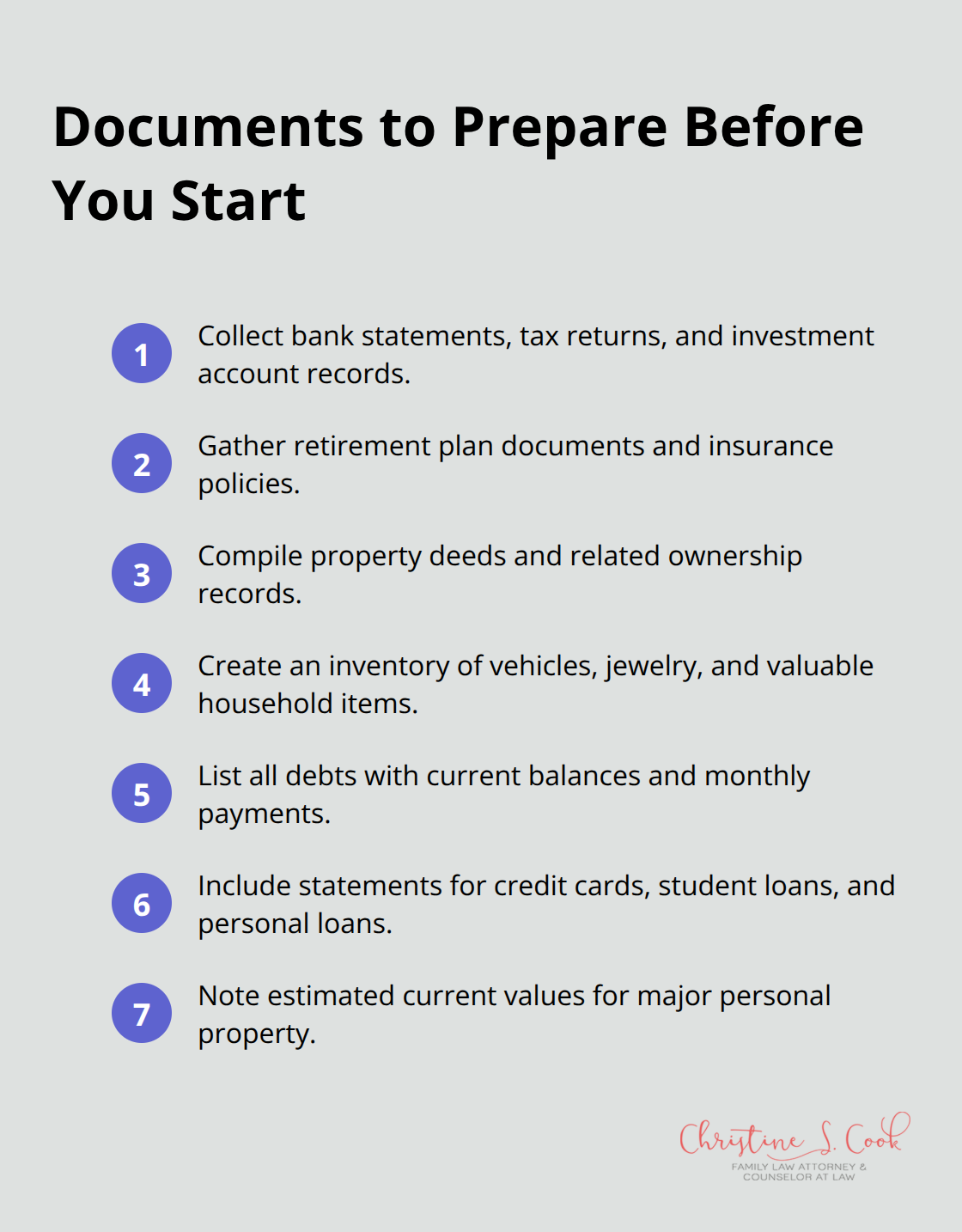
Document all debts that include credit cards, mortgages, student loans, and personal loans with current balances and monthly payment amounts.
Effective co-parenting plans address specific logistics rather than general intentions. Research shows that detailed parenting agreements reduce parental conflict following separation and promote better outcomes for families. Specify exact pickup and drop-off times, locations, and which parent handles transportation. Address holiday schedules, summer vacations, and school breaks with alternating arrangements. Include decision-making authority for medical care, education choices, and extracurricular activities. Define communication methods between parents and establish boundaries about adult issues in front of children. Consider co-parenting apps like OurFamilyWizard or Talking Parents to maintain professional communication and document interactions.
Property division works best when couples focus on future financial security rather than emotional attachment to specific items. Financial planners recommend the 60-40 approach: divide liquid assets first (cash, investments, retirement accounts), then tackle real estate and personal property. The spouse who keeps the family home should qualify for the mortgage independently and handle all maintenance costs. Consider tax implications when you divide retirement accounts – 401k distributions require qualified domestic relations orders to avoid penalties. Understanding the legal aspects of divorce like asset division helps reduce anxiety throughout the process. Address debt responsibility clearly: credit card debt that accumulates during marriage typically gets split equally, while individual debts from before marriage stay with the original borrower. Create written agreements for ongoing shared expenses like children’s medical costs or college tuition to prevent future disputes.
These preparation steps set the foundation for your amicable divorce process, but you also need to understand the specific legal requirements and documentation that Florida law mandates for your case to proceed smoothly.
Florida mandates specific requirements that differ significantly from other states, which makes local expertise essential for amicable divorce cases. Petitioners must establish Florida residency for at least six months before they file, and the petition must include a parenting plan if minor children are involved. The state requires a $409 fee for dissolution of marriage cases, though fee waivers exist for individuals who qualify based on low income. Florida operates as a no-fault divorce state, which means couples only need to cite irreconcilable differences rather than prove wrongdoing.
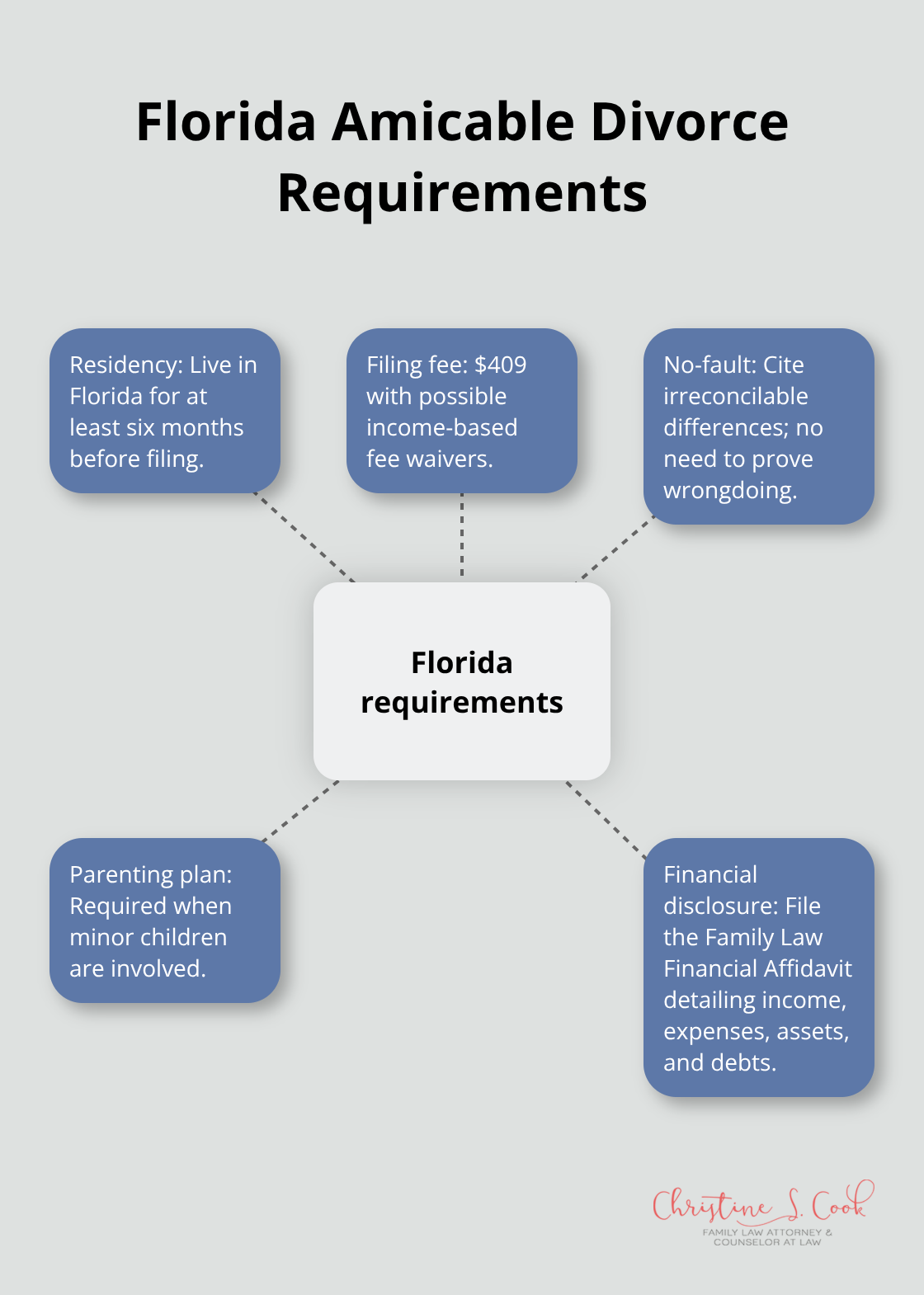
Courts require complete financial disclosure through mandatory forms that include the Family Law Financial Affidavit, which must detail all income, expenses, assets, and debts with attached documentation.
Florida enforces a mandatory 20-day wait period from filing before courts finalize any divorce. This applies even to uncontested cases where both parties agree completely. This period can be waived by a judge under certain circumstances, though couples can use this time productively to complete required classes if children are involved. The state mandates a four-hour Parent Education and Family Stabilization Course for all parents who divorce, which costs approximately $25 to $50 per person. Collaborative divorce cases often complete all negotiations during this wait period, which allows final hearings to occur immediately after the 20-day mark expires.
Court procedures require at least one spouse to attend the final hearing, even in uncontested cases (though many judges now accept virtual appearances for simple dissolution matters). Judges review all financial disclosures and parenting plans before they approve final judgments. The court must find that the marriage is irretrievably broken and that the settlement agreement is fair and reasonable. Proper documentation requirements prevent delays that could extend the process by weeks or months.
Collaborative attorneys in Florida sign participation agreements that prohibit them from representation of either spouse in litigation if the collaborative process fails. This commitment creates powerful incentives for creative problem-solving rather than adversarial positions. Florida collaborative law statutes protect all communications during the process from use as evidence in court, which encourages honest disclosure between parties. Experienced collaborative attorneys typically charge $250 to $450 per hour, but cases resolve in an average of four to six months compared to 12 to 18 months for traditional litigation. The collaborative team approach often includes neutral financial specialists who prepare detailed settlement analyses and child specialists who help develop comprehensive plans that serve everyone’s interests.
Amicable divorce offers substantial advantages over traditional litigation that extend far beyond cost savings. Couples who follow an amicable divorce checklist typically save $20,000 to $40,000 in legal fees while they complete their cases in half the time. Children benefit most from reduced parental conflict, with studies that show better academic performance and emotional stability when parents cooperate during separation.
Professional legal guidance becomes necessary when complex assets require valuation, domestic violence concerns exist, or one spouse refuses to disclose financial information honestly. Hidden assets, business ownership, or international property holdings also demand specialized expertise that only experienced attorneys can provide. Most divorced individuals report they feel relief and optimism about their future within six months of finalization (after they update beneficiaries on insurance policies and retirement accounts, revise estate planning documents, and establish new financial accounts).
We at Christine Sue Cook, LLC provide compassionate legal support throughout Florida’s collaborative divorce process. Our team helps families achieve amicable settlements while they protect everyone’s interests. We focus especially on children who need stability during this transition.