
Make a Payment
850-572-3443
Divorce doesn’t have to mean a courtroom battle. At Christine Sue Cook, LLC, we’ve seen firsthand how collaborative divorce transforms what could be an adversarial process into a cooperative one.
The benefits of collaborative divorce extend far beyond lower legal bills. When both parties commit to working together with trained professionals, families preserve relationships, reduce emotional damage, and reach agreements faster.
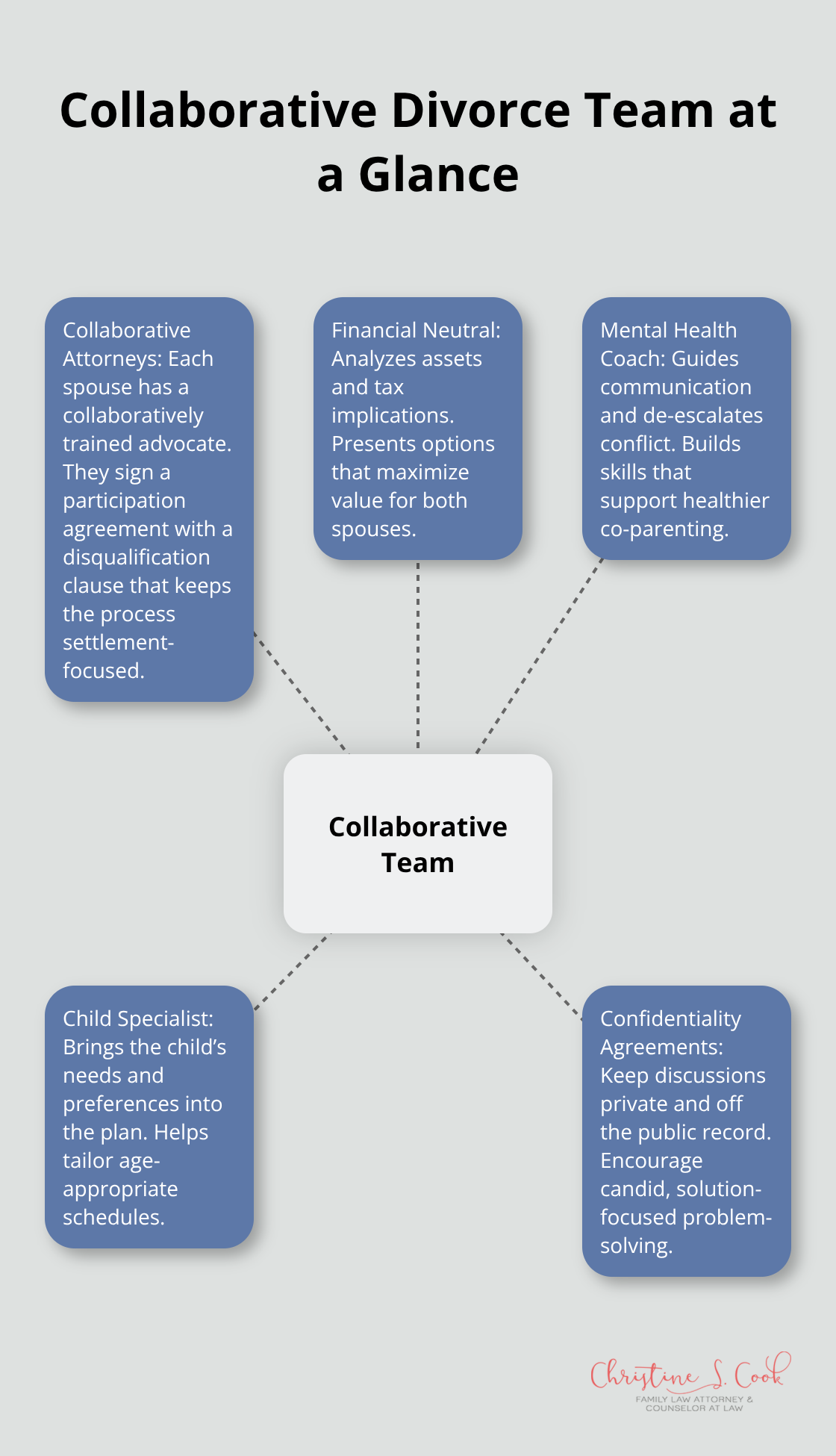
Collaborative divorce operates through a structured process where both spouses hire separate collaborative law trained attorneys, then assemble a team of professionals committed to reaching settlement without court involvement. Each attorney signs a participation agreement that includes a disqualification clause-if the process fails and litigation becomes necessary, both attorneys withdraw from the case. This creates a powerful incentive for genuine negotiation because neither side wants to restart with new counsel and lose momentum.
The team typically includes a financial neutral who analyzes asset division and tax implications, and often a mental health coach who helps manage communication and emotional dynamics. This isn’t mediation with a single neutral; instead, each spouse has their own advocate while the entire group works toward shared solutions. Collaborative divorce structures settlement from the beginning rather than after months of adversarial positioning.
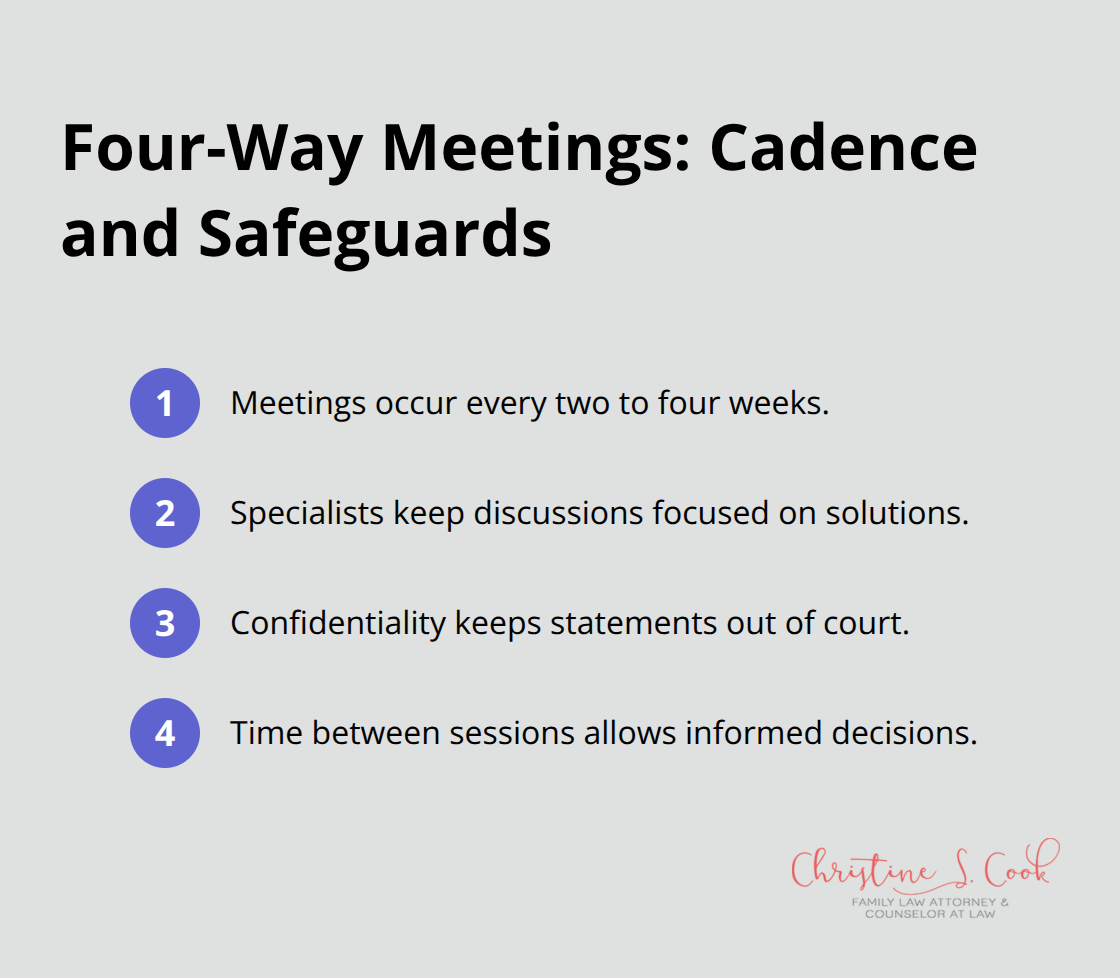
Four-way meetings bring both spouses, both attorneys, and any specialists together in a single room for focused discussions. These sessions follow a specific agenda and use interest-based negotiation techniques rather than positional bargaining. One spouse doesn’t make demands while the other defends; instead, the team identifies underlying concerns and explores creative solutions that address everyone’s actual needs.
Financial neutrals present comprehensive asset analyses during these meetings, showing how different division scenarios affect each party’s long-term security and tax burden. Mental health coaches intervene when discussions become heated, refocusing the conversation on problem-solving rather than blame. These meetings typically occur every two to four weeks, giving both parties time to process information between sessions. The confidentiality of these discussions means nothing said in a four-way meeting can be used in court if the process fails, which removes the fear of statements being weaponized later.
Collaborative divorce requires both parties to voluntarily disclose all financial information from the start, which accelerates the entire process. Each spouse provides bank statements, tax returns, retirement account statements, and business valuations without formal discovery requests. This transparency prevents the hidden-asset games that drag out traditional litigation for years.
Financial neutrals verify information and identify assets that might otherwise remain concealed, then propose division strategies that maximize value for both parties. The process works only when both spouses genuinely commit to honesty; if one party refuses to disclose information or negotiates in bad faith, the collaboration breaks down and litigation becomes necessary. Situations involving domestic violence, substance abuse, or severe mental health issues present obstacles to genuine cooperation, as power imbalances prevent fair participation in the collaborative framework.
Traditional divorce litigation costs between $7,000 and $15,000 on average, with contested cases regularly exceeding $50,000 when discovery, depositions, and expert witnesses enter the picture. Collaborative divorce typically costs significantly less because both parties eliminate court filing fees, depositions, and the hourly billing that accumulates during months of adversarial positioning. A financial neutral analyzes asset division once and presents findings to both sides simultaneously, rather than each spouse hiring separate forensic accountants to challenge the other’s numbers.
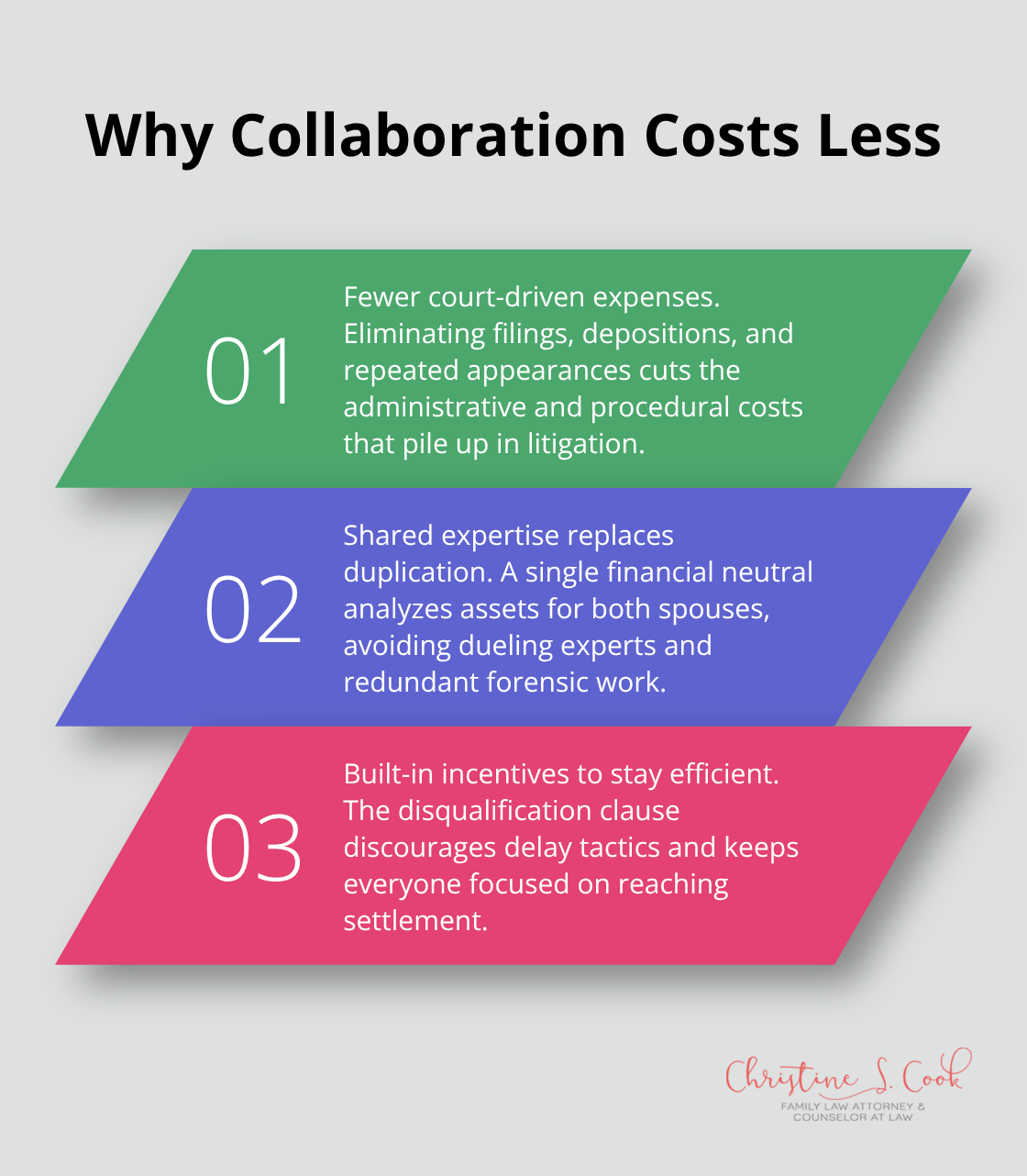
This shared expertise model distributes costs between both parties instead of duplicating professional fees. The participation agreement itself creates financial discipline because both attorneys know they’ll withdraw if litigation becomes necessary, eliminating the incentive to drag out negotiations.
The timeline difference matters enormously for your wallet: traditional litigation averages 12 to 18 months or longer depending on court backlogs, while collaborative divorce typically resolves in 4 to 8 months. Fewer billable hours means lower legal fees. If your case involves complex assets like business ownership, real estate portfolios, or retirement accounts, a collaborative financial neutral models tax scenarios that protect your long-term wealth in ways courtroom judges cannot.
Studies show children fare significantly better post-divorce when parents communicate and cooperate rather than fight through litigation. Collaborative divorce uses mental health coaches who teach communication skills during the process itself, skills that carry forward into co-parenting for years afterward. You avoid public court records that expose personal financial details and family conflict to anyone with courthouse access.
The confidentiality agreements in collaborative divorce keep sensitive information private, protecting your reputation and your children’s sense of stability. When both parties participate in designing the parenting plan rather than having a judge impose one, compliance improves because each parent feels invested in the agreement.
Four-way meetings held every two to four weeks maintain momentum and prevent the emotional exhaustion that comes from months of legal maneuvering. Mental health coaches intervene when discussions become heated, refocusing the conversation on problem-solving rather than blame. If one spouse refuses good-faith participation or the relationship involves domestic violence, litigation becomes necessary-but for couples willing to cooperate, collaborative divorce removes the adversarial pressure that transforms divorce into warfare. This foundation of cooperation and reduced conflict sets the stage for how collaborative divorce specifically protects your children throughout the process and beyond.
Collaborative divorce fundamentally changes what children experience during their parents’ separation. Research consistently shows that children fare better when parents communicate cooperatively rather than battle through litigation. In collaborative divorce, children spend less time exposed to parental conflict because the four-way meeting structure resolves disputes privately between adults, not through months of adversarial positioning that bleeds into home life. Mental health coaches embedded in the collaborative team teach parents communication skills specifically designed to reduce tension, and these skills persist long after the divorce concludes.
A child specialist can be brought into the collaborative process to assess the child’s specific needs and preferences, ensuring the parenting plan reflects what actually works for that particular family rather than a judge’s generic template. This professional involvement means children’s voices shape the agreement from the beginning, not as an afterthought once parents have already fought their way to court. The confidentiality agreements in collaborative divorce also protect children’s privacy; nothing discussed in four-way meetings becomes public record, so sensitive family information stays private rather than appearing in courthouse files accessible to anyone.
The parenting plans created through collaboration build in flexibility that litigation cannot match. Traditional court-imposed orders often become rigid, requiring parents to return to court whenever schedules change or children’s needs evolve. Collaborative parenting plans include mechanisms for adjustment without litigation, allowing parents to adapt pickup times, holiday splits, and activity schedules as children grow and circumstances shift. This adaptability dramatically reduces the likelihood of future court modifications and the conflict that accompanies them. When both parents participate in designing the plan, they feel invested in making it work, which translates to better compliance and fewer disputes down the road.
Financial stability matters enormously for children’s wellbeing after divorce, and collaborative divorce protects that stability through careful tax planning and asset division strategies that judges cannot customize. A financial neutral models how different property splits affect each parent’s long-term financial security, ensuring both parents remain financially stable enough to support their children meaningfully. Children thrive when both parents maintain economic stability, and collaborative divorce prioritizes this outcome in ways traditional litigation simply cannot achieve.
Collaborative divorce offers a fundamentally different path than courtroom litigation. The benefits of collaborative divorce become clear when you weigh the full picture: lower costs, faster resolution, preserved relationships, and children who experience less conflict during their parents’ separation. Families who choose collaboration retain control over outcomes that matter most, crafting agreements tailored to their specific circumstances rather than accepting a judge’s generic template.
Collaborative divorce works best for couples willing to communicate honestly and share financial information openly. If both spouses commit to good-faith negotiation and respect each other’s interests, the collaborative process delivers results that litigation cannot match. However, situations involving domestic violence, substance abuse, or deliberate asset concealment make collaboration impossible, and aggressive court representation becomes necessary to protect your rights.
The decision between collaboration and litigation depends on your relationship dynamics and what you hope to preserve after divorce concludes. If you want to minimize conflict for your children, maintain financial stability, and reach agreement faster, collaborative divorce deserves serious consideration. Contact us for a free consultation to discuss your options without financial pressure and explore whether collaborative divorce can work for your family.