Life changes, and sometimes your child custody arrangement needs to change with it. Florida courts allow parents to modify existing custody agreements when specific legal requirements are met.
At Christine Sue Cook, LLC, we guide families through the complex process of modifying child custody agreements in Florida. Understanding the legal standards and proper procedures can make the difference between success and frustration in court.
Florida law sets strict standards for custody modification, and courts reject most petitions that fail to meet these requirements. You must prove a substantial change of circumstances has occurred since your original custody order. The Florida Supreme Court ruled in Wade v. Hirschman that this two-part test applies to all modification cases statewide, which eliminated the previous requirement to prove detriment to the child that some districts imposed.
Courts require concrete evidence of significant life changes that affect your ability to parent or your child’s welfare. Acceptable changes include job loss that requires relocation more than 50 miles away, serious health issues that affect your capacity to parent, military deployment that lasts over six months, or documented substance abuse by the other parent. Minor schedule adjustments or temporary financial difficulties rarely qualify as substantial changes.

Florida Statutes Section 61.13 requires these changes to be ones that were not reasonably contemplated when the original order was entered. Document every relevant change with medical records, employment letters, police reports, or school records to build a compelling case for modification.
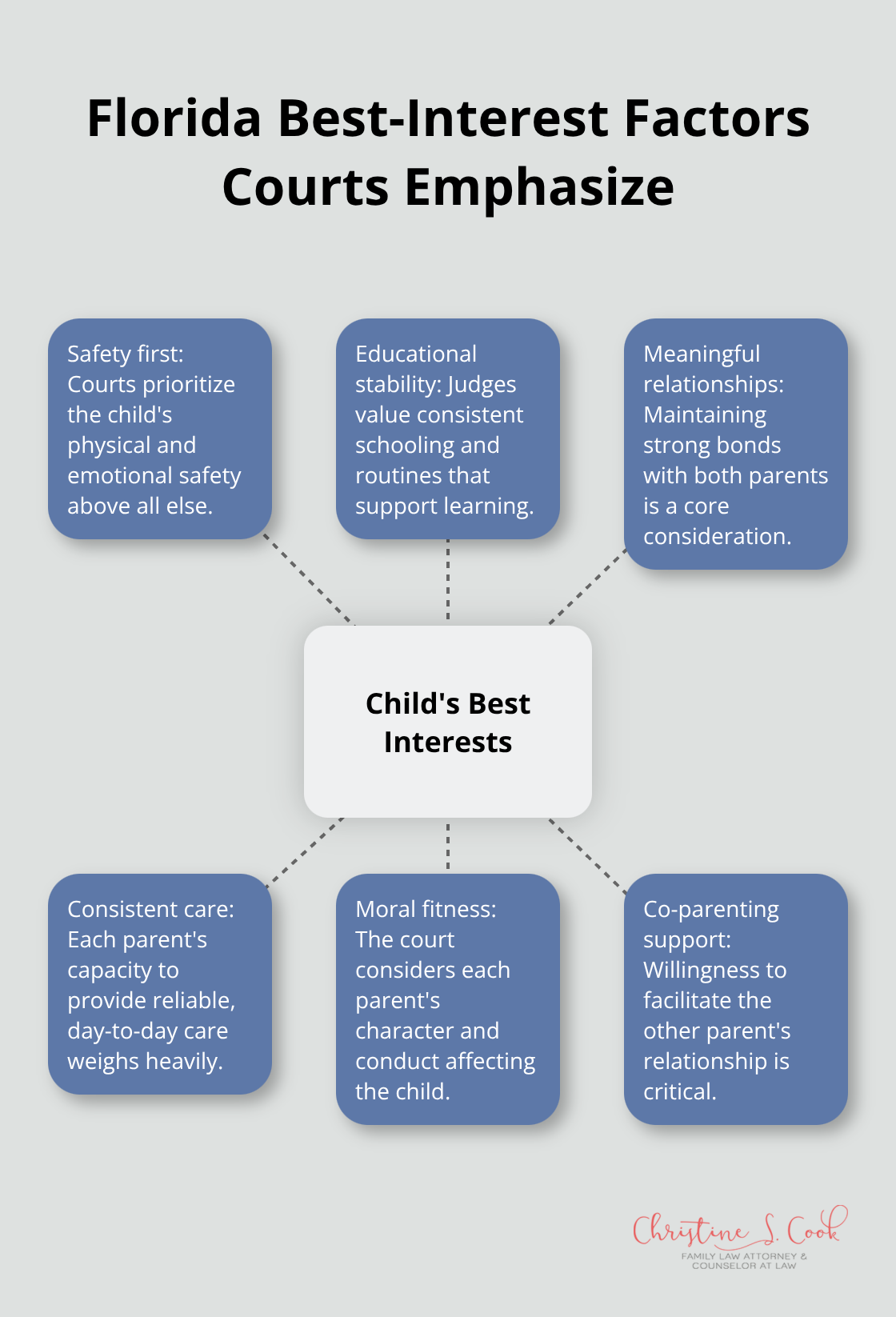
After you prove substantial change, you must demonstrate how modification serves your child’s best interests under Florida’s statutory factors. Courts prioritize the child’s physical and emotional safety, educational stability, and maintenance of meaningful relationships with both parents. Children aged 12 and older may have their preferences considered (though judges weigh this against other factors).
The court examines each parent’s ability to provide consistent care, moral fitness, and willingness to facilitate the other parent’s relationship with the child. Courts favor stability and rarely approve modifications to recent agreements, so wait at least two years after your original order before you file unless emergency circumstances exist.
The modification process requires careful attention to legal deadlines and procedural requirements. You must file your petition in the same circuit court that issued the original order to maintain proper jurisdiction. Courts schedule hearings based on their availability, and the entire process can take several months to complete.
Strategic preparation becomes essential when you gather evidence and prepare your case. The legal process for modification involves specific steps that determine whether your petition succeeds or fails.
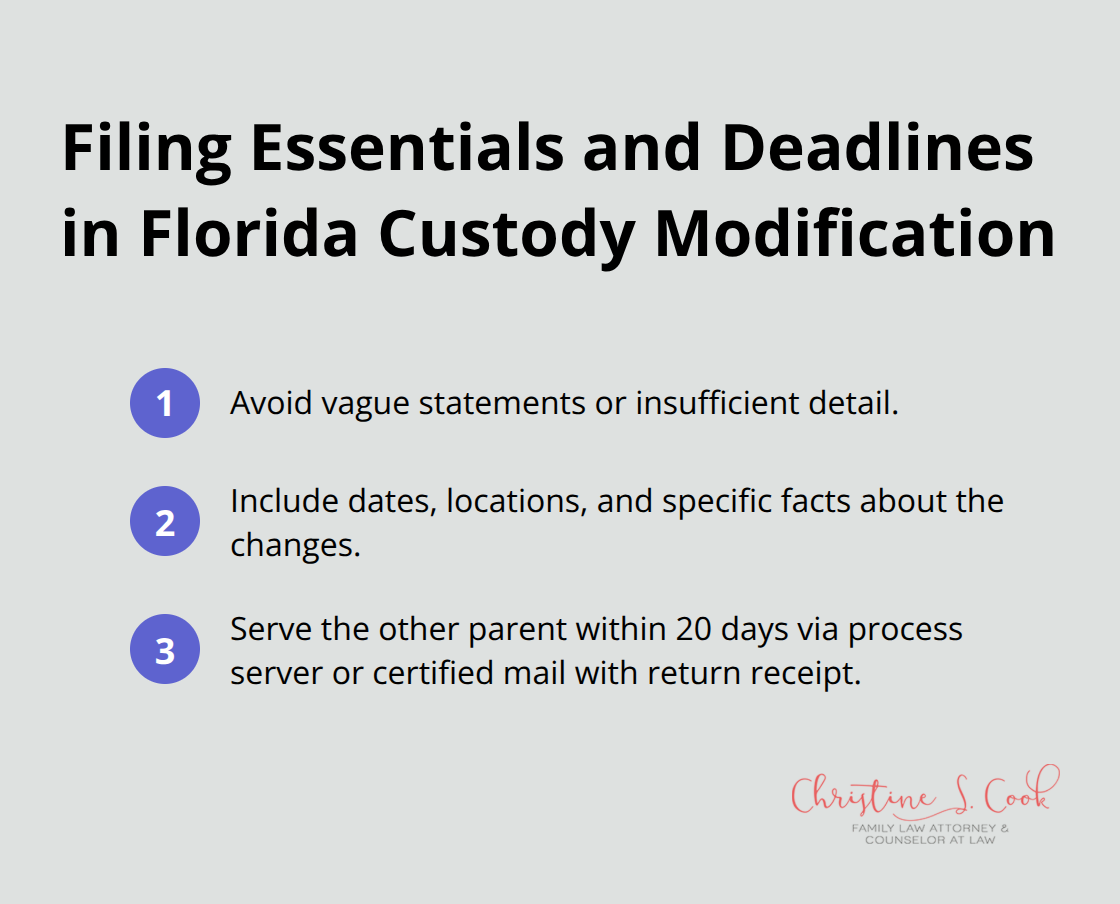
The modification process begins when you file a petition in circuit court that issued your original custody order. You must pay a filing fee of approximately $409 (though this varies by county). The petition requires specific legal language that identifies the substantial changes in circumstances and explains how modification serves your child’s best interests.
Courts reject petitions with vague statements or insufficient detail. Include dates, locations, and specific facts about the changes that occurred. You have 20 days to serve the petition on the other parent through a process server or certified mail with return receipt requested.
Strong documentation determines whether courts approve your modification request. Gather employment records that show job changes or relocations, medical records that document health issues affecting your parental capacity, and school records that reflect your child’s academic or behavioral changes. Police reports prove any safety concerns, while financial records demonstrate income changes that affect your ability to provide for your child.
Courts particularly value third-party documentation like teacher statements, counselor reports, or witness affidavits that support your claims. Organize evidence chronologically and create copies for the court, opposing counsel, and your own records before any hearing.
Florida courts mandate mediation for most custody modification cases before they schedule trial hearings. Mediation costs $60 per party per session if combined total gross income is less than $50,000 annually, or $120 per party per session for higher incomes, and typically resolves cases within 2-4 sessions. If mediation fails, the court schedules a final hearing where both parents present evidence and testimony.
Judges often appoint guardian ad litem representatives for children in contested cases, which adds $2,500 to $5,000 in additional costs. The entire process from filing to final order takes 4-8 months depending on court schedules and case complexity. Prepare for multiple court appearances and maintain detailed records of all interactions with the other parent during this period.
Understanding these procedural requirements sets the foundation for success, but courts approve modifications only when parents present compelling reasons that demonstrate substantial changes in their circumstances.
Florida courts approve custody modifications when parents present compelling evidence of specific life changes that substantially affect their parental capacity or their child’s welfare. Employment relocations beyond 50 miles from the original residence succeed in modification cases, particularly when the move provides better career opportunities or family support. Military deployment that lasts more than six months automatically qualifies as substantial change, and courts typically approve temporary modifications during active duty periods. Job loss that results in inability to maintain housing or provide basic necessities also meets the substantial change threshold.
Children’s developmental changes create valid grounds for custody modifications when their needs outgrow current arrangements. Medical diagnoses like ADHD, autism, or chronic illnesses often require specialized care that one parent can better provide through proximity to treatment centers or flexible work schedules. Educational needs also justify modifications when children require specialized programs, tutoring, or schools that one parent can better access.
Florida courts increasingly recognize that teenagers aged 14-17 have stronger preferences about living arrangements, and judges consider these preferences alongside other best interest factors. Academic performance that declines two or more letter grades over consecutive semesters often supports modification requests when linked to custody arrangements.
Courts prioritize child safety above all other considerations and approve modifications quickly when credible safety concerns arise. Documented domestic violence incidents (even those not directly involving the child) create grounds for immediate custody restrictions or supervised visitation requirements. Substance abuse with police reports, failed drug tests, or treatment program enrollment provides strong evidence for modification.
Child neglect evidenced by repeated school absences, medical appointment failures, or unsafe living conditions also succeeds in modification cases. Florida’s Department of Children and Families investigations, even those that result in no findings, often provide sufficient documentation for custody modifications when combined with other evidence of changed circumstances.
Courts examine significant lifestyle changes that affect parental capacity or child welfare. New romantic relationships that introduce potential safety risks or instability warrant modification consideration (particularly when new partners have criminal histories). Work schedule changes that eliminate a parent’s availability during previously established custody time create grounds for adjustment.
Mental health issues that impair judgment or create unsafe environments for children also qualify as substantial changes. Courts require professional documentation from licensed therapists or psychiatrists to substantiate these claims and often order psychological evaluations to assess current parental fitness. Life changes can necessitate adjustments to custody arrangements over time, and Florida law permits modifications when substantial changes occur.
Modifying child custody agreement Florida demands strategic preparation and thorough documentation of substantial changes in circumstances. You must gather comprehensive evidence that demonstrates how your situation has changed since the original order. Medical records, employment documentation, school reports, and witness statements strengthen your petition significantly.
Professional legal guidance proves invaluable when you navigate Florida’s complex modification requirements. At Christine Sue Cook, LLC, we understand the procedural demands and evidence standards that courts require. We help families reach amicable settlements through mediation while we provide strong court representation when litigation becomes necessary.
The modification process demands attention to strict deadlines, proper procedures, and compelling evidence presentation. Courts reject poorly prepared petitions, which makes professional assistance worth the investment. We provide compassionate legal support that prioritizes your child’s welfare while we protect your parental rights throughout the entire process.