Protecting your family legacy in Florida starts with honest conversations about what happens to your assets and loved ones if something unexpected occurs. Most families put off estate planning because it feels overwhelming or distant, but the reality is that Florida’s probate laws can complicate matters significantly without a clear plan in place.
At Christine Sue Cook, LLC, we’ve seen firsthand how the right documents and strategies transform uncertainty into peace of mind. This guide walks you through the essential steps to secure your family’s future.
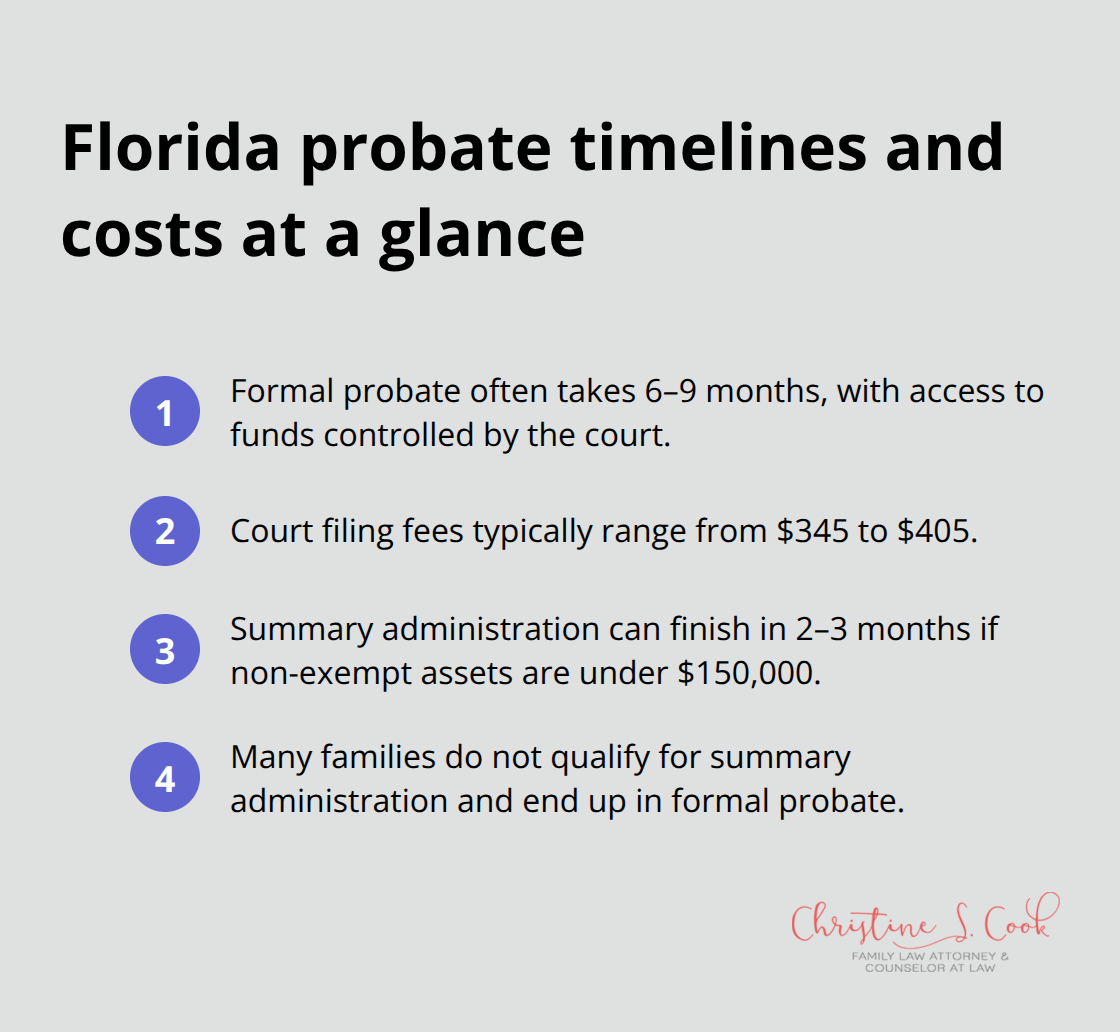
Without a clear plan, your family faces real financial and emotional consequences when probate enters the picture. Florida’s probate system requires court involvement to transfer assets, which means delays, public disclosure, and costs that could have been avoided. A typical formal probate in Florida runs 6-9 months, during which your grieving family cannot access funds without court approval. Court filing fees alone start around $345 to $405, and if your estate qualifies for summary administration because non-exempt assets total under $150,000, the process finishes in two to three months instead. Most families, however, do not structure their assets to qualify for summary administration, so they end up in formal probate anyway. Without beneficiary designations on retirement accounts and life insurance, those assets enter probate too, even though they could transfer directly to heirs outside the court system.
Pay-on-death bank accounts cost nothing to set up and bypass probate entirely, yet fewer than half of Florida families use them.
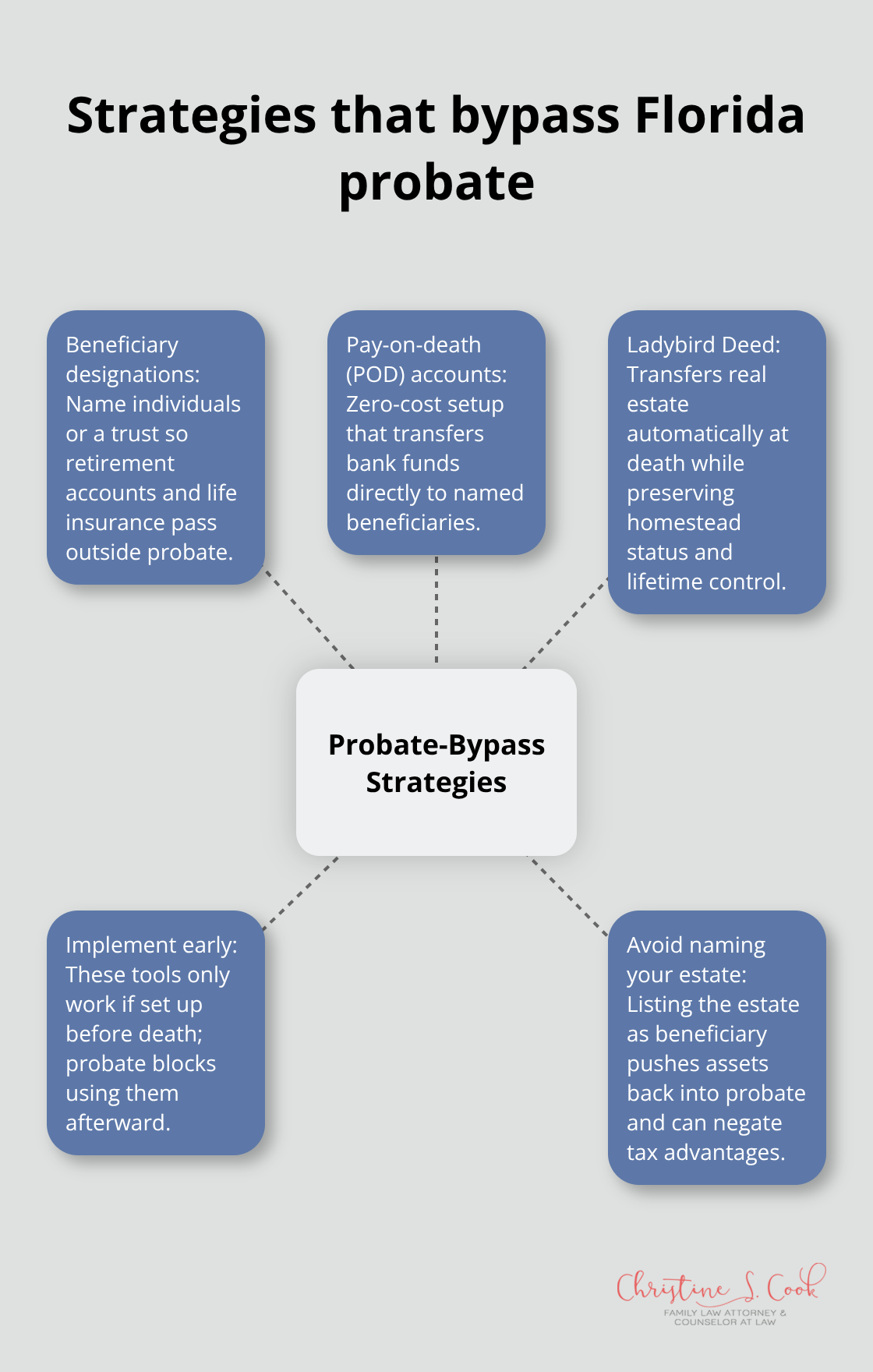
The real damage happens when families make avoidable mistakes. Holding property as tenants in common instead of tenants by the entirety means a surviving spouse cannot claim automatic ownership and must go through probate to inherit. A will alone does not avoid probate, but many people believe it does and stop there. If you own real estate, a Ladybird Deed costs roughly $250 to $350 when drafted by an attorney and transfers property automatically at death while preserving your homestead tax benefits and lifetime control, yet most families never hear about it.
Blended families face particular risk because intestacy laws give the surviving spouse and children equal claims, which can create years of conflict and legal fees. Special needs beneficiaries are especially vulnerable; an inheritance can disqualify them from SSI and Medicaid if held in their name, but a properly structured special needs trust protects benefits while allowing them to receive support. Without professional guidance, families either lose government assistance or leave disabled loved ones with nothing.
The emotional toll compounds the financial burden: siblings fight over who should inherit what, parents manage a minor’s inheritance through costly guardianship proceedings, and the family’s private affairs become public record through probate court filings. These conflicts often damage relationships that took decades to build. The stress of navigating probate while grieving can strain even the strongest families. Understanding these risks helps you see why taking action now protects far more than just your money-it protects your family’s harmony and your legacy’s integrity.
A will tells the court how you want your assets distributed, but it does not avoid probate and offers no privacy once filed. A revocable living trust transfers assets outside probate entirely, keeps your affairs confidential, and lets you manage property during your lifetime and after death without court intervention. The difference matters enormously: formal probate in Florida averages 6 to 12 months and costs $2,000 to $6,000 in attorney fees plus court costs, while a trust-based plan transfers assets in weeks with minimal expense. If your non-exempt assets fall under $150,000, summary administration cuts probate to 2 to 3 months, but most families do not structure their holdings to qualify, so they pay for the longer process anyway.
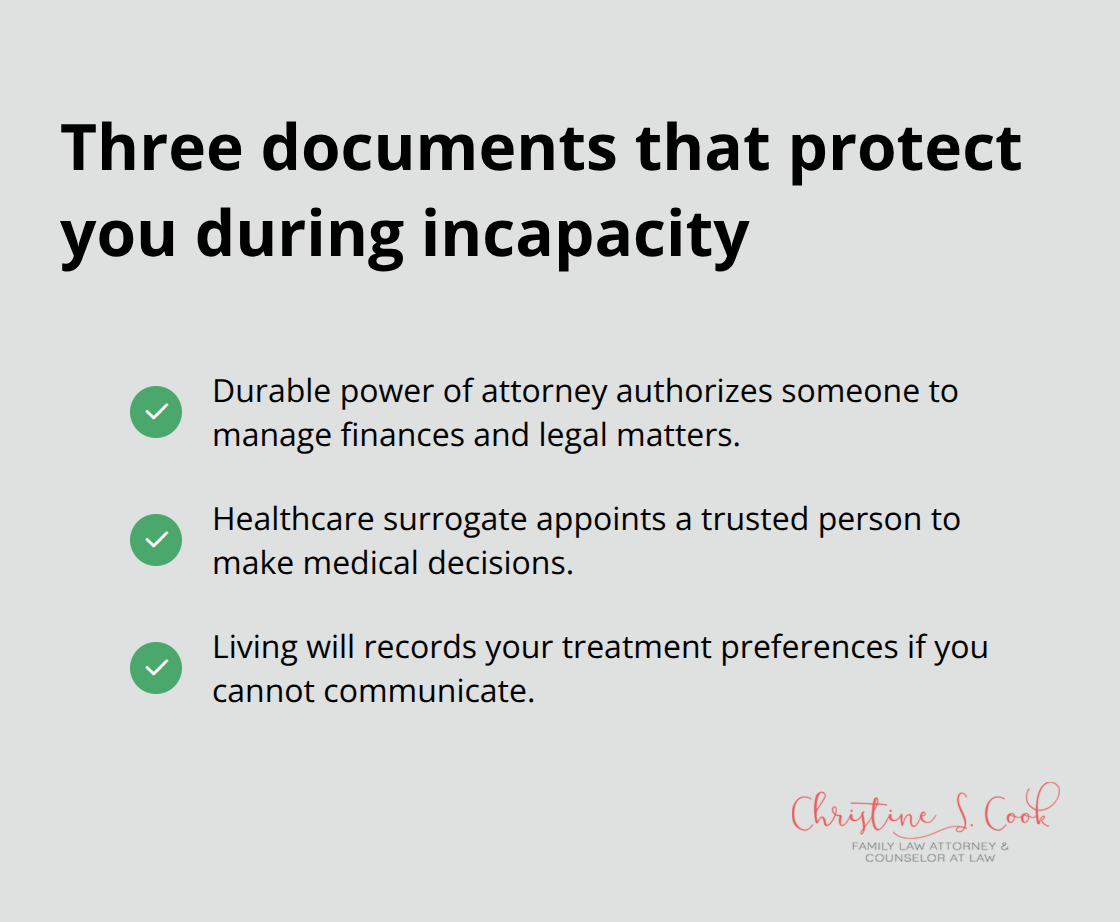
A durable power of attorney designates someone to handle your financial and legal matters if you become incapacitated, avoiding the need for costly guardianship court proceedings (which can cost $5,000 to $15,000 and take months to resolve). A healthcare surrogate and living will ensure your medical wishes are followed if you cannot communicate them. These three documents-power of attorney, healthcare surrogate, and living will-work together to address incapacity planning and should be executed simultaneously, not as afterthoughts.
For most Florida families, a revocable living trust paired with a pour-over will and properly designated beneficiaries on retirement accounts and life insurance creates the strongest foundation. Real estate deserves special attention: a Ladybird Deed (enhanced life estate deed) transfers property automatically at death while preserving your homestead tax exemption and letting you sell or refinance without trustee approval, costing $250 to $350 when drafted correctly. Pay-on-death bank accounts cost nothing to establish and bypass probate for those funds, yet fewer than half of Florida families use them.
Blended families should never rely on intestacy laws because Florida’s statute treats surviving spouses and children as equal heirs, often triggering years of conflict. A trust specifies exactly how assets flow to a current spouse versus children from prior marriages, preventing disputes and protecting each side’s interests.
Special needs beneficiaries face the harshest consequences of poor planning: an inheritance in their name disqualifies them from SSI and Medicaid, which provide health coverage and monthly benefits. A special needs trust holds the inheritance and allows a trustee to pay for supplemental care, education, and quality-of-life expenses without triggering benefit loss. Minor children require guardianship of property unless assets are held in trust, forcing your family through court proceedings and ongoing accounting requirements that drain time and money when they should be grieving. These structural decisions shape whether your loved ones inherit smoothly or face years of legal complications and financial loss.
A will tells a probate judge how to distribute your assets after you die, but it does not prevent probate from happening. The court still must validate the will, inventory assets, notify creditors, and officially transfer title to heirs-a process that takes 6 to 12 months and costs $2,000 to $6,000 in attorney fees plus court filing fees around $345 to $405. A revocable living trust avoids probate by transferring assets during your lifetime to the trustee, meaning your family receives inheritance in weeks instead of months, pays minimal fees, and keeps your financial details private rather than public record. The choice between these two documents determines whether your family experiences delays and expense or a smooth transition.
Many Florida families choose trusts precisely because they eliminate probate delays, reduce costs, and protect privacy-three outcomes a will cannot deliver. The misconception that a will avoids probate remains so widespread that families spend years in court when a trust would have resolved everything quietly. Real estate held in a trust transfers to beneficiaries with a simple deed assignment rather than a probate court order, which means your family can sell property, refinance, or occupy it without waiting for judicial approval.
Retirement accounts and life insurance with named beneficiaries bypass probate automatically, but only if you name the beneficiary correctly-many people name their estate as beneficiary by mistake, which forces those assets back through probate and negates the tax advantages those accounts offer. Pay-on-death bank accounts cost nothing to establish and transfer funds directly to named beneficiaries at death, yet fewer than half of Florida families use them despite the zero-cost setup. A Ladybird Deed on real estate costs $250 to $350 and transfers property automatically at death while preserving homestead tax status and your lifetime control to sell or refinance without trustee involvement. These specific strategies work because they bypass probate court entirely, but only if you implement them before death. Waiting until probate starts means your family cannot use these tools and must navigate the full court process.
Disputes over asset distribution happen far less often in trust-based plans because the trust document spells out exactly who receives what, eliminating the ambiguity that causes siblings to fight. A will creates opportunities for relatives to challenge validity based on claims of undue influence or lack of testamentary capacity, whereas a trust’s private nature makes challenges far harder to pursue and fund. Keeping your plan confidential through trust ownership also prevents creditors from targeting your estate aggressively or relatives from making unreasonable demands based on assumptions about your wealth. These practical advantages explain why families who understand probate consistently choose trusts over wills as their primary planning tool.
Your estate plan requires review every three to five years, or whenever major life events occur, because Florida’s laws shift and your circumstances change. When you marry, divorce, have children, or experience significant financial changes, your documents need adjustment-if you named an ex-spouse as beneficiary on a retirement account, that asset still transfers to them at death unless you update the designation, a costly mistake that happens far too often. If you created a trust years ago but never funded it with your real estate or bank accounts, the trust sits empty while your assets still go through probate, destroying the protection you thought you had built.
Protecting family legacy in Florida means taking action today rather than waiting for a crisis to force your hand. The cost of creating a solid plan now pales in comparison to what your family pays later through probate delays, court fees, family conflict, and lost government benefits for special needs dependents-you already know the risks of inaction (six to twelve months of probate, $2,000 to $6,000 in attorney fees, court filing costs, and emotional burden on grieving loved ones). A will alone cannot protect your family the way a trust does, and waiting only compounds the problem.
Contact Christine Sue Cook, LLC for a free consultation to discuss your specific situation and build a plan that actually protects what matters most. Christine and her team provide compassionate, client-centered guidance tailored to your family’s needs and explain your options in plain language. Your family’s security and your legacy’s integrity depend on the decisions you make today.