When a loved one passes away in Florida, the will probate process can feel overwhelming for families already dealing with grief. At Christine Sue Cook, LLC, we’ve guided countless families through this journey, and we know that understanding each step makes the process less stressful.
Probate doesn’t have to be complicated or mysterious. This guide walks you through exactly what happens, what to expect, and how to avoid common pitfalls that delay settlements and drain estate resources.
Probate in Florida is the court-supervised process that validates your will, identifies and gathers your assets, pays off debts and taxes, and transfers what remains to your beneficiaries. It’s not punishment or bureaucracy for its own sake. The process exists because Florida law requires court oversight to protect everyone involved, especially your heirs. When you die, your assets don’t automatically go to the people you named in your will. Instead, the probate court steps in to confirm that your will is legitimate, appoint a personal representative to manage the estate, and make sure creditors get paid before beneficiaries receive anything. This protects your family from unexpected liability and gives them legal certainty about asset ownership. Florida Statutes Chapters 731 through 735 govern the entire process, and these rules exist to prevent fraud, mismanagement, and disputes that could drain your estate or tear your family apart.
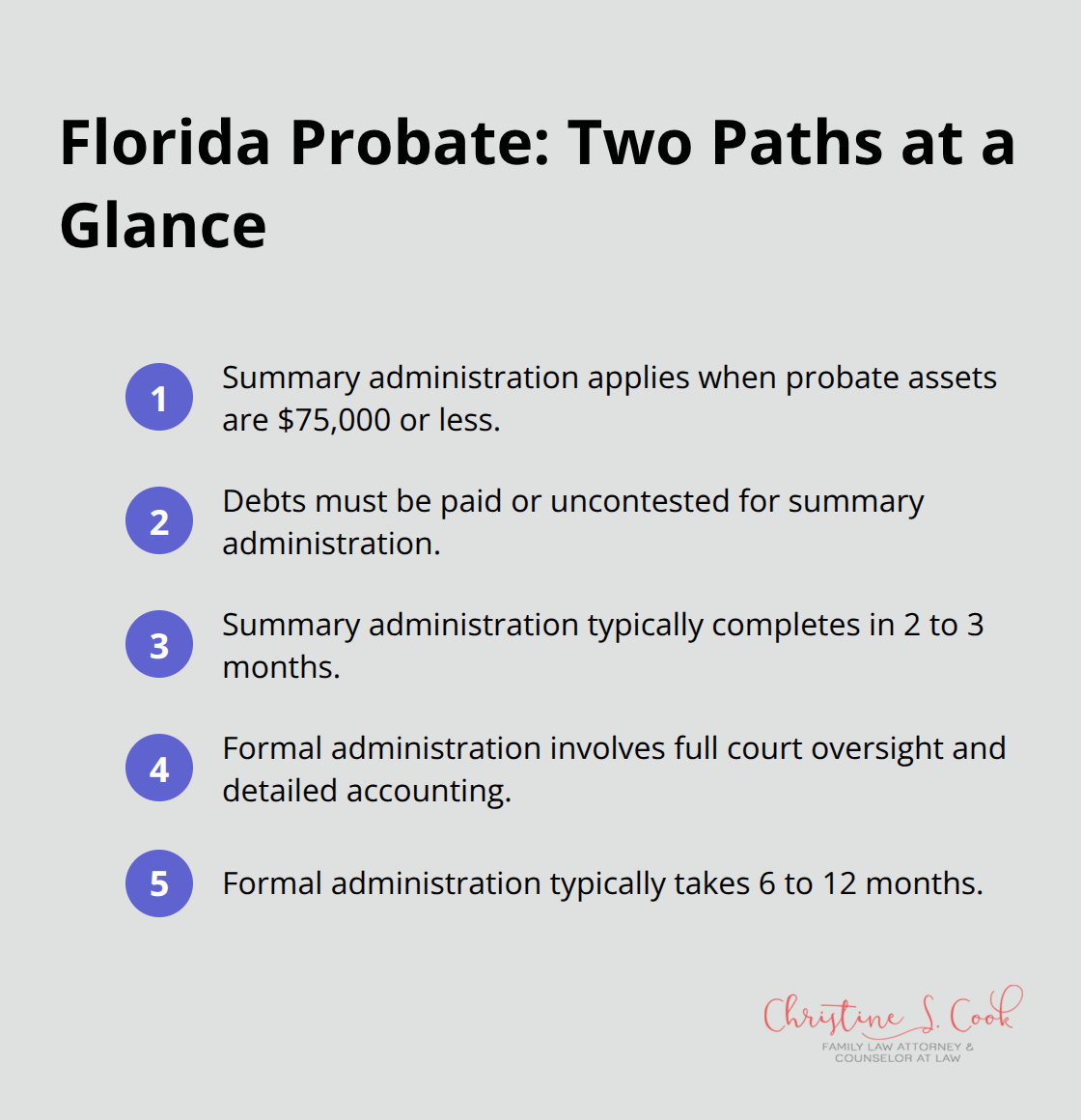
Florida offers two distinct probate routes depending on your estate’s size. Formal administration applies to most estates and involves full court oversight, creditor notice periods, and detailed accounting. Summary administration moves faster and costs less-typically taking 2 to 3 months compared to 6 to 12 months for formal administration-but it only applies if your probate assets don’t exceed $75,000 and debts are either paid or not contested by creditors. The $75,000 threshold determines whether your family faces months of court involvement or weeks of straightforward transfers. Probate assets include bank accounts without beneficiary designations, real estate titled solely in your name, vehicles without survivorship rights, and personal property without designated heirs.
Assets with payable-on-death designations, life insurance with named beneficiaries, or property held as tenants by the entirety with your spouse typically bypass probate entirely. This distinction matters enormously for your timeline and costs.
Your family faces real expenses and delays if probate isn’t handled properly. Court filing fees range from $345 to $405, and publication fees for creditor notices add roughly $250. Attorney fees for simple probate typically run flat-fee arrangements between $2,000 and $6,000, though complex estates cost significantly more.
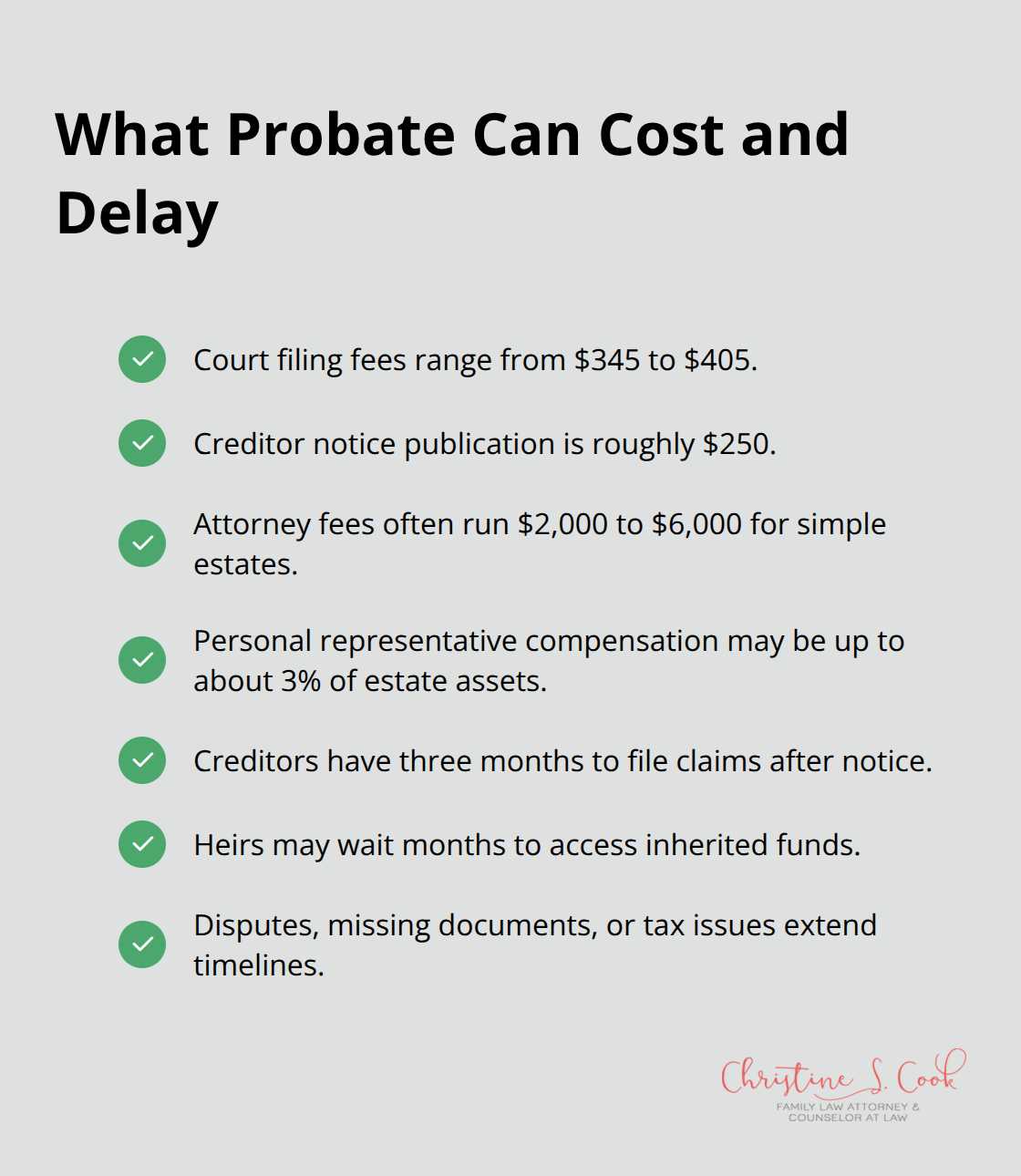
The personal representative may also receive compensation up to approximately 3 percent of estate assets. Beyond money, probate takes time. Creditors have three months after notice to file claims, and the court won’t close the estate until all valid debts are paid and beneficiaries receive their distributions. During this entire period, your heirs wait to access money they’ve inherited, sometimes unable to pay immediate expenses or settle the decedent’s outstanding bills. Disputes among heirs, missing documentation, or tax complications extend timelines further.
Understanding probate now lets you plan around these delays and costs through strategies like beneficiary designations, Lady Bird Deeds for real estate, or revocable trusts that keep assets out of court entirely. These tools work because they transfer assets outside the probate system-your heirs receive what you’ve left them without court involvement or creditor delays. The right plan depends on your specific assets and family situation. Some families benefit most from a combination of strategies (a Lady Bird Deed for the home, a revocable trust for investments, and beneficiary designations on retirement accounts). Others find that a single approach solves their probate concerns. What matters is that you take action now rather than leaving your family to navigate probate without a plan. The next section walks you through exactly what happens once probate begins, so you understand each step your personal representative and the court will take to settle your estate.
The personal representative must file the will with the clerk of court within ten days of death, along with a petition to open probate. This petition names the personal representative (often called the executor) and requests the court to officially open the estate.
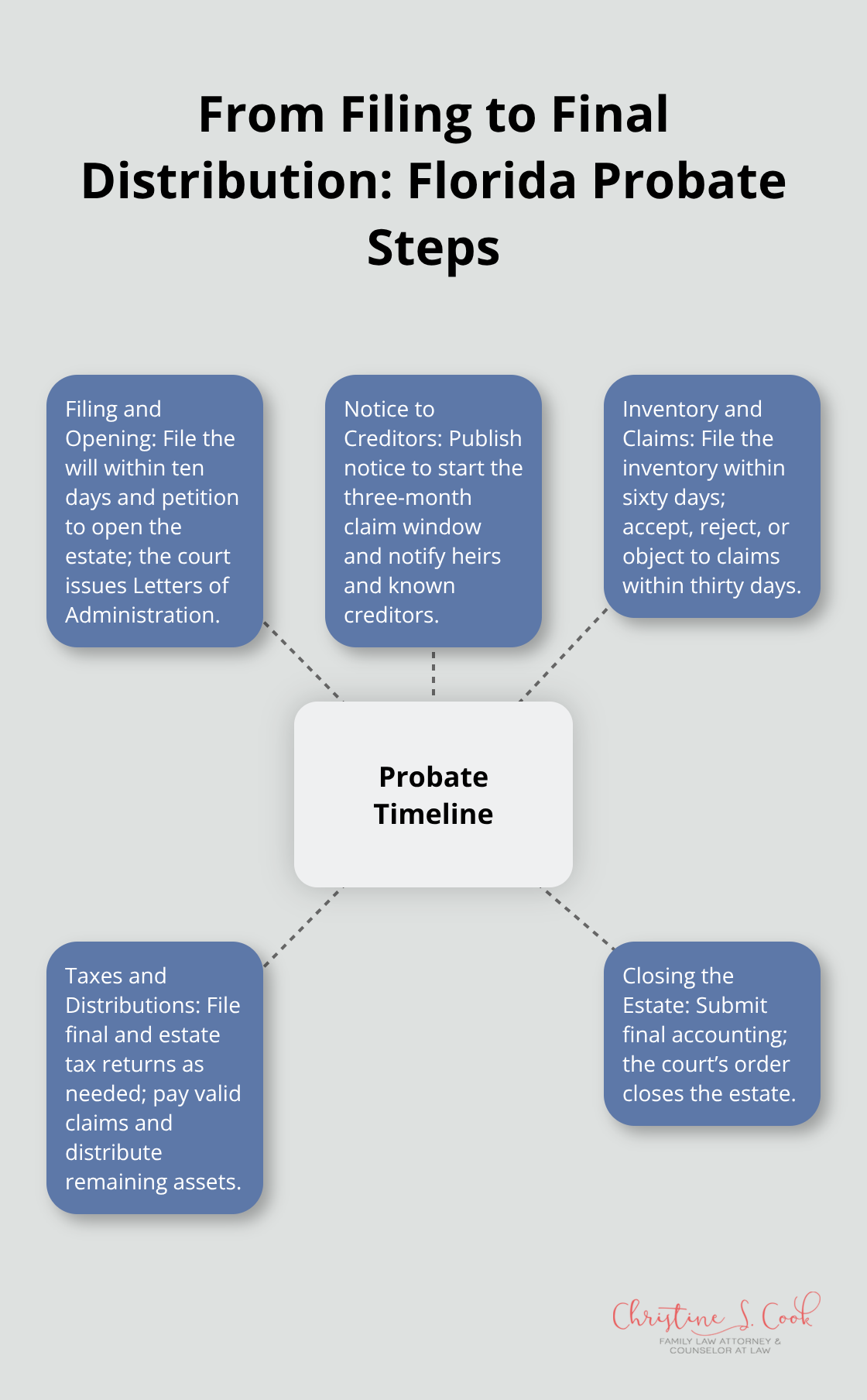
The clerk charges a filing fee between $345 and $405, depending on the county. Within two weeks of filing, the court typically issues Letters of Administration-the document that authorizes the personal representative to act on the estate’s behalf. Without these Letters, banks won’t release accounts, real estate can’t transfer, and creditors won’t negotiate.
The personal representative must publish a Notice to Creditors in a local newspaper, which costs roughly $250. This notice starts a three-month creditor claim period under Florida Statute 733.2121. Any creditor who fails to file a claim within this window loses the right to collect from the estate. Simultaneously, the personal representative must notify all heirs and beneficiaries named in the will, plus any intestate heirs under Florida law if portions of the estate pass without specific bequests. Known creditors receive individual notice by mail or email. This notification phase typically takes four to six weeks.
The personal representative inventories all estate assets and obtains professional appraisals for items of significant value (real estate, vehicles, artwork, jewelry). The personal representative files this inventory with the court within sixty days of receiving Letters of Administration. When a creditor files a claim, the personal representative has thirty days to accept, reject, or object to it. Rejected claims can trigger a separate lawsuit, which extends the timeline considerably. Valid claims and taxes must be paid before any distribution to beneficiaries occurs.
The personal representative files the decedent’s final income tax return (Form 1040) and may file Form 1041 for the estate itself if probate extends beyond the tax year. If the gross estate exceeds $13.61 million as of 2024, federal Form 706 (estate tax return) becomes necessary, though Florida imposes no state estate tax. Once all debts, taxes, and administrative costs are satisfied, the personal representative distributes remaining assets according to the will’s terms or Florida’s intestacy laws if no will exists. This distribution phase cannot begin until the three-month creditor period expires and all claims are resolved.
Simple estates close within five to six months; complex estates with tax issues, disputes, or asset complications regularly extend to twelve months or beyond. The personal representative files a final accounting with the court showing all receipts, disbursements, and distributions. Only after the court approves this accounting and issues an order closing the estate does the probate process formally end. Understanding these phases helps you anticipate what your personal representative will face and why each step matters-knowledge that becomes invaluable when common challenges arise during administration.
Missing documents and incomplete records create the biggest delays in Florida probate. When a personal representative cannot locate the original will, bank statements, property deeds, or investment account information, the entire process stalls. The court will not issue Letters of Administration without the will on file, and banks will not release funds without Letters. Families should locate and organize all financial documents, property titles, and account statements immediately after death-before filing anything with the court. This preparation typically saves two to four weeks and prevents unnecessary court requests for missing paperwork.
Disputes among heirs represent the second major delay factor in probate administration. When beneficiaries disagree about asset valuations, challenge the will’s validity, or contest the personal representative’s decisions, the court must hold hearings to resolve conflicts. These contested matters regularly extend probate timelines from six months to eighteen months or longer. Unresolved disagreements can trigger expensive litigation that consumes estate resources and fractures family relationships permanently.
Creditor claims add complexity when multiple creditors file claims during the three-month notice period. The personal representative must investigate each claim’s validity and negotiate settlements or defend rejections in court. Tax issues compound delays significantly-if the estate owes federal taxes or the personal representative fails to file required returns on time, the IRS can freeze distributions and assess penalties that reduce what beneficiaries ultimately receive. These financial complications often require professional coordination to resolve properly.
An experienced probate attorney prevents these problems systematically from the start. The attorney ensures the will is filed correctly, coordinates with tax professionals to handle returns on schedule, manages creditor communications to prevent unnecessary litigation, and helps resolve heir disputes through mediation before they escalate to court hearings. While attorney fees range from $2,000 to $6,000 for straightforward estates, this investment typically saves families thousands in unnecessary costs and weeks or months of waiting. An attorney also protects the personal representative from personal liability if something goes wrong during administration-a protection that becomes invaluable when complex tax issues or contested claims emerge.
Florida’s will probate process follows a predictable path when you handle it correctly, and most straightforward estates close within five to six months. Summary administration wraps up in just two to three months if your assets fall below the $75,000 threshold. The real difference between smooth probate and prolonged complications comes down to preparation and professional guidance from the start.
Planning ahead transforms everything-when you establish beneficiary designations on retirement accounts and life insurance, use Lady Bird Deeds for real estate, or fund a revocable trust with your investments, you remove assets from probate entirely. Your heirs receive what you’ve left them without court involvement, creditor delays, or months of waiting. Even modest planning saves thousands in attorney fees and administrative costs while protecting your family from disputes and tax complications.
If you’re currently facing the will probate process in Florida as a personal representative or beneficiary, Christine Sue Cook, LLC specializes in guiding families through estate planning and probate with genuine care and practical solutions. A free consultation can clarify your options and show you exactly how to protect your estate or settle one efficiently.