Probate can drain your family’s time, money, and privacy. The court process is slow, expensive, and exposes your personal financial details to the public.
The good news? You have options. At Christine Sue Cook, LLC, we help Florida families use probate avoidance strategies to protect what matters most and keep their affairs private.
Florida probate moves slowly. Estates in Florida typically take between six months and over a year to settle, depending on complexity and whether disputes arise. During this time, your family cannot access funds or property, and court fees, attorney costs, and filing expenses accumulate. A simple probate in Florida can cost thousands of dollars just in administrative fees alone, before you factor in attorney time. These costs reduce what your heirs actually receive.
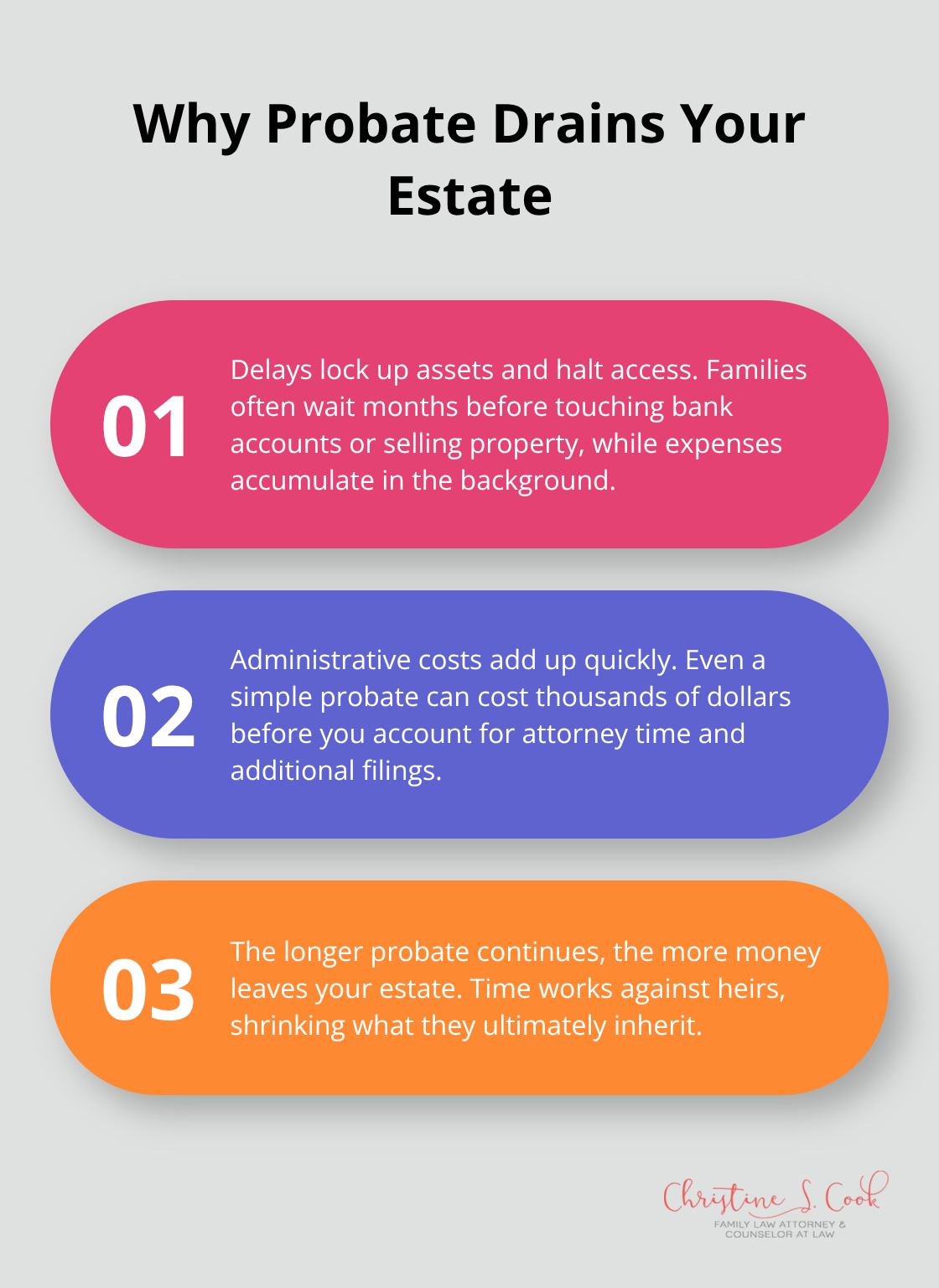
The longer probate continues, the more money leaves your estate.
When your estate goes through probate, everything becomes public record. Your assets, debts, beneficiaries, and family disputes appear in court filings accessible to anyone. This means creditors, distant relatives claiming they deserve money, or scammers targeting grieving families all have access to detailed information about what you owned and who inherited it. Your family’s financial details are no longer private-they are court documents. Many Florida families find this exposure deeply uncomfortable, especially when estates contain significant assets or when family relationships are complicated. Avoiding probate keeps these matters confidential and protects your family from unwanted attention.
Your family may need access to funds immediately after your death. Your spouse needs to pay bills. Your children need support. Debts require payment. Probate freezes everything. Heirs cannot touch accounts, sell property, or access life insurance proceeds without court approval. This waiting period creates genuine hardship (a widow cannot pay the mortgage; adult children cannot settle their parent’s medical bills). The probate system simply does not move fast enough for families in crisis. Probate avoidance strategies allow assets to transfer directly to beneficiaries within days or weeks, not months or years.
Florida offers several proven methods to sidestep probate entirely. Revocable living trusts, joint ownership, and beneficiary designations all work to move assets directly to your heirs without court involvement. Each tool serves different situations and asset types. Some families use one method; others combine several strategies to create a comprehensive plan. The right approach depends on your assets, your family structure, and your goals for privacy and control. Understanding these tools helps you make informed decisions about your estate.
A revocable living trust stands as the most powerful probate-avoidance tool available to Florida families. You create a trust document, name yourself as trustee during your lifetime, and transfer your assets into the trust’s name. When you pass away, a successor trustee you’ve named takes over and distributes assets according to your instructions-without court involvement, without probate delays, and without public disclosure. The entire process typically completes within weeks or a few months, not the six months to over a year that Florida probate requires.
You maintain complete control over trust assets while alive; you can sell property, borrow against it, or change beneficiaries whenever you wish. The trust costs more upfront to create than a simple will, but the long-term savings in court fees, attorney costs, and administrative expenses often offset that initial investment.
The critical step is funding the trust properly-you must retitle real estate deeds, bank accounts, and investment accounts into the trust’s name. Assets not transferred into the trust may still face probate, so working with an attorney to verify complete funding is essential. This step determines whether your family actually avoids probate or faces court delays anyway.
Beneficiary designations offer a simpler alternative for specific accounts. Life insurance policies, IRAs, 401(k)s, and payable-on-death bank accounts all allow you to name beneficiaries directly. When you pass, those assets transfer immediately to the named beneficiary outside probate, sometimes within days.
Joint ownership with rights of survivorship provides similar benefits for real estate and other titled property. Transfer-on-death deeds and joint ownership pass assets automatically to the surviving owner at death, though this method carries risks-co-owners gain full access to the asset during life, creditors can target jointly held property, and disputes among multiple co-owners can create complications. For married couples transferring the family home, joint ownership may make sense.
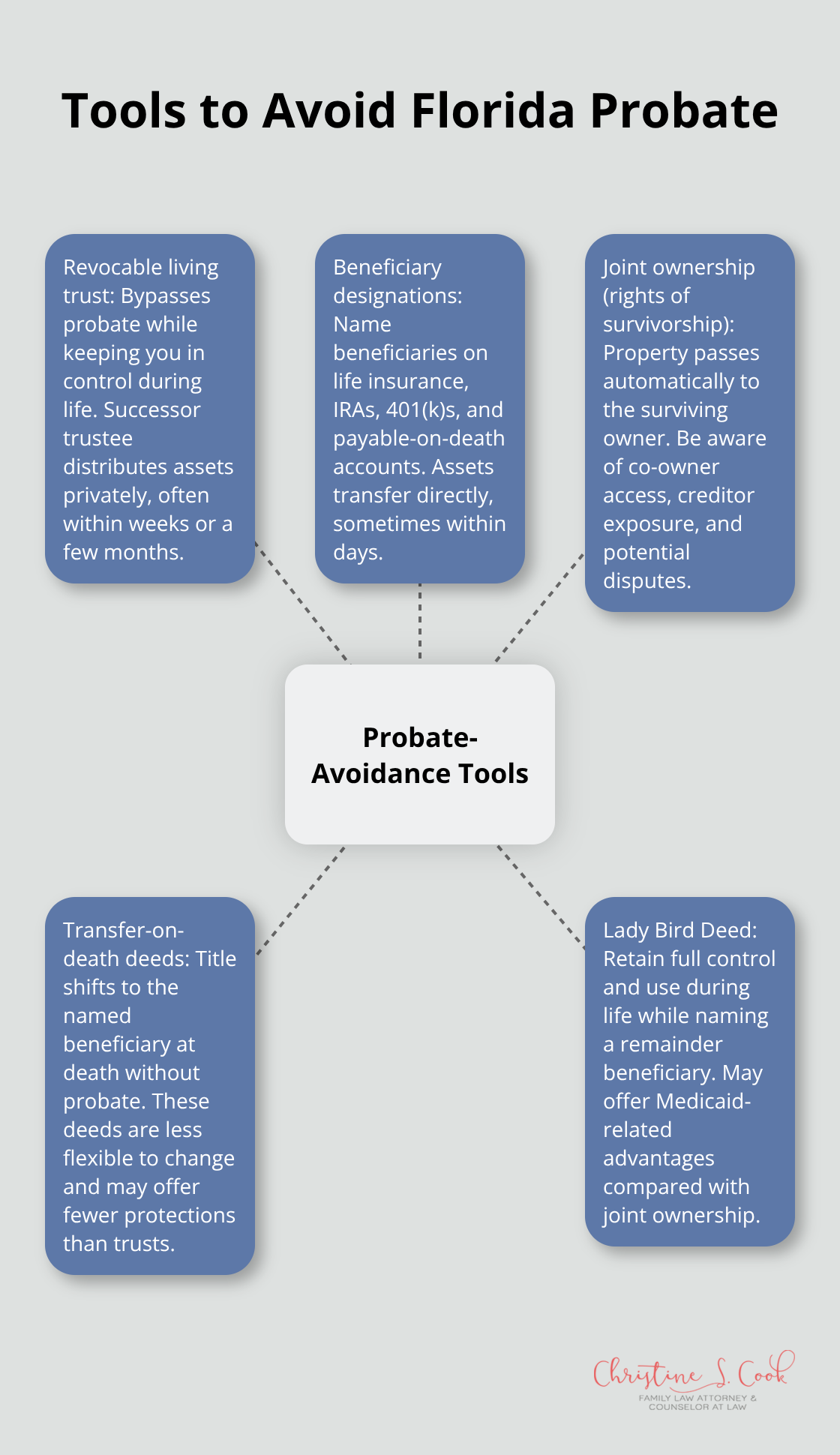
For larger estates or blended families, a Lady Bird Deed offers better protection; it allows you to transfer real estate to a beneficiary while retaining full control and use during your lifetime, plus potential Medicaid protection that joint ownership does not provide.
The strongest Florida estates combine multiple tools-a funded revocable trust for real estate and major assets, beneficiary designations on financial accounts, and strategic gifting during life-tailored to your specific situation and goals. The right combination depends on what you own, who you want to protect, and how much control you want to maintain. Once you understand which tools fit your assets, the next step involves working with an experienced estate planning attorney to implement them correctly and verify that everything is properly titled and funded.
The difference between a family that avoids probate and one that faces years in court often comes down to one simple fact: how assets are titled. Real estate deeds, bank accounts, and investment titles determine whether your property automatically passes to beneficiaries or gets frozen in the probate system. Florida allows multiple titling options, and choosing the right one for each asset type dramatically impacts your family’s experience after you pass.
A revocable living trust stands as the strongest choice for real estate and major assets because it removes property from your probate estate while keeping you in complete control during life. When you transfer a deed into the trust’s name, that property bypasses probate entirely and goes directly to your named beneficiary. The process takes weeks, not months. You maintain full authority to sell, mortgage, or modify the trust as circumstances change.
Payable-on-death accounts and transfer-on-death designations work effectively for financial assets without requiring trust creation. An IRA or 401(k) with a named beneficiary passes outside probate automatically. Life insurance policies bypass probate regardless of how your will is written. Florida law allows transfer-on-death deeds for real estate as well, though these carry less flexibility than Lady Bird Deeds or trusts because you cannot modify them as easily and they lack the same creditor protections.
The annual gift exclusion from the IRS is currently $19,000 per recipient per year in 2026, meaning you can gift this amount to each of your children or grandchildren without triggering gift taxes or reducing your lifetime exemption. This strategy works especially well if your estate approaches the federal taxable threshold. Gifting during life accomplishes two goals: it reduces the size of your taxable estate and it puts assets directly into the hands of people you trust while you are alive to see the benefit. Many Florida families gift modest amounts each year to adult children, then rely on trusts and beneficiary designations for larger assets.
The key is coordination. You cannot simply title some property one way and other property another way without a plan.
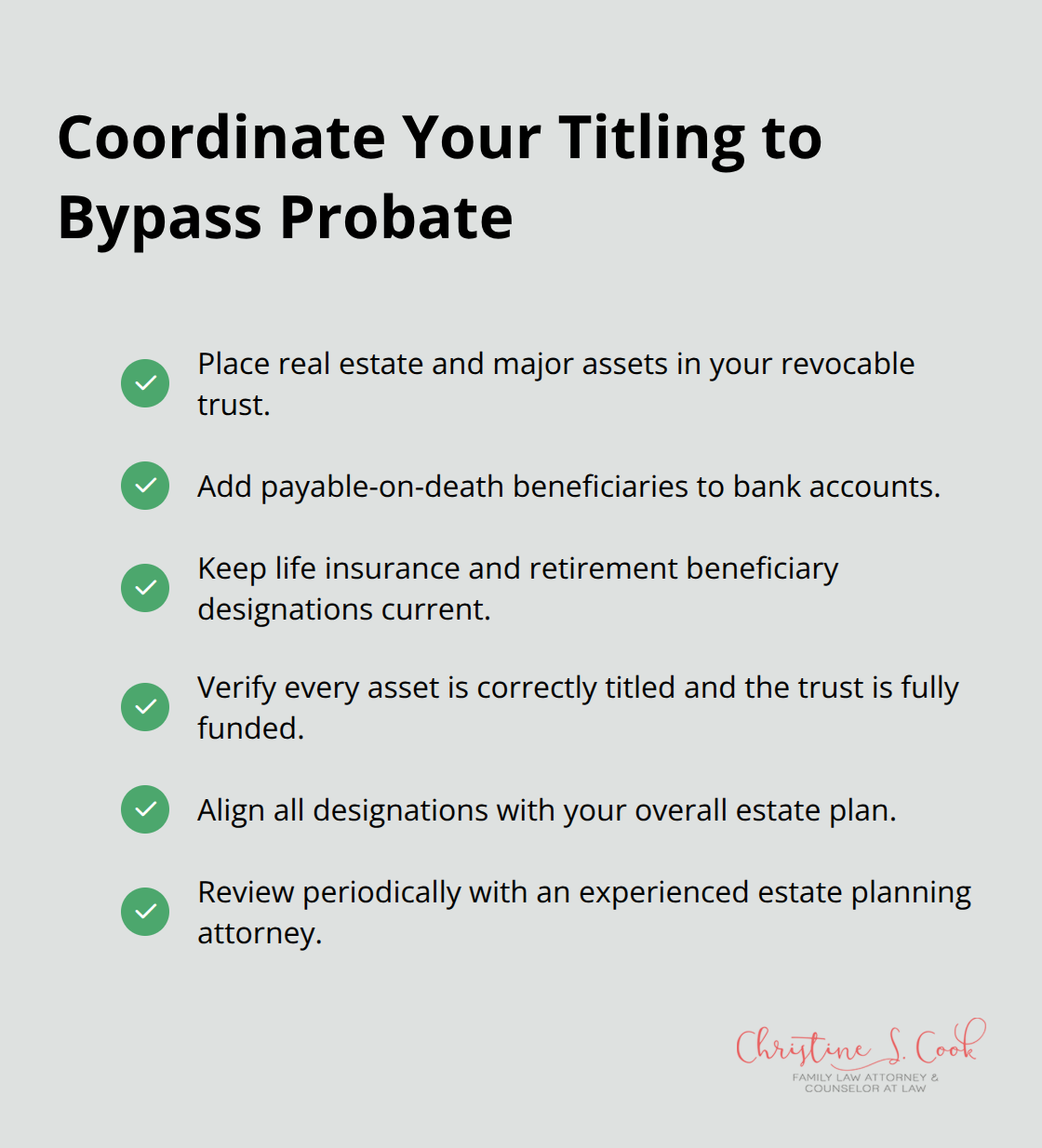
Your revocable trust should hold real estate and valuable personal property. Your bank accounts should have payable-on-death beneficiaries named. Your life insurance and retirement accounts should have current beneficiary designations that align with your overall plan. When these pieces work together, your family moves through the inheritance process smoothly, accessing funds and property within weeks instead of facing probate delays that cost thousands in court fees and attorney time.
Probate avoidance strategies in Florida work because they match your assets to the right legal tools. A revocable living trust handles real estate and major property, beneficiary designations move financial accounts directly to heirs, and strategic gifting reduces what passes through your estate. When these pieces fit together, your family inherits smoothly and accesses funds within weeks instead of waiting through months of court delays.
No single tool works for every family-your situation depends on what you own, who you want to protect, and how much control matters to you during your lifetime. A widow with a home and modest savings needs a different plan than a business owner with real estate in multiple states, and a blended family faces different challenges than a couple with adult children. The probate avoidance approach that protects one family may not fit another.
An experienced estate planning attorney reviews your complete financial picture, understands your family dynamics, and builds a plan tailored specifically to your goals. They verify that deeds transfer properly, that beneficiary designations align with your wishes, and that your trust funds completely so nothing accidentally falls back into probate. Contact us today to start building your probate avoidance plan and give your family the protection they deserve.