Divorce reshapes your life in ways that demand immediate attention to your physical and mental health. The stress alone can trigger sleep problems, anxiety, and weakened immunity-all while you’re navigating legal decisions and financial uncertainty.
At Christine Sue Cook, LLC, we’ve seen firsthand how divorce self-care becomes the foundation for protecting yourself during this transition. When you prioritize your well-being now, you’re building the stability you’ll need to move forward.
Divorce-related stress doesn’t just affect your emotions-it has measurable physical consequences. People who’ve experienced one divorce face a 24% higher risk of heart attack, and that risk jumps to 77% for those who’ve gone through multiple divorces. The stress hormones cortisol, adrenaline, and norepinephrine flood your system during separation, raising blood pressure and cholesterol levels while simultaneously weakening your immune response.
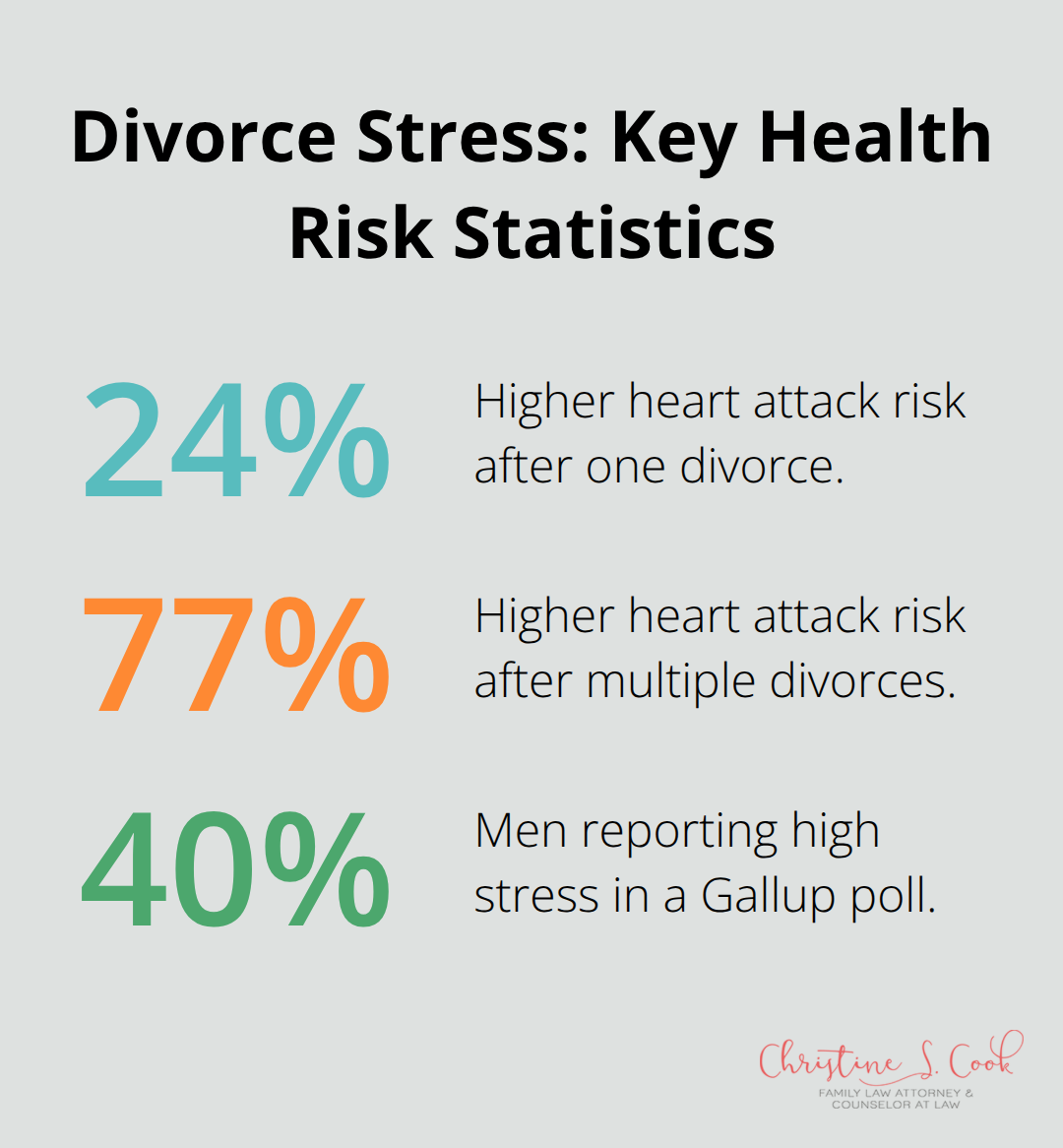
This explains why you might catch more colds, experience digestive issues, or feel chronic fatigue during divorce proceedings. Women report particularly elevated stress before and after separation-a Gallup Poll found that more than half of separated or divorced women report high stress levels compared to about 40% of men. Your body isn’t overreacting; it’s responding to genuine physiological threats.
Sleep disruption compounds these problems because poor sleep prevents your body from regulating cortisol naturally. Stress worsens insomnia, which then amplifies stress responses in a cycle that feeds itself. When you lose sleep, your immune system weakens further, making you more vulnerable to illness at the exact moment you need your strength most.
Anxiety and depression are common during divorce, but most people recover within one to two years when they maintain consistent routines and prioritize their well-being. The challenge is that depression and anxiety can distort your decision-making precisely when you need clear thinking for legal settlements and custody agreements. Untreated anxiety often leads to avoidance behaviors-skipping meals, neglecting sleep, or isolating from friends-which intensifies both mental and physical decline.
The connection between poor nutrition and worsening mental health is direct: skipping meals and dehydration reduce blood sugar stability, which destabilizes mood and increases anxiety. Your brain needs consistent fuel to regulate emotions and process stress effectively. When you neglect meals during the divorce process, you sabotage your own mental clarity at the worst possible time.
Social isolation accelerates both mental and physical health problems, so maintaining contact with supportive friends, family, or a therapist helps your body heal. These connections aren’t luxuries-they’re biological necessities that provide stability your nervous system needs. The people around you offer the support that becomes your next critical move.
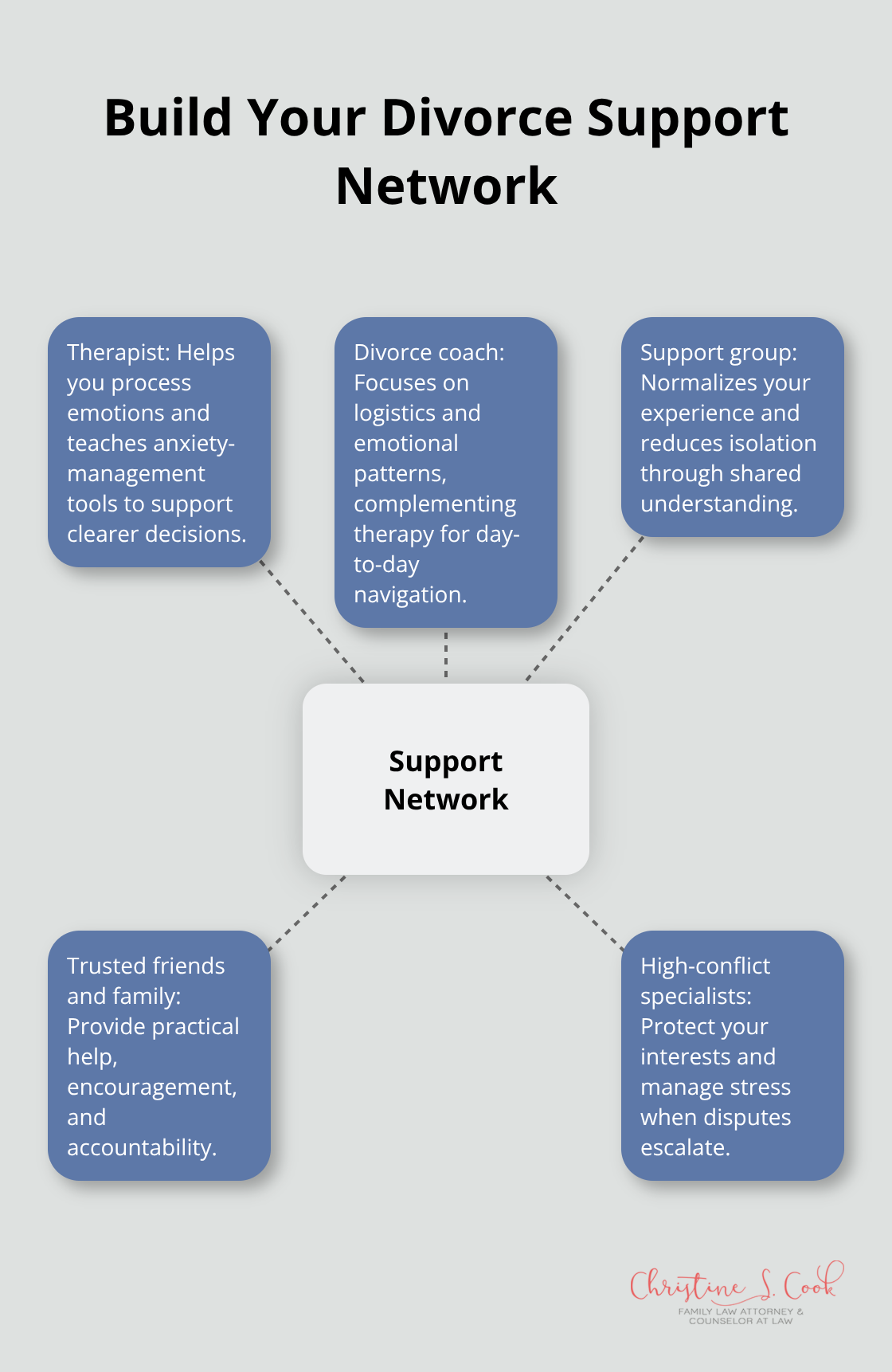
Your support network determines whether you survive divorce or thrive through it. Therapists, trusted friends, and divorce coaches provide the emotional scaffolding you need when decision-making feels impossible. A therapist helps you process the emotional whiplash of separation while giving you tools to manage anxiety before it sabotages your settlement negotiations. Divorce counseling can help you navigate emotional pain and learn to communicate effectively. Support groups connect you with people experiencing identical stress, which normalizes your feelings and prevents the isolation that deepens depression. Divorce coaches, distinct from therapists, focus specifically on navigating the logistics and emotional patterns of separation. When selecting professionals, prioritize those with experience in high-conflict or amicable divorces depending on your situation.
Your ex’s behavior matters here: if communication is reasonable, a collaborative approach works. If conflict runs high, you need professionals who specialize in protecting your interests while keeping stress manageable.
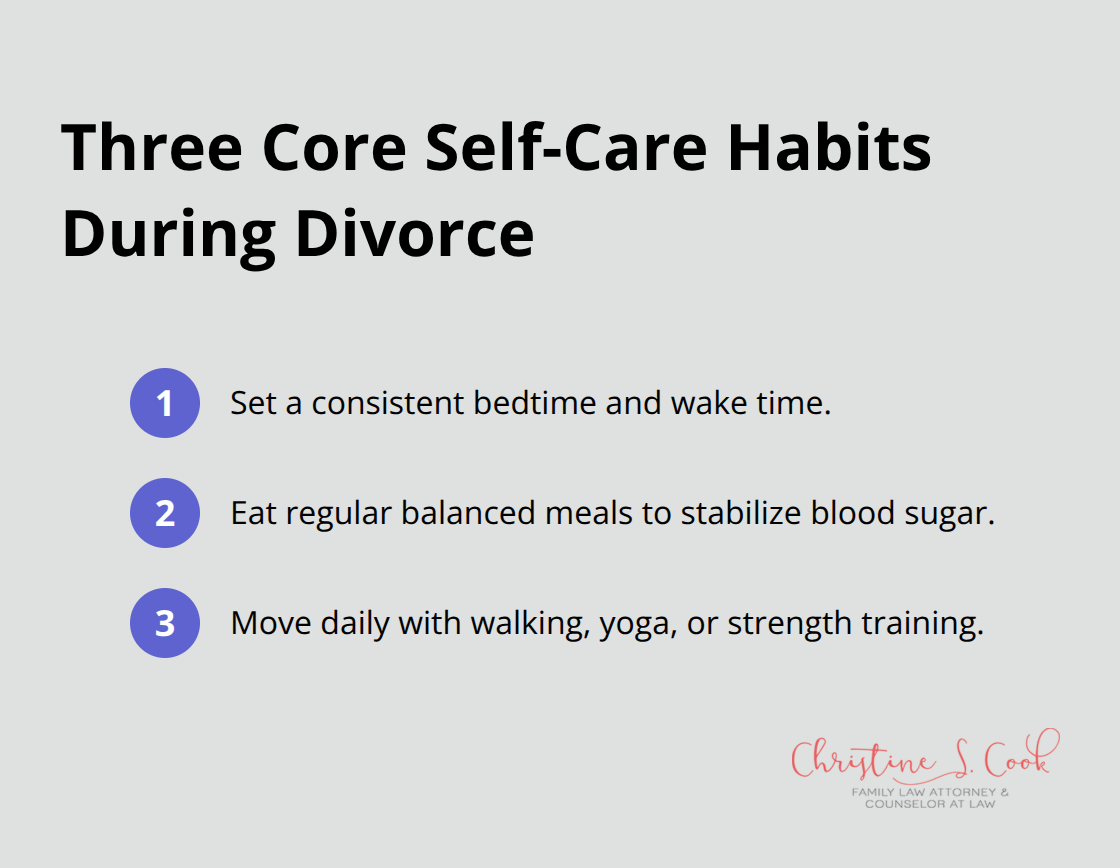
Routines anchor your nervous system when everything else feels chaotic. Sleep ranks as your first priority because it regulates your nervous system and sharpens decision-making. Set a consistent bedtime and wake time even on weekends, try for seven to nine hours, and eliminate screens one hour before sleep.
Your second priority is eating regular meals with protein, vegetables, and whole grains because blood sugar stability directly prevents anxiety spikes and emotional crashes. Skip the processed convenience foods that spike and crash your energy. Third, move your body daily through walking, yoga, or strength training because exercise releases endorphins and reduces stress hormones. These three habits cost almost nothing and produce measurable improvements in mental clarity within two weeks.
Financial stress compounds divorce overwhelm, so create a realistic post-divorce budget immediately rather than avoiding numbers. List your actual monthly expenses (housing, food, childcare, and insurance), then compare that to your anticipated income. This single exercise transforms vague financial terror into specific, manageable problems. Open a separate bank account in your name if you haven’t already, understand your credit score through a free tool like Credit Karma, and if debt exists, prioritize high-interest accounts first.
Meeting with a financial advisor or accountant costs money upfront but prevents costly mistakes in settlement agreements that you’ll live with for decades. Legal clarity about your rights and financial position eliminates the uncertainty that amplifies anxiety. When you know exactly what you’re entitled to and what your obligations are, you stop catastrophizing and start planning. This foundation of knowledge positions you to make informed decisions about the legal path forward.
Legal uncertainty amplifies divorce stress more than almost any other factor because you’re making life-altering decisions without knowing your actual rights or financial position. Working with an attorney transforms vague legal fears into concrete information, which immediately reduces anxiety and sharpens your decision-making. Legal clarity protects your self-care strategy because divorce can lead to chronic mental health struggles, including anxiety, depression, and difficulty with future relationships. When you know exactly what you’re entitled to regarding property division, spousal support, and custody arrangements, you stop catastrophizing and start planning with confidence.
An attorney handles the technical complexity of filing documents, meeting deadlines, and protecting your interests, which frees your mental energy for the emotional work of healing. This division of labor matters because divorce stress already taxes your cognitive capacity; letting a professional manage legal logistics prevents decision fatigue from sabotaging your recovery. The cost of attorney consultation typically ranges from $150 to $400 per hour depending on your location and the attorney’s experience, but this investment prevents costly mistakes in settlement agreements that affect your finances for decades.
Collaborative law reduces conflict and stress because traditional litigation often pits spouses against one another, which can increase hostility and emotional trauma, especially for children. In collaborative divorce, both parties and their attorneys commit to resolving disputes through negotiation rather than litigation, which means you avoid court appearances, depositions, and the prolonged uncertainty of contested proceedings. This process typically costs less than traditional litigation and concludes faster-often within six to twelve months rather than years of court battles.
Collaborative divorce also produces better long-term outcomes for co-parenting because it preserves the relationship foundation you’ll need when raising children post-divorce. If your ex-partner refuses collaboration or if abuse, severe financial deception, or extreme conflict exists, aggressive court representation becomes necessary, but collaborative law should be your starting point if any possibility exists.
The decision between collaborative and adversarial approaches depends on your specific situation, which is precisely why a free initial consultation with an experienced attorney clarifies your options without financial pressure and helps you choose the path that protects both your interests and your mental health. Christine S. Cook, LLC utilizes collaborative law techniques to achieve amicable settlements when both parties are willing to work toward resolution and offers aggressive court representation when necessary.
Divorce self-care isn’t a luxury you pursue after handling everything else-it’s the foundation that makes everything else possible. When you prioritize your physical health through sleep, nutrition, and movement, you protect the mental clarity and emotional stability required to navigate legal decisions, financial planning, and co-parenting arrangements. People who maintain consistent routines and lean on their support networks recover within one to two years, while those who neglect their well-being face prolonged anxiety, depression, and poor decision-making that compounds their divorce challenges.
Schedule a consultation with an experienced family law attorney who can clarify your legal rights and options without pressure. At Christine S. Cook, LLC, we provide free consultations to discuss your specific situation and help you choose between collaborative approaches and aggressive representation based on what your circumstances require. Legal clarity eliminates the uncertainty that amplifies stress, freeing your mental energy for the healing work ahead.
Establish one small self-care habit this week-whether that’s a consistent bedtime, a daily walk, or a call to a trusted friend-and identify a therapist or divorce coach who specializes in your situation. Create a realistic post-divorce budget so financial stress transforms from vague terror into manageable problems. These actions cost little but produce measurable improvements in your mood, decision-making, and resilience within weeks.