Divorce property division can feel overwhelming when you’re dealing with assets, debts, and complex legal requirements. A well-organized property division spreadsheet simplifies this process by helping you track everything systematically.
We at Christine Sue Cook, LLC know that proper documentation protects your financial interests during divorce proceedings. This guide shows you how to create an effective spreadsheet that covers all your assets and liabilities.
Your divorce property division depends entirely on which state you live in, and these laws directly impact how you structure your spreadsheet. Nine states follow community property laws where marital assets must be divided equally between spouses, including California, Texas, Arizona, Nevada, New Mexico, Washington, Idaho, Louisiana, and Wisconsin. The remaining 41 states use equitable distribution, meaning courts divide assets fairly but not necessarily equally based on specific factors like marriage length, income disparity, and each spouse’s contributions.
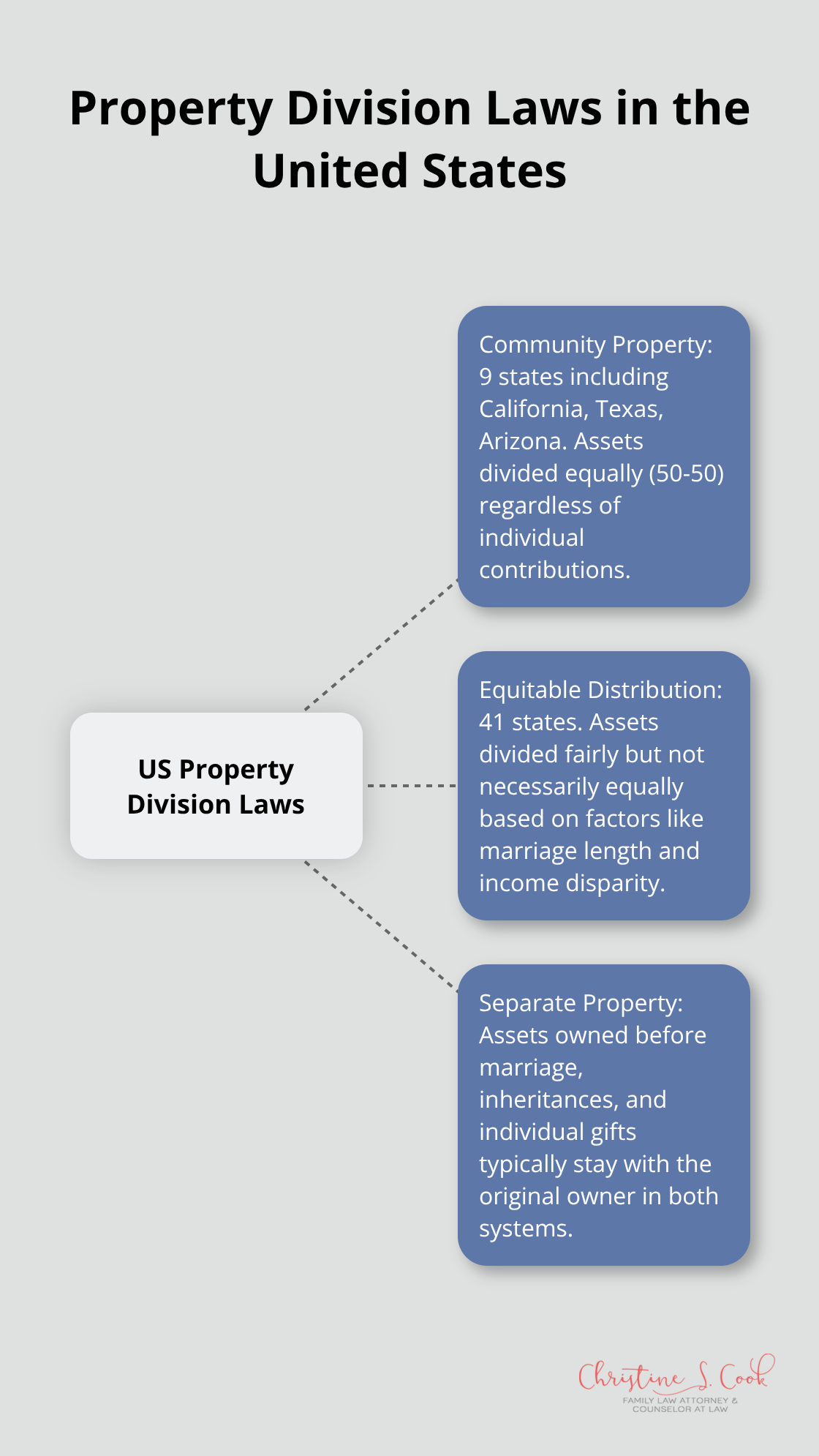
Community property states treat marriage as an economic partnership where both spouses own equal shares of all marital assets. Courts divide these assets down the middle (50-50) regardless of who earned the income or whose name appears on titles. Equitable distribution states take a different approach and consider what seems fair rather than equal. Judges examine factors like each spouse’s financial situation, career sacrifices, and future earning potential to determine appropriate division percentages.
Marital property includes everything acquired during marriage regardless of whose name appears on the title, while separate property covers assets owned before marriage, inheritances, and gifts received individually. Pennsylvania courts consider any increase in value of pre-marital property as marital property (giving your spouse rights to that appreciation). This distinction matters because separate property typically stays with the original owner, but proof of separate property status requires solid documentation like purchase receipts, inheritance papers, or gift letters.
Courts weigh multiple factors when they divide assets in equitable distribution states, including each spouse’s earning capacity, age, health, and contributions to the marriage including homemaking. The length of your marriage significantly influences division outcomes, with longer marriages often resulting in more equal splits. Courts also consider each spouse’s ability to maintain their standard of living post-divorce, which can affect both property division and spousal support decisions.
These legal foundations shape how you organize your spreadsheet categories and determine which assets require special attention during the division process.
Your spreadsheet needs specific columns that capture every financial detail courts require for fair asset division. Start with basic identification columns that include asset description, current owner, acquisition date, and original purchase price. Add valuation columns for current fair market value, outstanding debt against the asset, and net equity value. Include classification columns to mark items as separate property, marital property, or mixed property that requires further analysis. Property type columns help you sort real estate, vehicles, financial accounts, business interests, and personal property into manageable categories.
Structure your spreadsheet with mandatory columns that courts expect to see in property division cases. Create identification fields for asset name, location, and current legal owner listed on titles or accounts. Add acquisition details including purchase date, original cost, and funding source (separate funds versus marital funds). Include current status columns for fair market value, appraisal date, and valuation method used. Classification columns should distinguish between separate property, marital property, and commingled assets that need special analysis.
Financial tracking columns capture outstanding loans, liens, or encumbrances against each asset along with monthly payment obligations. Add preference columns where each spouse can indicate their interest level in retaining specific items (helping facilitate negotiations). Include notes sections for special circumstances like tax implications, sentimental value, or complex ownership structures that affect division decisions.
Fair market value determines what a willing buyer pays a willing seller in current market conditions, and courts use this standard for all property division calculations. Real estate requires comparative market analysis from licensed appraisers who examine recent sales of similar properties in your area. Vehicles need current Kelley Blue Book or NADA values adjusted for actual condition, mileage, and any modifications or damage.
Financial accounts like checking, savings, and investment accounts use statement balances from the valuation date your court establishes. Retirement accounts need present value calculations that account for early withdrawal penalties and tax implications (often requiring actuarial analysis for pension plans). Business valuations require certified business appraisers who examine financial statements, assets, liabilities, market comparisons, and ownership structure to determine the business’s value.
Personal property under $500 per item can use online marketplace prices from eBay, Facebook Marketplace, or Craigslist sold listings rather than formal appraisals.
Create separate debt sections for secured debts like mortgages and auto loans tied to specific assets, and unsecured debts that include credit cards, personal loans, and medical bills. List each debt with current balance, monthly payment, interest rate, and whose name appears on the account documentation. Track payment history to show which spouse made payments during marriage and from what funding source.
Marital debt gets divided between spouses regardless of whose name signed the original agreement, but you need documentation that proves when debts were incurred. Separate property debts like student loans from before marriage typically stay with the original borrower, but some states consider payments made during marriage as marital contributions that require reimbursement.
Organize these documents to understand your financial position and ensure you don’t overlook any assets or debts during property division discussions. This systematic debt organization becomes the foundation for identifying potential mistakes that can cost you thousands of dollars in your final settlement.

Property division spreadsheets fail when spouses miss assets that courts later discover or incorrectly classify property ownership. Financial advisor surveys show that 67% of divorcing couples overlook at least one significant asset during initial property disclosure, which costs them thousands in legal fees and settlement adjustments. Stock options, cryptocurrency holdings, frequent flyer miles, and pending tax refunds represent commonly forgotten assets that surface during discovery proceedings.
Professional retirement accounts like 401k plans, pension benefits, and stock option vesting schedules need careful tracking because their values fluctuate daily. Business partnerships, intellectual property rights, and professional licenses hold substantial value that requires expert valuation. Life insurance policies with cash value, collectibles stored in different locations, and jointly owned investment properties often escape initial asset lists.
Credit card rewards points, security deposits on utilities, and prepaid insurance premiums add up to significant amounts that courts divide as marital property. Many couples forget about pending tax refunds, escrow account balances, and employer-provided benefits that have cash value (like unused vacation time or stock purchase plans).
Courts reject separate property claims without proper documentation, which turns premarital assets into marital property subject to division. Separate property claims often fail when spouses cannot provide sufficient proof or when funds become commingled. Inheritance money deposited into joint accounts becomes marital property unless you maintain clear paper trails that show separate treatment.
Property purchased before marriage but improved with marital funds creates mixed ownership that courts divide proportionally based on contributions. The burden of proof falls on the spouse who claims separate property status, and judges require extensive documentation to support these claims.
Capital gains taxes on investment property sales can consume 20% of asset values, while early retirement account withdrawals trigger 10% penalties plus income taxes. IRA transfers between spouses avoid immediate taxation through qualified domestic relations orders, but 401k distributions without proper QDRO documentation create massive tax liabilities.

Home sale exclusions protect up to $500,000 in gains for married couples who file jointly, but this benefit disappears after divorce finalization. Alimony payments lost their tax deductibility for agreements signed after December 31, 2018, which fundamentally changed support calculation strategies that affect property division negotiations.
A property division spreadsheet transforms chaotic divorce proceedings into organized financial planning that protects your interests and speeds up negotiations. This systematic approach reduces legal fees by presenting courts with clear documentation while preventing costly oversights that surface during discovery. Your spreadsheet becomes the foundation for informed decisions about which assets to pursue and which compromises make financial sense.
Professional legal guidance becomes necessary when you face complex business valuations, retirement account divisions, or disputes over separate property classifications. Tax implications on asset transfers require expert analysis to avoid unexpected liabilities that can cost thousands after your divorce finalizes (especially with retirement account distributions and capital gains taxes). Courts expect thorough documentation that your property division spreadsheet provides.
We at Christine Sue Cook, LLC provide experienced legal support for property division cases throughout the divorce process. Complete your property division spreadsheet first, then schedule consultations with qualified family law attorneys who understand your state’s specific requirements. Proper preparation with comprehensive documentation positions you for favorable outcomes while minimizing the emotional and financial stress of divorce proceedings.