Probate litigation in Pensacola can feel overwhelming when family disagreements arise over a loved one’s estate. Whether it’s a disputed will, questions about asset distribution, or concerns about undue influence, understanding how local courts handle these cases makes a real difference.
We at Christine Sue Cook, LLC know that families facing probate court need clear answers about what happens next. This guide walks you through Pensacola’s probate process, from filing requirements to trial preparation, so you know exactly what to expect.
Will contests represent the most common reason families find themselves in Pensacola probate court. Florida law gives interested parties a limited window to challenge a will’s validity after it’s admitted to probate under Florida Statutes § 732.518.
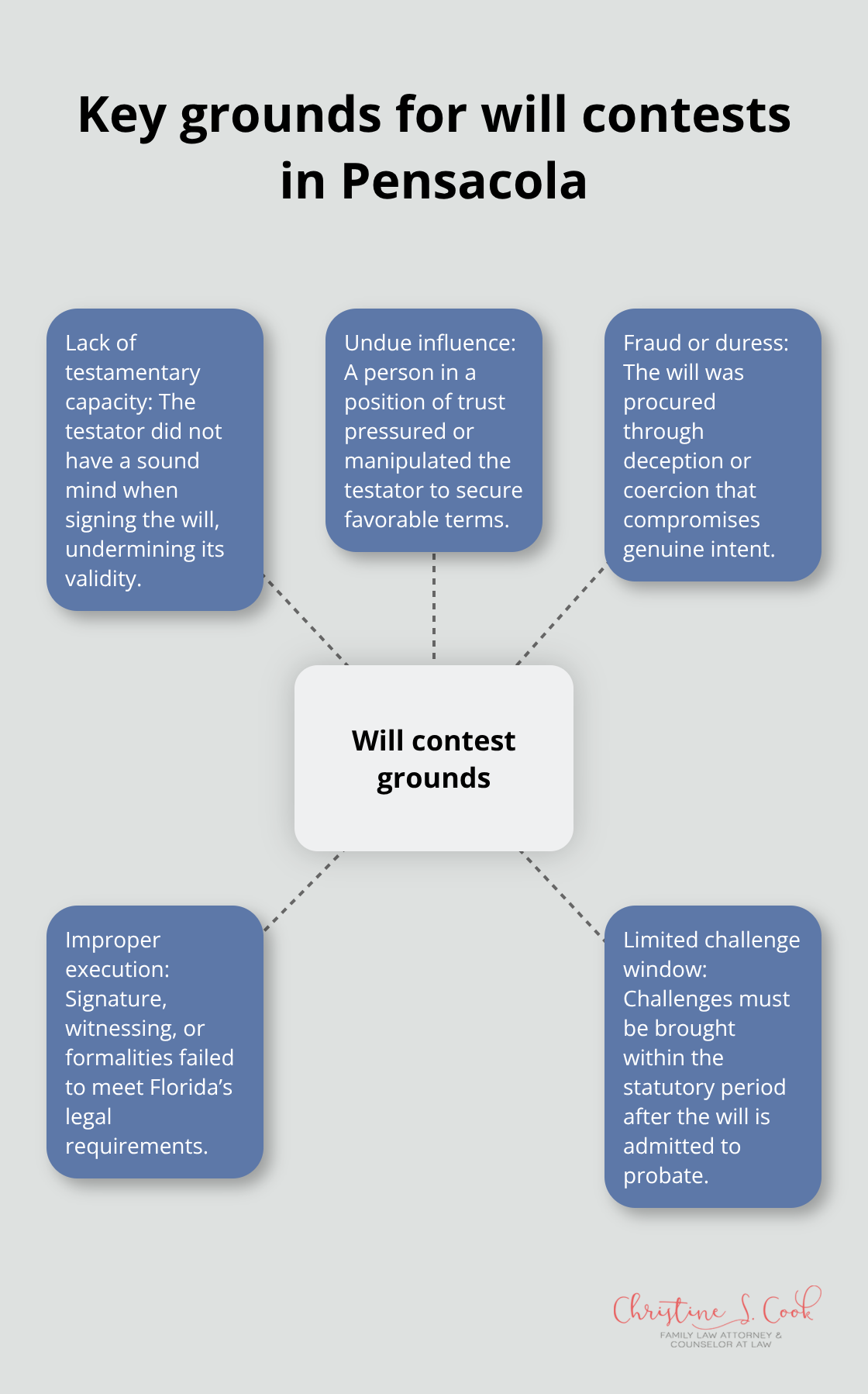
The grounds for these challenges include lack of testamentary capacity, meaning the person who signed the will didn’t have sound mind at the time, undue influence from someone close to the deceased, fraud, duress, or improper execution of the document itself. These cases often hinge on whether the testator truly understood what they were signing and whether someone pressured them into unfavorable terms.
Asset distribution disputes follow closely behind will contests as a reason cases reach court. Even when a will exists and appears valid, families disagree over how property should be divided, how assets should be valued, or what the will language actually means. Florida’s homestead exemption rules, elective share rights, and family allowance provisions add layers of complexity that trigger disputes. A surviving spouse might claim elective share rights that override certain distributions, or beneficiaries might contest the valuation of a family business or real estate.
Personal representative disputes create another significant category of probate litigation. Beneficiaries can petition to remove a personal representative under Florida Statutes § 733.504 when they suspect mismanagement, self-dealing, or conflicts of interest. A personal representative owes fiduciary duties to all beneficiaries, and violations of those duties can land the case in court.
Creditor claims disputes also push cases toward litigation. When creditors file claims against the estate, the personal representative must decide whether to pay or object. These disputes can extend timelines significantly and reduce what beneficiaries ultimately receive. Florida Statutes § 733.702 sets strict deadlines for creditor claims, typically three months after notice is published, but disagreements over claim validity spark courtroom battles.
Probate litigation in Pensacola happens when family members lose trust in the process or each other. Ambiguous will language, unclear asset valuations, and questions about someone’s mental state create openings for conflict. Early consultation with experienced probate counsel who understands Pensacola’s local court procedures helps you map out a realistic strategy before emotions escalate further. Recognizing which issues typically lead to court helps you understand when professional guidance matters most-and what actually happens once your case enters the system.
Pensacola’s probate system operates through the Escambia County Court, where judges handle estate litigation according to Florida’s formal probate rules and local court procedures. The probate judge assigned to your case does not make decisions based on what feels fair to them personally-they apply Florida Statutes, interpret will language, and enforce creditor deadlines with strict consistency. This judge reviews filings, rules on motions, and ultimately decides contested matters if your case does not settle before trial. Probate judges in Florida counties develop patterns in how they interpret ambiguous will provisions or value disputed assets. Local counsel familiar with Pensacola’s probate bench can provide insight into which arguments resonate with your specific judge and which strategies waste time and money.
The formal probate process in Florida typically runs six to nine months from start to finish, though litigation can extend this timeline considerably depending on complexity and how aggressively parties pursue discovery. Your case begins with filing a petition and notice requirements that must reach all interested parties-beneficiaries, creditors, and anyone contesting the will.
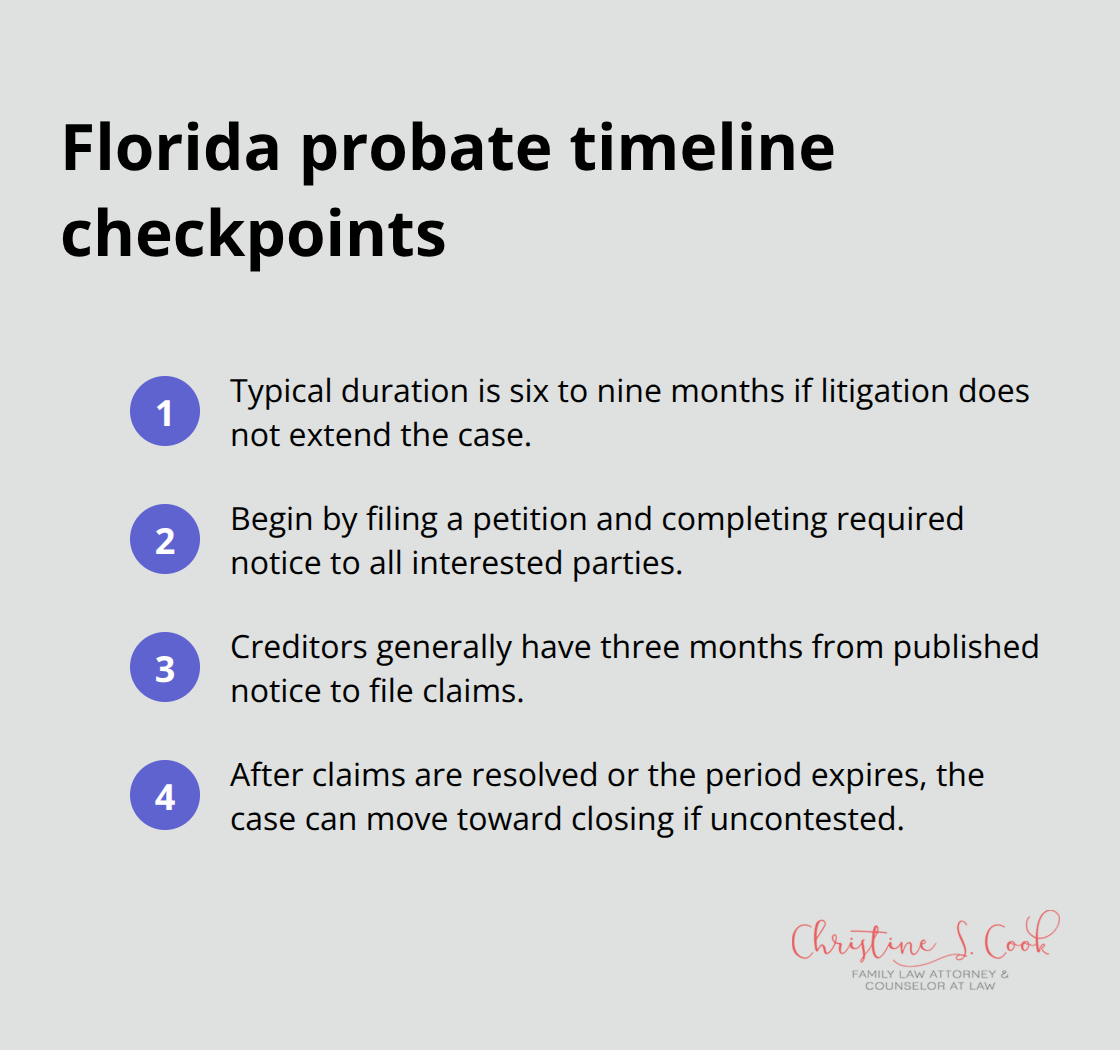
Creditors have three months from published notice to file claims, and this deadline creates a hard checkpoint in your timeline. Once creditor claims are resolved or the period expires, your case can move toward closing if no litigation is pending.
If disputes exist, discovery begins where both sides exchange documents, request financial records, and conduct depositions to build their arguments. Settlement negotiations often occur during this phase because litigation costs escalate rapidly once you move deep into discovery and expert valuations. If settlement fails, trial preparation requires you to organize evidence, prepare witnesses, and file pre-trial motions. Local Escambia County rules affect procedural requirements and filing deadlines, so missing court-imposed deadlines can derail your case entirely.
Filing requirements in Pensacola probate court demand precise compliance-your petitions must include specific language, proper notarization, and service on all required parties within statutory timeframes. These procedural rules protect everyone’s rights, but they remain unforgiving of mistakes. Understanding what happens during discovery and settlement negotiations helps you prepare for the actual work of litigation, where evidence and witness testimony determine outcomes.
Once your case enters discovery, the work becomes intensive and expensive. Both sides exchange documents, request financial records, and conduct depositions where witnesses answer questions under oath.
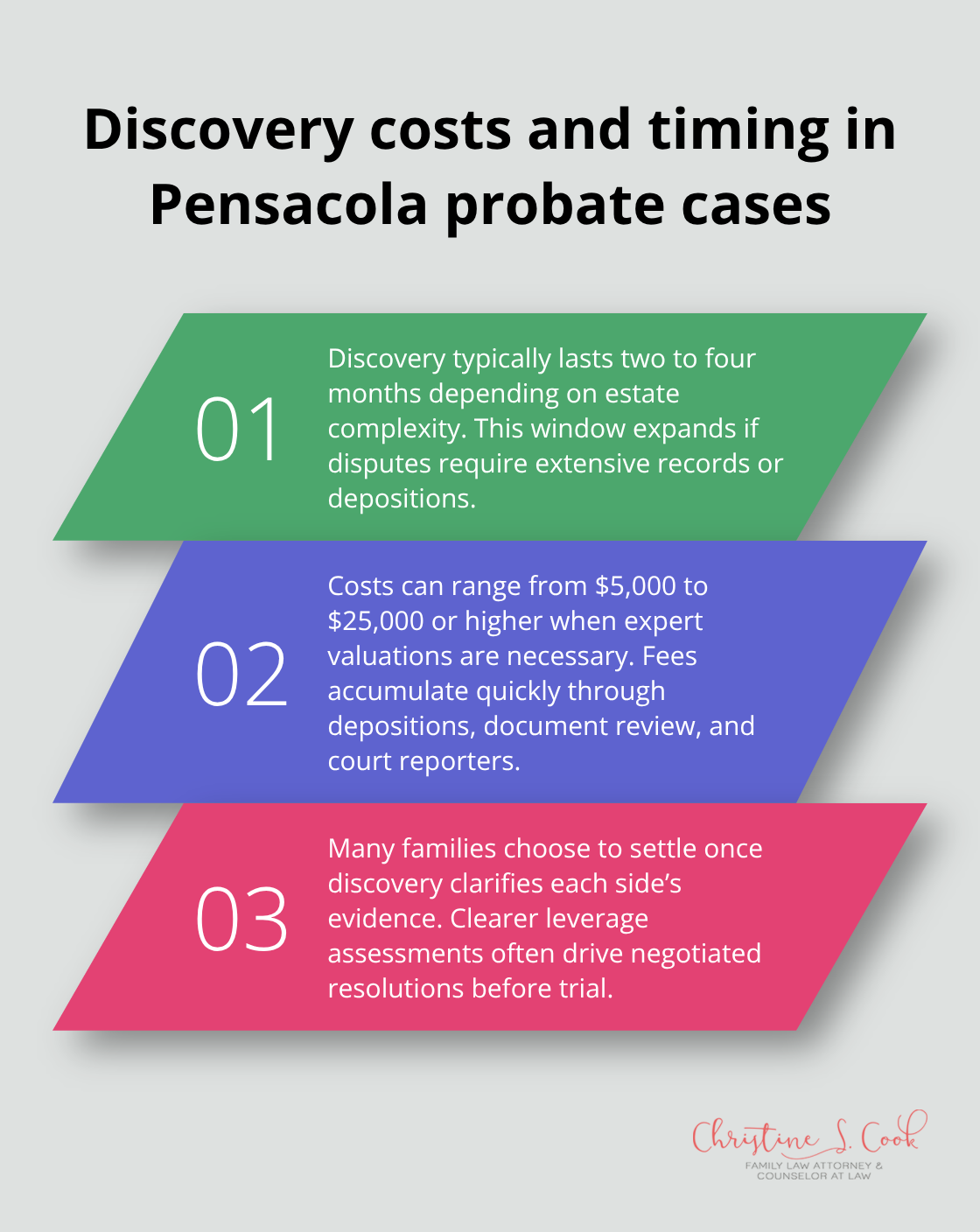
Discovery in probate cases typically lasts two to four months depending on estate complexity, and costs can range from $5,000 to $25,000 or higher when expert valuations are needed. This phase reveals what evidence each side actually possesses, and many families decide to settle once they understand the strength of the opposing position.
Settlement negotiations often accelerate during discovery because litigation costs multiply rapidly-expert witnesses for asset valuation, court reporter fees, and attorney time compound quickly. Mediation offers a structured alternative where a neutral third party helps both sides reach agreement without trial, and many Pensacola cases resolve through mediation rather than proceeding to courtroom battles. Settlement discussions tend to be most productive when both sides have invested enough in discovery to understand their actual leverage, typically three to five months into litigation.
Trial preparation demands meticulous organization if your case doesn’t settle. You must organize exhibits, prepare witness testimony, and file pre-trial motions that address procedural issues before the judge. Escambia County’s local court rules impose specific formatting requirements for motions and may require pre-trial conferences where the judge meets with attorneys to narrow contested issues. Trial itself in probate cases typically lasts one to three days for straightforward disputes, though complex asset valuation cases or will contests involving mental capacity questions can extend longer.
Judges decide probate litigation cases rather than juries, which means your arguments must focus on how Florida law applies to your specific facts rather than emotional appeals. Local attorneys who practice in Pensacola probate court understand which arguments judges in Escambia County find persuasive and which procedural shortcuts save time and money. This local knowledge provides a significant advantage when you navigate the specific expectations and preferences of your assigned judge.
Probate litigation in Pensacola demands clear understanding of what you face and realistic expectations about timelines and costs. The cases that reach court typically involve will validity questions, asset distribution disagreements, personal representative conflicts, or creditor claim disputes-each follows Florida law strictly, and judges in Escambia County apply statutes consistently regardless of family circumstances. Settlement negotiations often provide the most practical path forward because discovery costs money and time, and trial preparation requires meticulous organization if your case proceeds to the courtroom.
You should seek legal representation early in any probate dispute rather than waiting until emotions escalate or deadlines pass. Florida’s statutory deadlines for will contests, creditor claims, and other probate matters don’t bend for families who didn’t understand the rules, and an attorney familiar with Pensacola’s local court procedures can evaluate your case’s actual strength and guide you toward settlement or trial with realistic cost projections. Early consultation costs far less than fixing procedural mistakes or missing critical deadlines.
Litigation outcomes are final in most cases, and you cannot undo a judge’s decision on will validity or asset distribution without grounds for appeal. This reality makes settlement negotiations during litigation far more valuable than many families initially recognize, and working with experienced counsel from Christine S. Cook, LLC in Pensacola ensures you understand your options and make informed decisions about your family’s estate and future.