A living will is one of the most important documents you’ll ever create, yet many Floridians put it off or get it wrong. Without clear healthcare directives in place, your family could face agonizing decisions during your most vulnerable moments.
At Christine Sue Cook, LLC, we’ve seen firsthand how the right living will Florida tips can spare families from confusion and conflict. This guide walks you through everything you need to know to protect your wishes and your loved ones.
A living will is a written legal document that tells doctors and hospitals what medical care you want if you can’t speak for yourself. Under living wills under Florida Statutes Chapter 765, it specifically addresses end-of-life treatment decisions when you’re incapacitated and facing a terminal condition, end-stage condition, or persistent vegetative state with no reasonable probability of recovery. This isn’t about naming someone to handle your finances or property; it’s purely about your medical wishes during your final chapter.
Florida law distinguishes living wills sharply from other documents. A health care surrogate designation appoints a person to make decisions for you, but without a living will, that surrogate has to guess what you’d want. A durable power of attorney handles money and legal matters. A last will and testament divides your property after death. Your living will works in real time during a medical crisis, instructing physicians whether to use life-prolonging procedures like ventilators, feeding tubes, dialysis, or CPR.
The form itself is straightforward-Florida provides an optional template in the statutes-but the decisions behind it matter enormously. You initial boxes indicating whether your directive applies to terminal conditions, end-stage conditions, or persistent vegetative states, and you can add additional instructions about pain management, organ donation, or specific treatments you refuse or accept.
Florida’s demographics demand serious attention to living wills. With Florida’s senior population demographics among the largest in the nation, Florida has the second-largest senior population. That concentration means hospitals, nursing homes, and emergency rooms regularly face families struggling through end-of-life decisions without clear direction.
Without a written living will, Florida law defaults to a hierarchy of decision-makers: your surrogate if you named one, then a spouse, adult children, parents, or siblings. This creates delays and potential conflict when multiple family members disagree about what you’d want. The stress of making life-or-death decisions while grieving is real, and families often report guilt years later about choices made in those moments. A living will removes that burden by making your preferences explicit before a crisis arrives.
Your document also protects doctors and hospitals. Physicians need legal protection to withhold or withdraw life-prolonging procedures, and your written directive provides that protection under Florida law. Without it, some medical teams become overly cautious, continuing aggressive treatment even when you’d want comfort care instead.
You should update your living will every three to five years, after major life changes like marriage, divorce, serious illness, or relocation, ensuring it always reflects your current values and medical situation. These updates matter because your preferences shift as your health and circumstances change. The next section covers the specific components you need to include to make your living will legally sound and truly reflective of what matters most to you.
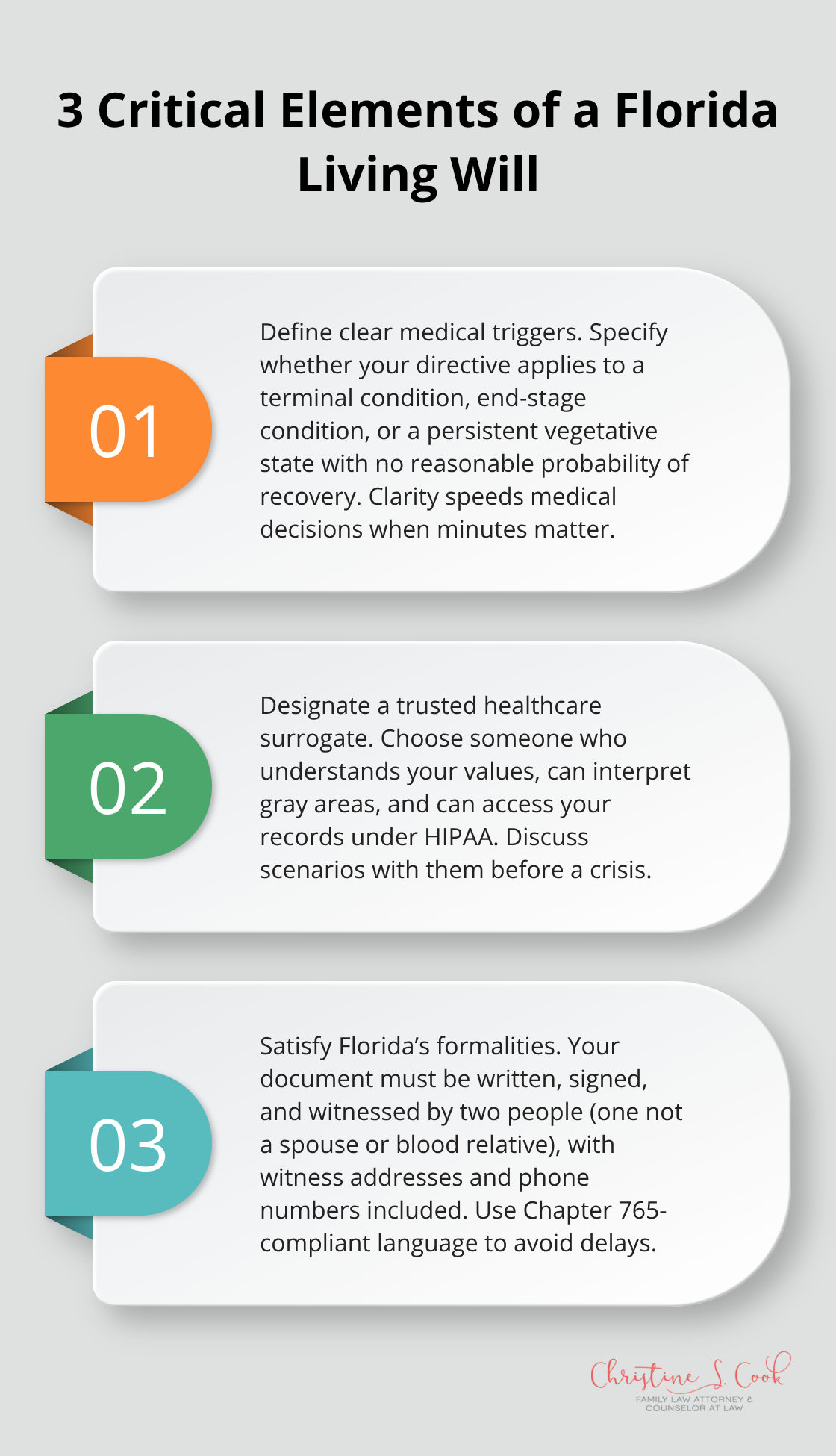
Your Florida living will requires three critical elements to function when it matters most. First, you specify which medical scenarios trigger your directive: terminal condition, end-stage condition, or persistent vegetative state with no reasonable probability of recovery under Chapter 765. This specificity matters because vague language creates delays when doctors need immediate clarity. Second, you name a healthcare surrogate-someone you trust completely to interpret your wishes if circumstances shift in ways your written document doesn’t cover. Florida law requires this person to have proper credentials and authority, and hospitals may ask them to verify they understand your HIPAA privacy rights and can access your medical records. Third, you must meet Florida’s strict legal requirements: your document must be written, signed by you, witnessed by two people (at least one cannot be your spouse or blood relative), and each witness must provide their address and phone number. Many people fail this step by using generic online templates that don’t include proper witness language or Florida-specific language about Chapter 765 compliance.
Your surrogate’s role extends far beyond simply reading your living will aloud. They interpret your values in real time during medical crises, decide whether experimental procedures align with your wishes, and advocate for comfort care when aggressive treatment contradicts your preferences. This is why you must choose someone emotionally equipped for these decisions and explicitly discuss your wishes with them before a crisis arrives. Give them a signed copy of your living will, discuss specific scenarios like whether you’d accept a feeding tube temporarily during recovery or never under any circumstances, and confirm they’re willing to potentially disagree with other family members if necessary to honor your actual preferences.
Florida law requires you to be explicit about pain management and end-of-life care preferences: state clearly whether you want pain medications even if they dull consciousness or might indirectly shorten life. Without this statement, doctors may withhold effective pain relief out of caution. Similarly, address organ donation and autopsy preferences directly in your directive to prevent unwanted procedures after death. The document should reference HIPAA and related privacy laws explicitly so hospitals understand your surrogate can access medical records without delay.
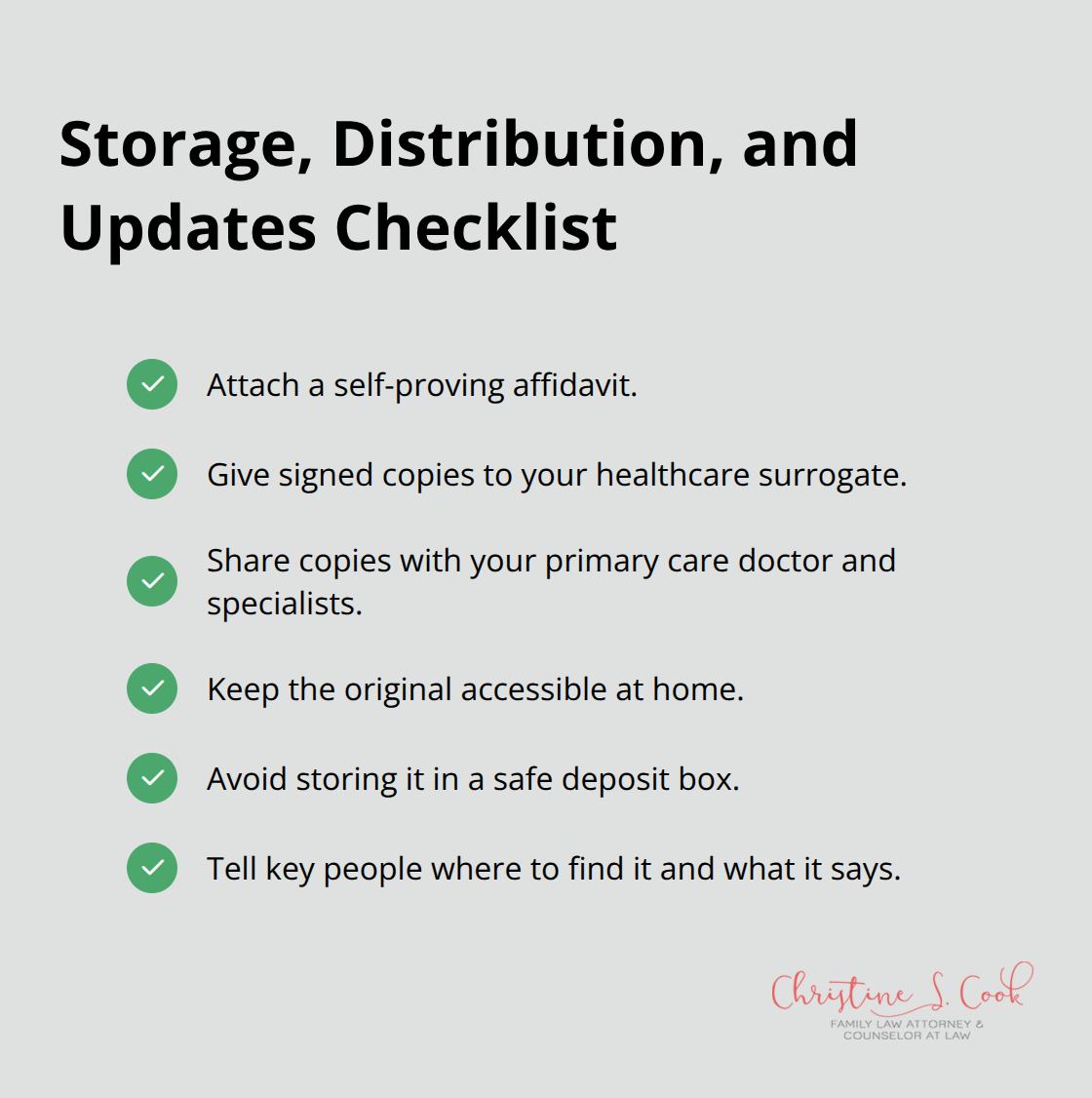
Make your directive self-proving by attaching a self-proving affidavit-this simplifies future verification and removes obstacles when your surrogate needs to act quickly. Distribute signed copies immediately to your healthcare surrogate, primary care doctor, specialists, and keep the original accessible in your home, not locked away in a safe deposit box where it takes days to retrieve during an emergency. Your living will only protects everyone involved when the right people can find it and understand it at the moment they need it most. The next section addresses the common mistakes that undermine even well-intentioned documents and how to avoid them.
The gap between creating a living will and actually using it destroys more family relationships than you’d expect. You can have a perfectly drafted document sitting in a drawer, but if your family doesn’t know what’s in it or where to find it, that document becomes worthless the moment you need it most. Families face paralysis during medical emergencies because they simultaneously search for a living will, argue about what a loved one would have wanted, and make life-or-death decisions under crushing time pressure. The reality is brutal: a living will only works when the people who need to act on it actually know about it and understand your specific wishes.
Too many people treat their living will like a secret insurance policy, something they complete and then never mention again. Your surrogate might not even remember you named them. Your doctor might have no idea the document exists. Your family could be completely unaware of your preferences about feeding tubes or CPR. This silence creates the exact situation your living will is supposed to prevent. The document sits in a drawer while your family makes decisions based on guesswork rather than your actual values. You must tell your surrogate, your doctor, and your closest family members that your living will exists and where they can find it immediately.
The second critical failure point is using documents that are either outdated or incomplete from the start. Generic online templates often miss Florida-specific requirements entirely. Documents created more than five years ago may not reflect your current health situation or values. Your living will isn’t a set-it-and-forget-it document. Life changes dramatically: you might have a health scare that shifts your perspective on aggressive treatment, you could move to a new state, you might change your mind about organ donation, or your designated surrogate could become unavailable. Documents created without professional review have higher failure rates when hospitals need to implement them because they lack the legal precision or Florida statutory language that ensures immediate compliance.
You need to review your living will every three to five years minimum, and immediately after any major life event like a serious diagnosis, marriage, divorce, or relocation. When you update your document, send the revised version to everyone who has a copy and explicitly state that it supersedes all prior versions. Without that clear communication, your old living will could still be sitting in your doctor’s file while you’re trying to implement a completely different set of wishes.
The practical step most people skip is actually discussing their living will with their healthcare surrogate before a crisis arrives. Don’t just hand them a document and assume they understand. Walk through specific scenarios: if you have advanced dementia with no hope of recovery, do you want tube feeding or comfort care only? If your heart stops, do you want CPR even knowing your chances of full recovery at age 80 with multiple health conditions are under 2% according to medical literature?
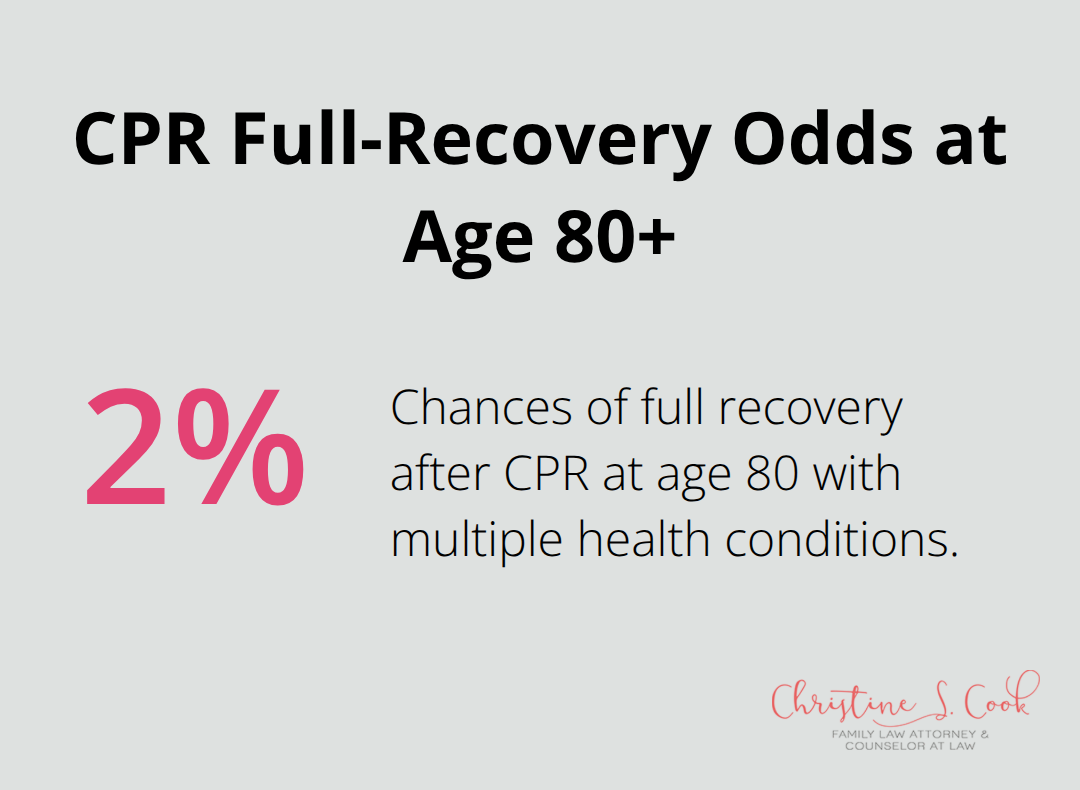
These conversations clarify your wishes and prepare your surrogate emotionally for the decisions they may need to make on your behalf.
Creating a living will requires more than filling out a generic online form-Florida’s statutory requirements under Chapter 765 demand precision, and mistakes cost families dearly when they need your document to work. An estate planning attorney reviews your specific health situation, discusses your actual preferences about pain management and end-of-life care, and drafts language that eliminates ambiguity when doctors need immediate clarity. We at Christine Sue Cook, LLC help families across Florida create healthcare directives that hospitals honor without delay or question.
Your living will Florida tips mean nothing if the document lacks proper witness signatures or sits unsigned in a drawer. Florida requires two witnesses (at least one unrelated to you) with their addresses and phone numbers included, and an attorney ensures this happens correctly the first time. They also integrate your living will with a healthcare surrogate designation and HIPAA authorization so your complete incapacity plan works together seamlessly.
After your living will is signed, storage and distribution matter as much as the document itself. Keep your original accessible at home, provide signed copies to your healthcare surrogate and primary care doctor, and update it every three to five years or after major life changes.
Contact Christine Sue Cook, LLC for a free consultation to discuss your estate planning needs and create a living will that actually protects your wishes and your family.