Probate in Florida can feel overwhelming, especially when you’re grieving the loss of a loved one. At Christine Sue Cook, LLC, we’ve helped countless families navigate Florida probate rules and procedures with clarity and confidence.
This guide breaks down what you need to know about probate in Florida, recent changes to the law, and practical steps to protect your estate.
Probate is the court process that transfers assets owned by a deceased person to the rightful beneficiaries or heirs. In Florida, this process handles bank accounts, real estate, vehicles, and personal property unless a named beneficiary or rights of survivorship bypass probate entirely. The court validates the will if one exists, identifies and collects assets, pays debts and taxes, and distributes what remains to those entitled to inherit. Florida Statutes Chapters 731 through 735 govern this process, and it matters because without probate, no legal mechanism exists to transfer title to real estate or settle disputes about ownership. The court supervises the entire operation through the clerk of the circuit court and a circuit court judge.
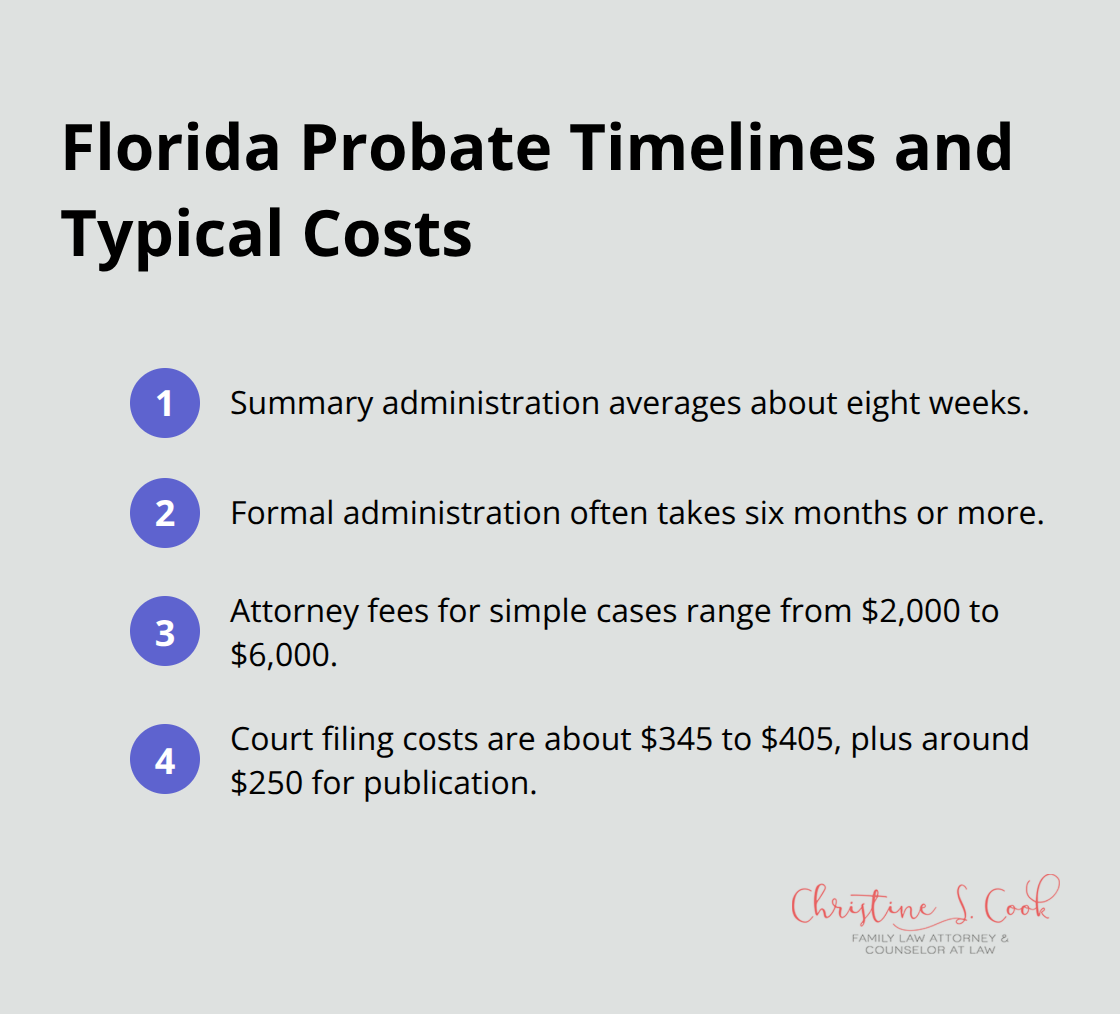
Many people assume probate is always expensive and slow, but Florida offers expedited options for smaller estates. Summary administration applies to estates under $75,000 in non-exempt assets or estates where the person died more than two years ago. This path takes roughly eight weeks for uncontested cases compared to six months or longer for formal administration. Probate costs vary widely based on estate complexity, with simple cases sometimes costing $2,000 to $6,000 in attorney fees plus court filing fees around $345 to $405 and publication costs around $250.
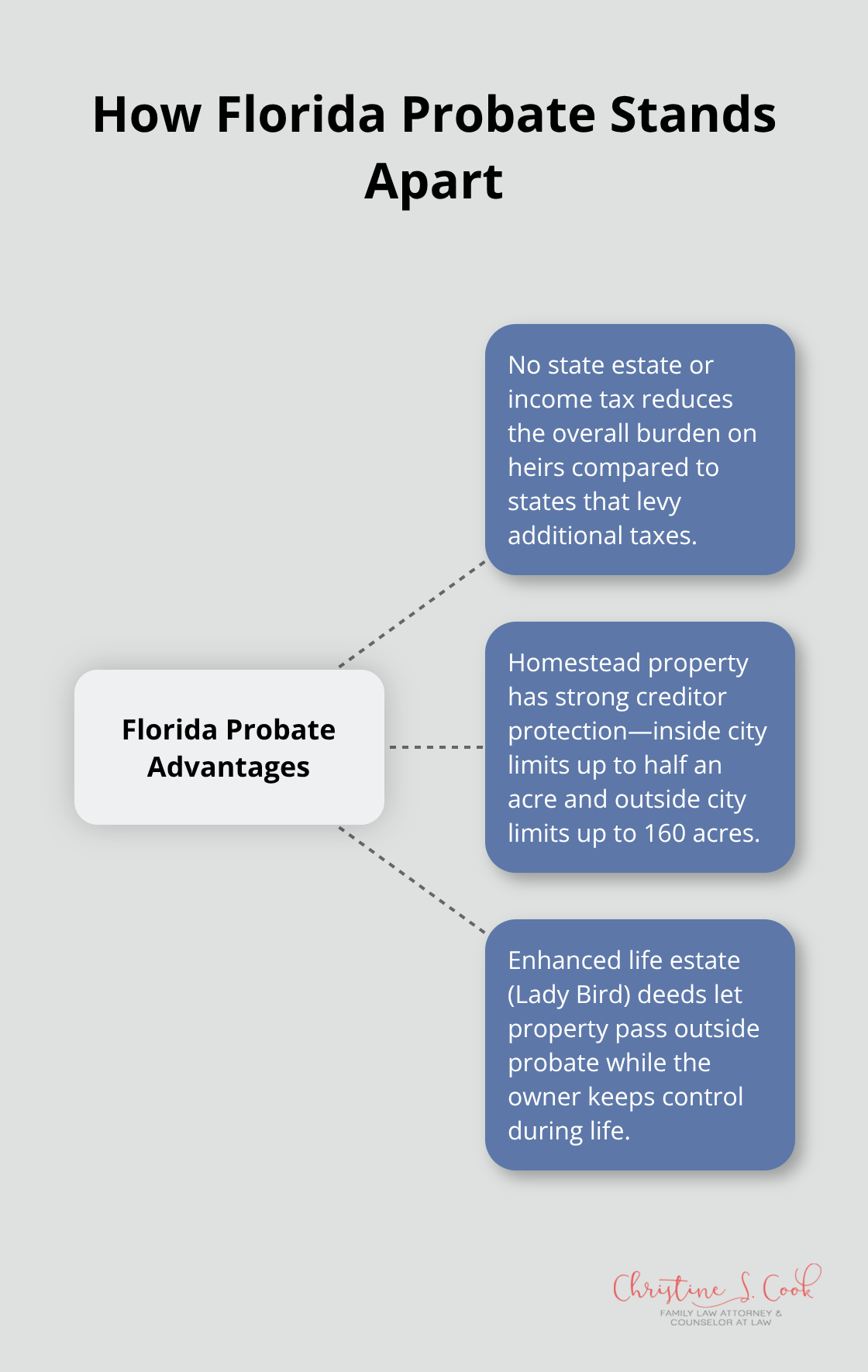
Florida’s probate system differs significantly from other states in three ways that affect your wallet and timeline. First, Florida imposes no state estate or income tax, which reduces the overall tax burden on heirs compared to states like New York or Massachusetts that impose additional taxes. Second, Florida’s homestead property receives extraordinary creditor protection: inside city limits up to half an acre, outside city limits up to 160 acres. This protection means creditors cannot seize homestead property to pay estate debts, and a surviving spouse with minor children receives a life estate in the homestead while descendants inherit the remainder. Third, Florida recognizes enhanced life estate deeds (often called Lady Bird Deeds), which allow property to pass outside probate while the owner retains control during their lifetime.
One common misconception is that a will avoids probate entirely, but in Florida a will actually triggers probate because the court must admit it to probate and validate it before distribution occurs. Another misconception is that probate always takes years; in reality, simple estates with uncontested wills often close within five to six months, though complex estates with disputed claims or multiple properties can extend longer. A third misconception is that probate costs are fixed; fees vary widely based on estate complexity and the specific circumstances of each case.
Understanding what probate does in Florida sets the foundation for recognizing how recent legislative changes affect your timeline and responsibilities. The 2025 amendments to Florida probate law introduce new requirements that directly impact how executors and personal representatives must handle digital assets, inventory deadlines, and electronic documentation.
Florida’s 2025 probate amendments directly affect how you handle digital assets, manage inventory deadlines, and process estate documents. The Florida Probate Rules Committee approved changes that took effect January 1, 2025, and they matter because they create new obligations for executors and personal representatives who miss them risk court sanctions or delays. The most significant change requires personal representatives to list digital assets in probate documentation, expanding beyond traditional bank accounts and real estate to include cryptocurrency, online banking passwords, social media accounts, and email archives. This shift reflects reality: most people hold valuable assets online now, and ignoring them creates administrative chaos.
The 2023 amendments tightened inventory deadlines to exactly 30 days from appointment, meaning your personal representative must compile a complete asset list within one month or face court orders to comply. A personal representative appointed today cannot wait weeks to gather assets or delay notifying creditors because the 30-day inventory window is inflexible. If your estate includes cryptocurrency or online accounts, the personal representative must identify and secure those assets immediately, requiring knowledge of digital platforms and access protocols that traditional probate training never covered.
Electronic signatures on certain estate documents became permitted under the 2023 rules, streamlining paperwork that previously required original signatures and overnight shipping. The 2025 amendments further modernized the process by requiring electronic service of formal notice to attorneys, eliminating the delays inherent in traditional mail service to lawyers. The electronic service requirement for attorneys accelerates notice delivery but assumes your personal representative has email addresses for all relevant lawyers, creating a hidden administrative burden.
Foreign-language wills now require certified translations under the 2025 rules, preventing disputes over document authenticity when the original will is in Spanish, French, or another language. If a will exists in a language other than English, securing a certified translation before filing adds time and cost upfront but prevents later court challenges.
Courts expect personal representatives to work with wills and trusts attorneys who understand the 2025 rules, making professional guidance not optional but essential for compliance. These amendments collectively signal that Florida’s probate system now operates faster and demands more from personal representatives than it did in 2024. The compressed timeline for straightforward estates requires precision from personal representatives who must understand new digital asset protocols and accelerated deadlines. Understanding these specific 2025 changes prepares you for the practical steps required to file for probate in Florida courts and navigate the documentation that courts now demand.
The moment a will arrives at the clerk of the circuit court within ten days of death, your probate timeline officially starts. Florida Statute 733.212 requires the personal representative to mail notices to beneficiaries while simultaneously publishing Notice to Creditors in a local newspaper weekly for two consecutive weeks. This dual notification process is not optional-courts enforce these deadlines strictly, and missing either one creates personal liability for the personal representative. Filing for Probate in Florida requires your personal representative to compile a complete list of all assets within one month of appointment by the court. Filing the petition for administration with the Circuit Court triggers Letters of Administration, which formally authorize your personal representative to act. The filing fee ranges from $345 to $405 depending on county, and notice publication typically costs around $250. Simple uncontested cases with clear wills move through this stage in four to six weeks, but estates with multiple properties, disputed claims, or digital assets requiring forensic analysis take considerably longer. Your personal representative cannot distribute a single dollar to beneficiaries until the court approves the petition and issues Letters of Administration, making this initial filing phase the gatekeeper for everything that follows.
Courts in Florida demand specific forms and documentation that vary slightly by county, and submitting incomplete paperwork forces your personal representative to refile, adding weeks to the timeline. The petition for administration must include the original will or a certified copy, the death certificate, proof of publication for the Notice to Creditors showing the newspaper published the notice weekly for two consecutive weeks, and an oath signed by the personal representative acknowledging their fiduciary duties. The 2025 amendments require certified English translations for any will originally written in another language, and securing certified translators quickly prevents delays months later when courts demand translations. The inventory form must list every asset with its estimated fair market value as of the date of death, and digital assets now require explicit documentation showing account names, access information, and estimated values.
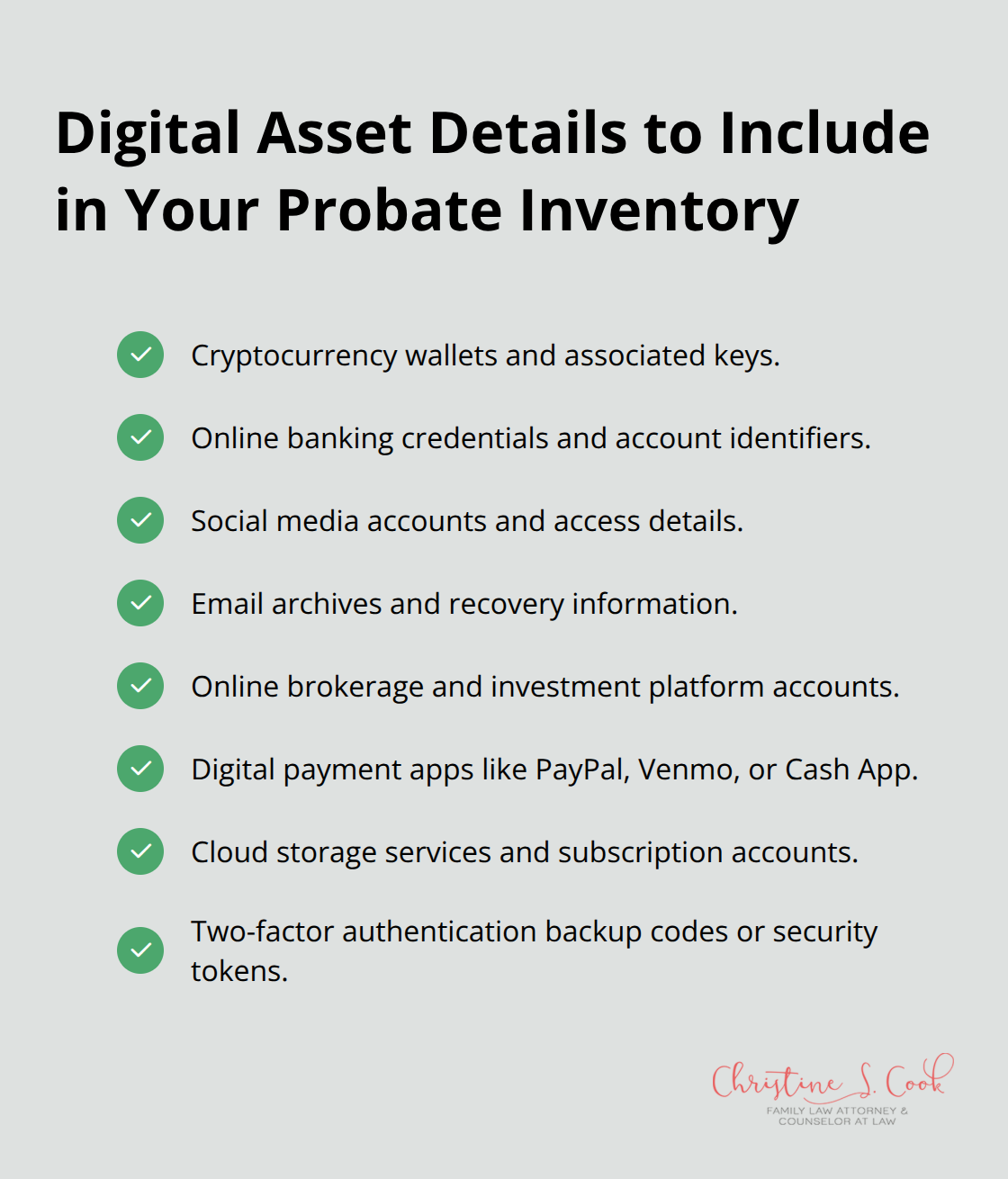
Many personal representatives underestimate the complexity of asset documentation and delay filing, which directly extends the probate timeline and increases costs. Courts expect the inventory within 30 days of appointment, meaning your personal representative needs organized asset records from the start, not weeks into administration. If your decedent maintained cryptocurrency, online brokerage accounts, or digital payment systems like PayPal, the personal representative must identify these holdings and secure them immediately-a task that requires technical knowledge most people lack without professional guidance. Personal representatives who attempt to compile assets haphazardly face court orders to comply and potential sanctions for missing the 30-day deadline.
Florida probate rules and procedures demand precision, but understanding them removes the mystery from a process that feels overwhelming when you’re grieving. The 2025 amendments accelerated timelines and expanded documentation requirements, forcing personal representatives to identify digital assets within 30 days and secure certified translations for foreign-language wills. These changes reflect reality-most people hold assets online now, and probate administration must adapt accordingly.
The strongest protection against probate complexity is planning ahead with revocable living trusts, beneficiary designations on retirement accounts and life insurance policies, and enhanced life estate deeds for real property. Joint ownership with rights of survivorship transfers property automatically to surviving owners without court involvement, while payable-on-death accounts and transfer-on-death designations bypass probate entirely. These strategies cost far less than probate administration and keep your estate details private instead of exposing them to public court records.
We at Christine Sue Cook, LLC recommend scheduling a consultation to assess your specific situation and determine whether probate avoidance strategies fit your goals. Our firm specializes in tailoring estate plans that honor your wishes while protecting your family from unnecessary court involvement (whether you need a comprehensive trust-based plan or targeted beneficiary designations). Contact us for a free consultation to discuss protecting your estate and ensuring your family navigates Florida probate rules with confidence.