A healthcare directive in Florida is one of the most important documents you’ll ever create, yet many people put it off or skip it entirely. Without one, your family and doctors won’t know what medical care you actually want if you can’t speak for yourself.
At Christine Sue Cook, LLC, we’ve seen firsthand how a clear healthcare directive brings peace of mind to families during their most difficult moments. Let’s walk through how to create one that truly reflects your values.
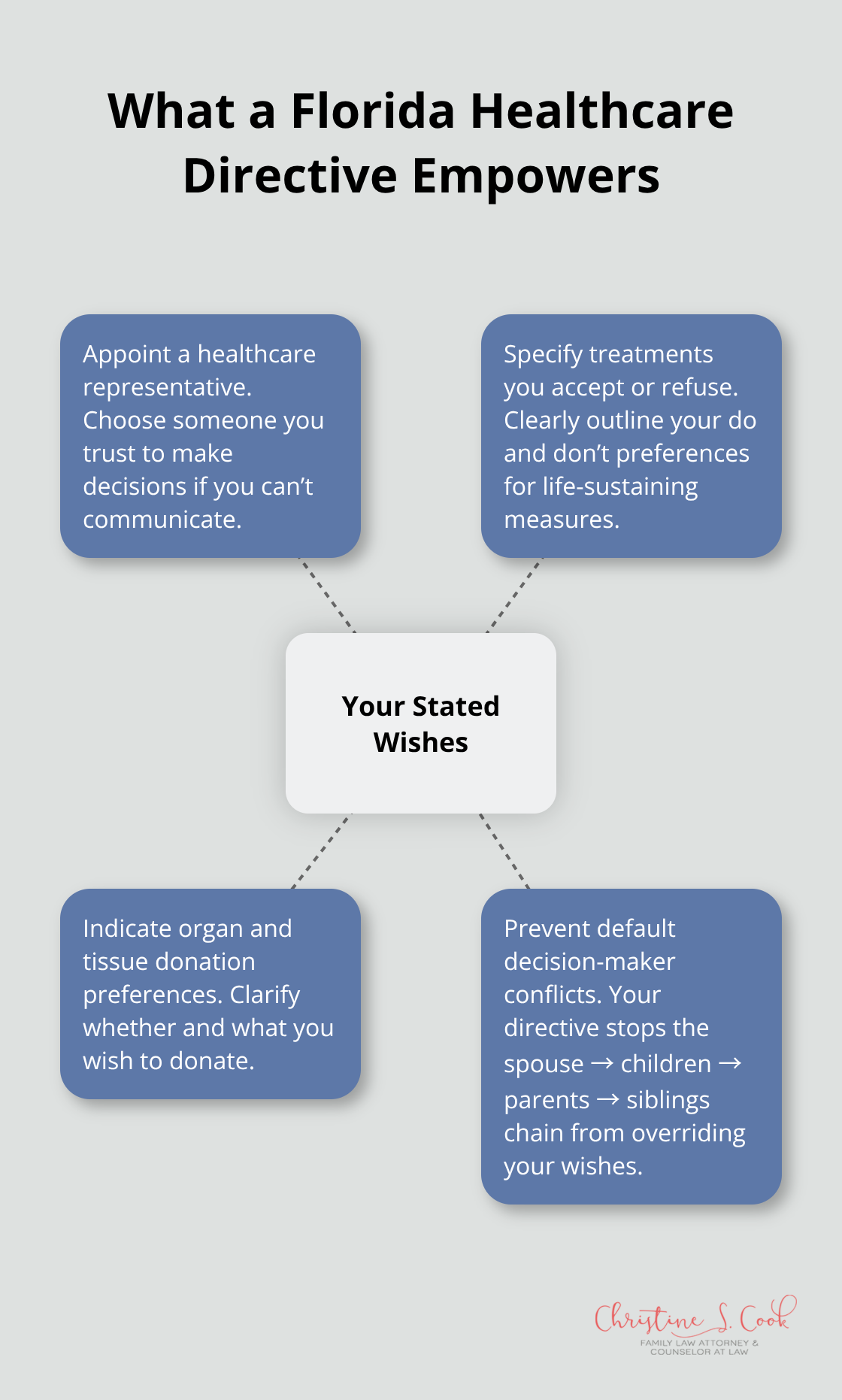
A healthcare directive in Florida is a legally binding document that gives your medical wishes teeth when you can’t communicate them yourself. Florida Statute 765.101 defines it as written instructions about your medical care, and it covers three main areas: naming someone to make decisions for you, specifying what treatments you do or don’t want, and indicating whether you wish to donate organs or tissues. Without this document, Florida law creates a default priority list for who decides your care, starting with your spouse, then adult children, then parents, then siblings. That chain often leads to family conflict and decisions that contradict what you actually wanted. With a directive, your voice remains in control; without one, the state’s rules determine who speaks for you.
Florida’s population includes over 4 million residents aged 65 and older, and many face serious illnesses or injuries that leave them unable to communicate. When hospitals and doctors lack clear directives, they default to aggressive life-sustaining treatment while families scramble to figure out your preferences. Florida law requires hospitals, nursing homes, and home health agencies to inform patients about advance directives, but that information alone doesn’t create the document you need. The state honors directives created in other states, which helps if you split time between Florida and another location, but a Florida-specific directive eliminates confusion about whether your out-of-state document meets Florida requirements. Families without proper directives often spend thousands on court-ordered guardianships that a simple healthcare directive would have prevented entirely.
Florida Statute Chapter 765 protects your right to self-determination in healthcare and shields healthcare providers from liability when they follow your directive in good faith. Your healthcare power of attorney can consent to or refuse treatment on your behalf, and you can place restrictions on their authority if certain decisions concern you. If a healthcare facility objects to your directive for moral or ethical reasons, Florida law requires them to transfer you to another facility that will honor your wishes and cover the transfer costs. The statute also prohibits anyone from coercing you into executing a directive or falsifying one to force unwanted treatment. This legal framework exists specifically to prevent the scenario where your family argues about your care while doctors wait for direction, and it applies whether you face a terminal illness, end-stage condition, or permanent vegetative state.
Now that you understand what a healthcare directive protects, the real work begins: identifying the right person to act as your healthcare representative and translating your values into specific medical preferences that your doctors and family can actually follow.
Your healthcare directive only works if it names the right person, spells out your actual medical preferences, and gives that person legal access to your medical information. Most people get one or two of these right and leave the third incomplete, which defeats the entire purpose.
The person you name as your healthcare representative needs to be someone who will actually follow your wishes even when family members disagree or emotions run high. This is not the time to pick someone because they’re the oldest child or the relative you see most often. You should choose someone who has already proven they can make difficult decisions without getting derailed by guilt or pressure from others.
Your representative should live close enough to reach you quickly if a medical emergency happens. They also need to be willing to have uncomfortable conversations with doctors and your other family members. Test this person’s resolve before you name them-ask them directly if they can honor your wishes even if other family members object.
Write down specific scenarios and your preferences for each one. If you suffer a massive stroke and can’t recognize anyone or communicate, do you want a feeding tube? If your heart stops, do you want CPR even if it means broken ribs and a machine breathing for you? If you develop severe dementia and can no longer recognize your own children, do you want antibiotics for infections or comfort care only?
These details matter far more than vague language about wanting natural death or quality of life. Your representative cannot guess what you mean by those phrases. The more specific you are about what treatments you accept or reject in particular situations, the more confidently your representative can act on your behalf when the time comes.
The HIPAA authorization in your healthcare directive is the piece that gets overlooked constantly, and it causes real problems. Without it, your healthcare representative cannot legally receive your medical records, speak with your doctors, or access test results even after you’ve named them to make decisions. Federal privacy law treats medical information as sacred, and hospitals will not share it with anyone except the patient unless explicit permission exists in writing.
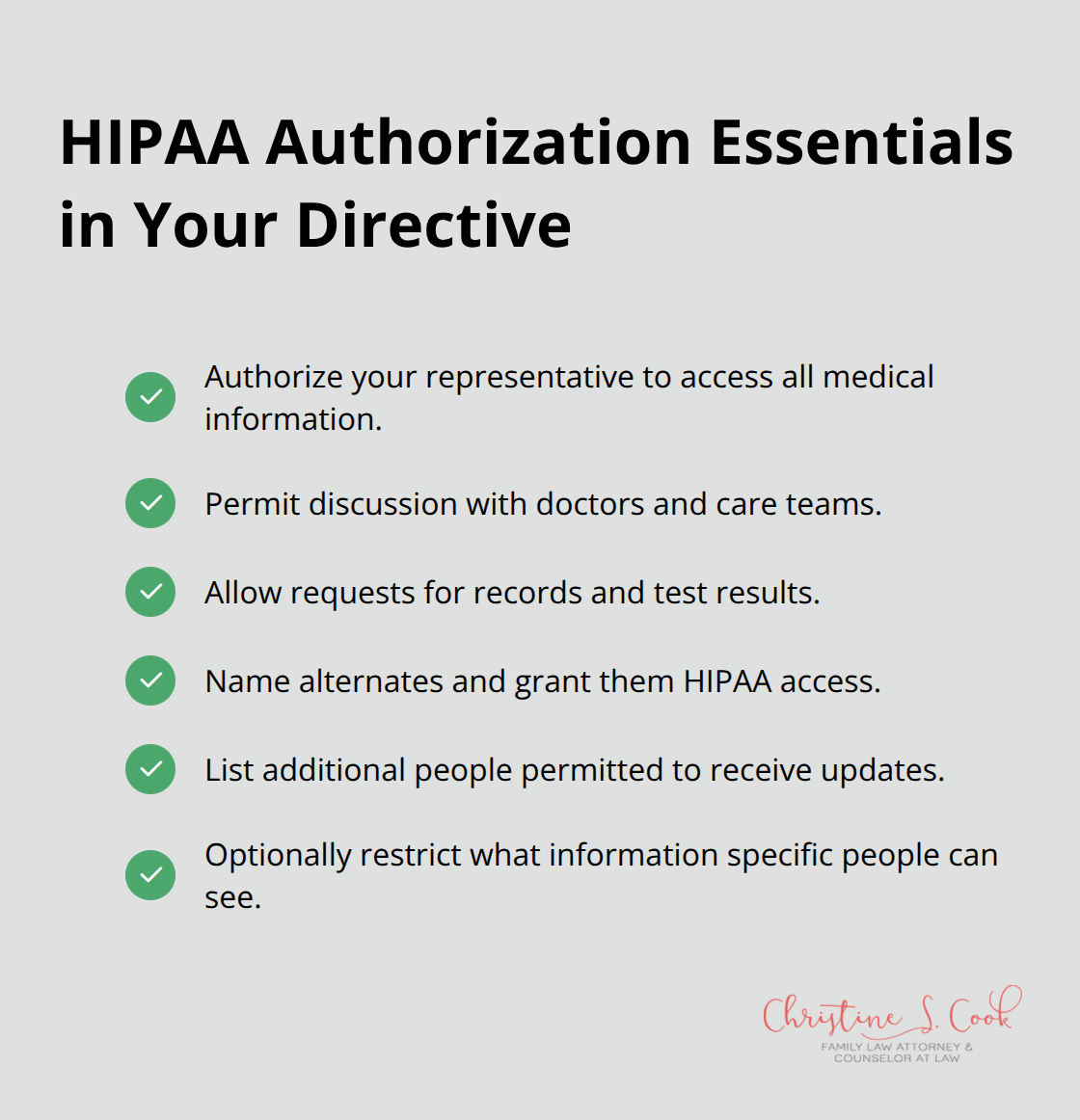
Your directive must include language authorizing your representative and your alternate representative to access all your medical information, request records, and discuss your condition with healthcare providers. If you have adult children who might need information or want to help, name them as alternates or add additional people with HIPAA authorization. Florida law allows you to restrict what information your representative can access if you want, though few people use that option.
Print copies of your completed directive and give them to your doctor, your hospital, your representative, and keep one in an easily accessible place at home. Carry a wallet card listing your representative’s name and phone number so paramedics or emergency room staff know someone has authority to make decisions for you immediately. Store the original in a secure location (such as a safe deposit box) and ensure your representative knows exactly where to find it.
The final step-and the one that separates effective directives from documents that sit in a drawer-involves actually talking to the people involved about what you’ve written.
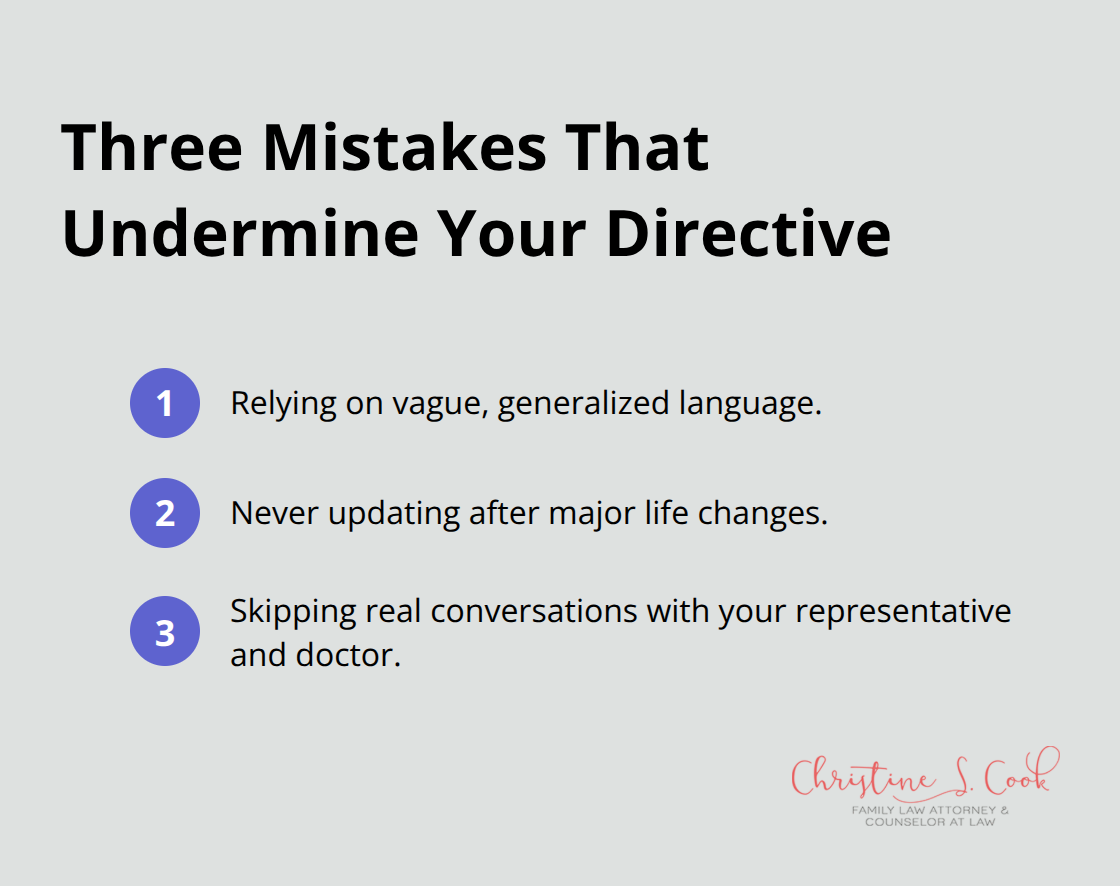
The gap between having a healthcare directive and having one that actually works often comes down to three preventable errors. The first mistake involves using language so general that your representative cannot act on it when the moment arrives. Phrases like wanting natural death or quality of life sound meaningful to you, but they mean different things to different doctors and family members. Your representative cannot walk into a hospital and say you wanted quality of life and expect staff to understand whether that means refusing a feeding tube in a specific scenario or accepting aggressive treatment for a few more months.
Instead of vague preferences, write out the actual medical situations you worry about. Specific medical scenarios in your directive help your representative and doctors understand your preferences in end-of-life situations when you can’t speak for yourself. If you suffer severe dementia and develop pneumonia, do you want antibiotics or comfort care only? If you have a massive stroke and cannot swallow, do you accept a feeding tube or refuse it? If your heart stops and CPR could break ribs, do you want doctors to attempt resuscitation? These concrete details transform your directive from a general statement into a document your representative and doctors can actually follow.
The second mistake involves creating a healthcare directive once and never touching it again, even after major life changes that should trigger an update. If you divorce and named your spouse as your representative, that designation does not automatically end after divorce unless you update the document to reflect your post-divorce wishes. If you have a new diagnosis, a significant health event, or your values shift over time, your old directive may no longer match what you actually want.
Update your directive when life changes to ensure your document reflects your current wishes. When you update, make sure the new document explicitly replaces the old one and reaches your doctor’s office, your representative, and anyone else holding a copy. This simple step prevents outdated instructions from contradicting your current wishes at a critical moment.
The third mistake involves completing your healthcare directive in isolation and never discussing it with the people who will carry it out. Your healthcare representative cannot do their job well if they discover your wishes only when you’re unconscious or dying.
Have an actual conversation with the person you named as your representative before you finalize the document. Walk through specific scenarios and explain your reasoning. If they hesitate or seem uncomfortable, that’s your signal to choose someone else. Tell your doctor that you have a healthcare directive and ask them to place a copy in your medical record. If you have adult children who might want to understand your preferences (even if they are not your representative), share the document with them and explain your thinking. This conversation prevents the chaos that erupts when family members disagree about your care and your representative struggles to defend decisions nobody else understands.
A healthcare directive in Florida protects your autonomy when you cannot speak for yourself, and it allows your family to honor your actual wishes instead of fighting about what you would have wanted. The work you do now-naming the right person, writing specific medical preferences, and talking honestly with your representative-directly determines whether your voice gets heard when medical decisions matter most. Start by writing down the scenarios that concern you most and your preferences for each one, then identify someone you trust completely to make decisions aligned with your values, even when family members disagree.
Share your completed directive with your doctor and ask them to place it in your medical record, carry a wallet card with your representative’s contact information, and store the original in a safe location where your representative knows to find it. Update the document whenever your life changes significantly-divorce, new diagnosis, or shift in values-and make sure the new version reaches everyone who holds a copy of the old one. These steps transform your healthcare directive from a document that sits in a drawer into one that actually protects you.
We at Christine Sue Cook, LLC help families throughout Florida create healthcare directives and estate plans that reflect what matters most to them. If you’re ready to protect your medical future and give your family clarity, contact us for a free consultation and we’ll walk you through the process without any financial pressure.