A living will Florida document gives you control over your medical care when you can’t speak for yourself. Without one, doctors and family members may face uncertainty about what you actually want.
At Christine Sue Cook, LLC, we’ve helped countless Florida families put their healthcare wishes in writing. This guide walks you through everything you need to know to protect your autonomy.
A living will is a legal document that tells doctors exactly what medical care you want or don’t want if you become unable to communicate. Under Florida Statutes 765.303, your living will directs that dying not be artificially prolonged when you face a terminal condition, end-stage condition, or persistent vegetative state. This isn’t about general healthcare preferences-it’s specifically about life-prolonging procedures like ventilators, feeding tubes, dialysis, and CPR when recovery is medically impossible.
Two physicians must determine there’s no reasonable probability of recovery before your living will takes effect, which means your document won’t override treatment for conditions where recovery is possible. Florida law also allows comfort care and pain relief to continue even as life-prolonging treatments are withheld or withdrawn, so your wishes prioritize your dignity and comfort during end-of-life care.
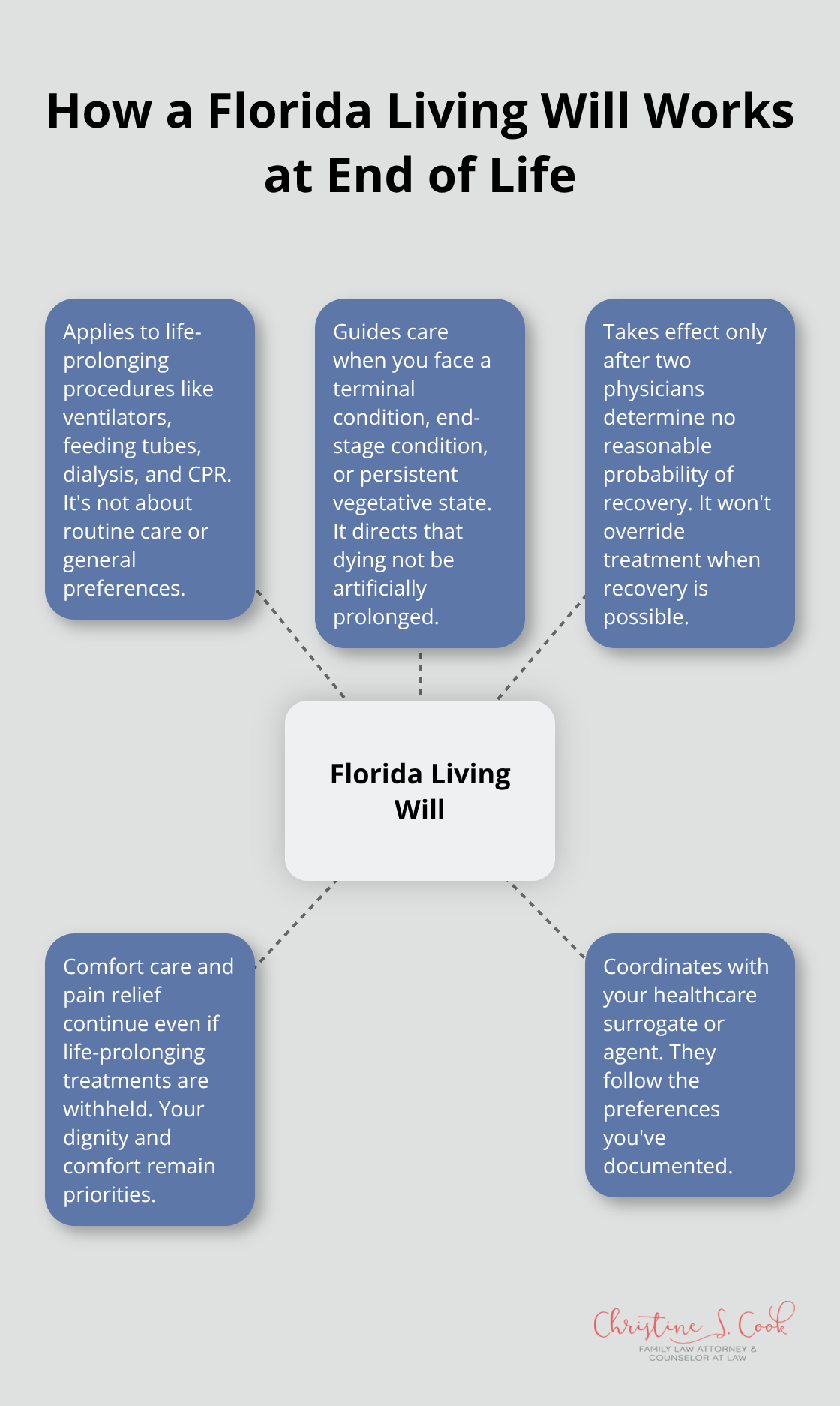
Florida distinguishes your living will from other estate planning documents because it addresses healthcare decisions, not financial or property matters. A healthcare surrogate designation names someone to make medical decisions on your behalf, while a durable power of attorney for healthcare gives a trusted person authority over medical choices during incapacity. Your living will works alongside these documents-the surrogate or agent follows the preferences you’ve written down in your living will.
Without a living will, Florida law allows decisions to fall to a court-appointed guardian, spouse, adult child, parent, or other relatives, potentially not reflecting your actual values. This uncertainty can create conflict among family members and leave your medical team without clear direction.
CPR outcomes underscore why clarity matters: survival rates following cardiac arrest in older adults remain low, with hospital survival rates not exceeding 28.5 percent. Writing down your preferences now means your family won’t face guilt or conflict later, and your medical team gets clear direction about your values regarding quality of life and medical intervention. Your living will prevents unwanted procedures that may cause suffering without offering meaningful recovery.
Understanding what your living will covers sets the stage for the specific medical scenarios you’ll address in your document.
Your living will must address specific medical situations so your healthcare team knows exactly what you want. Florida law allows you to specify your preferences for life-prolonging procedures, and the more detailed you are, the better your doctors can honor your wishes. You should clearly state whether you want ventilators, feeding tubes, dialysis, CPR, antibiotics, and surgery if you face a terminal condition or persistent vegetative state with no reasonable probability of recovery.
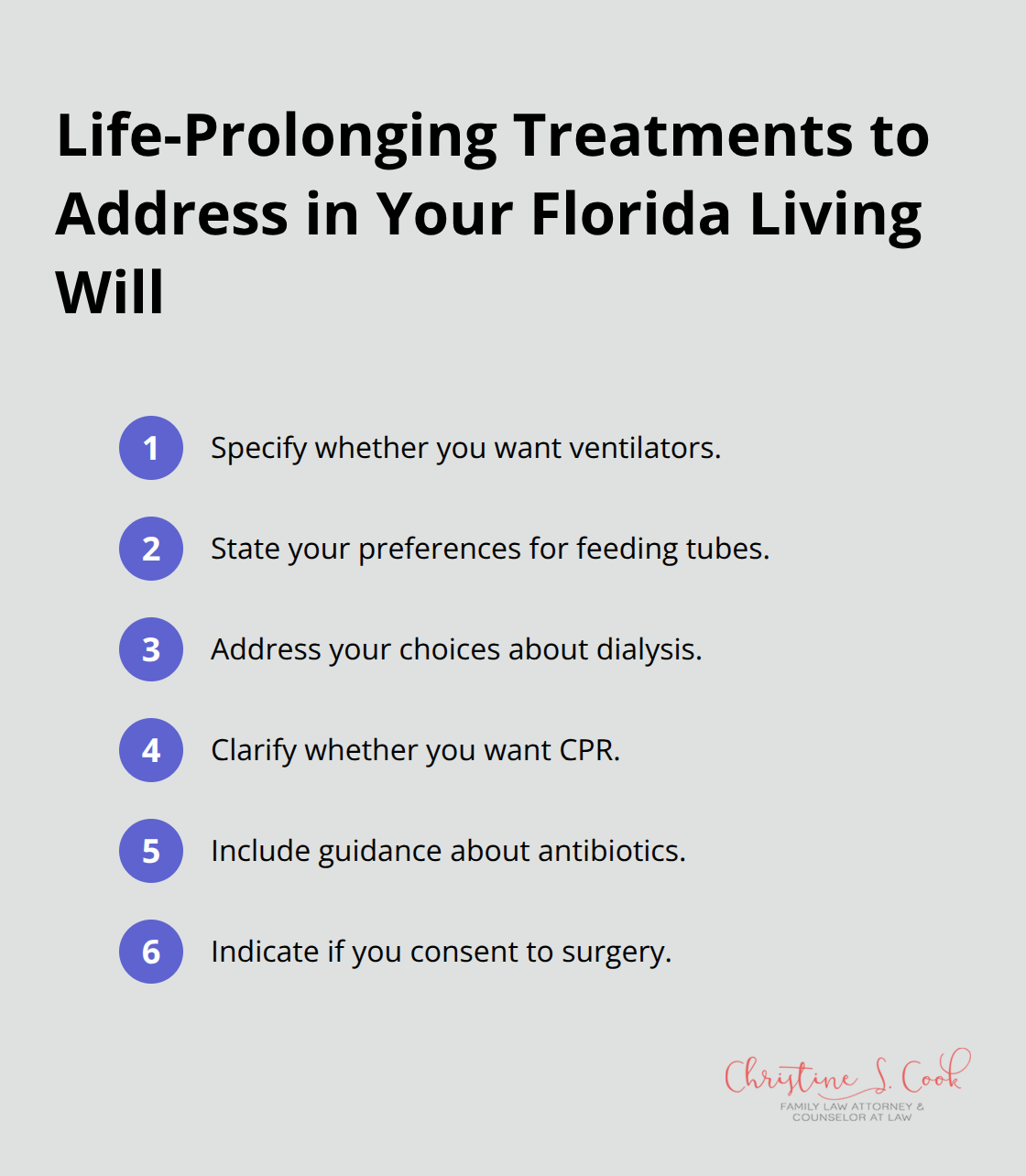
The Florida Agency for Health Care Administration provides an official Living Will form as a practical starting point, and using this form helps ensure Florida compliance and easier implementation by your medical team. When you complete the form, include explicit additional instructions beyond the standard options to reduce ambiguity for hospital staff and emergency responders. If you have strong feelings about pain management or comfort care versus aggressive intervention, write those preferences clearly so your healthcare surrogate and doctors understand your values about quality of life.
Your healthcare surrogate is the person who will advocate for your wishes when you cannot speak, making this the most important decision in your living will. You must select someone who understands your values, can handle difficult conversations, and will follow your instructions even when family members disagree. The person you name must be willing to take on this responsibility, so discuss your living will with them before you sign and make sure they know where you keep the document.
Florida law requires your surrogate to have accurate contact details on the form, so include their address and phone number and update this information if they move. Your surrogate cannot be your healthcare provider or anyone working at your healthcare facility, which prevents conflicts of interest and ensures your wishes drive medical decisions rather than institutional convenience.
Your healthcare surrogate needs a copy of your completed living will, and you should also provide copies to your primary care physician and any hospitals where you receive regular care. Your medical team must have clear instructions before an emergency occurs so they can act on your preferences immediately. When your doctors and surrogate have the same document, they work together to honor your actual wishes rather than making assumptions about what you might want.
With your living will in place and your surrogate informed, you’re ready to learn how to create and execute your document properly under Florida law.
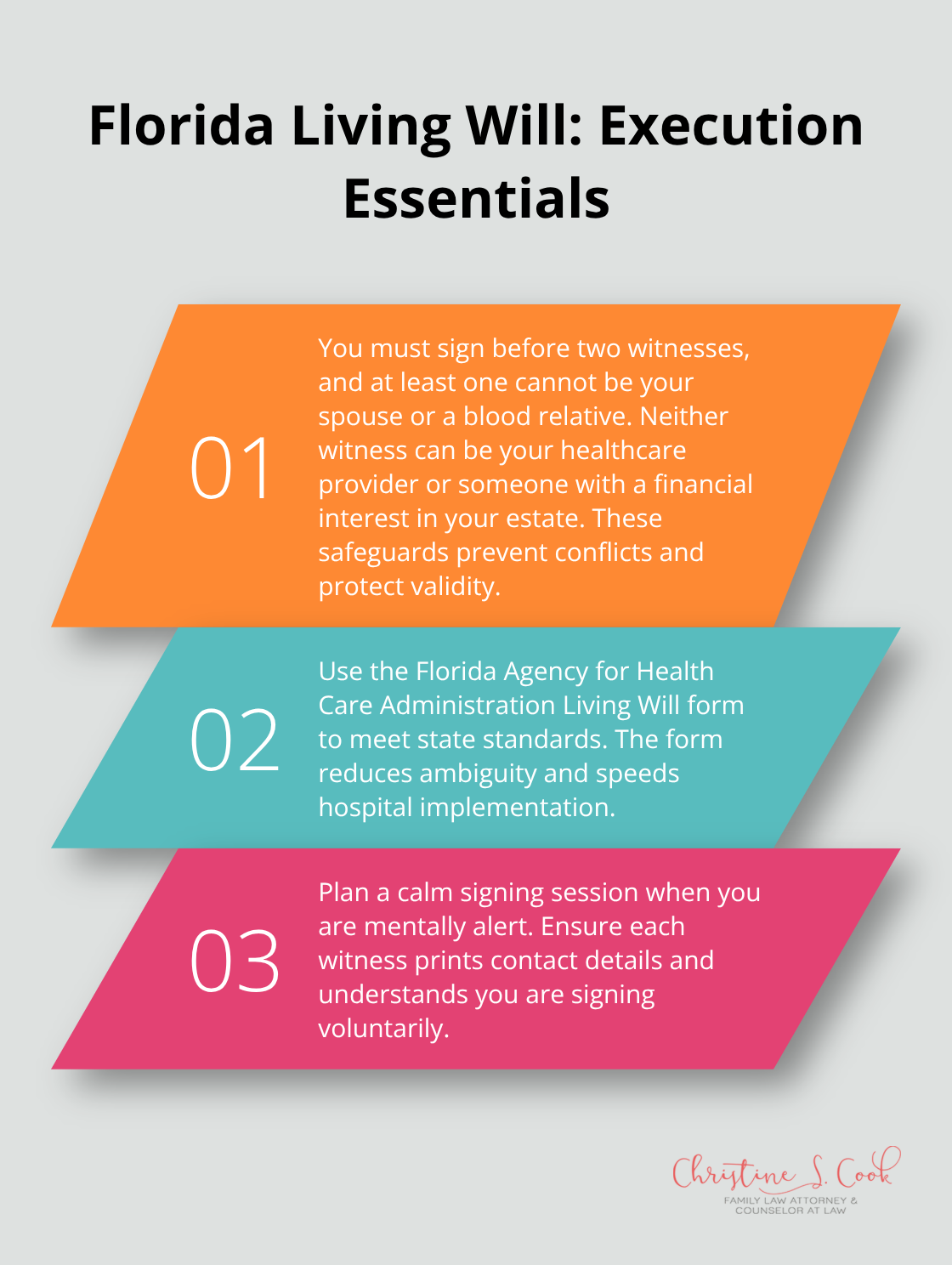
Florida law sets specific requirements for your living will to be legally valid, and skipping even one step can render your document worthless. You must sign your living will in front of two witnesses, and at least one witness cannot be your spouse or a blood relative according to Florida Statutes Chapter 765. Neither witness can be your healthcare provider, work at your healthcare facility, or have financial interest in your estate, which means you cannot use your doctor, nurse, or anyone on the hospital payroll. The Florida Agency for Health Care Administration provides an official Living Will form that meets all legal standards, so using this form eliminates guesswork about whether your document will hold up when it matters most.
When you complete the form, write your name clearly, sign and date it in front of your two qualified witnesses, and have each witness sign with their printed name, address, and phone number. This witnessing step is not optional and not something to rush through at the last minute before surgery or hospitalization. Schedule time specifically for signing your living will when you are mentally alert and can discuss your wishes with your witnesses so they understand your values and can attest that you signed of your own free will.
Your healthcare surrogate deserves as much careful consideration as the legal requirements because this person will make life-and-death decisions on your behalf. Choose someone who knows you well, shares your values about quality of life and medical intervention, and has the emotional strength to advocate for your wishes even when other family members disagree. Discuss your living will with your surrogate before you sign so they understand your specific preferences about ventilators, feeding tubes, CPR, and comfort care, and ask directly whether they are willing to take on this responsibility.
Your surrogate must have the ability to handle difficult conversations and stand firm in their commitment to your wishes. This role demands emotional maturity and the willingness to prioritize your documented preferences over their own feelings or pressure from other relatives.
Give your surrogate a signed copy immediately after execution, along with copies to your primary care physician, any specialists you see regularly, and the hospitals where you receive care. Keep the original document in a safe but accessible location, not in a safe deposit box at a bank where your surrogate might need a court order to access it during an emergency. Create a wallet card listing your surrogate’s name and phone number, your living will location, and any major preferences, then carry this card with you so emergency responders know your wishes exist.
Your medical team must have clear instructions before an emergency occurs so they can act on your preferences immediately. When your doctors and surrogate have the same document, they work together to honor your actual wishes rather than making assumptions about what you might want.
Update your living will every five to ten years or whenever your health status changes significantly, your values shift, or your designated surrogate moves away or becomes unable to serve. Major life events (new diagnosis, change in marital status, relocation) signal the right time to review your document and make revisions. Your living will must reflect your current wishes and circumstances to remain effective when your medical team needs it most.
Your living will Florida document represents one of the most important decisions you make for your family. Without it, your medical wishes remain unknown, leaving doctors and loved ones to guess what matters most to you during the most vulnerable moments of your life. The clarity you provide through a living will prevents unnecessary suffering, eliminates family conflict, and gives your healthcare team the direction they need to honor your values.
Creating your living will takes just a few hours, yet the protection it offers lasts a lifetime. You complete the official form, specify your preferences clearly, sign in front of two qualified witnesses, and distribute copies to your surrogate and medical team. Life changes unexpectedly, and having your wishes documented means your family won’t face impossible choices or second-guess themselves later.
At Christine Sue Cook, LLC, we help Florida families create comprehensive estate plans that protect their autonomy and provide peace of mind. Contact us for a free consultation to discuss your living will and estate planning needs without any financial pressure. Your healthcare wishes deserve the protection of a properly executed document.