Without a guardianship plan in place, Florida courts-not you-decide who cares for your children or aging parents if something happens to you. That’s a risk most families don’t realize until it’s too late.
At Christine Sue Cook, LLC, we help families create guardianship plans that reflect their values and protect the people they love most. This guide walks you through what guardianship planning in Florida actually means and how to build a plan that works for your family’s unique situation.
Florida law defines guardianship as a court-supervised relationship where a judge appoints a guardian to make legal decisions for someone who cannot make them independently. This person, called the ward, loses certain rights and decision-making authority to the guardian. Florida Statute Chapter 744 governs the entire guardianship process, requiring courts to determine incapacity before appointing a guardian.
The court must find clear and convincing evidence that the person lacks the capacity to manage their property, person, or both. Once appointed, guardians hold significant legal authority-they can make medical decisions, manage finances, choose where the ward lives, and handle education for minors. This authority comes directly from the court, not from family agreement or preference alone.
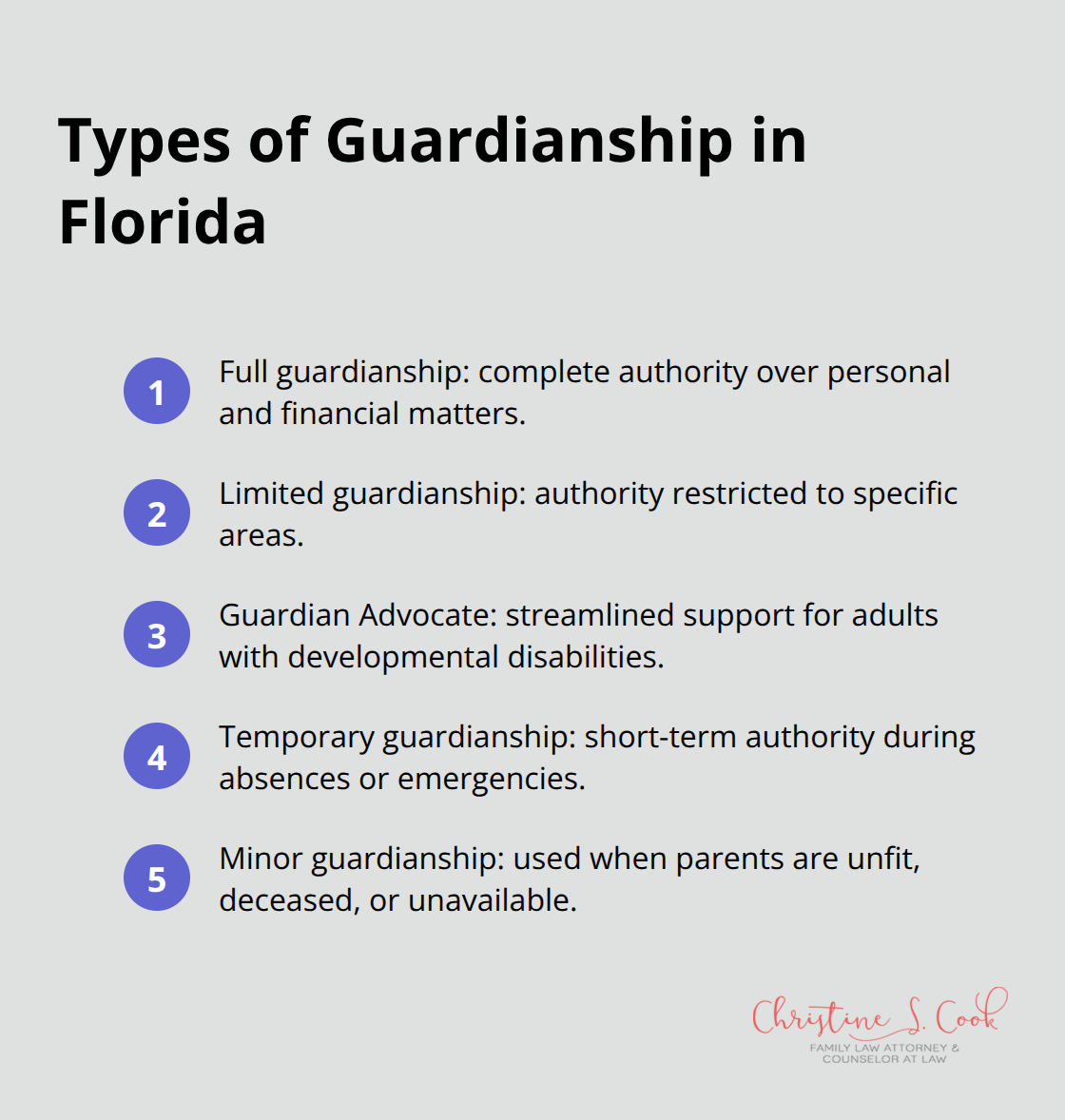
Florida offers several guardianship options depending on your situation. Full guardianship gives the guardian complete decision-making power over the ward’s personal and financial matters. Limited guardianship restricts the guardian’s authority to specific areas-perhaps medical decisions only, or financial management only-leaving the ward with some independent rights. Guardian Advocate serves as a streamlined option for adults with developmental disabilities who need support but don’t require full guardianship. Temporary guardianship works for defined periods, typically when parents need someone to make decisions for their children during extended absences or emergencies. For minors, guardianship becomes necessary when natural parents are unfit, deceased, or unavailable. Many families overlook limited guardianship because courts and attorneys don’t always present it as an option, even though it preserves more autonomy for your loved one while still providing protection.
Guardianship is expensive and restrictive, so Florida law now recognizes less restrictive alternatives that accomplish similar goals without court involvement. Supported Decision-Making, formalized in Florida law effective July 1, 2024, lets you create a written agreement where trusted friends, family members, and advocates help someone understand options and communicate decisions. A durable power of attorney lets you appoint an agent to handle financial and legal matters without court approval. Health Care Surrogate designation lets someone make medical decisions on your behalf when you cannot. Living Will documents express your wishes about life-prolonging treatment in terminal situations. Revocable living trusts manage assets without guardianship and avoid probate.
The financial impact matters significantly. Guardianship involves court filing fees of $250 to $400, capacity evaluations costing $500 to $1,500, and ongoing annual accounting fees of $500 to $3,000. A power of attorney or health care surrogate designation costs far less and maintains your loved one’s dignity and autonomy. These alternatives also avoid the court process entirely, which means faster implementation and fewer delays when your family needs protection.
Understanding these options sets the stage for selecting the right approach for your family’s needs. The next section walks you through how to choose a guardian and document your preferences in writing.
Without a guardianship plan in writing, Florida’s court system steps in and makes decisions for your family. The stakes are high because the court’s choice may not align with your values or your loved one’s best interests. The judge appoints a guardian based on legal standards and available evidence, not your preferences. Your minor children could be raised by someone you wouldn’t have chosen. Your aging parent’s finances could be managed by a court-approved conservator who doesn’t understand their spending habits or charitable values. A written guardianship plan prevents this outcome by documenting your choices before incapacity occurs, giving the court clear direction on who you trust and what matters most to your family.
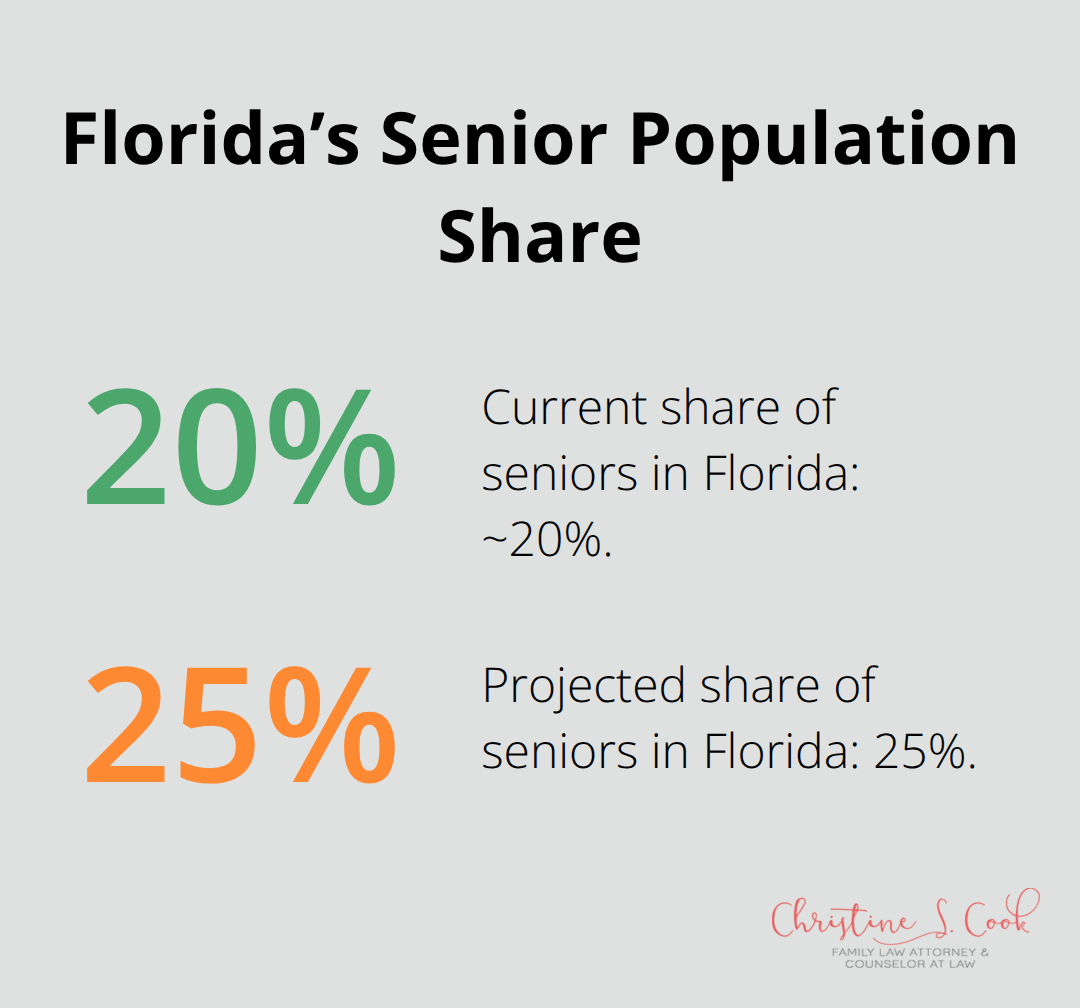
Florida’s aging population is expanding rapidly, with the state projected to add over 1.5 million net new residents, increasing seniors from roughly 20 percent to 25 percent of the population. This demographic shift means more families face incapacity situations, yet most wait until a crisis forces court involvement. When that happens, you lose control. The court’s timeline moves slowly-weeks or months pass while your family’s needs remain unmet.
Contested guardianship cases cost families $3,000 to $10,000 or more in attorney fees, plus court filing fees, capacity evaluations ranging from $500 to $1,500, and ongoing annual accounting expenses of $500 to $3,000. A family that plans ahead using a durable power of attorney, health care surrogate designation, or supported decision-making agreement avoids most of these costs entirely. Planning also speeds up implementation when you need it most-a power of attorney takes effect immediately upon signing, while guardianship requires weeks or months of court proceedings.
For families with minor children, a guardianship plan means your chosen guardian can step in without delay, providing stability during an already difficult time. Parents who document their guardianship preferences also protect their children from state custody while courts sort out details. The practical benefit is clear: families who plan control outcomes, reduce costs, and preserve their loved one’s autonomy. Families who don’t plan hand that control to a judge who knows nothing about their situation.
The financial and emotional stakes make planning essential, but knowing why you need a plan is only the first step. The next section walks you through how to select the right guardian and document your preferences in writing-the concrete actions that transform your intentions into legal protection.
Your guardianship plan is only as strong as the decisions you make today. The first decision involves selecting the right guardian-the person who will step in if something happens to you. This choice matters more than most families realize because guardians hold real legal authority over someone’s life, finances, and wellbeing.
Choose someone who shares your values, understands your loved one’s needs, and has the emotional stability to handle the responsibility. Many families pick the oldest sibling or a close relative without considering whether that person actually wants the role or has the capacity to manage it. Ask potential guardians directly if they’re willing to serve before naming them in writing. Some people accept the responsibility reluctantly and later struggle with decisions or miss annual accounting deadlines, which creates problems for your ward. A guardian who actively wants the role and understands the commitment will make better decisions and follow through on legal requirements.
If no family member is suitable, professional guardians exist in Florida, though they charge $50 to $150 per hour or take a percentage of assets. For most families, a trusted family member combined with a professional advisor works better than either option alone.
Once you’ve identified your guardian, you must document everything in writing. This is where planning transforms from intention into legal protection. A written guardianship designation tells the court exactly who you want to serve, which carries significant weight in judicial decisions. You can also document your preferences about your loved one’s education, religious upbringing, healthcare values, and spending priorities-details that give your guardian concrete guidance instead of forcing them to guess.
Put these preferences in a separate document alongside your formal guardianship nomination so the court and your guardian have clear direction. This written record prevents confusion and ensures your values shape decisions when you cannot make them yourself.
Update your guardianship plan every three to five years because life changes. Your original choice of guardian may move out of state, develop health problems, or experience a major life change that affects their ability to serve. Your loved one’s needs shift too. A guardianship plan that worked for a ten-year-old doesn’t address the needs of a teenager or adult.
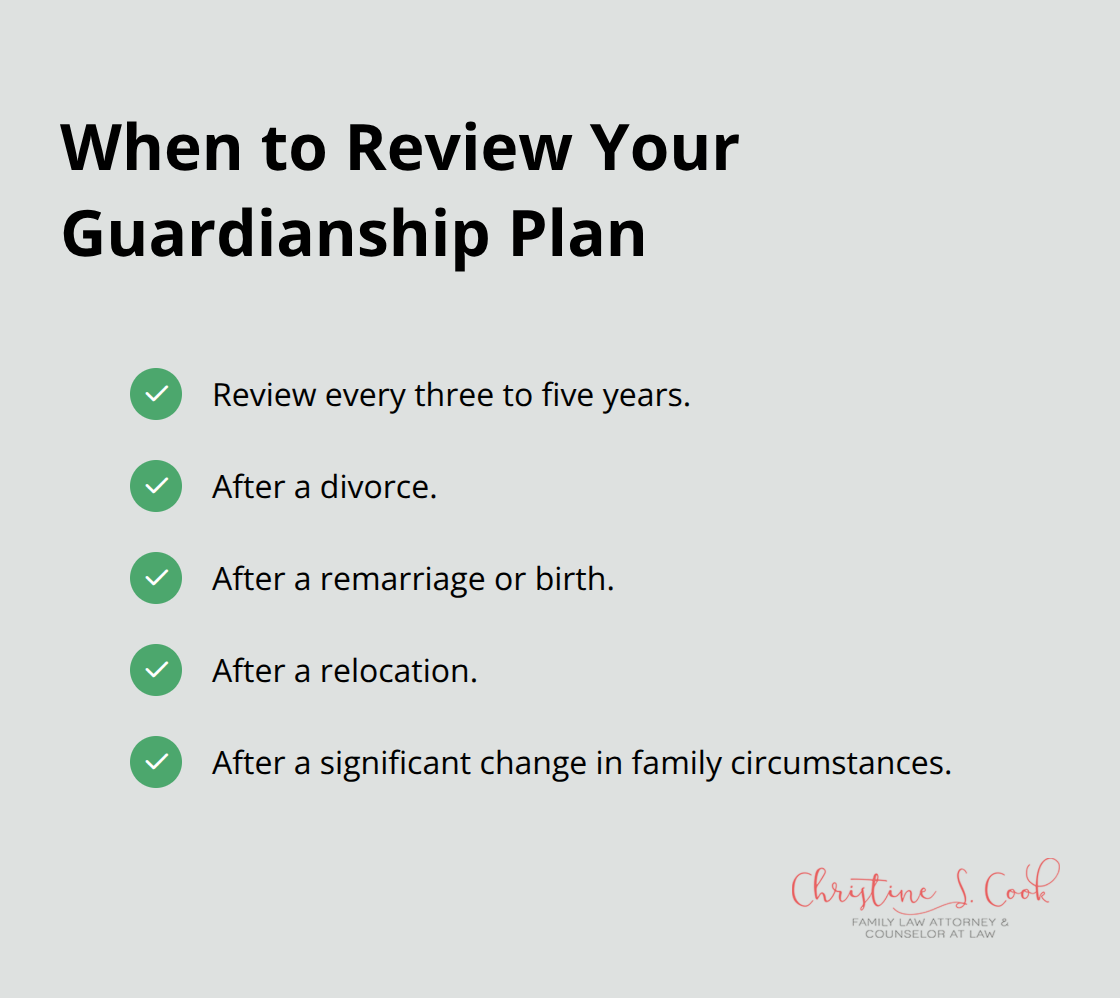
Review your plan whenever you experience a major life event-a divorce, remarriage, birth, relocation, or significant change in family circumstances. A stale guardianship plan creates confusion when courts need to implement it, and outdated preferences may not reflect your current wishes. Keeping your plan current ensures it actually protects your family when it matters most.
The decisions you make today determine who protects your loved ones tomorrow. Without a written plan, Florida courts make those decisions for you, often at significant cost and delay. Guardianship planning in Florida starts with naming a trusted guardian who shares your values, documenting your preferences in writing, and updating your plan every three to five years as circumstances change.
Contested guardianship cases drain $3,000 to $10,000 or more from family resources, while alternatives like powers of attorney and health care surrogate designations cost far less and avoid court entirely. Planning also preserves your loved one’s autonomy by using less restrictive tools whenever possible. You gain control, reduce costs, and protect what matters most.
If you have minor children or aging parents who depend on you, guardianship planning is not optional. Contact Christine Sue Cook, LLC today to discuss your guardianship planning needs and take control of your family’s future.