Many Florida families struggle with the decision between wills and trusts, unsure which tool actually protects their loved ones. The truth is, both serve different purposes, and understanding those differences can save your family thousands of dollars and months of stress.
At Christine Sue Cook, LLC, we’ve helped countless families navigate wills and trusts in Florida. This guide breaks down what each option does, when to use them, and the mistakes that could derail your plans.
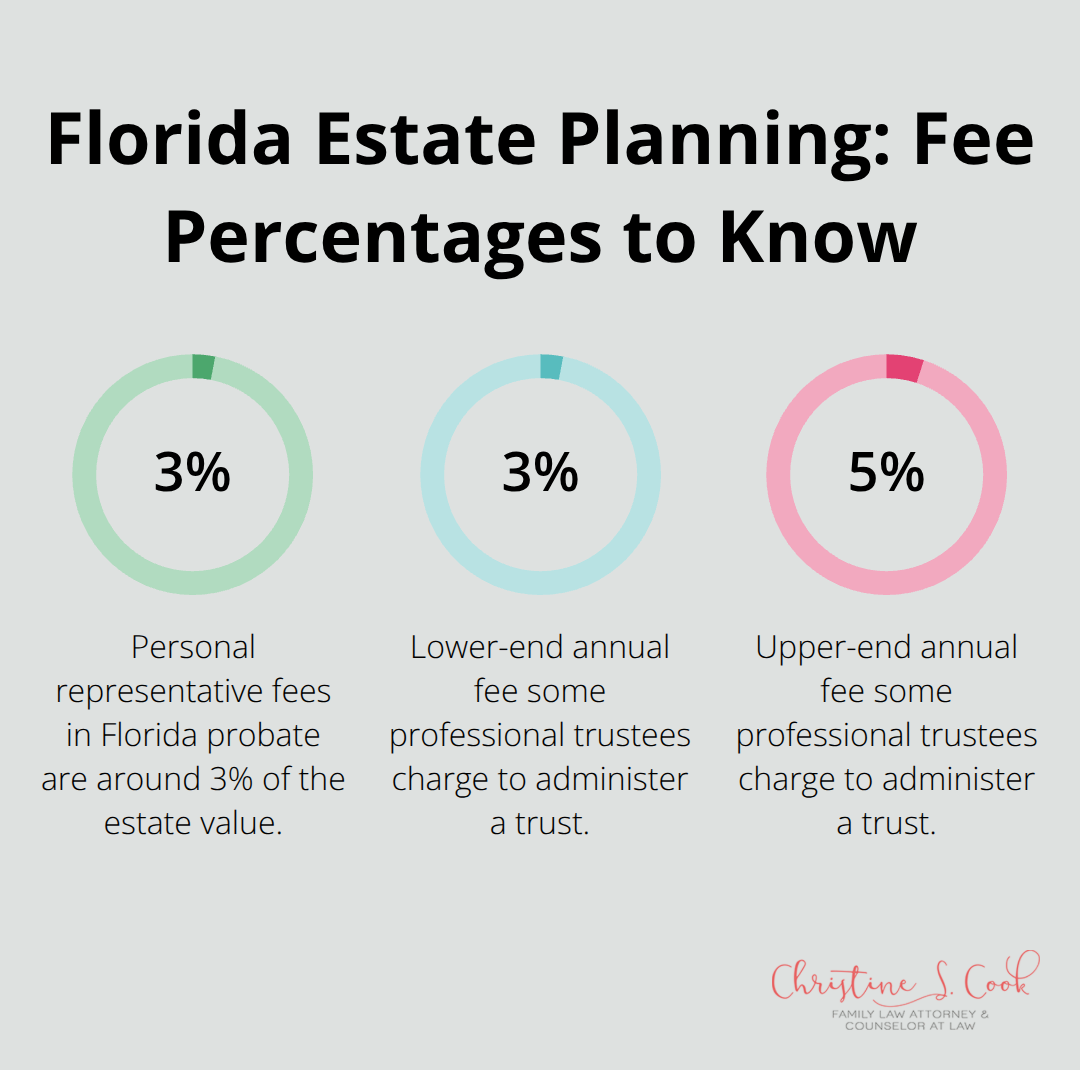
A will is a legal document that tells the court how you want your assets distributed after you die, but it only works if your assets pass through probate first. In Florida, probate is the court process where a judge validates your will, identifies your heirs, pays creditors, and transfers property to beneficiaries. This process typically takes six to twelve months, though complex estates take longer, and costs money in filing fees, personal representative fees around three percent of the estate value, and attorney fees.
Your will becomes public record during probate, meaning anyone can see who inherited what and how much your estate was worth. The court also notifies creditors, giving them ninety days to file claims against your estate under Florida Statute 733.2121. If you die without a will, Florida’s intestacy laws determine who gets what, which often doesn’t match what families actually want-especially in blended families where children from different relationships need protection.
A trust transfers ownership of your assets to a trustee during your lifetime or at death, completely bypassing probate and keeping your affairs private. When you create a revocable living trust, you name yourself as the initial trustee and a successor trustee to manage assets if you become incapacitated or die. Your beneficiaries receive distributions according to your instructions, but this happens outside court and outside public view.
Trusts cost more upfront to establish and require funding-you must retitle deeds, investment accounts, and other property in the trust’s name. However, the privacy and speed make this worthwhile for most Florida families.
A trust lets you control exactly how money reaches beneficiaries, which is especially valuable for minor children, special needs dependents, or spouses you want to protect from poor financial decisions. Special needs trusts preserve government benefits by keeping assets in the trust rather than the beneficiary’s name.
The real advantage emerges when life happens: if you become incapacitated, your successor trustee steps in immediately without court involvement, whereas a will provides no protection during your lifetime. This distinction matters far more than most families realize.
A will only takes effect after you die and only after probate concludes. A trust protects you and your family both during your lifetime and after death. This difference shapes which tool-or combination of tools-makes sense for your situation.
Trusts eliminate probate entirely, which in Florida means avoiding court fees. A modest $500,000 estate incurs roughly $15,000 in probate costs alone, and that timeline stretches six to twelve months minimum. Formal administration for larger estates can drag past a year, especially if creditors file claims or disputes emerge. Trusts bypass this entirely. You fund the trust during your lifetime by retitling assets into the trust name, and when you pass, your successor trustee distributes everything to beneficiaries within weeks, not months. No court involvement means no filing fees, no publication requirements, and no waiting for a judge’s approval.
Trusts shield your family’s financial details from public scrutiny. Probate is a public court process, so anyone-creditors, distant relatives, scammers targeting grieving families-can access court documents showing exactly what your estate contained and who inherited what amount. Trusts keep this information private between you and your beneficiaries. This privacy matters more in practice than most families expect, especially when sensitive family dynamics or significant wealth transfers could attract unwanted attention.
Trusts give you immediate control if you become incapacitated. A will provides zero protection during your lifetime; if you suffer a stroke or develop dementia, your family faces a guardianship proceeding that creates a public record. A trust names a successor trustee who steps in immediately without court involvement, managing your financial affairs seamlessly while you receive care. This incapacity planning function is where trusts prove their worth to families facing real health crises.
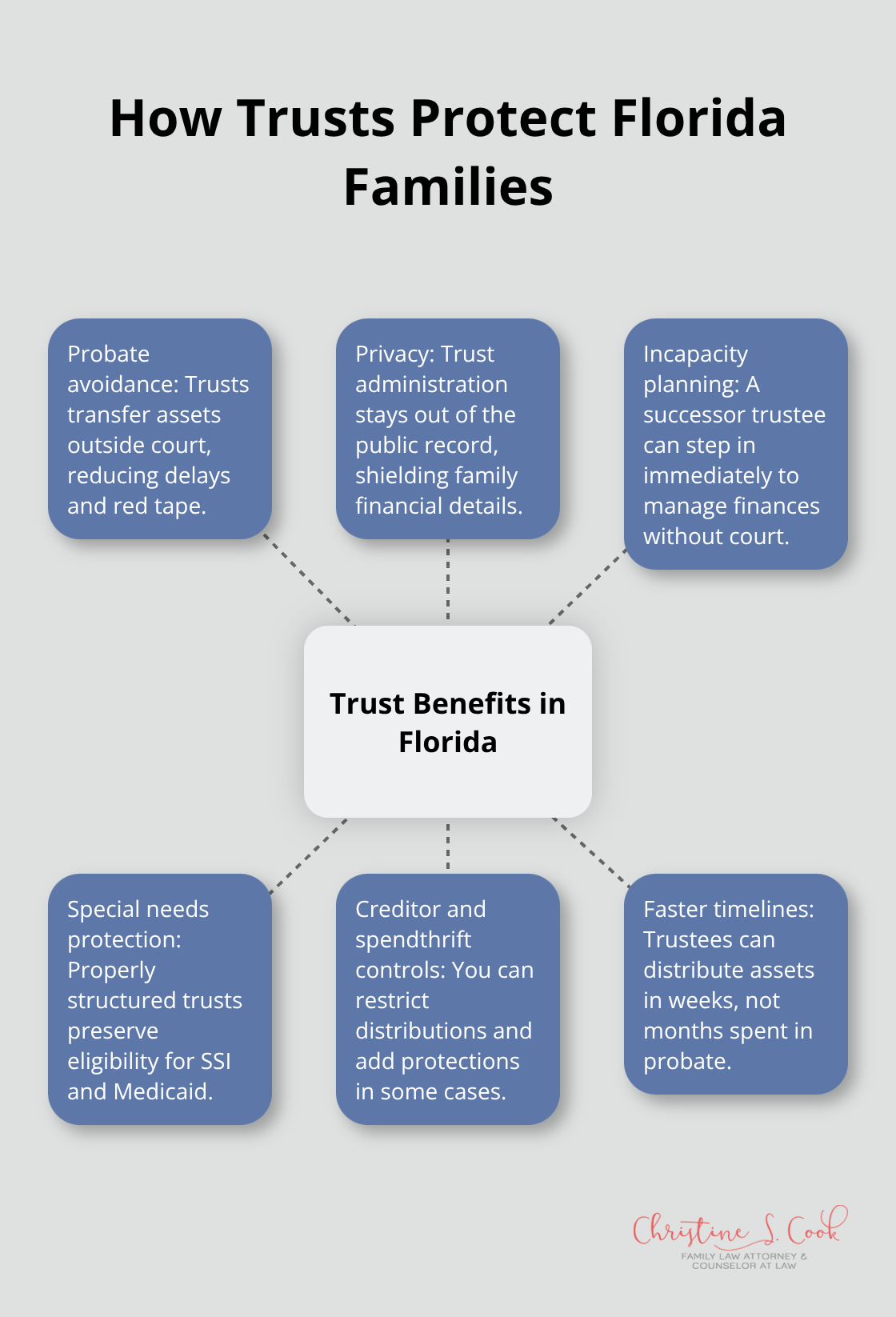
Special needs trusts preserve government benefits for disabled family members by holding assets in trust rather than the beneficiary’s name, protecting SSI and Medicaid eligibility when the asset limit sits at $2,000 for a single person under Florida 2026 thresholds. Trusts also offer creditor protection in some circumstances and enable detailed instructions about how distributions reach beneficiaries-critical for blended families or adult children who struggle with money management. These protections work together to create a comprehensive safety net that a will alone cannot provide.
The financial and practical advantages of trusts extend far beyond simple probate avoidance. When you understand how trusts control costs, maintain privacy, and protect your family during incapacity, the decision between a will and a trust becomes clearer. The next step involves identifying which mistakes most Florida families make when setting up their estate plans-and how to avoid them.
Most Florida families wait until a crisis hits before reviewing their estate plan, and outdated documents create chaos when life changes. Life shifts constantly: you remarry, have grandchildren, purchase property out of state, face health scares, or watch your net worth shift. Your will or trust from ten years ago no longer reflects reality. Florida law requires precise execution formalities for wills, and documents that don’t account for current circumstances lead courts to interpret them in ways you never intended. Marriage or divorce automatically affects beneficiary rights under Florida law, yet many people assume their old documents still work. A trust created when your children were minors may not protect them as adults; a will naming an executor who has since moved away or passed could trigger delays; and a deed from before you established your trust means that property still passes through probate when you die.
Life events demand immediate action. You should review your entire estate plan every three to five years and immediately after major life events like remarriage, relocation, significant asset purchases, or health diagnoses. Formal probate administration for an estate that could have avoided court through a funded trust runs six to twelve months and costs around three percent of the estate value in personal representative fees alone, plus filing fees and attorney costs.
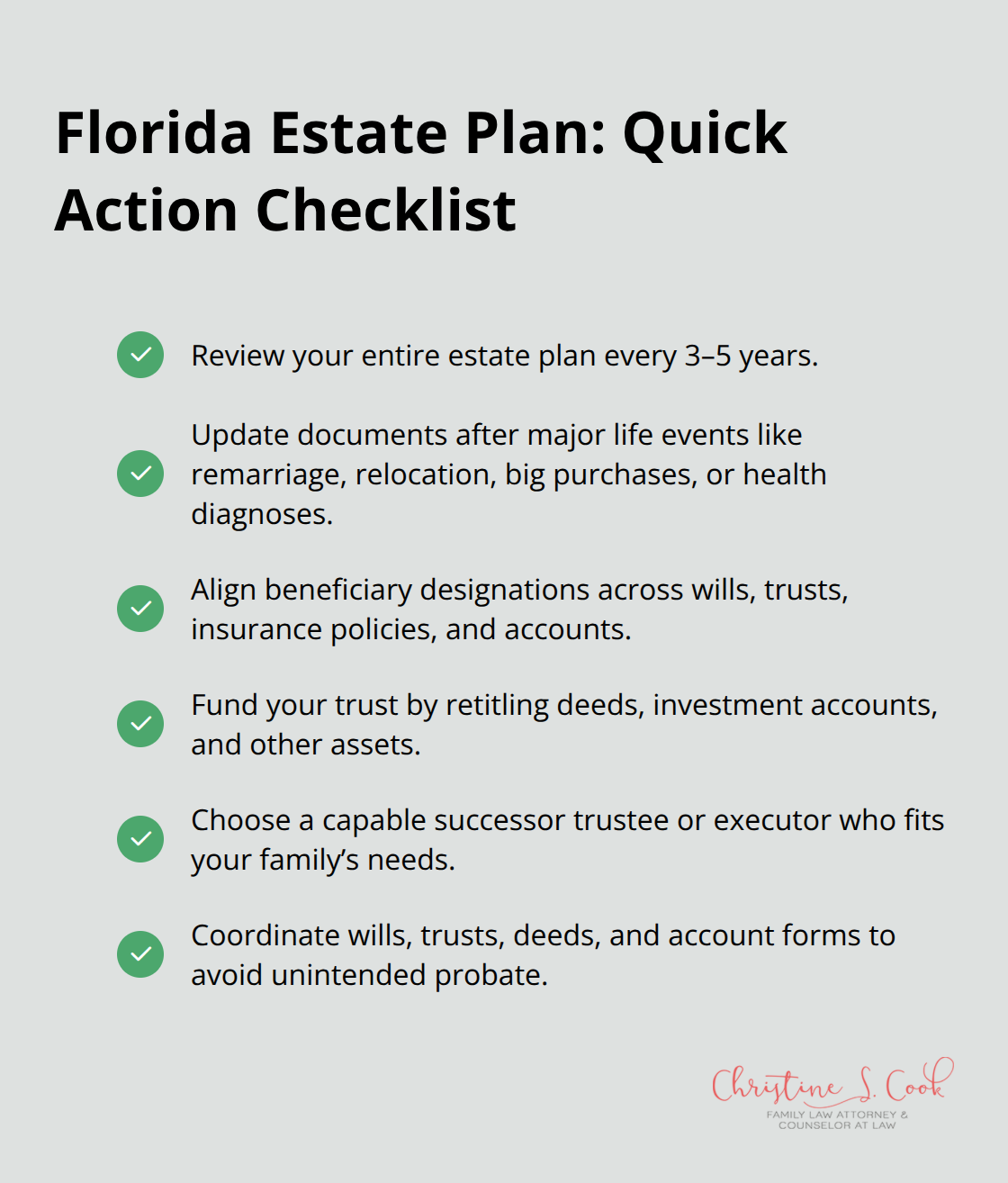
Families often name beneficiaries inconsistently across different documents, which creates real problems. A will might name your new spouse as primary beneficiary, but your life insurance still lists an ex-spouse, and your investment accounts have no beneficiary designation at all. Beneficiary designations on accounts take priority over wills in Florida, so your life insurance goes to the ex while your spouse inherits nothing from that policy. This conflict happens more often than most families expect, and the results prove devastating.
Special needs trusts require absolute clarity about who manages funds for disabled beneficiaries, yet many families leave this role unnamed or choose someone unprepared for the responsibility. You should align every designation across wills, trusts, insurance policies, and account beneficiary forms so nothing falls through probate by accident.
Naming a successor trustee or executor matters enormously because this person must understand your intentions, manage conflict between beneficiaries, handle financial decisions under stress, and possibly serve for decades if your trust includes a special needs provision. Some families name their oldest child out of habit, even though a younger sibling has better financial skills or lives closer and can respond faster to emergencies. Others name professional trustees without understanding fees, which can consume three to five percent of trust assets annually.
The right choice depends on your specific situation. You should evaluate whether a family member has the temperament and financial acumen to handle the role, or whether a professional trustee makes more sense despite the fees. This decision shapes how smoothly your estate transfers to beneficiaries and how well your wishes actually get carried out.
Wills and trusts in Florida serve fundamentally different purposes, yet both belong in a complete estate plan. A will directs how your assets distribute after probate concludes, while a trust protects your family during your lifetime and transfers assets outside court entirely. The families who avoid costly mistakes understand this distinction and act on it before crisis strikes.
Your situation determines which approach makes sense. If you have minor children, significant assets, or property in multiple states, a trust-based plan almost certainly makes sense; if your estate is modest and your family structure straightforward, a will paired with beneficiary designations on financial accounts might suffice. Either way, your documents must reflect your actual life right now, not the life you had five or ten years ago, so review your plan every three to five years and immediately after major changes like remarriage, relocation, or significant purchases.
Professional legal guidance transforms estate planning from overwhelming to straightforward. An experienced attorney identifies which tools actually fit your family’s needs, ensures documents comply with Florida law, and coordinates wills, trusts, deeds, and beneficiary designations so nothing falls through probate by accident. Schedule a consultation with Christine Sue Cook, LLC to discuss your needs without financial pressure and take control of your family’s future.