Your will and trust are only effective if they actually reflect your life. A generic template won’t capture your family’s specific needs, your Florida property situation, or your deepest wishes for what happens after you’re gone.
At Christine Sue Cook, LLC, we’ve seen how wills and trusts customization makes the real difference between a plan that sits in a drawer and one that truly protects your family. This post walks you through how to build an estate plan that’s genuinely yours.
Most people who purchase online will templates or use DIY estate planning tools think they’ve checked the box on estate planning. The reality is far different. Four in 10 people believe they do not have enough assets to make a will, according to Caring.com’s 2024 Wills and Estate Planning Study. When a will or trust fails to reflect your life, your family faces confusion, potential legal disputes, and sometimes outcomes you never intended.
Blended families present one of the most common problems with generic templates. A standard form treats beneficiaries as if they’re all equally related to you, but blended families require specific language about stepchildren, biological children, and how assets flow between households. Without customization, a second spouse might inadvertently inherit everything, leaving adult children from a previous marriage with nothing. The template simply doesn’t account for these relationships.

Special needs beneficiaries create another critical trap. A generic trust won’t include the language needed to protect government benefits like Medicaid or SSI. This means a well-intentioned inheritance could actually disqualify your child from critical support. The damage happens quietly-your child receives funds, loses eligibility, and your family faces years of complications you never anticipated.
Florida property ownership adds another layer of complexity. If you own real estate in multiple states or hold investment property differently than your primary residence, a one-size-fits-all approach creates tax inefficiencies and probate complications. Your specific property situation demands specific solutions.
These gaps in generic templates don’t appear until it’s too late. Your family situation, your property holdings, and Florida’s legal requirements all demand documents tailored to your actual circumstances. The next section shows you how to structure your will and trust so they work the way you intend.
Your will and trust become powerful tools the moment they reflect your actual life, not a template’s assumptions about how families work. Customization starts with property distribution, and this is where most generic documents fail. If you own your primary residence in Florida plus rental property, investment accounts, or real estate in another state, your will needs specific language about which assets go to which beneficiaries and in what order. Without this clarity, your executor wastes months determining your intent, and your family may face unexpected tax bills.
For example, if you own investment property that generates capital gains, your trust should specify whether that property transfers to a beneficiary who can manage it or whether your executor should sell it and distribute the proceeds as cash. Florida law allows you to name specific assets for specific people, which prevents arguments and keeps your plan aligned with your actual wishes. The step-up in basis rule adjusts the cost basis of an inherited asset to its fair market value on the date the owner died, potentially lowering your heirs’ capital gains tax if those assets appreciate. Your customized documents should account for this advantage by identifying which assets benefit most from this treatment.
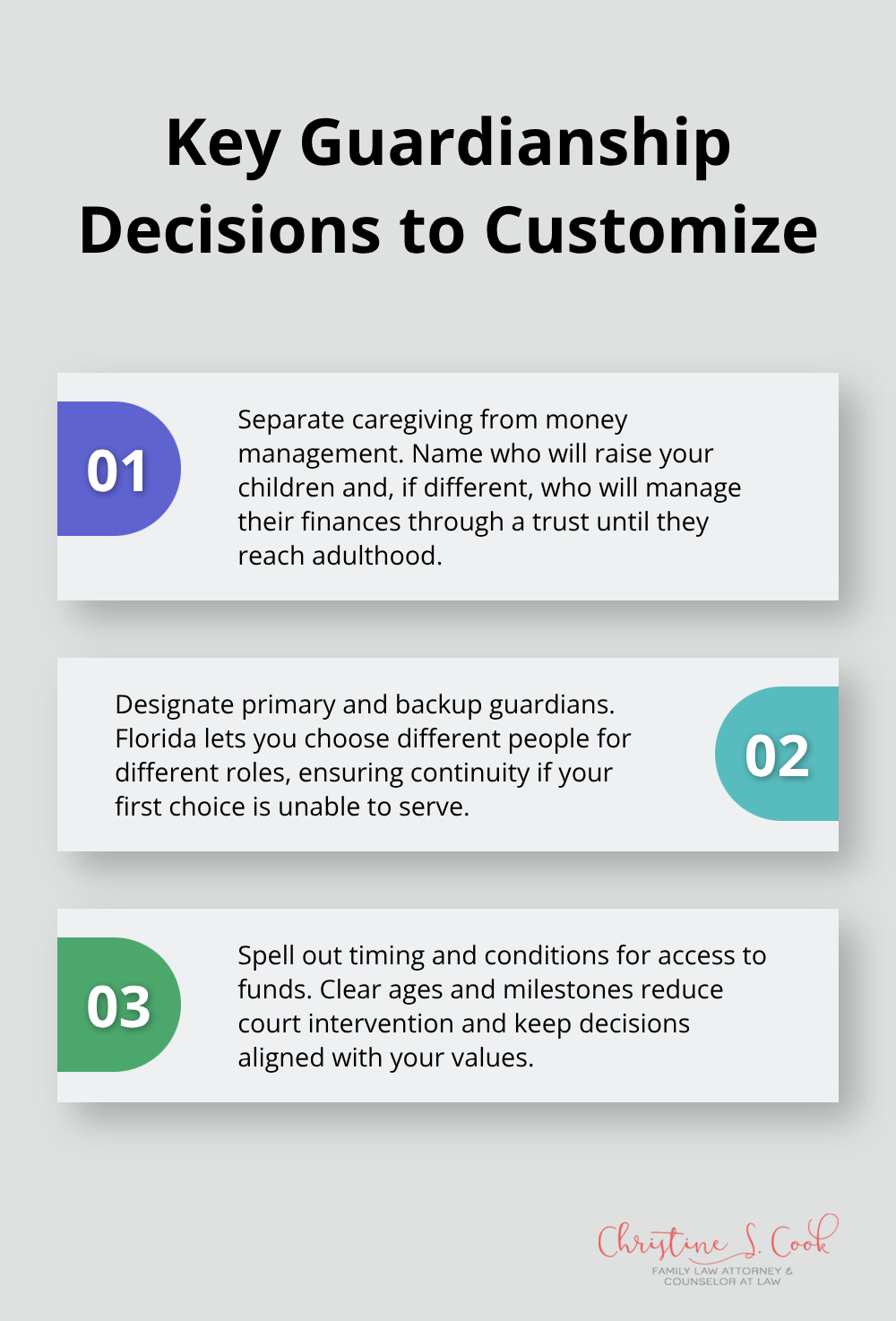
Guardianship for minor children demands equally specific language, and this is where your values matter most. A generic will offers a single guardianship provision, but your situation likely requires multiple decisions: who raises your children, who manages their finances until they reach adulthood, and at what ages they receive money outright versus through a trust. Florida allows you to name different people for these roles, which protects your children if your chosen guardian becomes unable to serve.
You should also specify backup guardians in case your first choice declines or dies before your children reach adulthood. This redundancy ensures your children have continuity of care rather than facing court intervention during an already difficult time. Your customized plan should address each decision separately rather than assuming one person can handle all responsibilities.
Digital assets and online accounts present a newer challenge that most templates ignore entirely. Your email accounts, social media profiles, cryptocurrency wallets, and cloud storage contain information your family needs and assets they must access or transfer. Your customized plan should include a digital asset inventory listing account names, usernames, and where your executor can find passwords or recovery codes.
Florida law recognizes digital assets as property, so your will and trust should explicitly address them rather than leaving your family guessing about what accounts exist or how to access them. Without this customization, your digital presence remains frozen, and valuable cryptocurrency or other digital holdings may become permanently inaccessible to your heirs. Your executor cannot manage what they do not know exists, which means your family loses both sentimental and financial value.
The next section shows you how to structure a trust strategy that goes beyond basic property transfer and actually protects your family against the complications life throws at them.
A trust does far more than move assets around after you die. When structured correctly, it becomes a financial shield that protects your beneficiaries from creditors, divorce settlements, and their own poor financial decisions. Florida law allows you to create what’s called a spendthrift provision inside your trust, which means beneficiaries receive income or distributions but cannot sell or pledge their inheritance to creditors. This matters because if your adult child faces a lawsuit, divorce, or bankruptcy, a properly drafted trust keeps their inheritance protected while a simple will offers no such protection. A spendthrift provision prevents a beneficiary’s creditor from seizing trust assets, even if that creditor wins a judgment. Without this language, your carefully built wealth transfers directly into someone else’s legal battle.
You can also structure distributions over time rather than handing everything over at once. Instead of giving a 25-year-old the full amount, your trust can specify that they receive income annually until age 35, then the remaining principal at age 40. This staged approach lets your beneficiary mature financially while protecting assets from impulsive decisions or poor judgment. The trust language should clearly outline when each distribution occurs and what conditions (if any) must be met before your beneficiary receives funds.
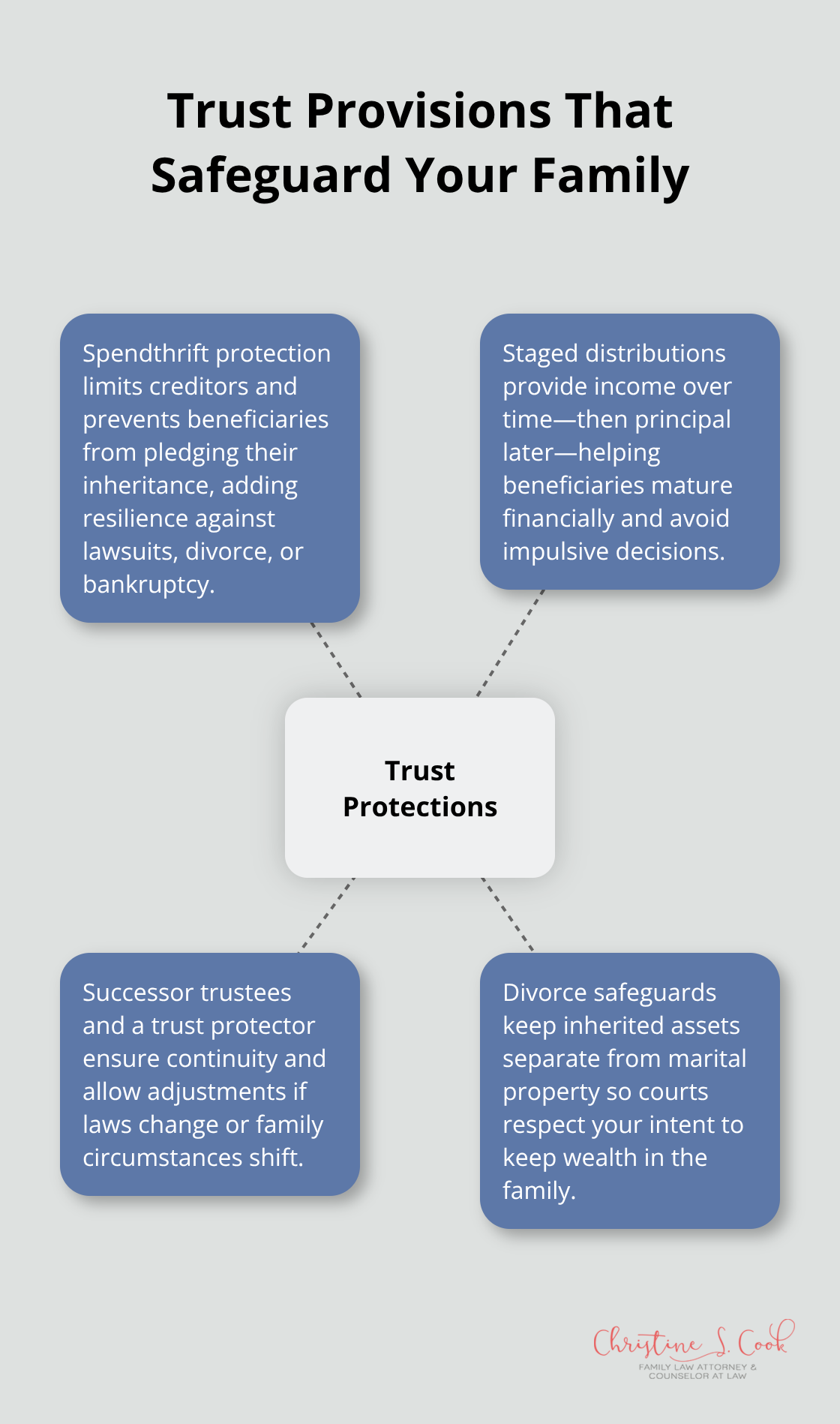
Contingency planning separates a mediocre trust from one that actually protects your family when life changes unexpectedly. Your trust needs clear successor trustee provisions naming at least two backup trustees in case your first choice dies, becomes incapacitated, or simply refuses to serve. A professional trustee or corporate trustee provides continuity that a single family member cannot guarantee, especially if that person faces their own health crisis or relocation. The trust should also include language allowing a trust protector to modify provisions if major tax law changes occur or family circumstances shift dramatically. If your child develops a disability after the trust is created, a trust protector can add special needs language without requiring a full trust reformation.
Your trust should specify how distributions work if a beneficiary faces a divorce, with language that keeps inherited assets separate from marital property and outside the divorce settlement. Florida recognizes these protections, so your customized trust language ensures courts honor your intent to keep family wealth within the family rather than seeing it split between your child and their ex-spouse. This protection applies even if your beneficiary’s spouse argues that inherited funds should be considered marital assets subject to division.
A customized estate plan accomplishes what a template never can: it speaks directly to your family’s situation and your deepest wishes for their future. Generic documents leave gaps that matter most when your family needs clarity. Wills and trusts Florida customization addresses the nuances of blended families, protects special needs beneficiaries, and accounts for your specific property holdings and digital assets. Your family deserves documents that reflect your actual life, not assumptions about how families work.
The real power of personalization lies in peace of mind. When your will and trust reflect your circumstances, your family knows what you wanted and understands which assets go where, who cares for your children, and how your wealth protects them against creditors or poor decisions. Florida law provides the tools to build this protection, but only if your documents are tailored to your specific needs. Working with an experienced attorney transforms estate planning from a checkbox task into something that truly matters to you and your loved ones.
Your estate plan represents one of the most important gifts you can leave your family. Contact Christine Sue Cook, LLC today to start building a personalized plan that protects everything you’ve built and honors your values for generations to come.