Most Florida families put off estate planning because it feels overwhelming or distant. But without a plan in place, your loved ones face unnecessary legal battles, delays, and expenses when you’re gone.
At Christine Sue Cook, LLC, we’ve helped countless families build Florida estate plan basics that actually work for their situation. This guide walks you through the essential documents and steps to protect what matters most.
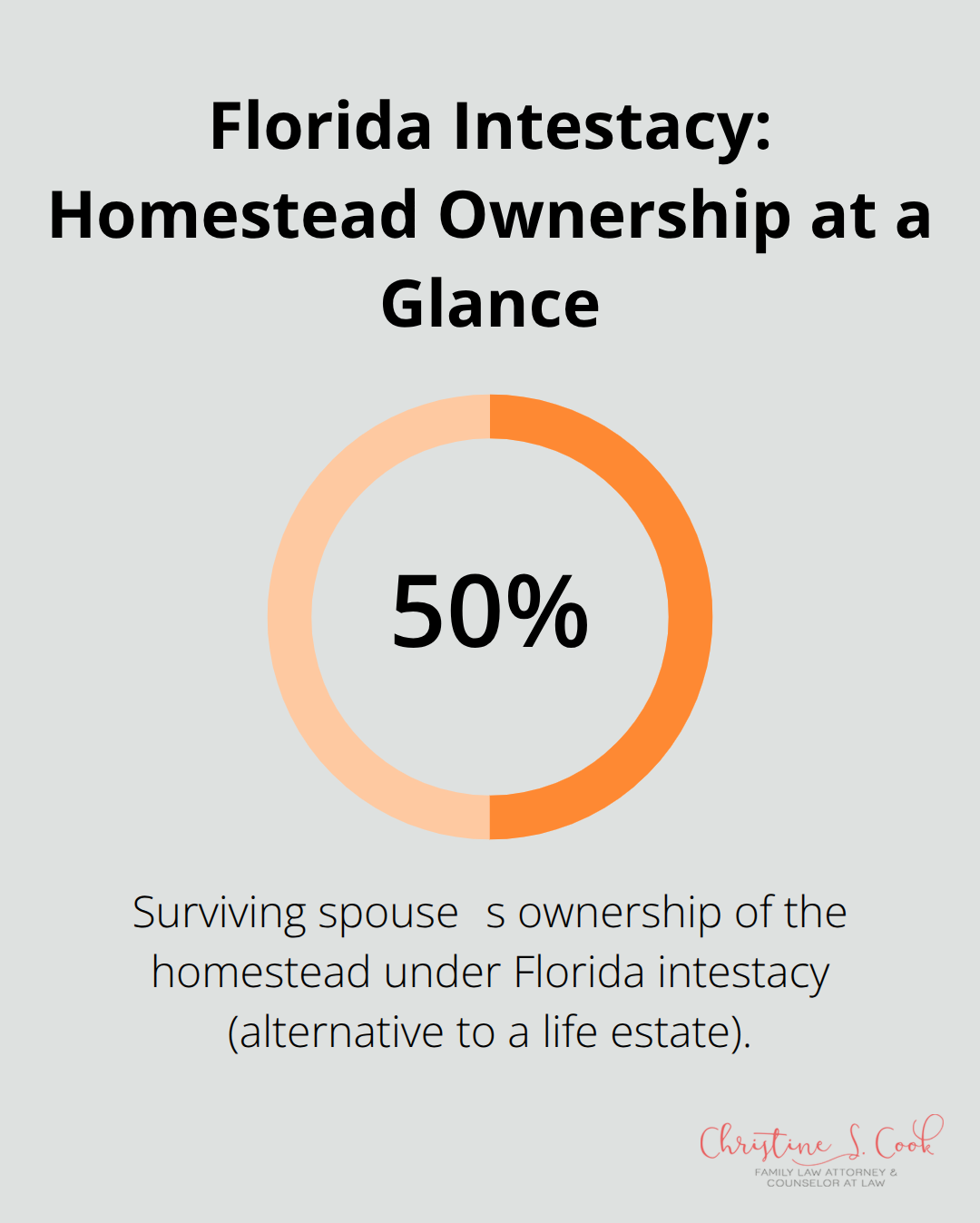
Without a plan in place, Florida law steps in and makes decisions for your family. Florida’s intestacy statutes dictate exactly who inherits your assets if you die without a will or trust. The surviving spouse receives a life estate or 50% ownership of the homestead property, with the remaining portion split among your children according to Florida Statute 732.4015. If you have no spouse, your children inherit everything. If you have no children, your parents inherit.
This rigid formula ignores your actual wishes and can take months or years to settle through probate court.
Probate in Florida typically takes anywhere from six months to over a year, and families often spend thousands in court fees and attorney costs watching their inheritance shrink. The real cost isn’t just financial-it’s the stress your family endures while lawyers and judges decide what happens to your home, your bank accounts, and your legacy. Without a will, your estate automatically enters probate, which means a judge oversees every asset transfer and every decision becomes public record.
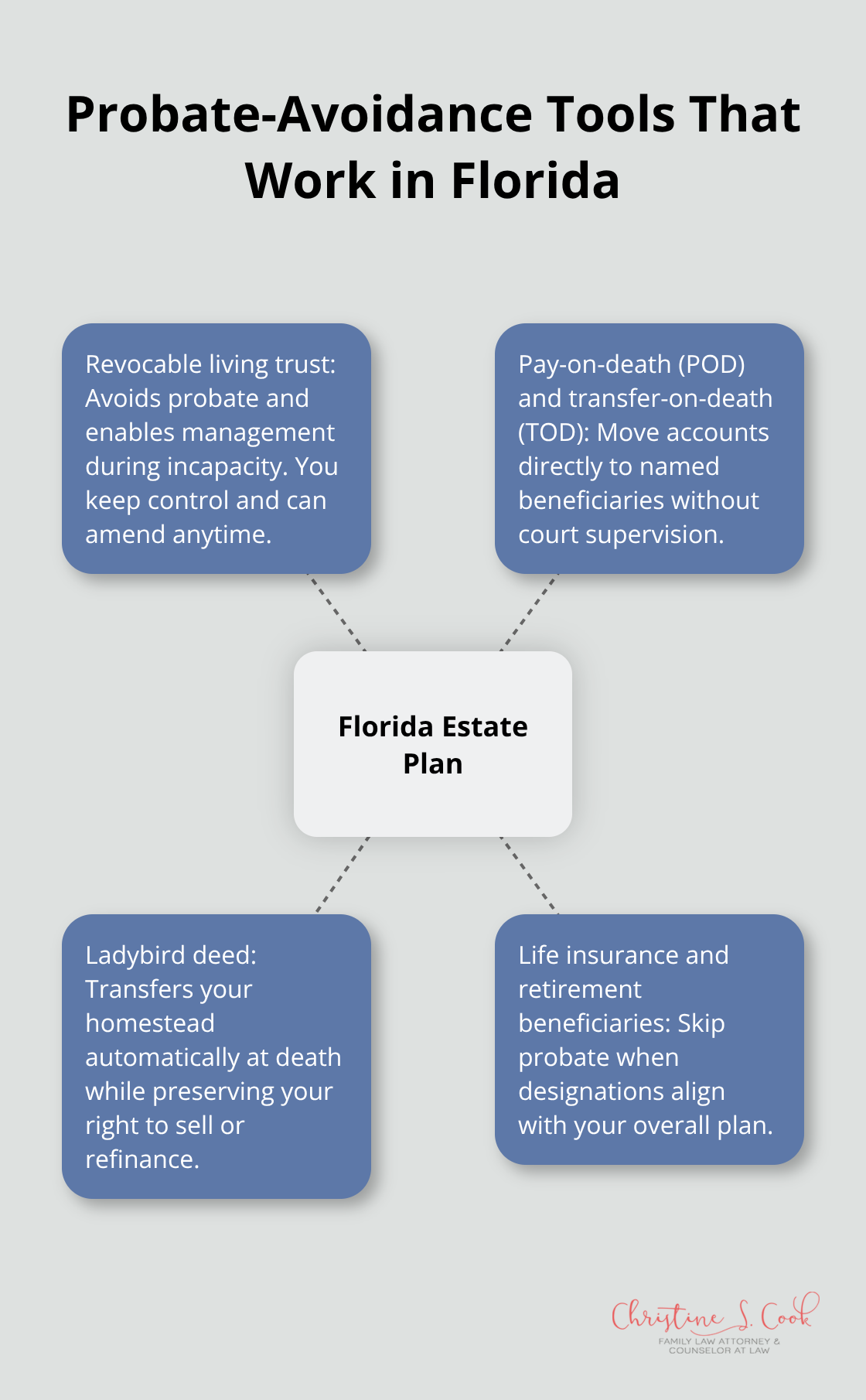
A thoughtful estate plan bypasses these delays and gives your family clarity when they need it most. A revocable living trust offers estate planning advantages such as avoiding probate and managing assets during incapacity. Pay-on-death accounts and transfer-on-death designations pass directly to named beneficiaries, avoiding probate entirely for those accounts. If you own real estate, a ladybird deed (enhanced life estate deed) transfers your home to your beneficiaries automatically at death while you retain full control and the ability to sell or refinance during your lifetime. Life insurance and retirement accounts with named beneficiaries also skip probate.
The combination of these tools-a revocable trust for your investments and bank accounts, a ladybird deed for your primary residence, and beneficiary designations for your life insurance and retirement funds-creates a probate-free estate plan that protects your family’s timeline and your estate’s value. Christine S. Cook, LLC tailors these customized plans so that your wishes are honored and your loved ones avoid unnecessary conflict and expense.
Understanding these probate pitfalls makes clear why the right documents matter. The next step is learning which core documents form the foundation of every solid Florida estate plan.
A will alone won’t get the job done in Florida. Many families mistakenly believe a will covers everything, but Florida probate law requires court involvement for most assets listed in a will, which means delays, public exposure, and unnecessary costs. The strongest estate plans combine three core document types that work together to avoid probate, maintain control during your lifetime, and handle unexpected incapacity.
Your first document is a revocable living trust, which holds your most valuable assets like your home, investment accounts, and bank balances. Unlike a will that goes through probate, a trust transfers these assets directly to your beneficiaries when you pass away, typically within weeks rather than months or years. You retain complete control during your lifetime and can modify the trust at any time. This flexibility makes trusts far more powerful than wills for protecting your family’s timeline and your estate’s value.
A durable power of attorney for finances names someone you trust to handle your bank accounts, investments, and bills if you become unable to manage them yourself. This document prevents the need for a court-appointed guardian and keeps financial decisions in your hands (through your chosen agent) rather than a judge’s.
A healthcare directive and living will work together to communicate your medical preferences and designate a healthcare surrogate to make decisions if you can’t. These documents address one of the two biggest risks most families face: who makes decisions if you’re incapacitated before death. Your family won’t have to guess what you would want, and your surrogate has clear legal authority to act on your behalf.
A ladybird deed for your primary residence works alongside your trust to ensure your home bypasses probate while you maintain the right to sell, refinance, or change beneficiaries during your lifetime. Life insurance and retirement account beneficiary designations must align with your trust and overall plan to avoid unintended consequences. These three documents address the two biggest risks most families face: what happens to your money and property after death, and who makes decisions if you’re incapacitated before death.
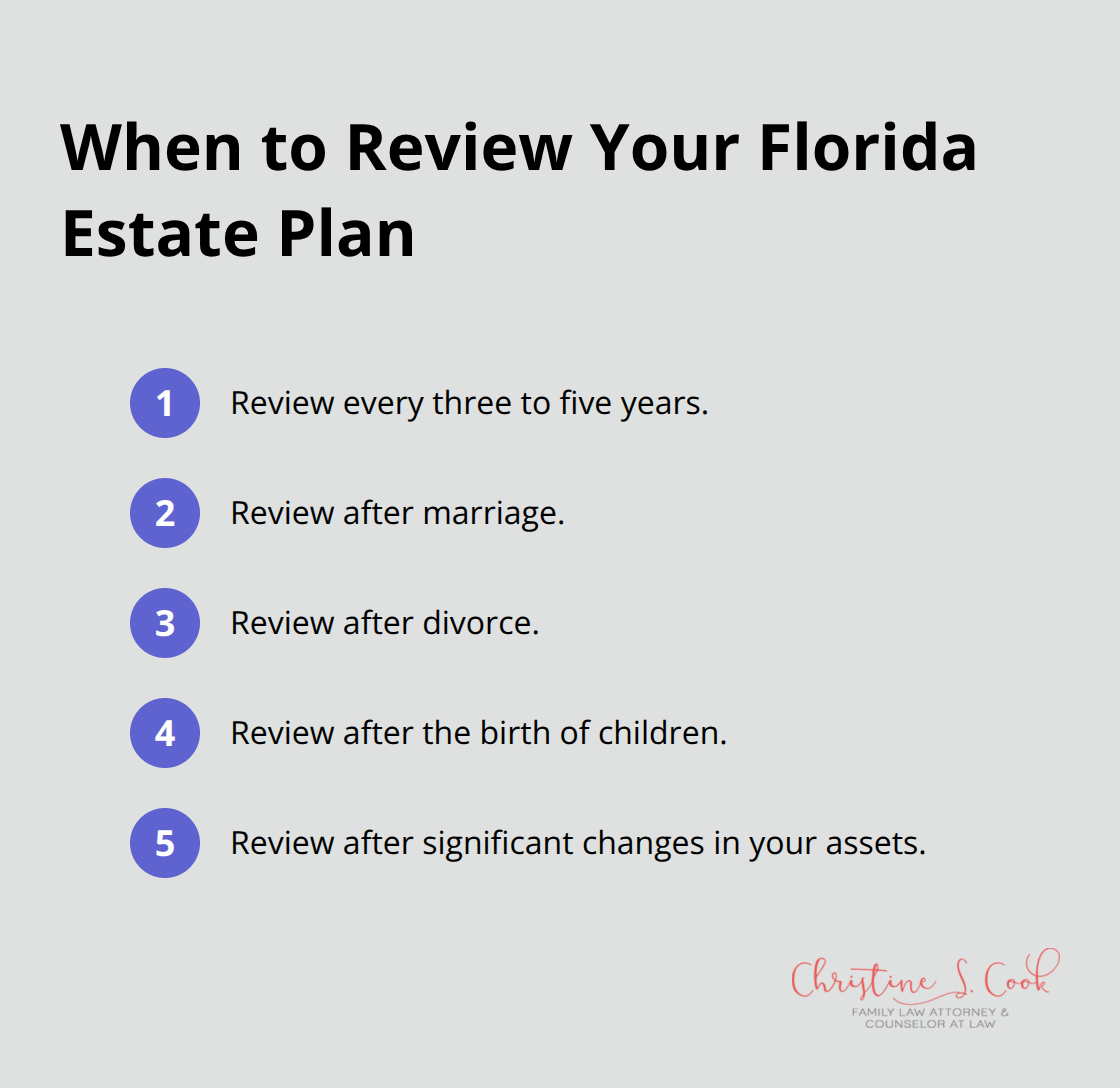
Review these documents every three to five years or after major life changes like marriage, divorce, the birth of children, or significant changes in your assets. A plan that worked five years ago may no longer reflect your wishes or protect your family effectively. With your core documents in place, the next step is understanding how to actually get started building your personalized plan.
Start your estate plan by listing everything you own: your home’s current market value, bank account balances, investment accounts, retirement accounts like 401(k)s and IRAs, life insurance policies, vehicles, and business interests. Write down approximate values as of today. This inventory takes an afternoon but prevents months of confusion later. Next to each asset, note how it’s currently titled (in your name alone, joint with your spouse, or in a trust) and whether it has a named beneficiary.
Many families discover that beneficiary designations on life insurance or retirement accounts haven’t been updated in years, which means assets could pass to an ex-spouse or deceased relative instead of your intended heirs. Outdated beneficiary designations create real problems that proper planning prevents.
Once you have your asset list, define what actually matters to you. Do you want your children to inherit equally, or does one child have greater financial need? Should your spouse receive everything, or do you want to protect assets for your children from a previous relationship? If you have a child with special needs, a Special Needs Trust can let them receive funds without losing SSI or Medicaid benefits.
Write down who you trust to manage your finances if you become incapacitated, who should make healthcare decisions for you, and who you want as guardian for minor children. These choices matter more than the legal documents themselves. Your answers to these questions form the foundation of a plan that actually reflects your values and protects your family’s future.
An experienced estate planning attorney will ask detailed questions about your family structure, your assets, and your concerns. The attorney translates your wishes into properly drafted documents that comply with Florida law and work together as a cohesive plan. This professional guidance ensures your documents are legally sound and tailored to your specific situation rather than relying on generic templates that may not address your family’s needs.
Your estate plan protects what matters most by giving your family clarity and control when they need it most. Without one, Florida’s intestacy laws take over, your assets face months of probate delays, and your loved ones inherit stress instead of peace of mind. The Florida estate plan basics we’ve covered-a revocable living trust, powers of attorney, healthcare directives, ladybird deeds, and beneficiary designations-work together to honor your wishes and protect your family’s timeline and finances.
Florida-specific rules make professional guidance genuinely valuable because homestead protections, the surviving spouse’s elective share, and the six-month deadline for certain elections create complexity that generic online templates simply don’t address. An experienced estate planning attorney understands these local requirements and tailors your documents to your family’s actual situation rather than forcing you into a one-size-fits-all approach. The cost of a thoughtful plan is far less than the cost of probate, family conflict, or outdated beneficiary designations that pass your assets to the wrong people.
Start today with a conversation about your family’s needs. Contact Christine Sue Cook, LLC to discuss how we can help you build an estate plan that actually works for your situation. Your estate plan doesn’t have to be complicated, but it does have to exist.