Many Florida families struggle with the same question: should we have a will, a trust, or both? The answer is that they serve different purposes, and when coordinated properly, they create a complete protection plan for your family.
At Christine Sue Cook, LLC, we’ve seen how Florida will trust planning done right can prevent costly mistakes and family conflict. This guide walks you through building a strategy that actually works for your situation.
A will and a trust handle different jobs in your estate plan, and that’s exactly why you need both. Your will acts as a safety net for anything not already in your trust. If you own a vehicle titled in your individual name, hold a bank account without beneficiary designations, or acquire property after creating your trust without funding it into the trust, your will directs where those assets go. Without a will backing up your trust, those assets enter probate anyway, defeating much of your planning. Treat your will as the catch-all document that handles whatever slips through the cracks.
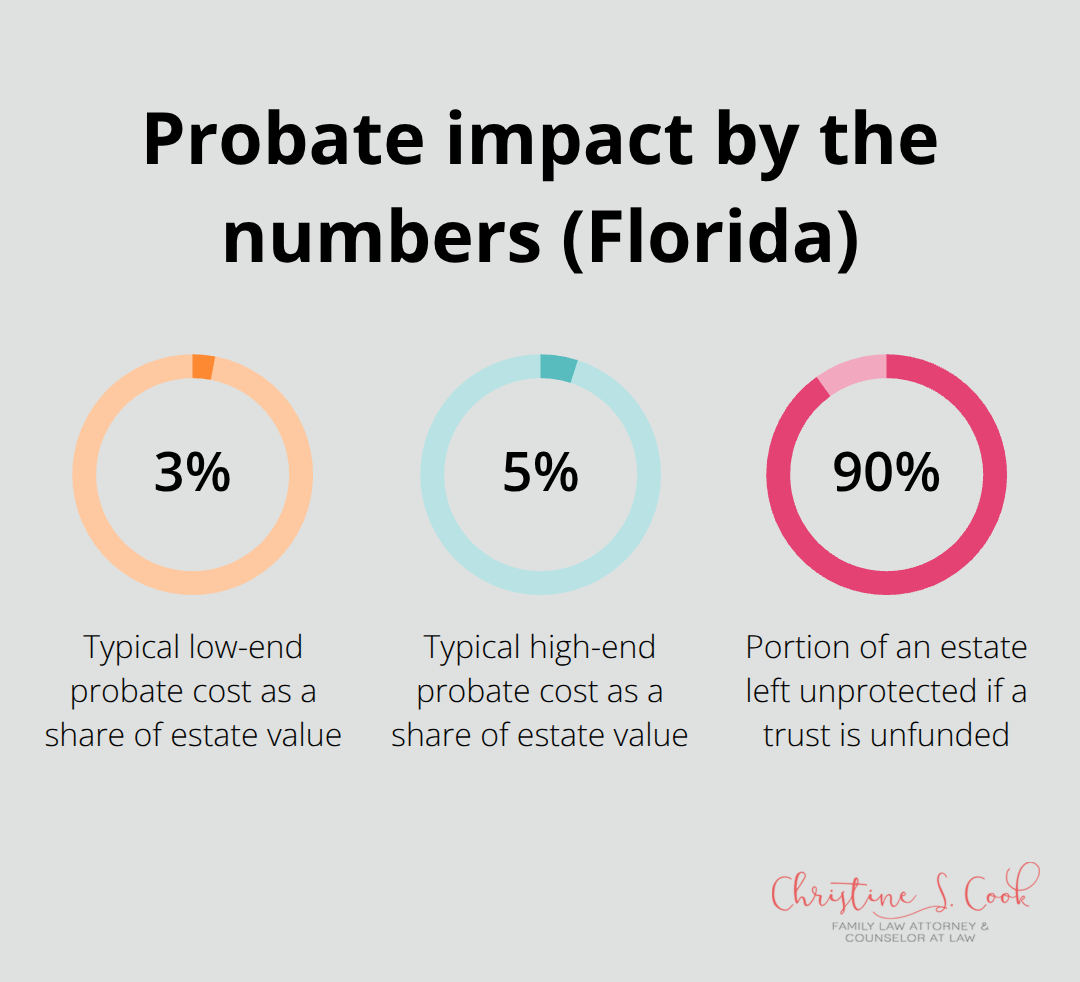
The probate court validates the will, identifies uncovered assets, pays debts and taxes, and distributes remaining property according to your instructions. This process typically costs between 3% and 5% of your estate value and can stretch from several months to over a year depending on complexity and whether anyone contests it. These costs add up quickly, which is why keeping assets out of probate matters so much for your family’s financial health.
Your trust eliminates probate for the assets you place inside it. When you fund your trust properly (retitling real estate, redirecting bank accounts, naming the trust as beneficiary on investment accounts), those assets skip probate entirely and transfer directly to your beneficiaries according to your instructions. This matters because probate is a public process; anyone can walk into the courthouse and see your entire asset list, your beneficiaries’ names, and how much everyone receives. A trust keeps this information private. Your successor trustee distributes assets faster without court oversight, often within weeks rather than months or years.
The real power comes from coordination. Your will names guardians for minor children, something a trust cannot do. Your trust handles ongoing asset management and provides instructions for how funds should be used-whether a child receives money at age 25 or in installments over time. Your will catches any assets that weren’t funded into the trust, and it can also designate who pays final expenses and manages your estate during probate if needed. Florida homestead law adds another layer: a properly structured trust can work with homestead protections to shield your primary residence while avoiding probate delays.
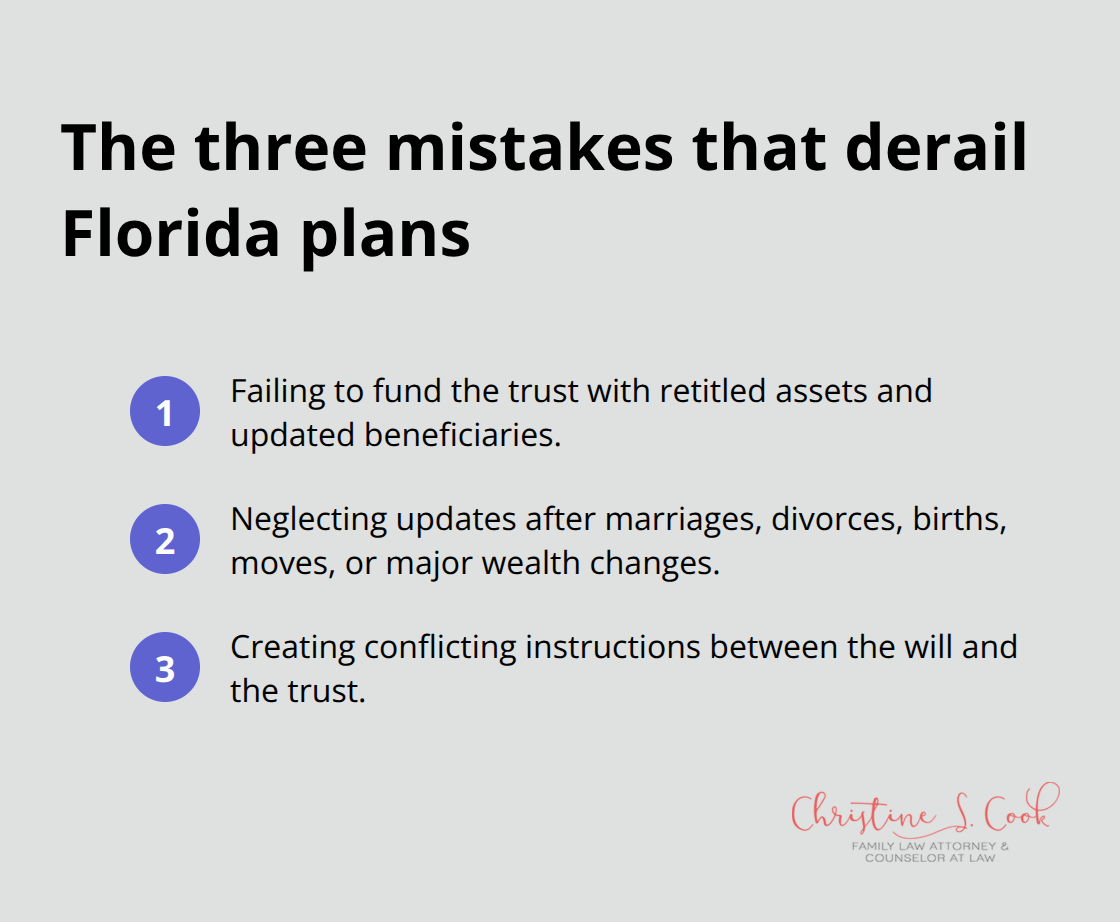
Without this coordination, you create gaps where probate applies when it shouldn’t, or you leave assets unprotected because instructions conflict between documents. The mistakes that follow-failing to fund your trust, neglecting updates after major life changes, or creating conflicting instructions-are exactly what derails many Florida families’ plans.
The gap between a well-intentioned plan and an actual working plan comes down to execution. Many Florida families create wills and trusts that look solid on paper, then fail to implement them correctly.
A trust sitting on your attorney’s desk with your signature but no assets inside it is worthless. Your assets, such as bank accounts, real estate and investments, must be formally transferred to the trust before your death to get the maximum benefit from probate protection. You must retitle real estate into the trust, redirect bank account ownership, name the trust as beneficiary on brokerage accounts, and update vehicle titles. This takes effort and follow-through, but skipping it means your trust provides zero probate protection for 90% of your estate. Many families discover this problem only after death, when it’s too late to fix.
This mistake compounds over time. Florida law recognizes that circumstances shift, yet families often leave their wills and trusts unchanged for a decade or longer. When you marry, divorce, have a child, experience significant wealth changes, or acquire property in another state, your existing plan may no longer reflect your wishes or protect your family effectively. A spouse married after your will was signed may have legal claims to your estate regardless of what your outdated will says. A child born after your trust was created might receive nothing unless you formally update the document. Moving to Florida from another state means your old trust may not comply with Florida’s specific trust laws.
The third mistake creates direct conflict: building contradictory instructions between your will and trust. If your will says your home goes to your daughter but your trust (which actually owns the home) says it goes to your son, your beneficiaries face confusion, potential litigation, and delays while courts sort out your real intentions. These three mistakes-unfunded trusts, stale documents, and conflicting instructions-are entirely preventable with proper attention during setup and regular reviews. An experienced Florida estate planning attorney catches these problems before they happen, ensuring your will and trust work as a unified system rather than working against each other.
The next step involves assessing your specific situation and building a personalized strategy that actually protects your family.
Start by listing everything you own. Real estate, bank accounts, investment portfolios, vehicles, business interests, life insurance policies, retirement accounts-write it all down with estimated values. This inventory determines whether a simple will suffices or a trust becomes essential. If you own property in multiple states, a trust becomes nearly mandatory because it eliminates ancillary probate, the separate probate process required in each state where you hold real estate. Florida residents with vacation homes in Georgia or investment property in North Carolina face probate costs in each state without a trust structure; a funded revocable living trust consolidates everything under one administration and one set of successor trustee instructions.
Next, assess your family situation honestly. Do you have minor children who need guardianship designations? A will handles this; a trust cannot. Do you have a blended family where children from a previous relationship need protection? Trusts excel here because you can specify exactly how assets flow to each child and prevent a new spouse from redirecting your legacy. Are you concerned about a beneficiary’s spending habits or substance abuse issues? A trust with a professional trustee provides ongoing management and control that a will never offers.
Your trust structure choice depends directly on your answers to these questions. A revocable living trust works for most Florida families because you maintain complete control during life, can modify it anytime, and it converts to irrevocable at your death to protect assets from creditors and manage distributions. An irrevocable trust sacrifices flexibility but offers tax advantages and stronger asset protection-useful if you have substantial wealth or want to shield assets from nursing home costs.
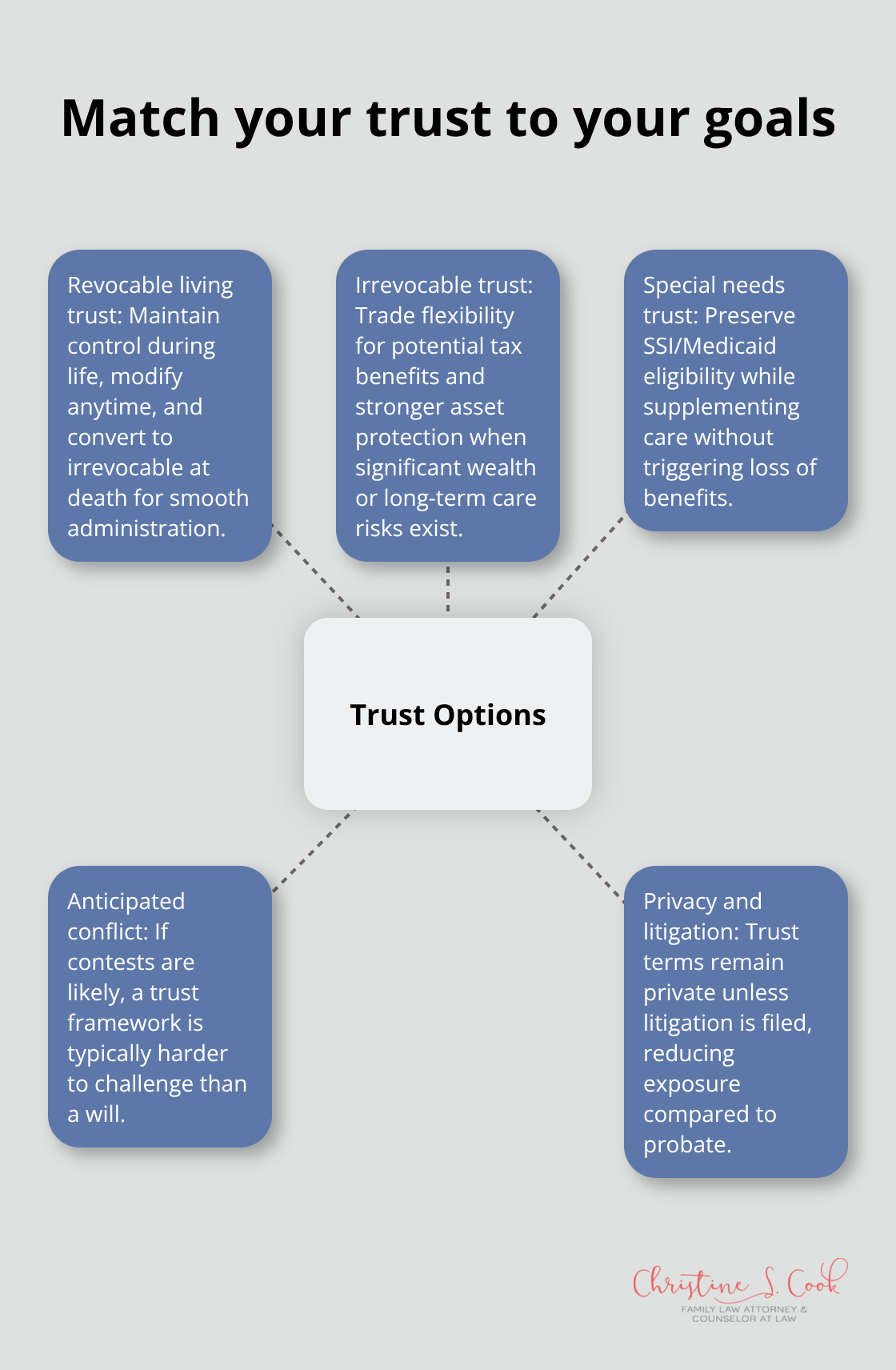
A special needs trust becomes mandatory if you have a disabled beneficiary relying on SSI or Medicaid, since direct inheritance would immediately disqualify them from benefits; this trust allows funds to supplement their care without triggering benefit loss. Do you anticipate family conflict or will contests? Trusts are significantly harder to challenge than wills because assets sit outside your individual name, and the trust terms remain private unless someone initiates litigation.
An attorney familiar with Florida law must draft and fund these documents because Florida’s homestead protections, spousal elective share rights, and specific trust funding requirements create traps for self-prepared plans. Christine S. Cook, LLC specializes in tailoring estate plans, including wills, trusts, and powers of attorney, ensuring clients’ wishes are honored. We align every document so your will, trust, power of attorney, and healthcare directives work as one system rather than creating confusion. This coordination costs more upfront but prevents thousands in probate costs and litigation later when documents contradict each other or assets remain unfunded.
A cohesive will and trust strategy protects your family far better than either document alone. Your will catches assets outside your trust and designates guardians for minor children, while your trust eliminates probate for funded assets and maintains privacy. When these documents work together without conflicts, your family avoids costly delays, public disclosure, and unnecessary court involvement.
Florida will trust planning requires proper funding, regular updates after major life changes, and careful coordination between all your estate documents. The families who sleep soundly knowing their plans will actually work invested time upfront to get the details right-they updated their documents when they married, divorced, had children, or moved to Florida, and they ensured their trust was fully funded with retitled property and redirected accounts. Professional guidance matters in Florida because state law creates unique opportunities and pitfalls that generic online templates miss.
Contact Christine Sue Cook, LLC in Pensacola to discuss your specific situation and determine whether a simple will, a revocable living trust, or a combination best protects your family. Christine offers free consultations to review your assets, family circumstances, and goals without any financial pressure. Your legacy deserves a plan that actually works.