
Make a Payment
850-572-3443
When your marriage reaches a crossroads, you face a critical decision: legal separation or divorce. These two paths offer different protections, timelines, and outcomes for your future.
At Christine Sue Cook, LLC, we help clients understand the benefits of legal separation versus divorce so they can choose what aligns with their circumstances. The right choice depends on your financial situation, religious beliefs, custody needs, and whether you want to preserve your legal marital status.
Legal separation and divorce operate on fundamentally different legal foundations, and this distinction shapes everything that follows. In a legal separation, you petition the court to live apart while remaining legally married. The court issues a separation agreement that governs custody, support, and property division, but your marital status stays intact.
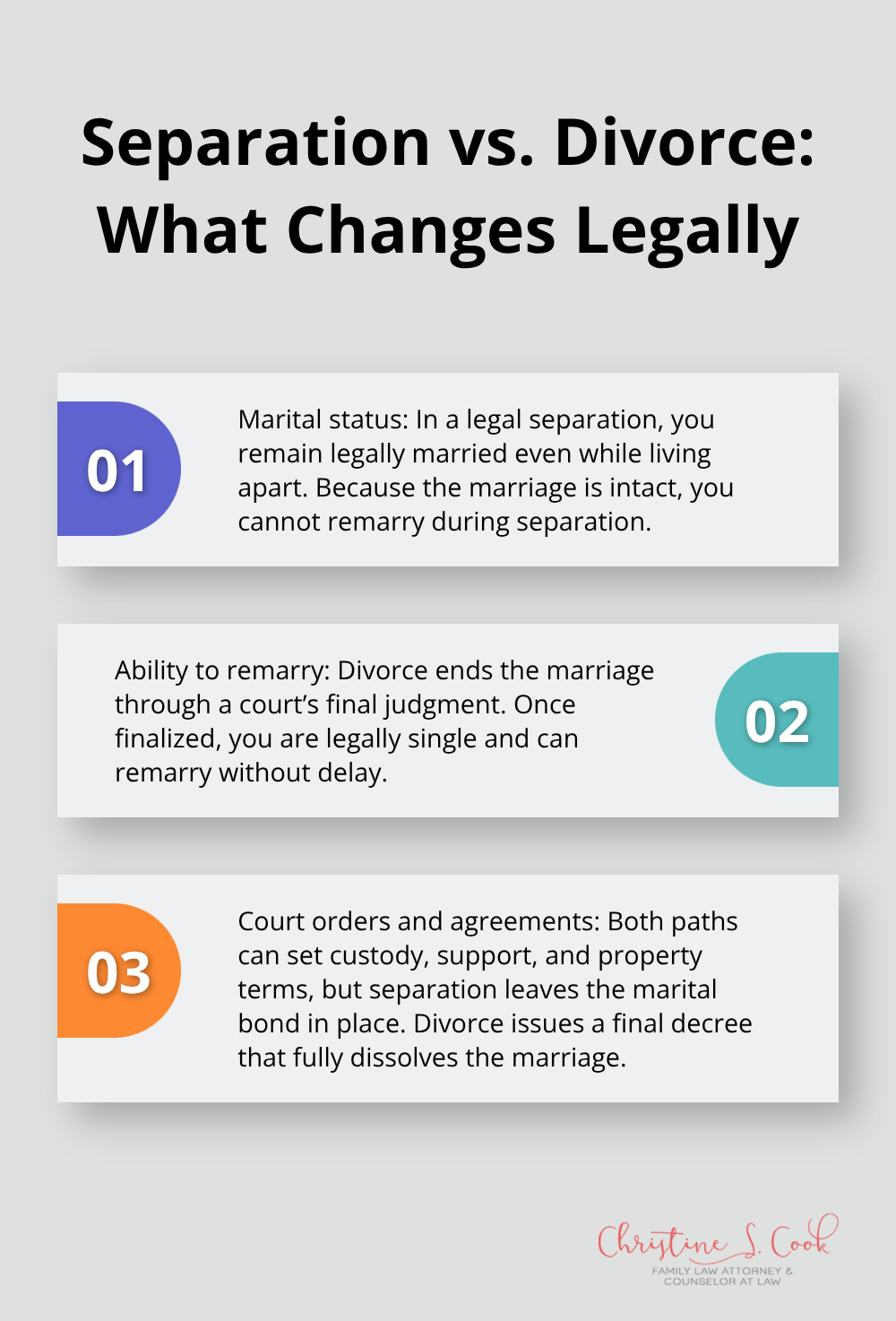
You cannot remarry during a legal separation without first obtaining a divorce decree. In contrast, divorce terminates the marriage entirely through a Judgment of Dissolution of Marriage. After divorce is finalized, you are legally single and free to remarry immediately. Illinois requires you to file a Petition for Legal Separation and live physically apart-simply moving out does not constitute legal separation. The same applies to divorce, which begins with a Petition for Dissolution of Marriage.
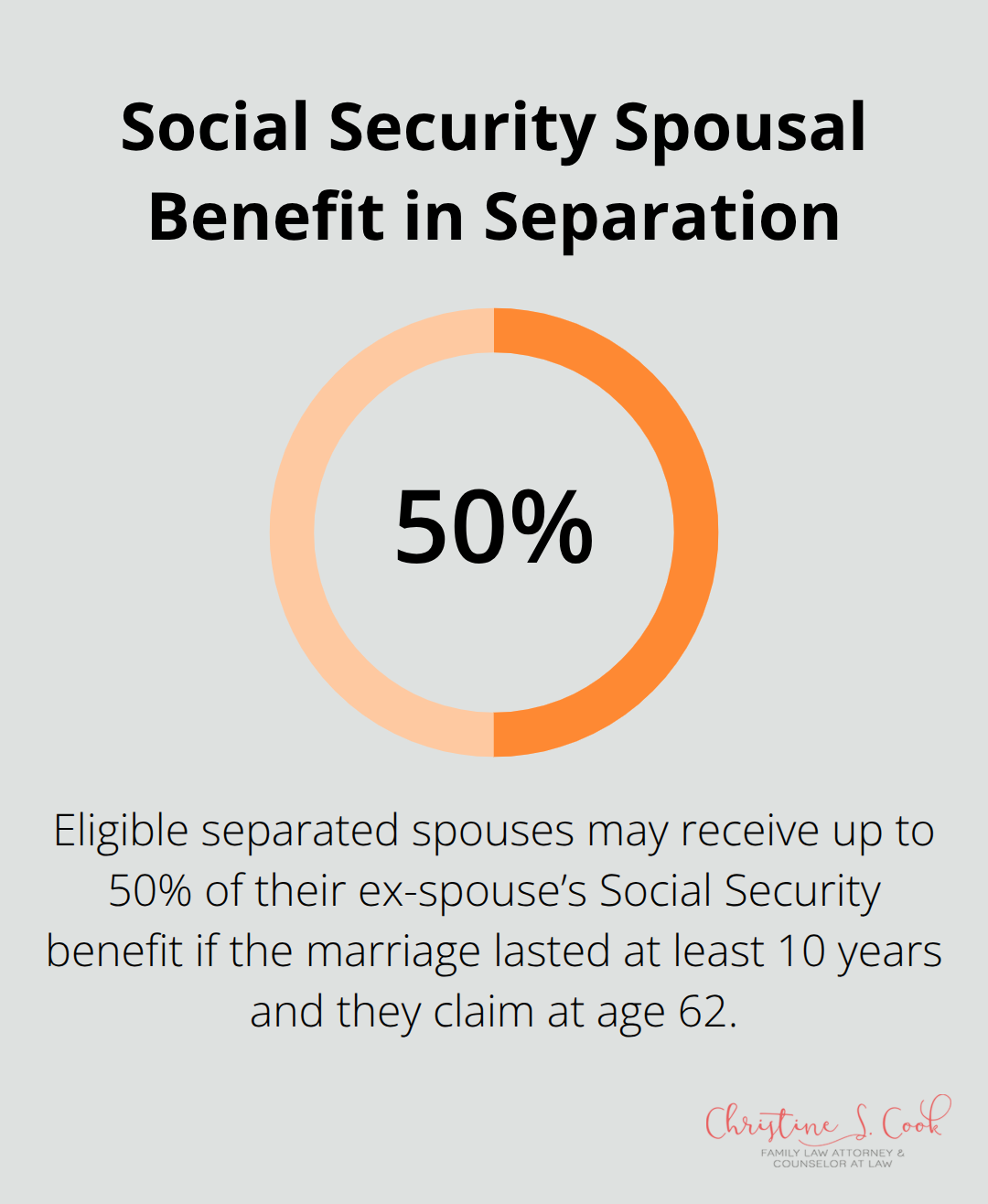
The financial and custody implications differ significantly between these paths. During legal separation, you maintain joint tax filing status, continue on your spouse’s health insurance plan, and preserve access to Social Security benefits if you meet the ten-year marriage threshold. According to SSA rules, a separated spouse may receive Social Security benefits at age 62 if the marriage lasted ten or more years, with the benefit amount equal to the greater of your individual benefit or fifty percent of your ex-spouse’s benefit. Divorce severs these joint arrangements entirely. You lose the ability to file taxes jointly and must secure your own health insurance coverage.
Both legal separation and divorce require the court to address child custody, parenting time, child support calculations based on each parent’s income, and potentially alimony. The critical difference is that separation agreements remain in place indefinitely unless you later file for divorce, whereas divorce creates a final decree. If you know you want to end your marriage completely, filing for divorce from the start often saves time and money compared to pursuing separation first, then divorcing later. However, if you need to preserve benefits, test living apart before making a permanent decision, or align with religious or personal beliefs about marriage, legal separation provides a structured alternative that keeps your options open. Understanding which path protects your financial future and meets your family’s needs requires careful consideration of your specific situation-and that’s where the benefits of each option become clear.
Legal separation keeps your marriage legally intact while you live apart, and this status provides practical financial and personal advantages that divorce eliminates. If your religious beliefs oppose divorce, or if you hold personal values around maintaining your marital status, legal separation lets you honor those convictions without sacrificing legal protection. Many couples choose this path specifically because they refuse to dissolve the marriage, even when the relationship no longer works day-to-day. The court still establishes binding agreements on custody, support, and property division, so you get the legal structure you need while preserving the marital bond.
Social Security Administration rules create a concrete financial incentive for staying legally married during separation. A separated spouse can claim benefits at age 62 if the marriage lasted at least ten years, receiving an amount equal to the greater of their own benefit or fifty percent of the other spouse’s benefit. Staying legally married during separation means you keep access to this benefit without having to finalize a divorce first. You also maintain the ability to file joint tax returns during the separation period, which often reduces your combined tax liability compared to filing separately or as a single person.
Health insurance becomes another tangible advantage. Most employer-sponsored plans allow a separated spouse to remain covered under the other spouse’s policy, avoiding the cost and hassle of finding new coverage immediately. If you have young children, this continuity of benefits directly protects their access to healthcare while the family adjusts to living apart.
Both parties sign a court-approved document that specifies how assets and debts divide, who has parental responsibilities, what child support looks like, and whether alimony applies. This structure prevents one spouse from making unilateral financial decisions or claiming assets later. If reconciliation becomes possible down the road, you have not burned bridges through divorce proceedings. You remain married, so remarriage is not an option yet, but neither is the finality that makes reconciliation legally complicated.
This breathing room matters most when couples need time to determine whether the marriage can improve with distance and professional help, or whether ending it permanently is truly necessary. The separation period functions as a formal trial run, not a vague or informal arrangement. You know exactly where you stand financially, what your custody schedule looks like, and what support obligations exist. That clarity reduces conflict and gives both parties stability while they make the hardest decision of their lives-and it sets the stage for understanding when divorce becomes the better choice.
Divorce offers something legal separation cannot: a clean break that frees you to rebuild your life without the weight of ongoing marital obligations. Once your divorce is finalized, you are legally single, can remarry immediately, and own the ability to make financial decisions without your ex-spouse’s involvement. This finality eliminates the emotional ambiguity that separation creates. You are not waiting for reconciliation or managing the complexity of remaining married while living apart. The court issues a final decree, the marriage ends, and you move forward. If you know with certainty that the relationship cannot be repaired, pursuing divorce from the start rather than separation saves time and money. Separation followed by divorce means paying legal fees twice and navigating court processes twice. Divorce consolidates these steps into one path.
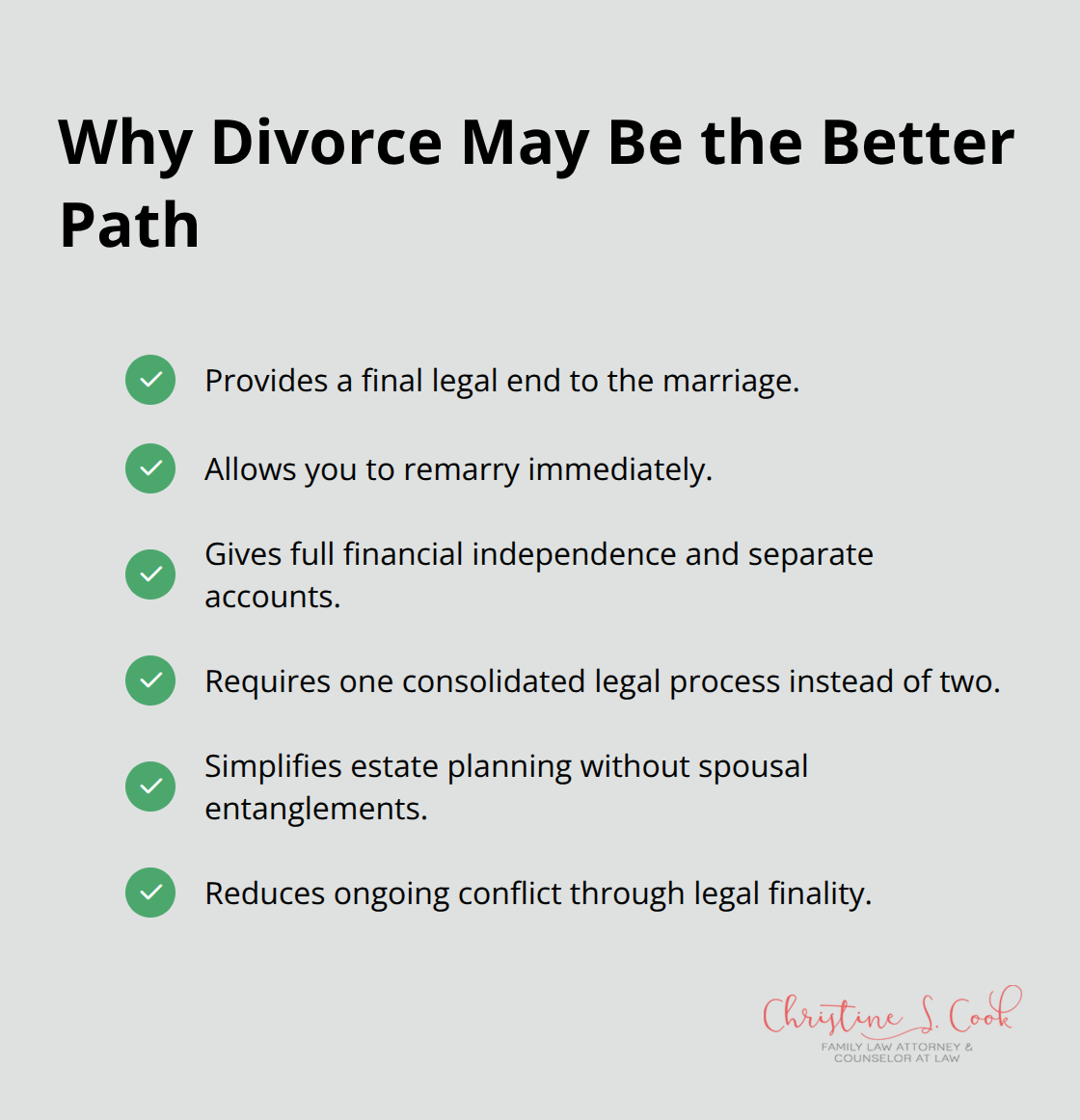
After divorce, assets and debts divide completely. Each party knows exactly what they own, what they owe, and what support obligations exist. There is no ambiguity about whether joint accounts remain open or whether you can sell shared property. This separation of finances allows you to rebuild independently, secure new housing, refinance debt in your name alone, and plan your financial future without waiting for your ex-spouse’s cooperation on future transactions.
Remarriage becomes possible immediately after divorce, whereas separation keeps you legally married indefinitely. If you want to marry again, divorce removes that barrier. You can also update your estate planning documents without complications. During separation, your ex-spouse may retain inheritance rights or decision-making authority in emergencies, which creates ongoing legal entanglement. Divorce severs these ties completely. Your will, beneficiary designations, and powers of attorney reflect only your wishes and your chosen representatives.
For parents, divorce still requires custody and support agreements, but those arrangements exist within a framework where both parties are no longer married. The court has already decided parental responsibilities, visitation schedules, and child support based on each parent’s income and custody arrangement. Unlike separation, which can last indefinitely and leave issues unresolved if circumstances change, divorce provides a foundation that both parties understand is final. If child support or custody needs adjustment later due to job loss or relocation, either parent can petition the court for modification, but the baseline arrangement is clear and legally binding. This finality reduces ongoing conflict because both parties know the marriage is over and must plan accordingly.
Legal separation makes sense when you need breathing room without burning bridges. Choose this path if your religious or personal beliefs oppose divorce, if you want to preserve Social Security benefits tied to a ten-year marriage, or if you need time to determine whether reconciliation is possible. The court establishes binding agreements on custody, support, and property division, so you obtain legal protection without permanent dissolution.
Divorce becomes the better option when you know with certainty that the marriage cannot be repaired. If you want to remarry, need complete financial independence, or simply cannot afford the emotional weight of remaining legally married while living apart, divorce provides finality and severs joint financial arrangements entirely. Filing for divorce from the start rather than pursuing separation first saves time and money by consolidating legal processes into one path.
The benefits of legal separation versus divorce depend entirely on your circumstances, values, and long-term goals. If you are unsure which path aligns with your situation, an experienced family law attorney removes the guesswork and helps you understand your options. Contact Christine Sue Cook, LLC for a free consultation to discuss your specific circumstances without financial pressure.