Collaborative divorce offers couples a respectful path forward during separation. Unlike traditional litigation, this approach relies on a skilled collaborative team working together toward mutually beneficial solutions.
We at Christine Sue Cook, LLC understand that assembling the right professionals makes all the difference in your divorce outcome. The key lies in selecting experts who share your commitment to cooperation and problem-solving.
Your collaborative divorce team requires three distinct professional categories, each bringing specialized expertise to achieve the best possible outcome. Statistics show that collaborative divorce has success rates exceeding 90% when the right team assembles, compared to traditional litigation which often leaves both parties dissatisfied.
Collaborative attorneys form the foundation of your team, with each spouse selecting their own legal representative trained specifically in collaborative law methods.
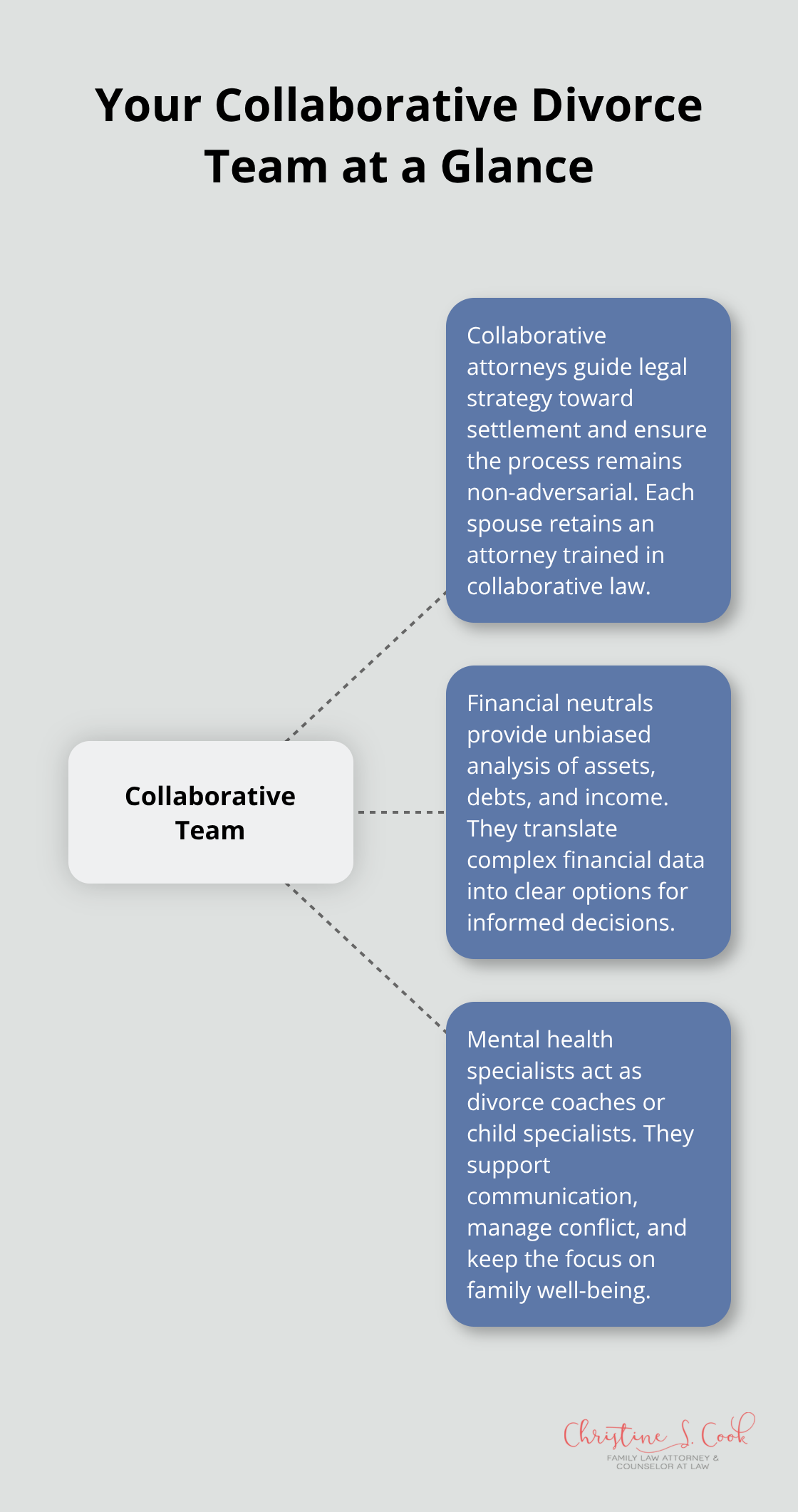
These lawyers must complete specialized training beyond traditional law school (typically requiring 40+ hours of collaborative practice education). Your attorney will guide legal strategy while maintaining focus on settlement rather than adversarial tactics.
The Institute for the Advancement of the American Legal System reports that collaborative attorneys view themselves as problem-solving partners rather than opponents. Select an attorney who demonstrates strong negotiation skills and genuine commitment to the collaborative process rather than someone who primarily practices litigation.
Financial neutrals analyze your complete financial picture, including assets, debts, and future income projections, providing unbiased data to both parties. These professionals often hold CPA or CFP designations with additional training in divorce financial analysis. They present complex financial information in clear terms that both spouses can understand and use for informed decision-making.
Mental health professionals serve as divorce coaches or child specialists, helping manage emotional challenges and communication breakdowns that can derail negotiations. Research indicates that teams including mental health professionals can significantly reduce post-divorce conflict compared to attorney-only approaches.
Child specialists focus specifically on minimizing trauma for children during the transition (developing custody arrangements that prioritize their wellbeing over parental preferences). These professionals help families navigate the emotional complexities while keeping negotiations productive and respectful.
With your team members identified, the next step involves selecting the right professionals who match your specific needs and communication style.
Professional selection requires systematic evaluation beyond impressive websites and marketing materials. Start with credential verification through state bar associations and professional organizations like the International Academy of Collaborative Professionals, which maintains strict training requirements for members. Collaborative attorneys must complete at least 40 hours of specialized training, while financial neutrals typically hold CPA or CFP designations plus divorce-specific certifications. Mental health professionals should possess active licenses in psychology or social work with additional collaborative training certificates.
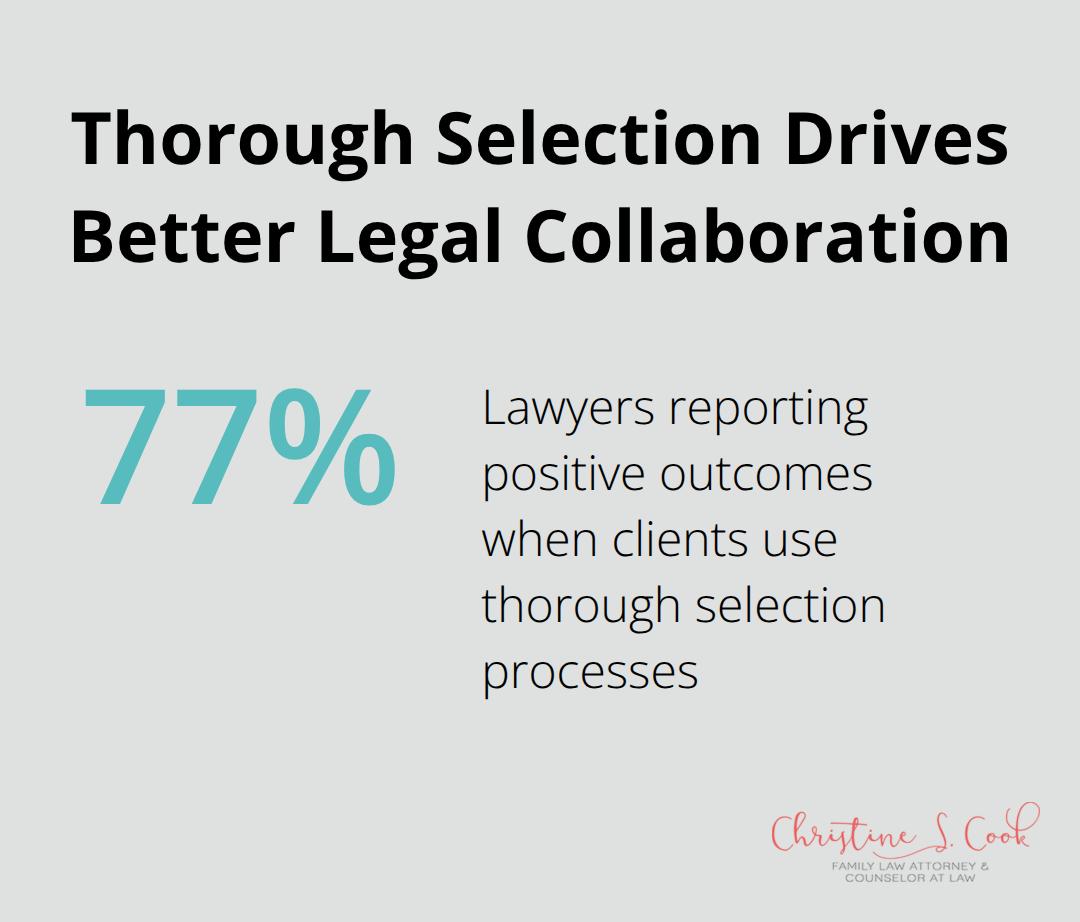
Interview potential team members with specific scenarios from your situation rather than generic questions. Ask attorneys how they handled cases with similar asset complexity or custody arrangements. Request financial professionals to explain their approach to business valuation or retirement account division with actual examples. Mental health specialists should demonstrate their conflict resolution methods and explain their experience with your family dynamics. Research shows that 77 percent of lawyers who participated in career satisfaction studies report positive outcomes when clients engage in thorough selection processes.
Observe how potential team members communicate during initial consultations. Professionals who interrupt, use excessive legal jargon, or seem impatient during free consultations will likely exhibit the same behaviors during negotiations. Quality professionals listen actively and explain complex concepts in plain language that both spouses can understand.
Fee transparency separates quality professionals from those who hide costs. Reputable collaborative attorneys charge $300-600 per hour in most markets, while financial neutrals typically range $200-400 hourly. Request detailed fee agreements that outline all potential charges (including document preparation, research time, and communication between team members). Clear fee structures prevent unexpected costs and budget overruns during your collaborative process.
Once you select your team members, the focus shifts to establishing productive working relationships that maximize their collective expertise. Building an effective collaborative divorce team requires careful coordination between all professionals to achieve amicable outcomes.
Successful collaboration demands structured coordination from day one. Establish specific objectives beyond just settlement, such as completing financial disclosure within 60 days or finalizing parenting plans within 90 days. Research on collaborative practice shows the importance of structured approaches in case management and outcomes.
Schedule regular team meetings every 2-3 weeks to maintain momentum and address issues before they escalate into major conflicts. These consistent touchpoints prevent small problems from derailing your entire process.
Create formal communication channels that prevent information silos between team members. All significant communications should flow through your attorney to maintain attorney-client privilege and prevent mixed messages. Financial neutrals should send reports simultaneously to both attorneys and spouses to maintain transparency.
Set response timeframes (typically 48-72 hours for non-urgent matters) and designate primary contact methods. Studies show that collaborative divorce resolves 85% of cases, often within 6 months, demonstrating the effectiveness of structured approaches. Clear protocols eliminate confusion about who handles what information and when responses are expected.
Conflicts within your team require immediate professional intervention rather than allowing tensions to fester. Your mental health professional should facilitate resolution sessions when team members disagree on approaches or recommendations. Document all disagreements and resolutions to prevent recurring issues.
Replace team members who consistently create friction or fail to collaborate effectively, as one disruptive professional can derail the entire process. Studies show that teams addressing conflicts within the first two weeks maintain their collaborative approach, while delayed responses often result in process breakdown.
Track measurable progress indicators like completed financial disclosures, signed interim agreements, and resolved custody issues. Request monthly progress reports from each team member detailing accomplishments and upcoming milestones. This systematic approach prevents stagnation and identifies problems early when solutions remain manageable.
Create accountability measures that keep everyone focused on your shared objectives. Regular progress reviews help identify when adjustments to strategy or timeline become necessary.
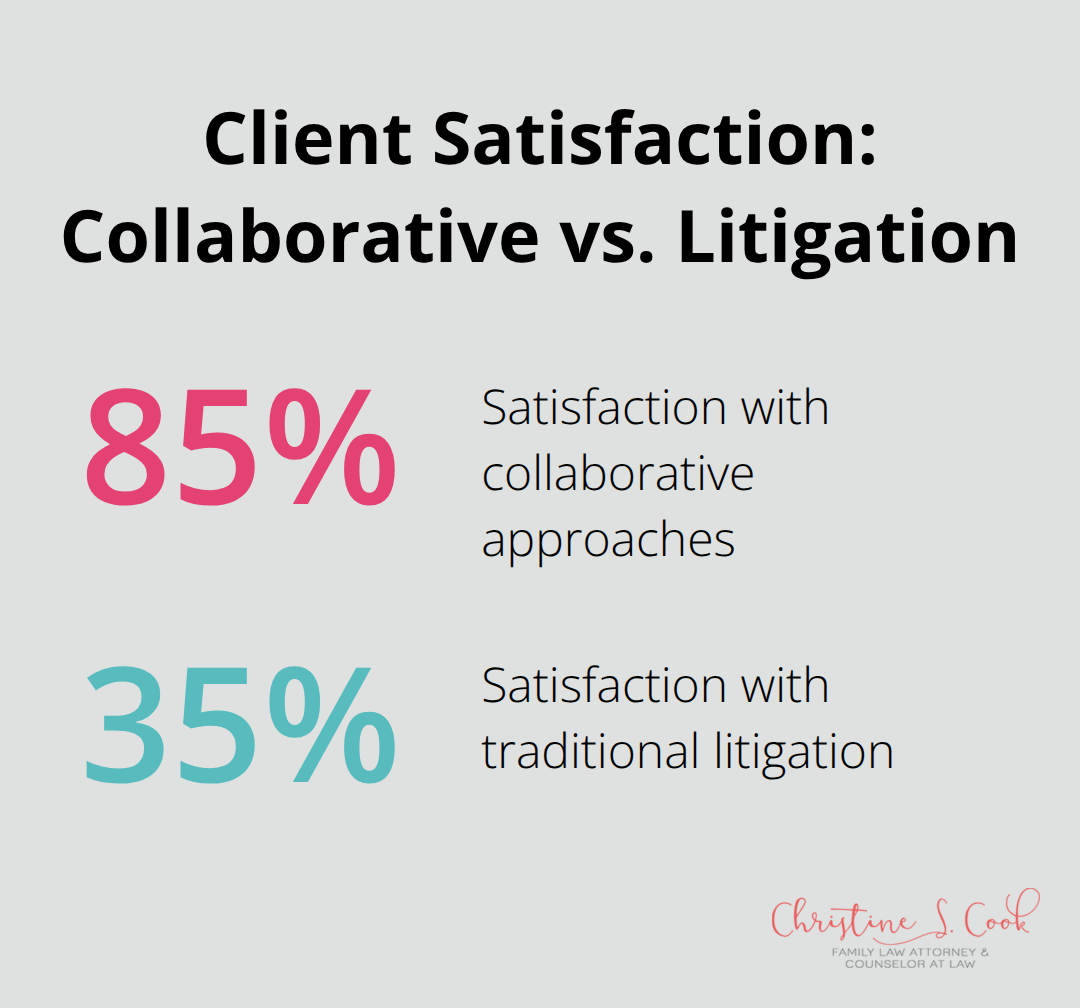
A well-assembled collaborative team transforms divorce from an adversarial battle into a structured problem-solving process. Research demonstrates that couples who use collaborative approaches report 85% satisfaction rates compared to 35% in traditional litigation. Your team’s combined expertise addresses legal, financial, and emotional challenges simultaneously, which creates comprehensive solutions that protect your family’s future.
Success in collaborative divorce depends on three key factors: you select properly trained professionals, you maintain transparent communication, and you commit to the cooperative process even during difficult moments. Teams that establish clear protocols and regular progress reviews complete their cases 40% faster than those without structured approaches. The collaborative process requires genuine commitment from all parties (but the benefits extend far beyond settlement).
Couples preserve relationships, protect children from courtroom trauma, and maintain control over their outcomes. When you’re ready to explore collaborative divorce options, Christine Sue Cook, LLC provides expert legal guidance to achieve amicable settlements while offering compassionate support throughout your transition. We help you build the right collaborative team for your specific situation.