Family law disputes don’t have to mean courtroom battles. At Christine Sue Cook, LLC, we know that collaborative process options give you real control over your outcome and your family’s future.
When you choose an amicable path, you avoid the cost, delay, and emotional toll of litigation. This guide walks you through your options so you can make the right choice for your situation.
Collaborative law is a structured process where both parties and their attorneys commit to resolving disputes outside court. Unlike litigation, which hands decision-making power to a judge, collaborative law keeps that power in your hands. You and your spouse work together with trained professionals to reach agreements on property division, child custody, support payments, and other critical issues. The process requires written commitment from both parties that they will not go to court, which creates real accountability and motivation to find solutions that work for everyone.
Collaborative divorce involves more than just two attorneys. A typical collaborative team includes collaborative attorneys who facilitate negotiation through active listening and reframing techniques, financial specialists who analyze assets, liabilities, and tax implications to inform realistic settlement discussions, and mental health professionals who provide emotional support and teach effective communication strategies. This multidisciplinary approach addresses the real complexities of family disputes, not just the legal paperwork.
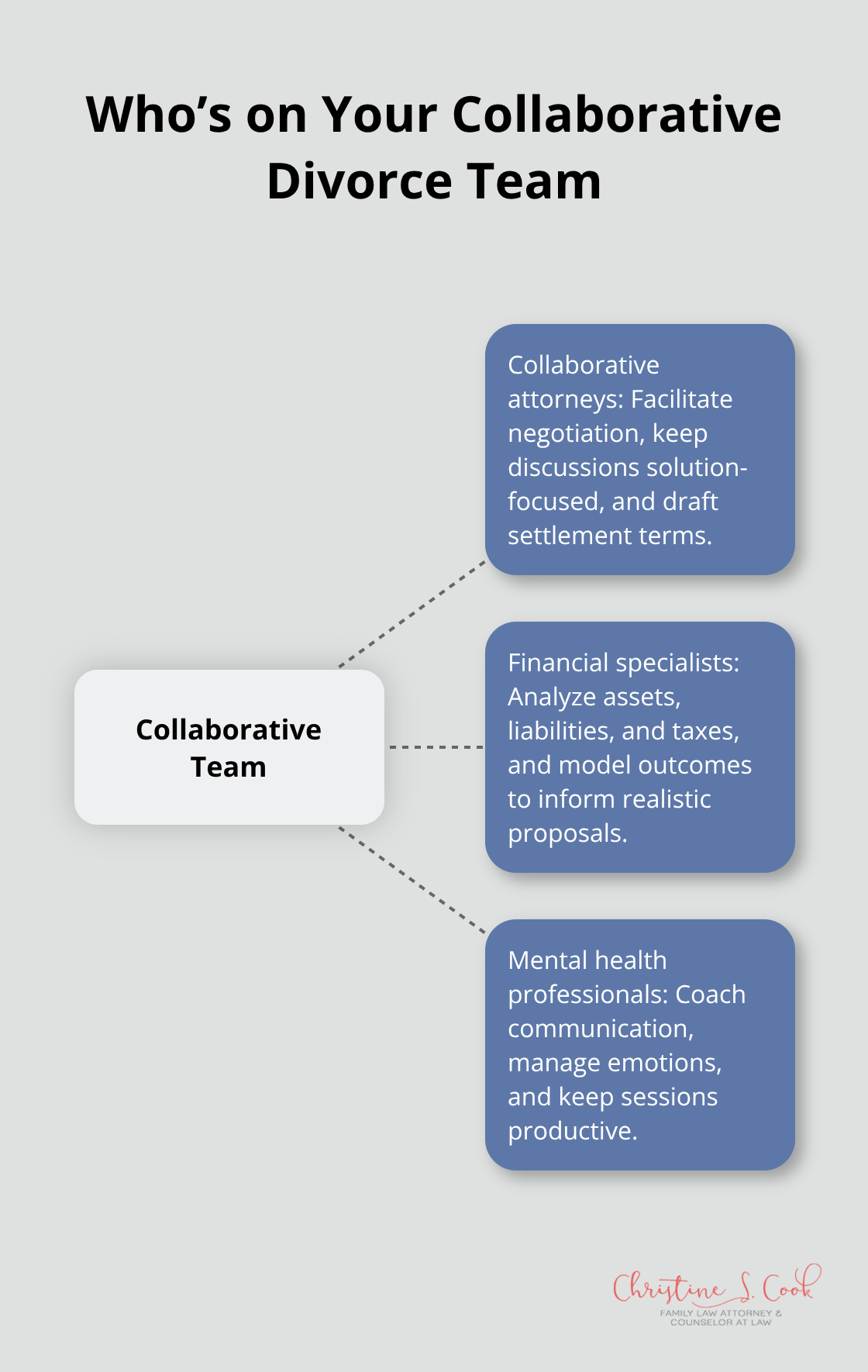
Financial specialists examine bank statements, tax returns, and investment accounts to project future needs and identify hidden financial issues before they derail negotiations. Mental health professionals help couples understand each other’s underlying interests rather than just their stated positions, which dramatically increases the likelihood of agreements that actually hold up long-term.
Traditional litigation costs significantly more than collaborative processes. Court cases involve discovery phases where attorneys request documents and depositions, motion practice where lawyers argue procedural issues before judges, and trial preparation that can stretch cases across years. Collaborative cases typically resolve in six to twelve months, while contested divorces average two to three years according to family law practitioners.
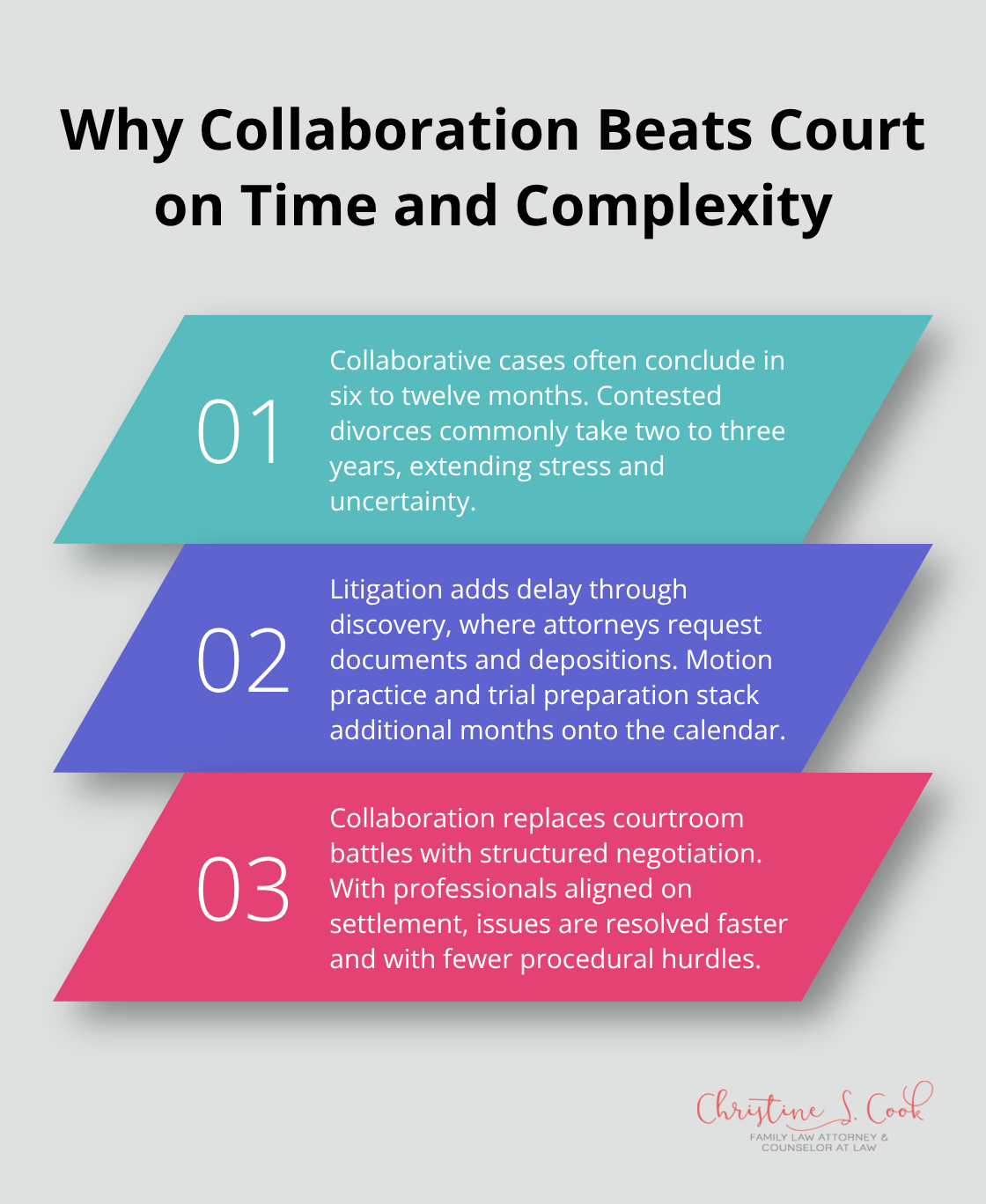
Cost differences are equally stark: collaborative cases average between 20,000 and 40,000 dollars total, while adversarial litigation frequently exceeds 100,000 dollars when accounting for attorney fees, court costs, and expert witness expenses. The financial specialists on your collaborative team help identify cost-saving opportunities early by using a single neutral financial expert, which reduces the costs of the divorce process compared to traditional approaches.
The collaborative process starts with both parties selecting trained collaborative attorneys and assembling your full team. You and your spouse then participate in structured negotiation sessions where professionals facilitate discussions around your family’s specific needs and priorities. This approach means you shape the outcome rather than waiting for a judge to impose one.
Collaborative law delivers measurable financial advantages that traditional litigation cannot match. Collaborative divorce typically ranges from $10,000 to $25,000, while contested court cases frequently exceed 100,000 dollars when you factor in attorney fees, court costs, expert witnesses, and the hidden expenses of prolonged disputes. This difference exists because collaborative processes eliminate discovery phases where attorneys request endless documents and depositions, motion practice where lawyers argue procedural issues before judges, and trial preparation that stretches cases across years. Collaborative cases typically resolve in six to twelve months compared to the two to three year average for adversarial litigation.
Your financial specialist on the collaborative team identifies cost-saving opportunities immediately through the use of a single neutral expert instead of each side hiring competing specialists, which cuts expenses dramatically compared to traditional approaches. Time savings matter beyond the calendar: every month your case stays open, you pay attorney hourly rates, and your family remains in limbo waiting for decisions about custody, support, and property division.
The emotional and relational benefits directly impact your family’s long-term stability. When children watch parents resolve disputes through collaboration rather than courtroom battles, they experience significantly less trauma and confusion about loyalty conflicts. Collaborative processes allow you to preserve co-parenting relationships that will define your children’s lives for decades, whereas adversarial litigation creates lasting resentment that poisons future interactions around school events, medical decisions, and major life milestones.
You maintain control over custody arrangements, support amounts, and property division rather than accepting whatever a judge imposes based on limited courtroom testimony. Parents in collaborative processes report greater satisfaction with final agreements because they shaped the outcome themselves, which increases compliance with settlement terms without future court enforcement battles.
The structured negotiation sessions with mental health professionals teach communication skills that help both parties move forward productively. These professionals facilitate discussions that address underlying interests rather than just surface positions, which reduces the likelihood that unresolved conflicts resurface years later. When you work with a collaborative team, you develop tools for handling future disagreements about your children’s education, medical care, and major decisions-conversations that will happen throughout your co-parenting relationship.
This foundation of improved communication means you can address new challenges without returning to court. The collaborative process transforms how you and your former spouse interact, creating patterns of respectful negotiation that serve your family long after the divorce concludes. Understanding these communication benefits helps clarify whether collaborative law aligns with your family’s needs and values, which brings us to evaluating the specific collaborative options available to you.
Collaborative divorce assembles attorneys, financial specialists, and mental health professionals into a coordinated team designed specifically for your family’s needs. This process works best when both parties genuinely want to resolve disputes outside court and participate in structured negotiation sessions. The collaborative model requires written commitment from both sides that they will not litigate, creating accountability that pushes toward settlement. You control every aspect of the outcome, from custody arrangements to property division, rather than accepting a judge’s decision based on limited courtroom testimony.
Financial specialists analyze your complete asset picture-bank statements, retirement accounts, real estate, tax implications-to ensure settlement proposals reflect actual financial reality. Mental health professionals address the emotional dimensions that derail many negotiations, teaching communication techniques that help you and your spouse understand each other’s underlying interests. Collaborative cases typically resolve in 3 to 9 months, compared to 12 to 36 months or more for court litigation. This speed reduces costs substantially since you avoid discovery phases where attorneys request endless documents and depositions, motion practice arguing procedural issues before judges, and trial preparation consuming months of attorney time.
Mediation offers a less structured option when you need help communicating but want lower costs than full collaborative divorce. A neutral mediator facilitates conversations between you and your spouse without deciding the outcome or representing either party’s interests, making mediation particularly effective for preserving relationships when both parties remain committed to finding solutions. This approach works well when financial disputes dominate but communication remains respectful between you and your former spouse.
Settlement conferences provide a middle ground where a judge or settlement officer evaluates your case and actively pushes toward settlement without rendering a final decision. This option proves useful when you want expert assessment of your case’s strengths and weaknesses before committing to full resolution. The neutral evaluator’s perspective can shift negotiations toward realistic settlement ranges based on what courts typically award in similar situations.
Negotiation conducted directly between your attorney and your spouse’s attorney works when disputes center primarily on financial issues rather than custody or emotional conflicts. This approach requires both attorneys to prioritize settlement over positioning for trial, and it costs less than collaborative divorce or mediation since fewer professionals participate in the process.
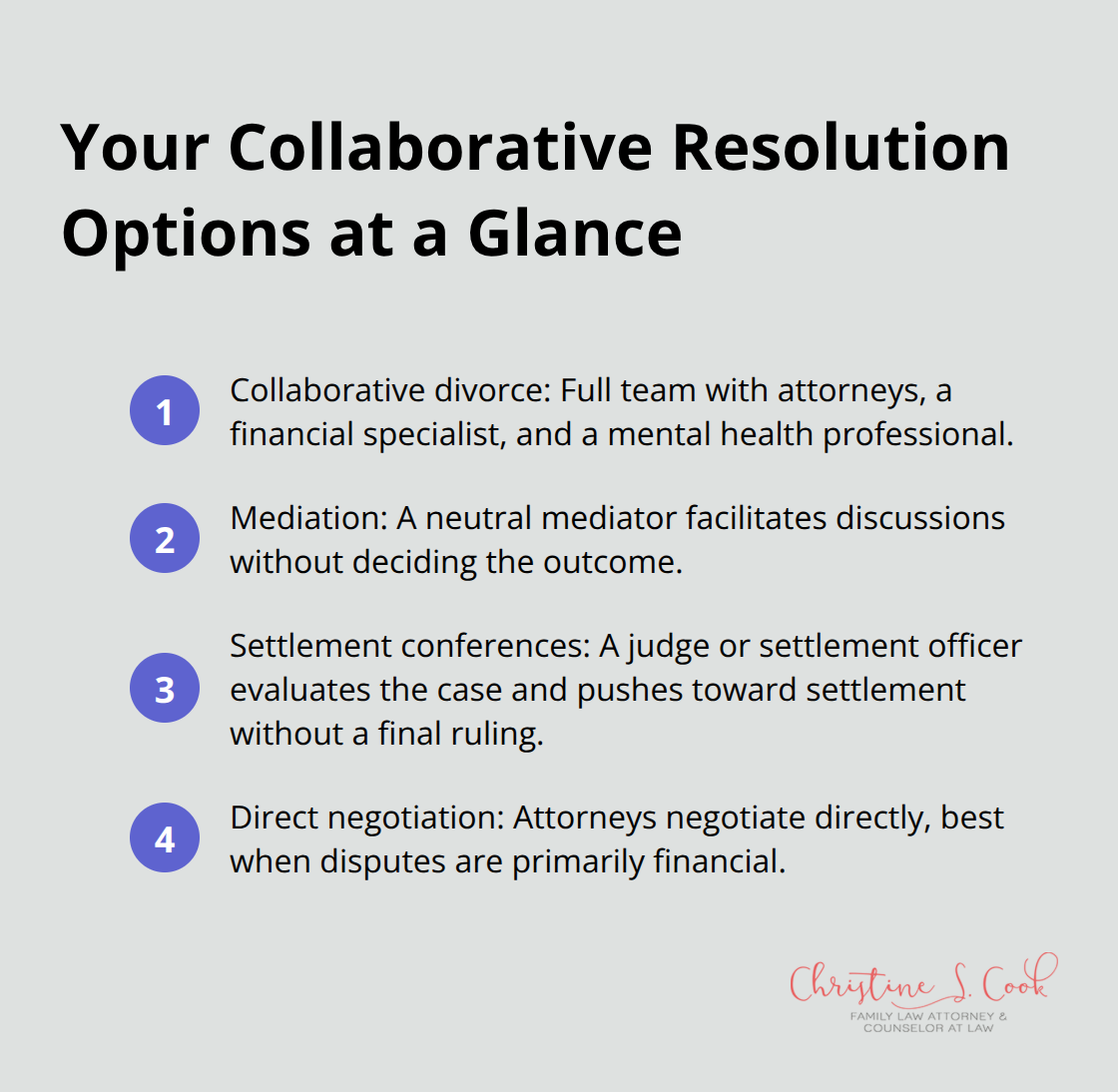
The choice between these options depends on your specific circumstances. If custody or parenting arrangements involve significant disagreement, collaborative divorce’s mental health professional component becomes invaluable. If finances dominate but communication remains respectful, mediation costs less while still achieving resolution. If you need a neutral expert’s evaluation before moving forward, settlement conferences provide that assessment efficiently. At Christine S. Cook, LLC, we help you evaluate which option aligns with your family’s needs and your priorities for resolution.
Collaborative process options work because they shift power from judges back to you. When you control the outcome, you make decisions that reflect your family’s needs rather than accepting whatever a court imposes based on limited testimony. Agreements you shape yourself get followed, custody arrangements you design work better for your children, and financial settlements you negotiate feel fair to both parties.
Assess your situation honestly to determine whether collaboration fits your circumstances. If you and your spouse can communicate respectfully with professional help, collaboration becomes viable. If custody or parenting time involves significant disagreement, the mental health professional on a collaborative team addresses underlying concerns that direct negotiation cannot resolve. Contact Christine Sue Cook, LLC to discuss which collaborative process options align with your priorities and constraints.