
Make a Payment
850-572-3443
Divorce can be a complex and emotionally challenging process, especially when it comes to dividing assets. At Christine Sue Cook, LLC, we understand the importance of a well-prepared property division worksheet in divorce proceedings.
This essential tool helps couples organize their assets, debts, and financial information, making the division process more manageable. In this blog post, we’ll guide you through creating an effective property division worksheet for your divorce.
Property division forms a critical part of divorce proceedings. At Christine Sue Cook, LLC, we often encounter clients who struggle to grasp how their assets and debts will be split. Let’s break down the key concepts to help you navigate this complex process.
In divorce, property falls into two main categories: marital and separate. Marital property encompasses assets and debts acquired during the marriage, regardless of who made the purchase or whose name appears on the title. This includes homes, vehicles, bank accounts, and even retirement benefits.
Separate property belongs to one spouse individually. It typically includes assets owned before marriage, inheritances, or gifts received by one spouse during the marriage. However, separate property can transform into marital property if it’s commingled or used for the benefit of the marriage (e.g., using inherited funds to renovate a shared home).
Your state’s laws largely determine how property is divided. Most states follow equitable distribution rules, which aim for a fair (but not necessarily equal) division of marital property. These states consider factors such as each spouse’s economic circumstances, contributions to the marriage, and future needs.
Nine states, including California, Texas, Arizona, Idaho, Louisiana, Nevada, New Mexico, Washington, and Wisconsin, adhere to community property laws. In these states, marital property is generally split 50/50, regardless of individual contributions or circumstances.
Courts weigh various factors when dividing property. These may include:
It’s important to note that courts don’t just evaluate financial contributions. They also value non-financial contributions, such as homemaking or supporting a spouse’s career.
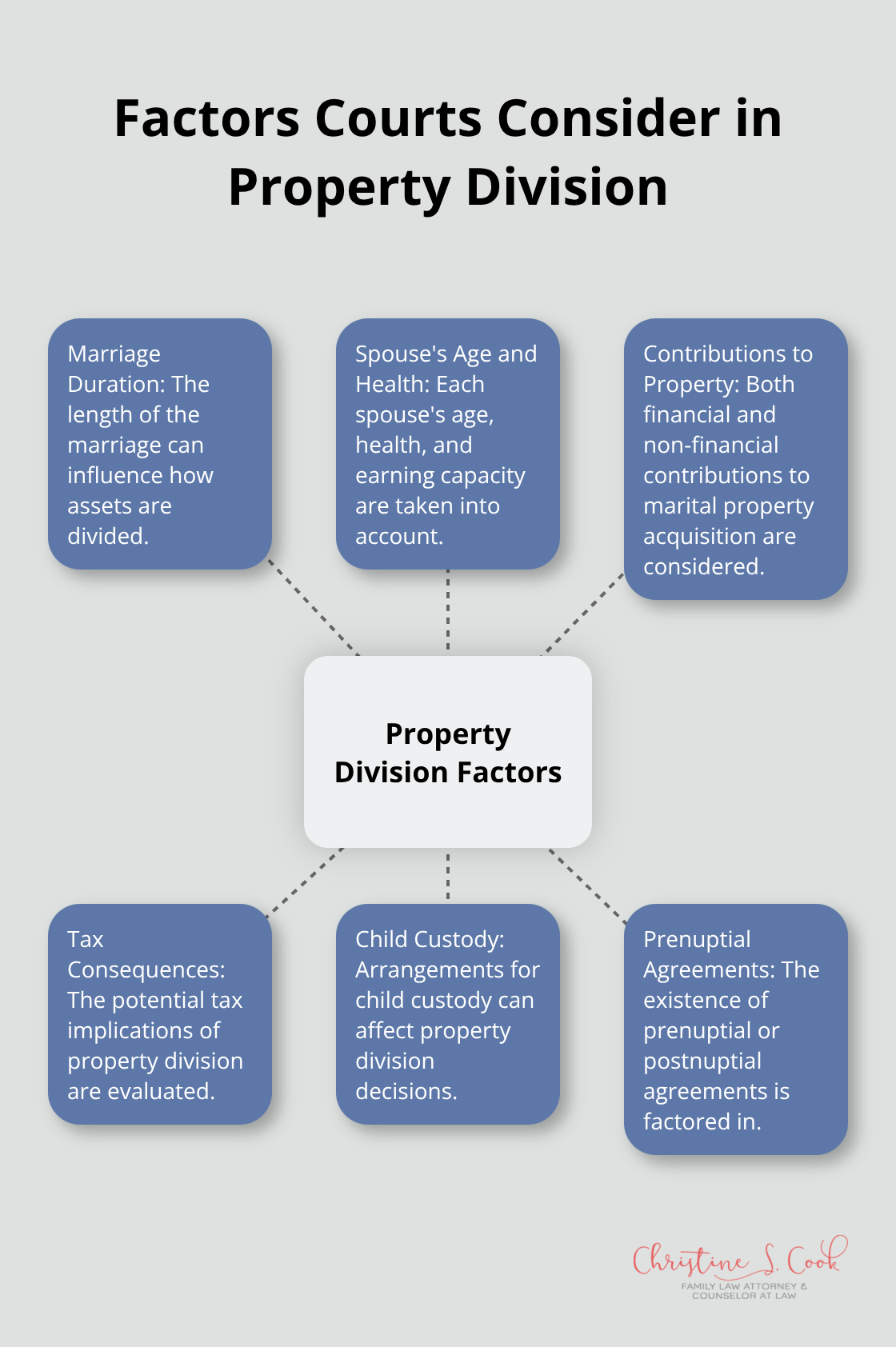
Property division can significantly impact your financial future. Working with an experienced family law attorney can help protect your interests throughout the divorce process. A skilled lawyer can explain your state’s specific laws and how they apply to your unique situation, preparing you for property division negotiations or court proceedings.
As we move forward, let’s explore the essential components of a property division worksheet, a tool that can streamline this complex process and help you achieve a fair settlement.
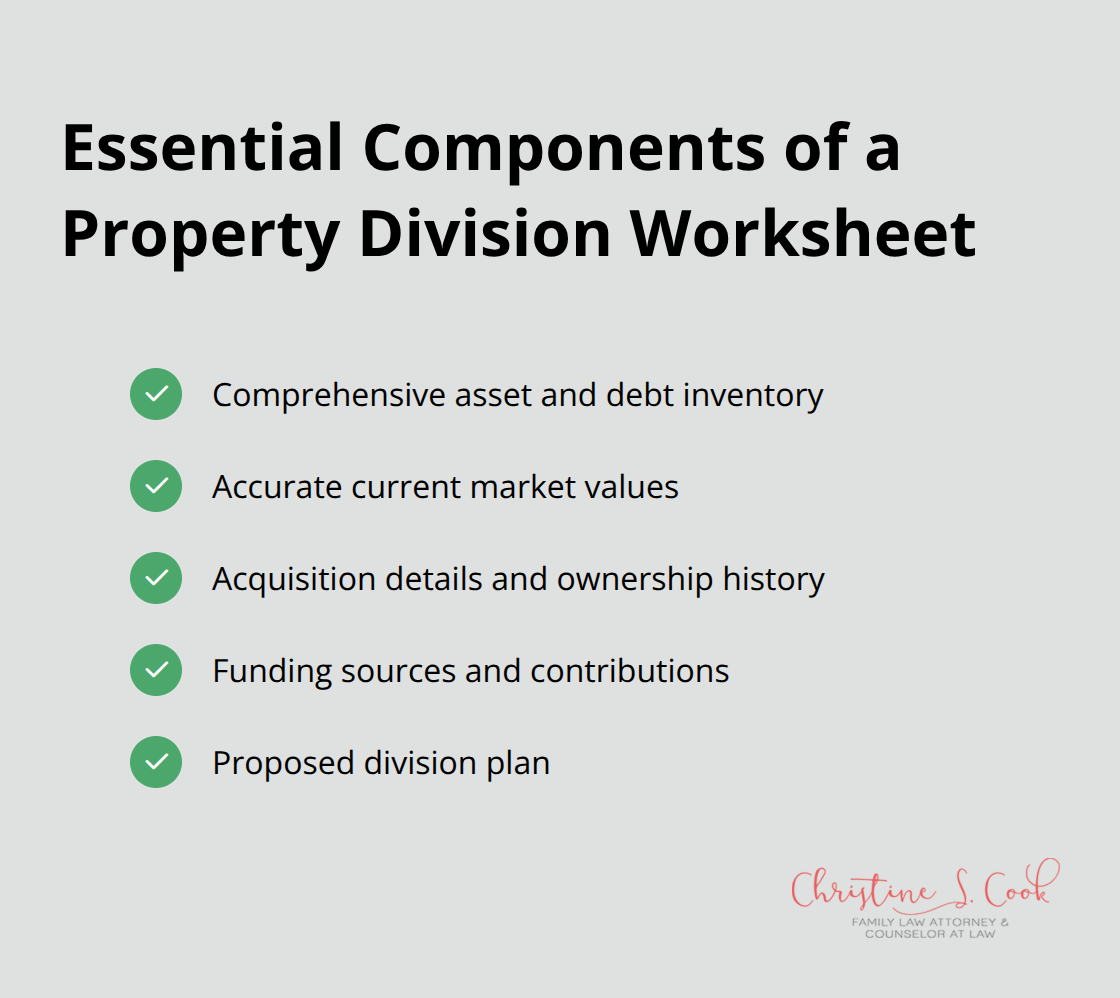
A property division worksheet must start with a complete list of all assets and debts. This inventory should cover your house, your car, your retirement accounts, and your bank accounts. Don’t overlook less obvious items (such as frequent flyer miles, club memberships, or intellectual property rights). The debt section should list all outstanding loans, credit card balances, and other financial obligations.
Assigning current market values to each asset is essential for fair division. Start by listing every asset, then categorize them. You also need to determine which assets are considered marital property and which are separate. For real estate, a professional appraisal provides the most accurate valuation. Vehicle values can be determined using resources like Kelley Blue Book. Personal property might require research on comparable items or expert valuations for high-value pieces. The objective is to reflect the true worth of each item as precisely as possible.
The worksheet should document when and how each asset was acquired to determine whether it’s separate or marital property. Include the date of purchase or acquisition for each item. This information holds particular importance in equitable distribution states, where courts consider the timing and source of acquisitions when dividing property.
Tracking the source of funds used to acquire assets can significantly impact how assets are classified and divided. For example, did the down payment for your home come from one spouse’s inheritance? Was a business started with marital funds but grown through one spouse’s efforts? These details can influence the final property division.
A well-crafted property division worksheet should also include a proposed plan for dividing assets and debts. This section allows each spouse to suggest how they believe the property should be allocated, taking into account factors such as emotional attachment, practical needs, and financial considerations.
The next step in creating an effective property division worksheet involves a detailed, step-by-step process to ensure all necessary information is gathered and organized properly. Let’s explore how to put this worksheet together in a systematic way.

Start your property division worksheet by collecting all relevant financial documents. This includes bank statements, investment reports, retirement account summaries, mortgage statements, credit card bills, and tax returns from the past three to five years. Don’t overlook less obvious items such as insurance policies, stock options, or cryptocurrency wallets. The completeness of your document collection will determine the accuracy of your worksheet.
With your documents in hand, create a comprehensive list of your assets and debts. Divide them into categories:
Be specific in your descriptions. Instead of simply listing “jewelry,” itemize each piece with a detailed description. For debts, include credit card balances, mortgages, personal loans, and any other outstanding financial obligations. Note which spouse’s name appears on each asset or debt (this information can prove vital during negotiations).
This step often presents challenges. You must determine ownership and assign values to each item on your list. For real estate, a professional appraisal will likely be necessary. Use resources like Kelley Blue Book or NADA Guides for vehicle valuations. Personal property might require research on comparable items or expert valuations for high-value pieces.
Prepare for potential disagreements over values. Spouses frequently have differing opinions on the worth of certain items. In such cases, a neutral third-party appraiser may need to settle disputes.
When determining ownership, consider whether items classify as marital or separate property. Some cases may not have clear-cut distinctions. For example, a business started during the marriage with one spouse’s inheritance money could have elements of both marital and separate property.
After assigning values to all assets and debts, calculate your total marital net worth. Subtract total debts from total assets to arrive at this figure. Then, propose a division of assets and debts that you believe is fair and equitable (considering factors such as each spouse’s income, future earning potential, and contributions to the marriage).
Creating a thorough and accurate property division worksheet involves complex tasks. If you feel overwhelmed, consider seeking professional help. At Christine Sue Cook, LLC, we offer extensive experience in guiding clients through property division (we can provide the necessary support to protect your interests throughout divorce proceedings).
A property division worksheet for divorce organizes financial information and provides a clear picture of the marital estate. This tool makes negotiations more productive and less contentious. It accounts for all assets and debts, their values, and proposed division, which helps ensure a fair and equitable distribution.
Property division in divorce can become complex, especially with high-value assets or complicated financial situations. Working with a skilled family law attorney can protect your interests and help you achieve a favorable outcome. An experienced lawyer provides valuable insights into state-specific laws and guides you through the intricacies of property division.
We at Christine Sue Cook, LLC specialize in family law matters, including property division in divorce. Our team offers expert legal guidance to help you navigate the property division process (ensuring your rights are protected). From assisting with detailed worksheets to negotiating on your behalf, we commit to helping you achieve a fair settlement.