Divorce is expensive, but collaborative divorce doesn’t have to drain your bank account. The cost of collaborative divorce is often lower and more predictable than traditional litigation because you control the process.
At Christine Sue Cook, LLC, we help clients understand exactly what they’ll pay before they commit to this path. This guide breaks down every expense so you can make an informed decision about your divorce.
Collaborative divorce assembles a coordinated team of professionals instead of two opposing lawyers battling it out. You have your attorney, your spouse has theirs, and then neutral professionals join the effort depending on what your situation requires. A neutral financial specialist handles asset valuation, retirement account division, and tax consequences so both sides understand the real numbers. If children are involved, a child specialist works with both parents to develop parenting plans that reflect what the kids actually need rather than what each parent wants to win. A mental health professional, sometimes called a divorce coach, helps manage the emotional side and keeps conversations productive when tension rises.
This structure costs more upfront than hiring one lawyer, but it eliminates the expense of duplicate experts and endless discovery battles. According to the Florida Academy of Collaborative Professionals, about 80 percent of couples resolve their issues through collaboration, avoiding lengthy court fights. The transparent process means your financial professional organizes documents once instead of each side’s expert doing it separately, cutting copying and administrative time substantially.
The collaborative process moves from initial team meetings through structured four-way sessions where both spouses and both attorneys sit together. Early meetings focus on gathering financial information and establishing ground rules for respectful communication. Your attorney explains your rights and options without pushing you toward conflict.
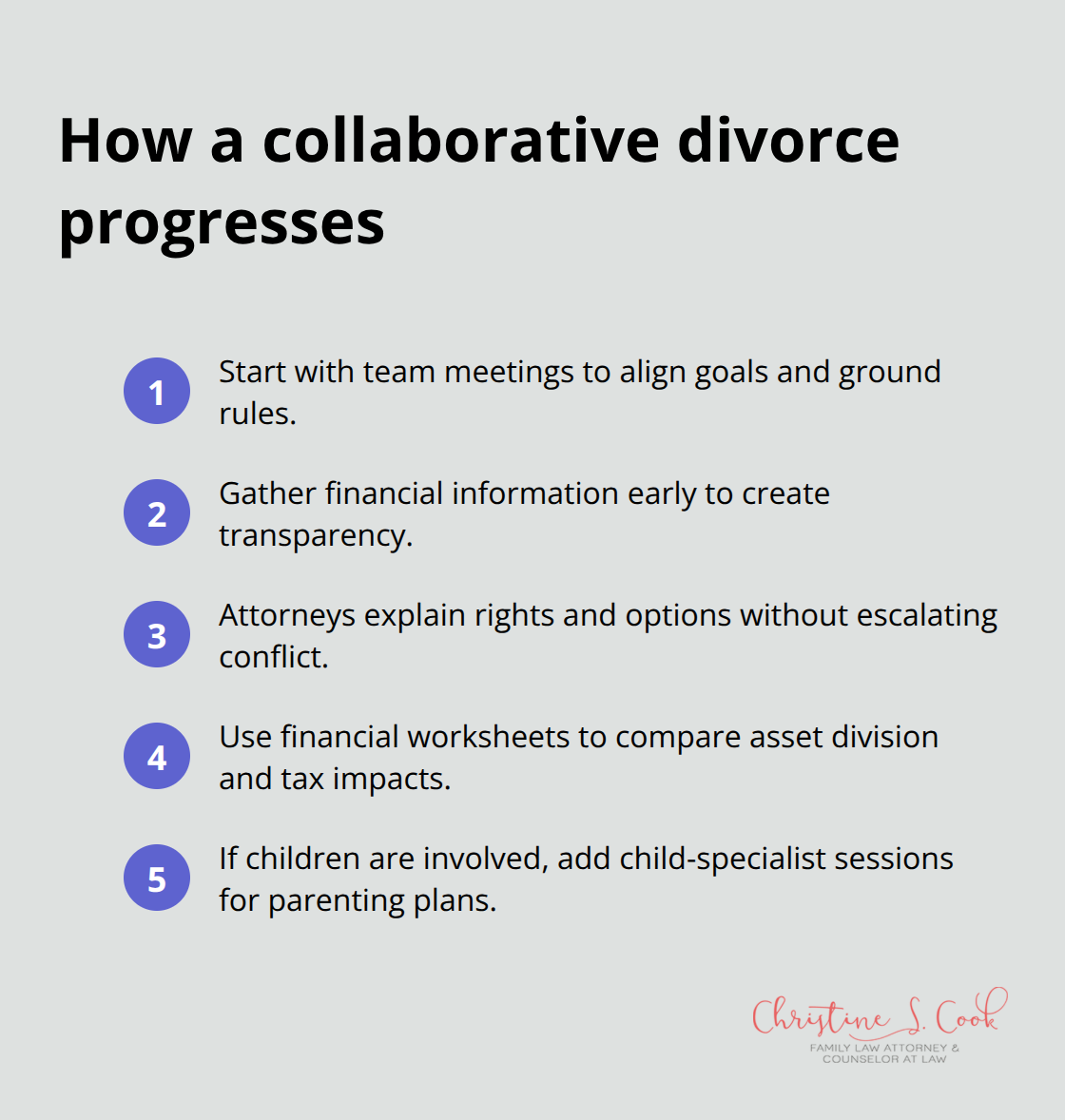
The neutral financial professional creates worksheets showing asset division scenarios, helping you see the actual tax impact of different settlement options.
If kids are involved, the child specialist meets with parents separately first, then facilitates discussions about schedules and decision-making. Most collaborative cases finish within 12 months or less, according to the Florida Academy data covering 299 matters from 2014 to 2024.
The biggest difference from litigation is that you avoid depositions, expert depositions, temporary hearings, and discovery battles that can stretch cases into years. In litigation, each side typically hires competing experts, creating duplicate costs. Collaborative divorce requires genuine willingness to negotiate, which is why it doesn’t work if one spouse refuses to disclose assets or won’t compromise. When both parties approach it honestly, the process keeps legal fees lower because your attorney focuses on negotiation and agreement rather than preparing for trial. Understanding these cost drivers sets the stage for what you’ll actually pay when you move forward with your team.
Attorney fees in collaborative divorce typically run between $250 and $400 per hour, depending on experience and location. You pay your own attorney directly, and you also contribute to the costs of neutral professionals your team brings in. Your attorney’s hours decrease substantially because you skip depositions, expert depositions, temporary hearings, and discovery battles that drain litigation budgets. In Florida, about 55 percent of collaborative matters cost $50,000 or less in total fees for all professionals combined, with 24 percent staying under $30,000, according to data from the Florida Academy of Collaborative Professionals covering 299 cases between 2014 and 2024. This cost structure differs sharply from litigation, which costs $15,000 to $50,000 or more because of court filing fees, transcripts, certified copies, and the need for competing experts in business valuation, taxes, and real estate appraisal.

A neutral financial professional charges hourly fees similar to attorneys, typically $150 to $300 per hour, but handles document organization and asset valuation once for both parties instead of each side hiring separate experts and duplicating that work. If you have children, a child specialist costs between $100 and $250 per hour for focused sessions on parenting plans and custody arrangements. A divorce coach or mental health professional runs $75 to $200 per hour to keep conversations productive and emotional stability intact. These professionals work as a coordinated team rather than as opposing advocates, which eliminates the expense of duplicate experts and reduces overall professional time.
Home or business appraisals add costs if assets require independent valuation. Actuarial analyses for pension division apply if either spouse has a substantial retirement plan. Tax advice structures asset splits efficiently so you don’t trigger unnecessary capital gains taxes on property sales or improper distributions from retirement accounts. If you sell a home as part of settlement, plan for capital gains taxes during the asset division phase rather than discovering them later. Court costs in collaborative divorce stay minimal because most cases avoid hearings entirely, though some judges require a final hearing to sign the judgment, which adds minimal expense.
The more organized you are at the start-gathering tax returns, bank statements, mortgage documents, and investment records-the fewer billable hours your attorney spends on administrative tasks, directly reducing your total bill. Complexity drives costs upward; cases involving business interests, multiple properties, or significant debt require more professional time than straightforward asset splits. More than 90 percent of collaborative matters finish within 12 months or less, which means you stop paying professional fees sooner than litigation cases that drag through years of court scheduling delays. Understanding these cost drivers prepares you to anticipate what factors will influence your final bill and where you can control expenses through preparation and cooperation.
Asset complexity stands as the single biggest cost driver in collaborative divorce, and ignoring this reality sets you up for budget surprises. If you own a business, hold significant retirement accounts, or have multiple properties, your neutral financial professional will spend substantially more time on valuation and tax planning. A business valuation alone can add $2,000 to $5,000 to your total costs, and pension division through an actuary runs another $1,000 to $3,000. The Florida Academy of Collaborative Professionals found that about 85 percent of collaborative matters reach full agreement on all issues, but that high success rate depends heavily on how straightforward your financial picture is. Cases with uncomplicated finances-one home, standard retirement accounts, no business interests-move faster and cost less because your neutral professionals spend fewer hours analyzing scenarios.
Disagreements over asset values or hidden debts force your team to spend more time investigating, extending timelines and increasing billable hours substantially. The willingness of both spouses to cooperate determines whether complex cases stay manageable or spiral into expensive disputes. If one spouse resists disclosing financial information or refuses reasonable settlement proposals, costs climb because your attorneys and neutral professionals must spend more time documenting positions, requesting clarifications, and managing conflict.
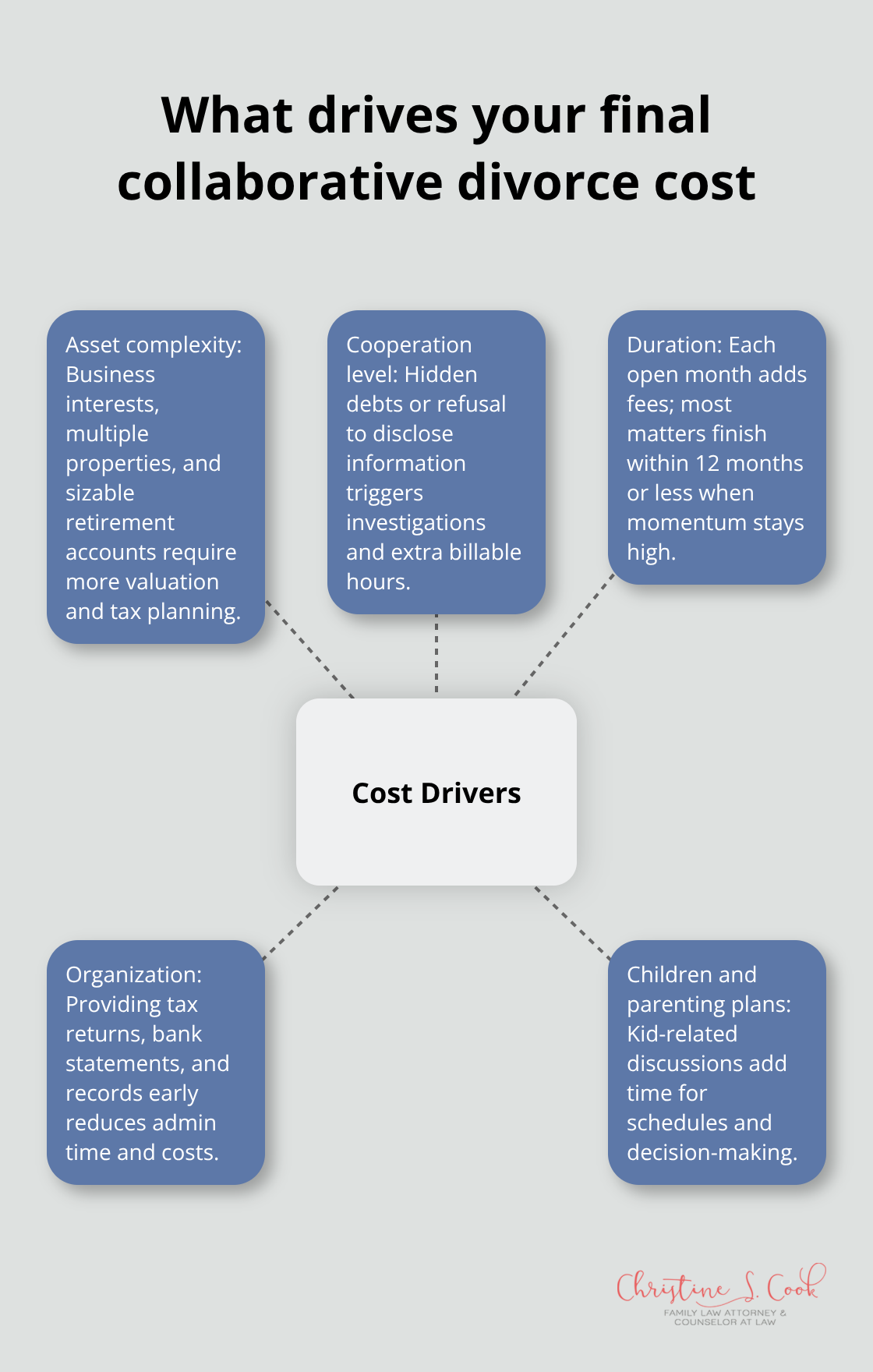
Couples who attend four-way team meetings consistently, respond promptly to requests for documents, and come prepared to discuss options keep momentum high and finish faster. Those who miss meetings, delay providing financial records, or continually change their positions extend the timeline significantly.
Duration matters because every month your case remains open means continued professional fees. Most collaborative matters finish within 12 months or less, which keeps costs predictable compared to litigation cases that stretch two to three years or longer. The speed depends entirely on how quickly you and your spouse move through information gathering, financial analysis, and parenting plan development. Scheduling delays in court systems add months to litigation automatically, but collaborative divorce only takes as long as the parties need to reach agreement. If your case involves children, expect the process to take longer because developing parenting plans requires more discussion and emotional processing than asset division alone. Budget for six to twelve months of professional fees rather than assuming completion in three months, especially if custody or complex assets are involved.
Collaborative divorce delivers cost predictability that litigation cannot match, and the cost of collaborative divorce typically ranges from $30,000 to $50,000 for all professionals combined in most cases. You know upfront what professionals you’ll engage, understand their hourly rates, and track expenses as the process unfolds. Most cases finish within twelve months, which means your professional fees stop sooner than litigation cases that drag through years of court delays.
Collaborative divorce reduces the emotional toll on you and your children when both spouses commit to honest negotiation rather than courtroom combat. Stress decreases and co-parenting stability improves as you maintain control over outcomes instead of leaving decisions to a judge who knows nothing about your family’s actual needs. The process respects your dignity and your spouse’s humanity, which matters long after the divorce is final.
Contact Christine S. Cook, LLC in Pensacola to explore whether collaborative divorce fits your situation. Christine offers free consultations to discuss your legal needs without financial pressure and provides compassionate guidance on collaborative options and aggressive court representation if litigation becomes necessary. Your first conversation costs nothing and gives you clarity about what your specific circumstances would actually require.