Navigating spousal support in divorce can be a complex and emotionally charged process. At Christine Sue Cook, LLC, we understand the challenges you face during this difficult time.
Our goal is to provide you with clear, practical guidance on understanding, calculating, and negotiating spousal support agreements. This post will equip you with essential knowledge to make informed decisions and protect your interests throughout your divorce proceedings.
Spousal support (also known as alimony) is a financial arrangement that maintains the standard of living for a lower-earning spouse after divorce. This support plays a vital role for individuals transitioning to single life.

Courts consider several factors when determining spousal support:
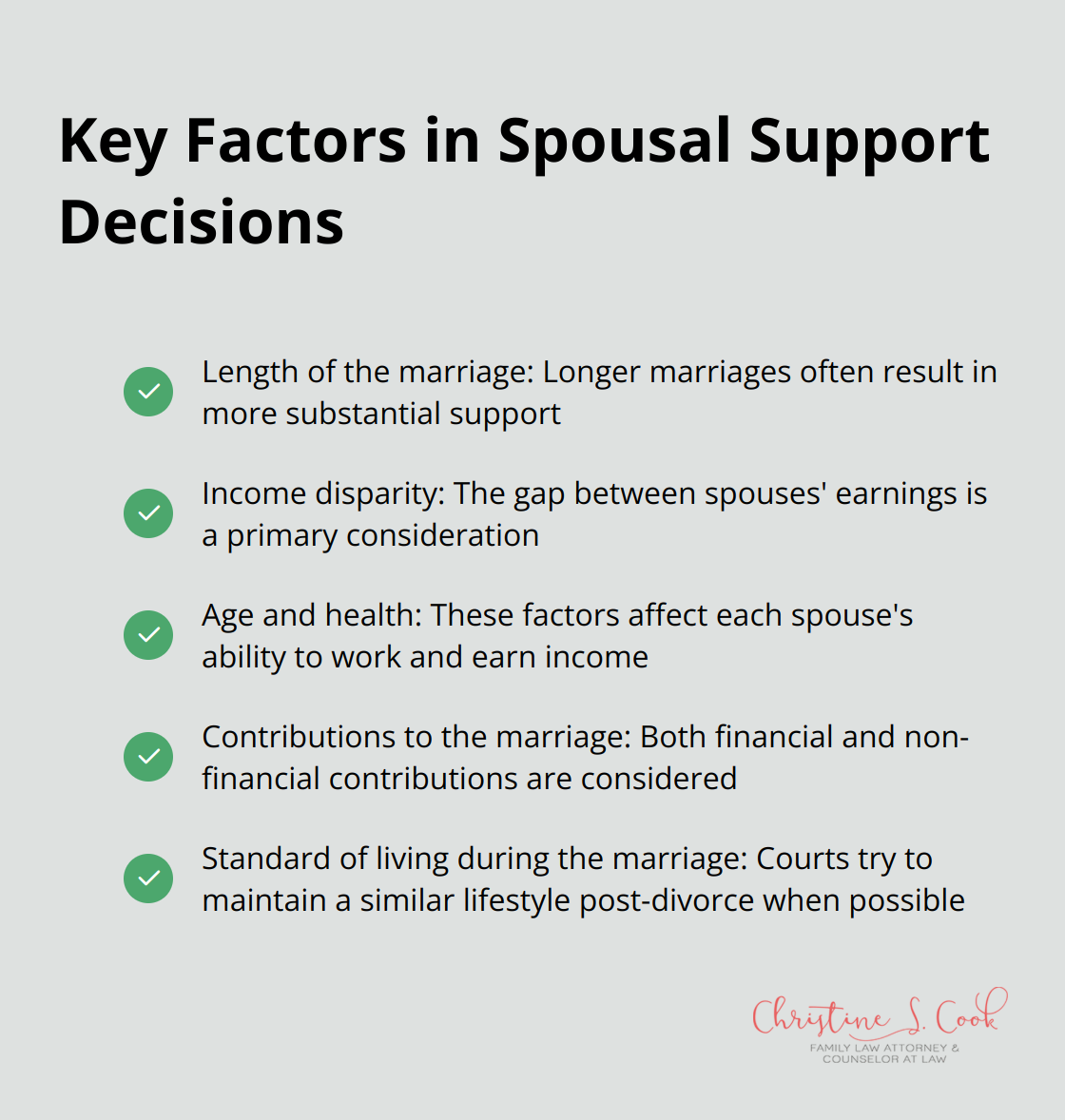
Recent tax law changes have affected alimony payments. Since 2019, spouses no longer have the ability to designate which payments will be deductible alimony. This shift has led to more creative negotiation strategies in spousal support cases.
Spousal support laws vary by state. In Florida, there’s no set formula for calculating alimony. Instead, judges have considerable discretion based on the factors mentioned above. This makes having an experienced attorney even more important to ensure fair treatment.
As we move forward, it’s essential to understand how these factors come together in the calculation of spousal support. Let’s explore the specific guidelines and formulas used in different states, as well as other considerations that impact the final support amount.
The calculation of spousal support begins with a thorough assessment of both parties’ income. This includes salary, bonuses, investment income, and other financial resources. The Journal of the American Academy of Matrimonial Lawyers (JAAML), established in 1984, features peer-reviewed articles, reviews, and editorials that provide valuable insights into various aspects of family law, including spousal support calculations.
Thorough examination of financial documents (including tax returns, bank statements, and employment contracts) ensures all income sources are accounted for. Overlooked income can significantly impact support calculations.
The length of the marriage plays a pivotal role in spousal support determinations. Longer marriages often result in more substantial or longer-lasting support arrangements. In Florida, marriages lasting 17 years or more are considered long-term, potentially leading to permanent alimony in some cases.
Courts also consider the standard of living established during the marriage. The court will order separate maintenance only if the spouse with money fails or refuses to support the other spouse and the other spouse is in “genuine need.”
Child support obligations can significantly impact spousal support calculations. In many cases, child support takes precedence. Cases involving both child and spousal support require a holistic approach. Consideration of the total financial picture ensures that support arrangements are fair and sustainable for all parties involved.
Spousal support calculation methods vary significantly across states. In Florida, there’s no set formula for determining alimony. Instead, judges have considerable discretion based on various factors. This variability underscores the importance of working with an experienced family law attorney to protect your rights and interests throughout the process.
As we move forward, it’s important to understand that while these factors provide a framework for spousal support calculations, each case is unique. The next section will explore effective strategies for negotiating spousal support agreements, which can lead to more favorable outcomes for both parties.
Negotiating spousal support agreements outside of court often leads to more satisfactory outcomes for both parties. Out-of-court settlements can reduce stress and costs associated with lengthy court battles. These agreements allow for more flexibility and customization to fit unique situations.
Mediation provides a structured environment for couples to discuss support arrangements with the help of a neutral third party. This process allows for more creative solutions tailored to specific circumstances. For example, couples can agree to a gradual reduction in support payments as the receiving spouse completes job training (incentivizing self-sufficiency while providing necessary financial stability).
Collaborative divorce involves a team of professionals, including financial advisors and mental health experts. This approach can benefit couples dealing with complex financial situations or high-conflict divorces. The collaborative team can help structure support agreements that account for unique circumstances, such as seasonal income fluctuations.
When entering support negotiations, preparation is key. Consider these strategies:

While amicable negotiations are ideal, skilled legal representation remains important. An experienced attorney can:
Spousal support in divorce requires a comprehensive understanding of legal principles, financial considerations, and negotiation strategies. We explored various types of support, key factors influencing court decisions, and the complexities of calculating fair arrangements. Out-of-court settlements, including mediation and collaborative divorce approaches, often lead to more satisfactory outcomes for both parties.
The intricacies of spousal support negotiations underscore the critical need for professional legal guidance. An experienced family law attorney can protect your rights, identify potential issues in proposed agreements, and provide valuable insights into typical court rulings on similar cases. At Christine Sue Cook, LLC, we offer expert legal services in family law, including comprehensive support for spousal support matters.
Our client-centered approach ensures that your unique needs and circumstances are at the forefront of all legal strategies. We offer free consultations to discuss your legal needs without financial pressure (allowing you to make informed decisions about your future). Our team provides compassionate and innovative solutions for divorce proceedings, utilizing collaborative law techniques to achieve amicable settlements and offering aggressive court representation when necessary.