
Make a Payment
850-572-3443
Divorce can be a complex and emotionally challenging process, especially when it comes to financial matters. At Christine Sue Cook, LLC, we often get asked, “What is spousal support in a divorce?”
Spousal support, also known as alimony, is a crucial aspect of many divorce settlements. This financial assistance is designed to help the lower-earning spouse maintain a similar standard of living after the marriage ends.
Spousal support, also known as alimony, is a financial arrangement where one spouse provides monetary assistance to the other after a divorce. The purpose of alimony is to limit any unfair economic effects of a divorce and ensure the lower-earning spouse can maintain a reasonable standard of living.
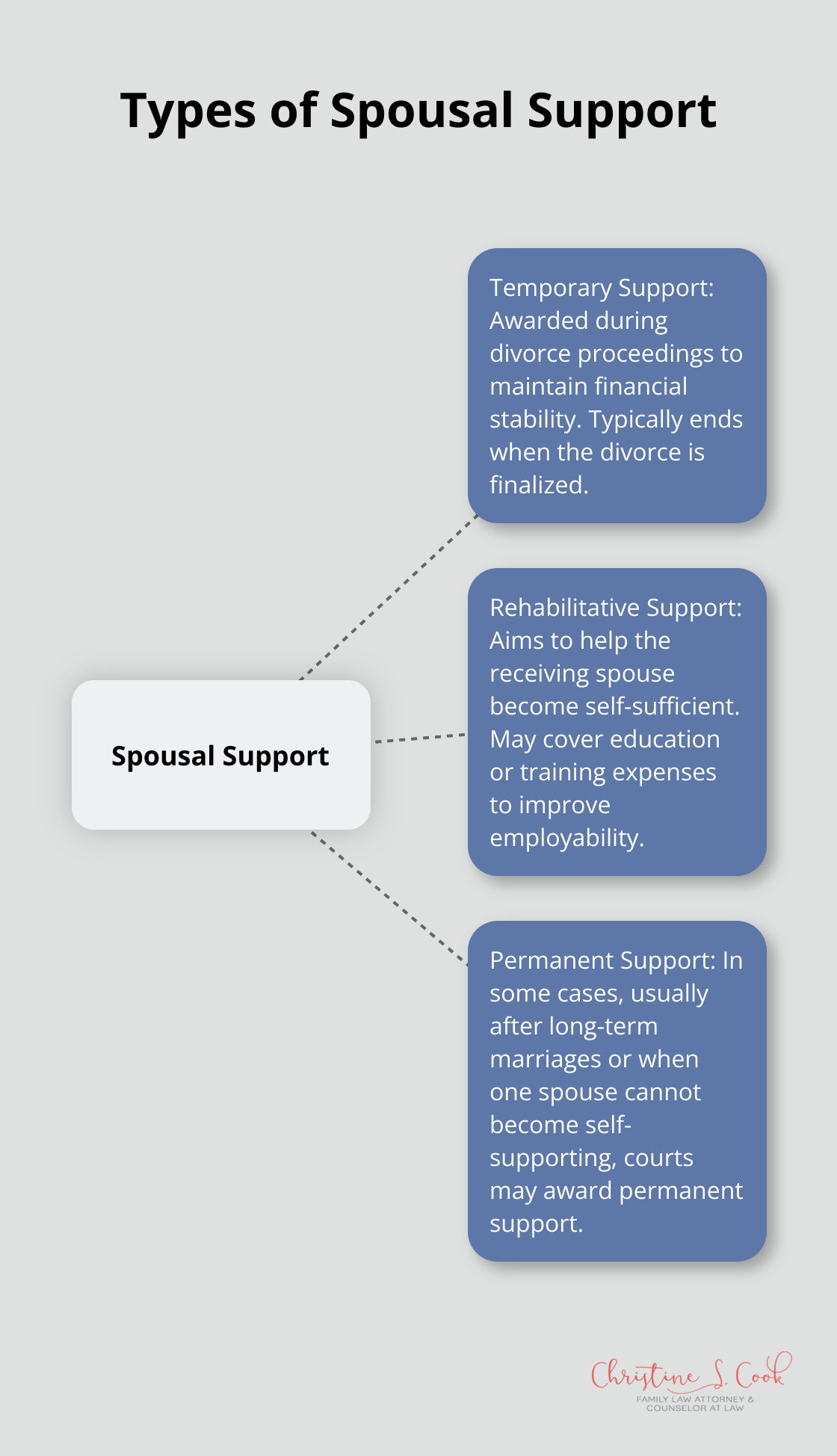
There are three main types of spousal support:
Spousal support can provide several benefits:
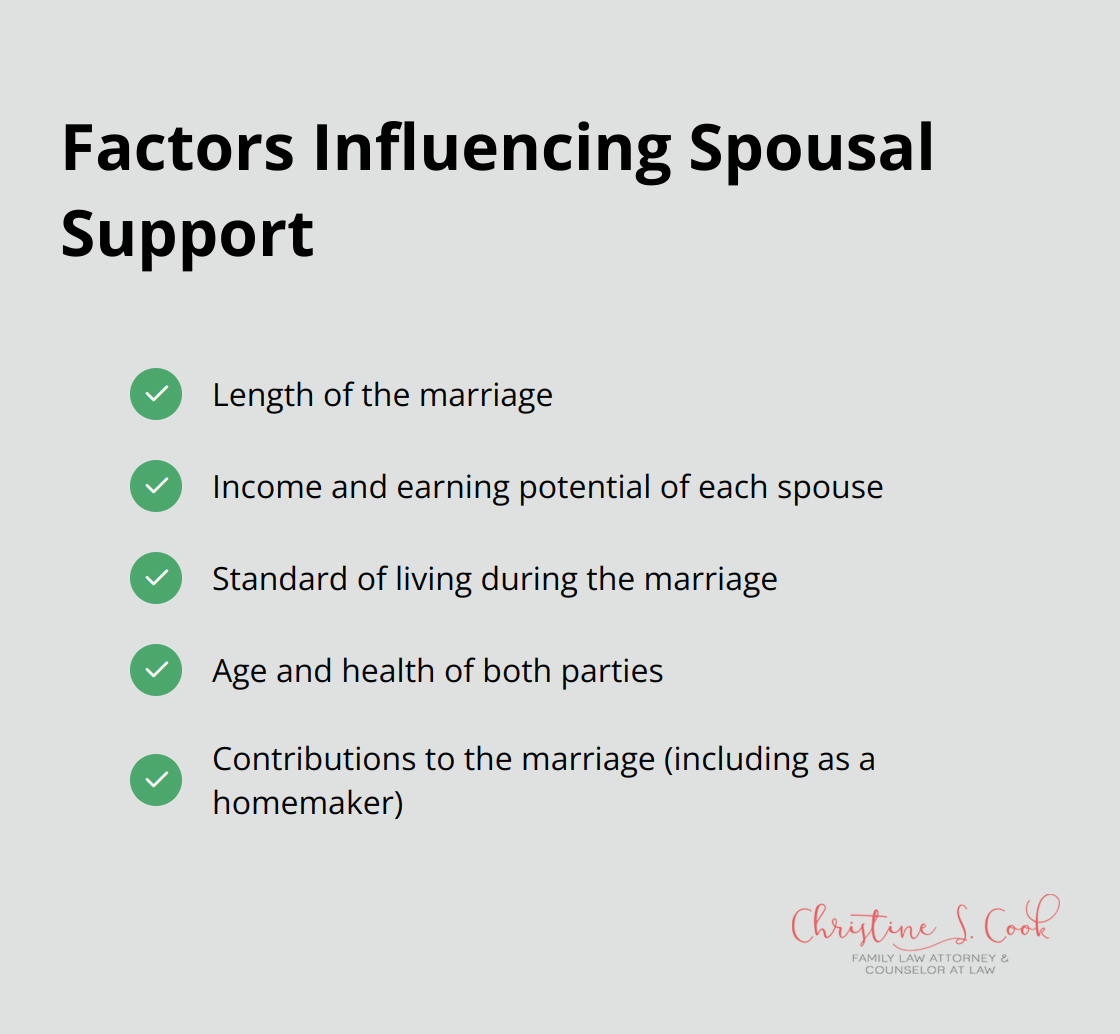
Courts consider various factors when determining spousal support. These may include:
It’s important to note that spousal support isn’t automatic in every divorce case. The specifics of each situation greatly influence whether courts will award support and in what amount.
Having experienced legal representation can make a significant difference in the outcome of your case. Whether you’re the potential payor or recipient, an attorney can help you understand your rights and obligations. They can also advocate for fair spousal support arrangements based on your unique circumstances.
As we move forward, let’s examine the specific factors that courts use to determine spousal support in more detail.
The length of a marriage plays a pivotal role in spousal support decisions. Courts often award substantial or permanent support for longer marriages. For example, Florida considers marriages lasting 17 years or more as long-term, which may lead to permanent alimony. Shorter marriages typically result in temporary support to assist the receiving spouse’s transition to independence.
Courts scrutinize the income and earning capacity of both spouses. This analysis extends beyond current earnings to include potential future income. If one spouse sacrificed their career for family support, the court will consider their earning potential upon re-entering the workforce. Courts incorporate such data into their support calculations.
The marital standard of living serves as a crucial benchmark. Courts strive to help the lower-earning spouse maintain a lifestyle reasonably similar to that enjoyed during the marriage. This doesn’t necessitate an exact replication but rather a fair approximation. For instance, if the couple frequently dined at high-end restaurants, the court might factor in a reasonable food budget for the receiving spouse that allows for some dining out (albeit perhaps not at the same level of luxury).
The age and health of both parties significantly impact support decisions. Older spouses or those with health issues often receive more substantial or longer-lasting support. A 60-year-old spouse with chronic health problems will likely receive more consideration than a healthy 35-year-old.
Courts recognize the value of non-financial contributions to a marriage. Homemaking, child-rearing, and supporting a spouse’s career all hold significant weight. While courts don’t directly apply such figures, they do consider these non-financial contributions when determining support.
The complexity of these factors underscores the importance of experienced legal representation in spousal support cases. A skilled attorney can effectively present and argue these elements to secure a fair arrangement. As we move forward, let’s explore the process of negotiating and modifying spousal support agreements.
An experienced attorney plays a key role in spousal support negotiations. A skilled lawyer will help you understand your rights, assess potential outcomes, and develop a strong negotiation strategy. They ensure all relevant factors receive consideration, such as your financial needs, marriage duration, and household contributions.
In a recent case, a client initially received an offer for support that fell significantly below her needs to maintain her standard of living. With proper representation, she secured a 40% increase in the support amount. This result came from effectively presenting evidence of her financial needs and the sacrifices she made for her spouse’s career.
Mediation offers an effective alternative to court-ordered support. A neutral third party assists both spouses in reaching a mutually agreeable solution. This process often proves less adversarial and results in more satisfactory outcomes for both parties.
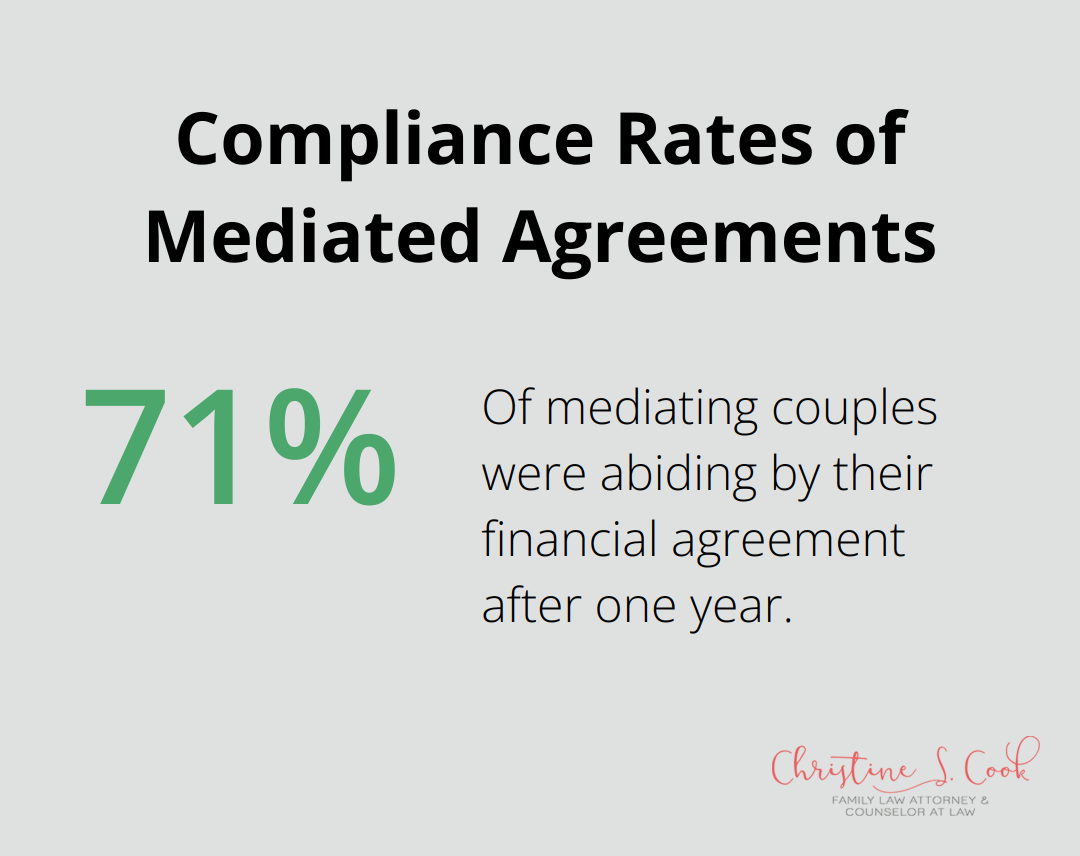
Research has found that, after one year, 71% of mediating couples were abiding by the financial responsibilities of their agreement. Moreover, mediated agreements tend to have higher compliance rates than court-ordered decisions.
Life changes can necessitate modifications to spousal support orders. Common circumstances that may warrant modification include:
To modify an existing order, you must file a petition with the court demonstrating a substantial change in circumstances. Quick action proves important when your situation changes, as modifications typically do not apply retroactively.
The Tax Cuts and Jobs Act of 2017 brought significant changes to the tax treatment of spousal support. For divorces finalized after December 31, 2018, alimony or separate maintenance payments are not deductible from the income of the payer spouse, or includable in the income of the recipient spouse.
This change has substantially impacted negotiations. In many cases, it has led to lower support amounts as payers no longer receive a tax benefit. You must factor in these tax implications when negotiating or modifying spousal support agreements.
Successful spousal support negotiations require preparation and strategy. Try to gather all relevant financial documents (including income statements, tax returns, and expense records) before entering negotiations. Understand your financial needs and be prepared to justify them.
Maintain a realistic perspective on what you can expect. Courts typically aim to provide support that allows the recipient to maintain a lifestyle reasonably comparable to the marital standard of living, not necessarily identical.
Consider non-monetary factors as well. For example, if you sacrificed career opportunities to support your spouse or family, this information should factor into the negotiations.
Lastly, remain open to compromise. Flexibility often leads to more satisfactory outcomes for both parties and can help avoid costly and time-consuming court battles.
Spousal support in a divorce provides financial stability for the lower-earning spouse. Courts consider various factors when determining support, including marriage duration, financial situations, and non-monetary contributions. Professional legal advice proves invaluable in navigating the complexities of spousal support cases.
At Christine S. Cook, LLC, we specialize in family law matters, including spousal support. Our team offers compassionate and innovative solutions for divorce-related issues. We utilize collaborative law techniques to achieve amicable settlements when possible and provide aggressive court representation when necessary.
Our experienced team can guide you through the challenging process of spousal support negotiations. We offer free consultations to discuss your legal needs without financial pressure (allowing you to make informed decisions about your future). Don’t face the complexities of spousal support alone – let us help secure a fair and equitable resolution for your divorce.