Divorce stress affects nearly every aspect of your life, from sleep patterns to decision-making abilities. The emotional weight can feel overwhelming when you’re navigating financial concerns and major life changes simultaneously.
We at Christine Sue Cook, LLC understand that collaborative divorce offers a gentler path forward. This approach reduces many traditional stressors while giving you tools to manage the unavoidable challenges that come with any divorce process.
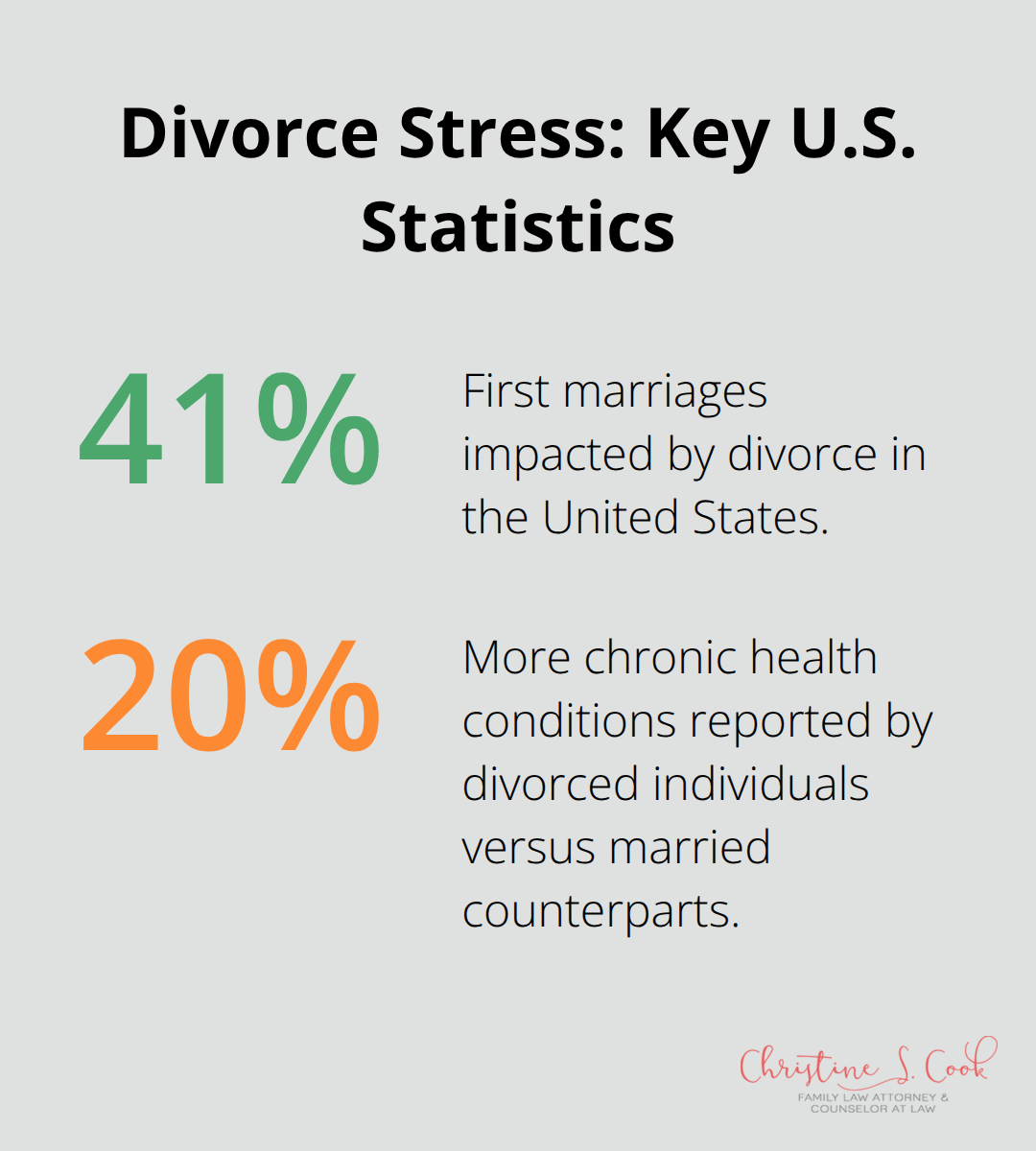
Divorce creates predictable stress patterns that affect 41% of first marriages in the United States. Financial uncertainty leads the list as couples face asset division, potential alimony payments, and increased expenses from two separate households. The American Psychological Association research shows divorced individuals experience 20% more chronic health conditions than married counterparts, with sleep disruption and anxiety as immediate concerns.
Money worries dominate divorce proceedings from day one. Asset division forces couples to evaluate retirement accounts, real estate, and business interests they never expected to split. Legal fees accumulate quickly in traditional litigation (often exceeding $15,000 per spouse), while household budgets stretch to cover duplicate housing costs, utilities, and insurance premiums. Credit scores suffer when joint debts become individual responsibilities, and many people face their first experience with single-income budgets after years of dual earnings.
Your body responds to divorce stress through measurable changes. A 2020 study revealed people who go through divorce often report higher levels of stress, anxiety, depression, and other mental health challenges. Sleep quality deteriorates within the first month, which affects decision-making abilities when you need them most. Cortisol levels spike during proceedings, which leads to headaches, digestive issues, and compromised immune function. Women report particularly severe physical symptoms when they leave unhappy marriages, though they also show greater psychological benefits post-divorce according to 2009 research.
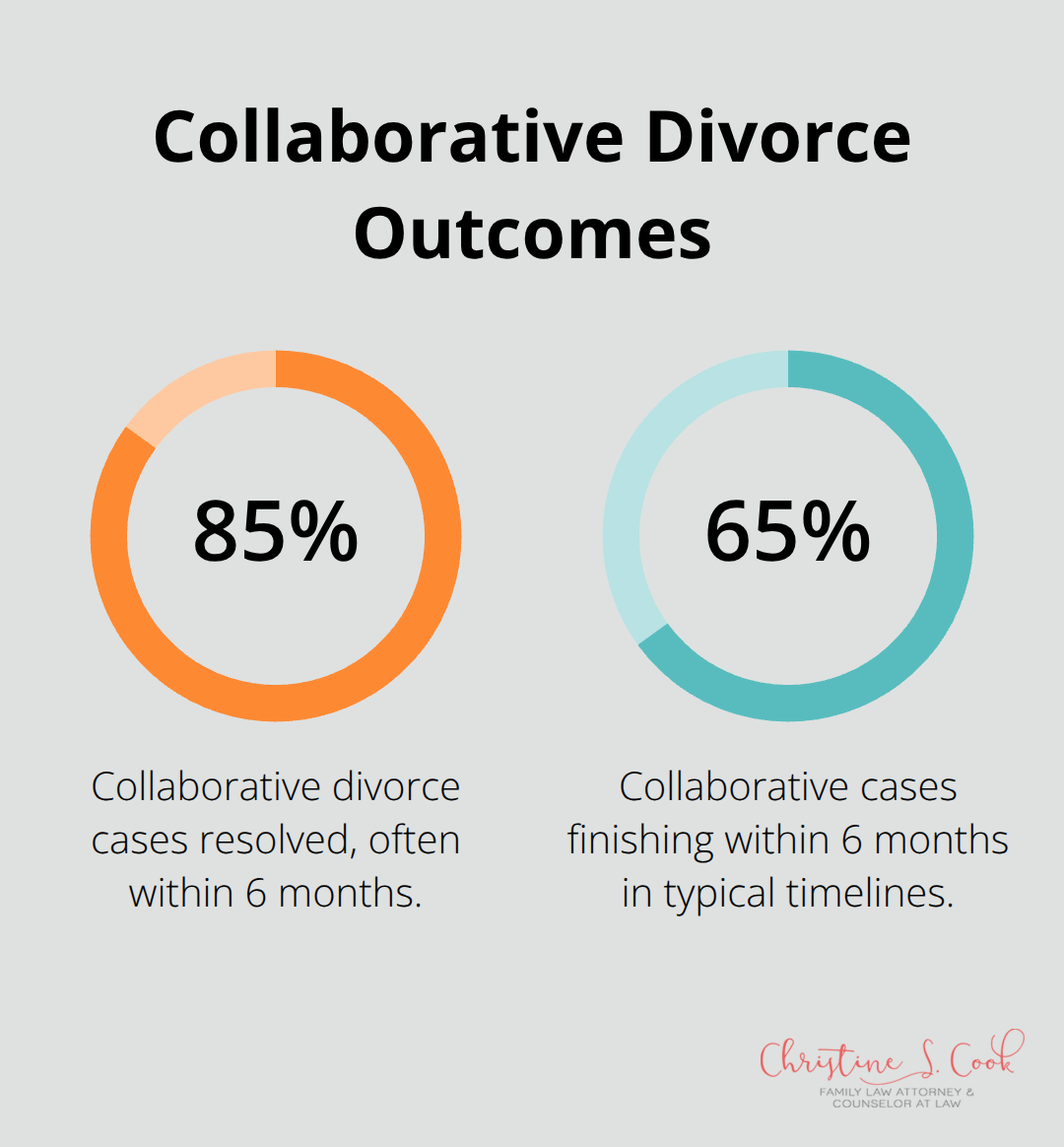
Traditional litigation creates adversarial environments that amplify stress responses. Collaborative divorce eliminates courtroom battles and discovery disputes that characterize contested proceedings. The no-court agreement signed at the start creates accountability while it reduces uncertainty about process timelines. Collaborative divorce resolves 85% of cases, often within 6 months, which directly correlates with reduced stress levels and better mental health outcomes for both parties and children involved.
These stress factors don’t have to overwhelm you when you understand effective management techniques that work specifically for divorce situations.
Mindfulness techniques work within 10 minutes of practice, with controlled breathing as the most accessible starting point. The 4-7-8 breathing method helps control stress responses: inhale for 4 counts, hold for 7, exhale for 8. Research from Harvard Medical School shows this technique activates your parasympathetic nervous system, which counteracts stress hormones that flood your system during divorce proceedings. Practice this method three times daily, especially before collaborative meetings or difficult conversations with your ex-spouse.
Professional support networks outperform family and friends for divorce-specific guidance. Schedule weekly sessions with a therapist who specializes in divorce transitions, as professional counseling provides significant support during major life changes. Add a financial advisor to your team within the first month to address money concerns that trigger substantial divorce-related stress.
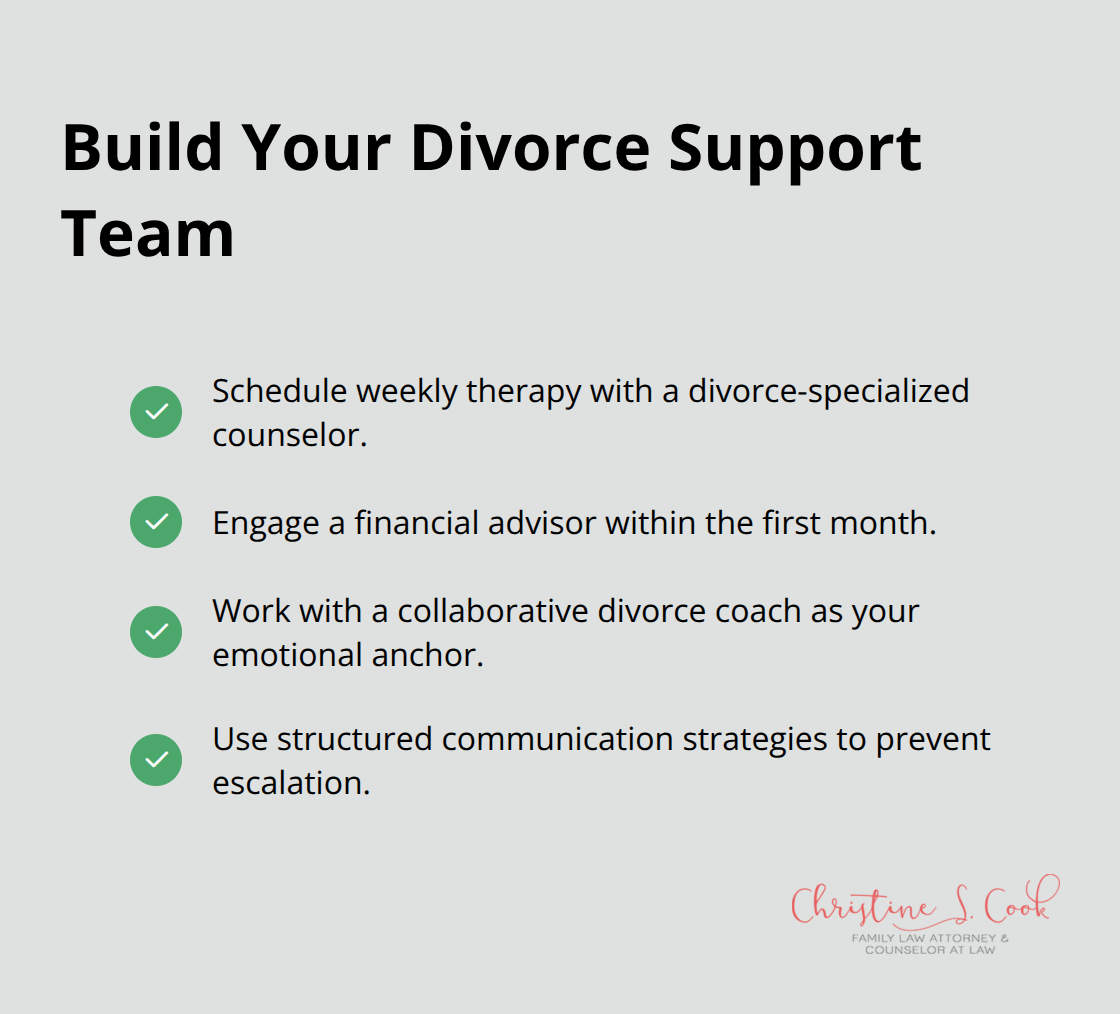
Your collaborative divorce coach becomes your emotional anchor throughout negotiations and teaches communication strategies that prevent conflicts from escalation. This professional foundation supports you better than well-meaning relatives who lack expertise in divorce dynamics.
Physical routines stabilize your mental state when everything else feels chaotic. Wake up at the same time every day and exercise for 30 minutes, as endorphin release from physical activity improves mood regulation for hours afterward. Prepare meals at consistent times to maintain blood sugar stability, which directly affects emotional reactions during stressful conversations. Set a firm bedtime routine with electronic devices turned off one hour before sleep, since quality rest improves decision-making abilities significantly. These routines become your stability anchors when divorce negotiations feel overwhelming.
Self-care activities reduce stress hormones and improve your capacity to handle difficult decisions. Take 20-minute walks in nature, which studies show decrease cortisol levels within the first session. Schedule activities you enjoyed before marriage complications arose – whether that means reading, gardening, or meeting friends for coffee. Limit caffeine intake after 2 PM and avoid alcohol as a coping mechanism, since both substances disrupt sleep patterns and amplify anxiety symptoms. These practices prepare you mentally and physically for the collaborative process ahead.
Your stress management foundation sets the stage for productive collaboration with your legal team and other professionals who guide your divorce process.
Trust develops through consistent actions, not promises. Schedule your initial attorney meeting within 48 hours of your collaborative divorce decision, as early engagement prevents miscommunication that derails negotiations later. Share complete financial information during your first session, including hidden accounts or debts your spouse might not know about. Attorney-client privilege protects these disclosures, and transparency prevents discovery disputes that add months to traditional litigation. Request weekly progress updates via email to track case developments and maintain connection with your legal team between formal meetings.
Document specific worries in written form before each four-way meeting with attorneys present. Fear about retirement asset division, child custody schedules, or spousal support calculations becomes manageable when you address concerns directly rather than let anxiety build. Your collaborative attorney needs concrete examples of problem areas to negotiate effectively on your behalf. Schedule private attorney consultations within 24 hours if new concerns arise between meetings, as unaddressed issues create emotional barriers that slow progress. Clear communication prevents small problems from becoming major obstacles.
Collaborative divorce typically completes within 6 months, with 65% of cases finishing in this timeframe, compared to 12-18 months for contested litigation.
Complex asset division extends timelines to 8-10 months, while simple cases with minimal property resolve within 3 months. Schedule four-way meetings every 2-3 weeks to maintain momentum, as gaps longer than one month allow tensions to rebuild. Your financial specialist needs 30-45 days to complete asset valuations, and child specialists require 3-4 sessions to develop co-parenting plans. These realistic timeframes prevent frustration when the process feels slower than expected.
Write down your priorities and questions 24 hours before each collaborative session. Review financial documents and identify specific areas where you need clarification or feel uncertain about proposed solutions. Arrive 15 minutes early to center yourself mentally and review your notes one final time. This preparation helps you participate actively in discussions rather than react emotionally to unexpected information. Your attorney can enhance understanding and build trust through techniques like paraphrasing and asking open-ended questions when you provide clear direction about your concerns and goals (rather than general statements about wanting fairness).
Divorce stress becomes manageable when you apply proven techniques with professional support. The 4-7-8 method delivers immediate relief during difficult moments, while consistent daily routines create stability when everything feels uncertain. Trust with your collaborative team develops through transparent communication and realistic expectations that transform the process from adversarial to cooperative.
Collaborative divorce provides measurable mental health benefits compared to traditional litigation. The 85% success rate within 6 months reduces prolonged stress exposure that damages physical and emotional well-being (without courtroom battles and discovery disputes, you maintain control over outcomes while protecting your children from hostile environments). This approach accelerates recovery by preserving dignity and reducing conflict throughout the process.
Your stress management skills developed during this process serve you long after divorce finalization. The mindfulness practices, professional support networks, and self-care routines become permanent tools for handling future challenges. Christine S. Cook, LLC provides compassionate legal guidance to navigate collaborative divorce successfully, offering free consultations to discuss your specific situation without financial pressure.