Unmarried parents in Florida face a different legal landscape than married couples when it comes to custody rights. Without marriage, fathers must take specific steps to establish paternity and gain legal recognition as a parent.
At Christine Sue Cook, LLC, we help unmarried parents navigate Florida child custody laws and understand their rights. This guide walks you through paternity establishment, custody standards, and how to create binding custody agreements.
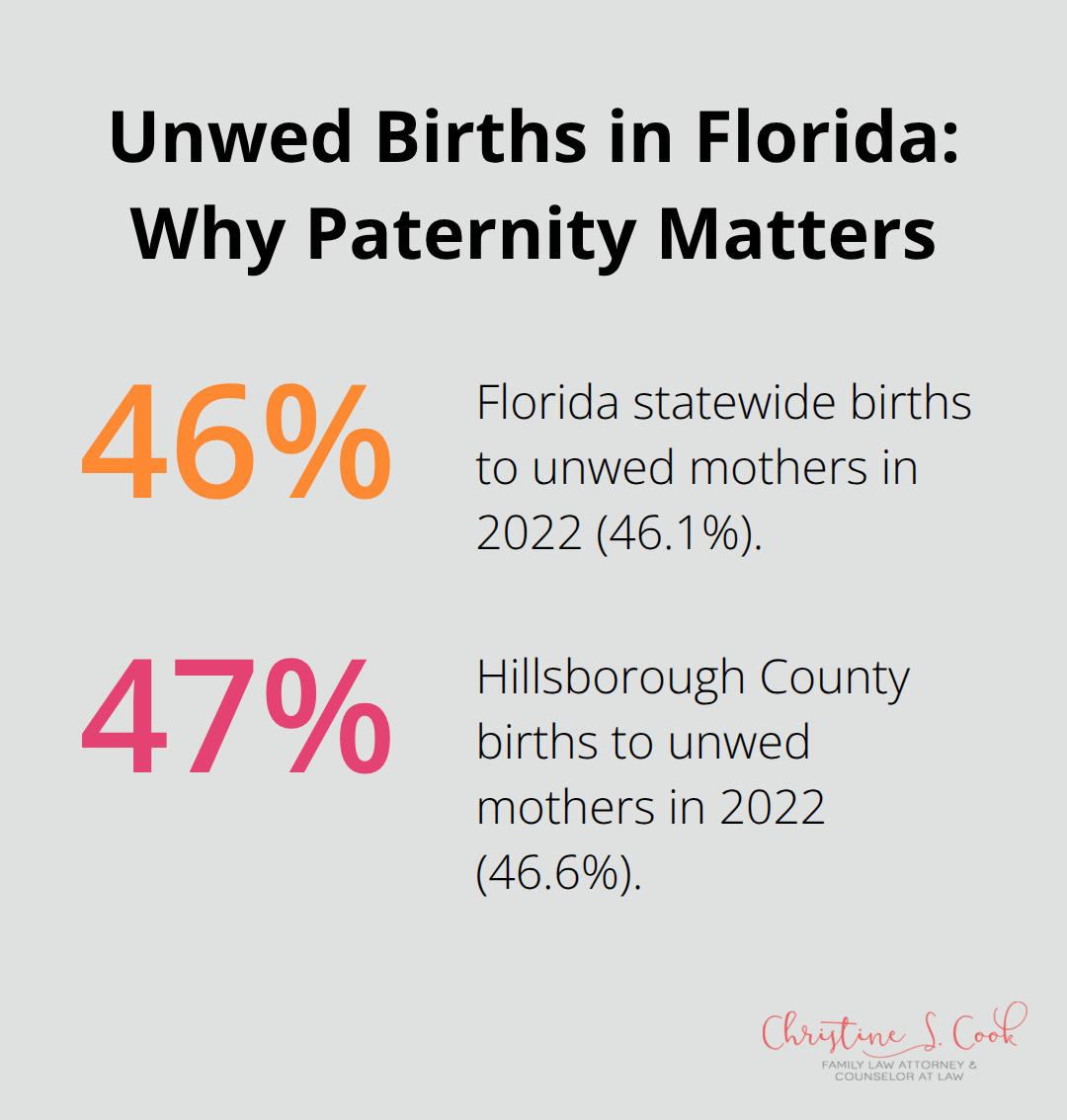
Establishing paternity is the legal foundation that grants unmarried fathers equal custody rights in Florida. As of July 1, 2023, Florida law changed to give both mothers and fathers equal natural-guardian rights once paternity is established, eliminating the previous presumption that favored mothers automatically. Without this step, fathers have no legal standing to pursue custody or visitation. Florida Department of Health data shows that 46.1% of births in 2022 occurred to unwed mothers, with Hillsborough County at 46.6%, making paternity establishment relevant for thousands of Florida families annually.
The fastest and most straightforward path is signing the Acknowledgment of Paternity form, typically the DH-511, at the hospital immediately after birth in the presence of a notary. This single document makes paternity official and updates the birth certificate through the Florida Bureau of Vital Statistics without court involvement. If you miss the hospital window, you can still sign the DH-432 form later with two witnesses or a notary, then submit it to update the birth certificate. Fathers who sign acknowledgment forms immediately gain access to medical information, inheritance rights for the child, and the ability to pursue shared custody or child support enforcement through the Department of Revenue.
When voluntary acknowledgment isn’t possible or one party disputes paternity, Florida offers administrative and court-based alternatives. The Florida Child Support Program establishes paternity through an Administrative Order of Paternity using genetic testing at no cost to either parent, with results carrying the same legal weight as a court judgment. If the mother or alleged father contests paternity, filing under Florida Statute 742.11 allows a circuit court to order DNA testing and make a binding determination. Court costs and genetic testing expenses may fall on either parent depending on the judge’s ruling.
Move quickly if you anticipate relocation, major custody changes, or need child support enforcement. Fathers who establish paternity early rather than waiting gain significant advantages in custody negotiations and legal proceedings. Christine S. Cook, LLC in Pensacola offers experienced guidance on paternity establishment and can help you choose the fastest, most cost-effective route for your situation. Once paternity is established, you’re positioned to negotiate custody terms that reflect your relationship with your child.
Florida courts apply the best interests of the child standard when determining custody arrangements, a framework that prioritizes the child’s welfare over parental preferences. This standard is not a fixed checklist but rather a fact-specific inquiry that judges tailor to each family’s circumstances. Courts examine the child’s health, stability, school ties, and relationship with each parent to craft custody orders that serve the child’s actual needs.
Under Florida law, courts presume shared parental responsibility is in the child’s best interests whenever possible, meaning both parents should participate in major decisions about education, healthcare, and religion unless evidence shows otherwise. Greyson’s Law requires courts to consider domestic violence evidence even without convictions, which can shift away from shared responsibility if abuse is documented. This legal framework recognizes that most children benefit from meaningful relationships with both parents, but protects children from unsafe situations.
The distinction between legal custody and physical custody matters significantly in custody arrangements. Legal custody governs who makes major decisions for the child, while physical custody determines where the child primarily lives and how much time each parent spends with them. An unmarried mother typically has both legal and physical custody at birth, but once paternity is established, courts can award shared legal custody while maintaining sole physical custody with the mother, or they can grant the father significant timesharing rights.
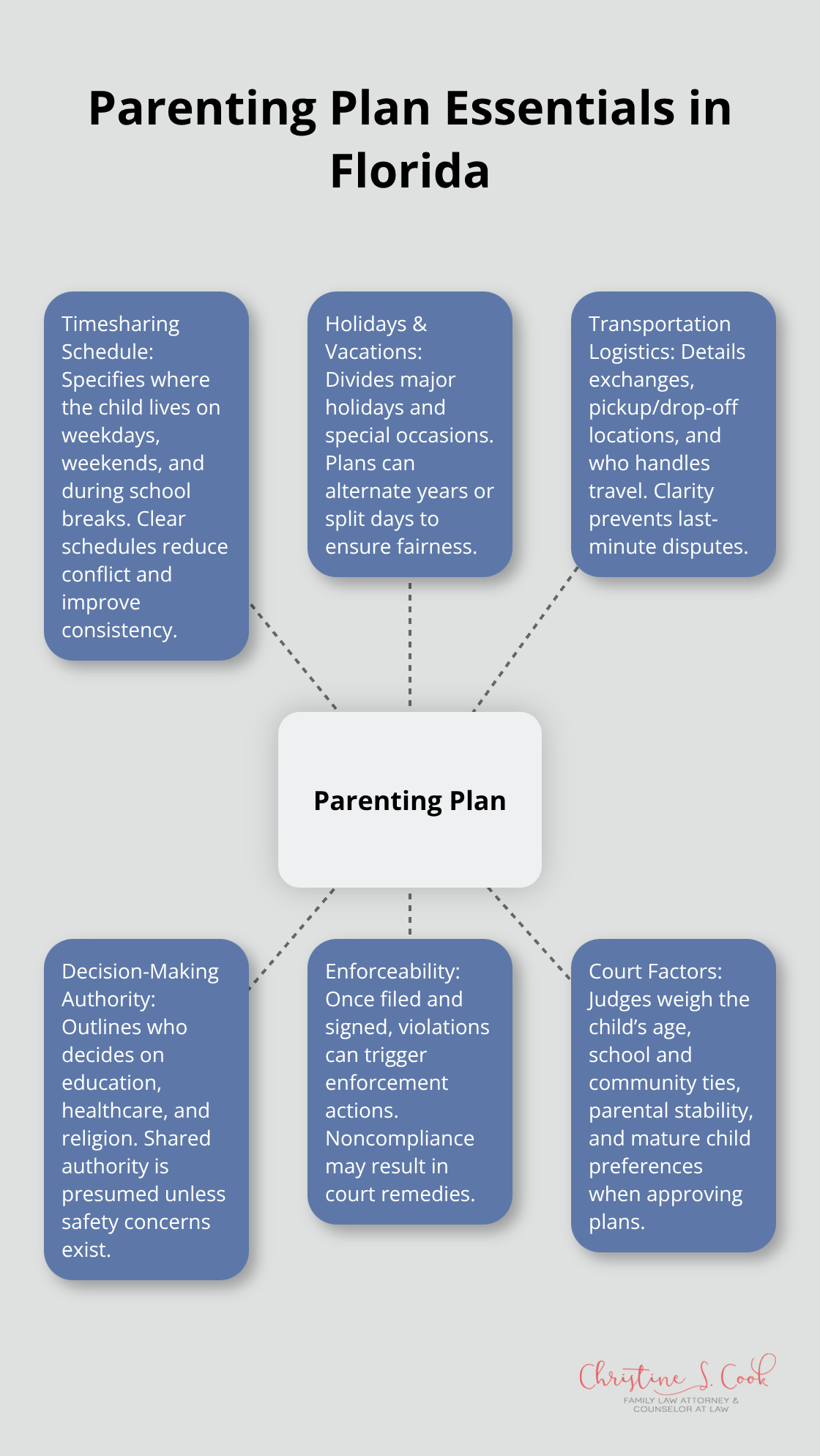
Florida law mandates that both married and unmarried parents have a written Parenting Plan that specifies custody arrangements, timesharing schedules, holiday divisions, transportation logistics, and decision-making authority. This document becomes enforceable once filed with the court, meaning violations can trigger enforcement actions. Courts heavily weight factors like the child’s age, existing school and community ties, each parent’s stability and ability to provide care, and the child’s stated preferences if the child is old enough to have meaningful input.
Fathers who established paternity early gain stronger negotiating positions because courts view them as equally situated parents rather than newcomers to custody matters. The evidence you present about your relationship with your child, your stability, and your ability to meet the child’s needs directly influences how judges apply the best interests standard. Understanding these factors allows you to prepare documentation and arguments that align with what Florida courts actually consider when making custody decisions, positioning you effectively as you move toward negotiating or litigating custody terms.
Negotiating custody terms directly with the other parent works faster and costs far less than litigation. When both parents agree on how much time the child spends with each, who makes medical and educational decisions, and how holidays are split, you avoid court fees, attorney costs, and the unpredictability of a judge’s ruling. Florida courts strongly prefer agreements between parents because they reflect the actual relationship dynamics and parenting capacity both parties recognize.
Start negotiations by listing what matters most to you: specific days and nights, school year versus summer arrangements, access to medical records, religious upbringing, and which parent decides on major medical procedures. Write down your proposals in plain language before meeting, and consider using a mediator if direct conversations become heated. Mediators in Florida typically charge between $150 and $300 per hour and can help you reach agreement without the expense of full litigation.
Once you both agree on terms, you must convert that agreement into a formal Parenting Plan document and file it with the court. The court will review your plan to verify it serves the child’s best interests, and if it does, the judge will sign an order making it legally binding and enforceable. Filing your custody order requires submitting the Parenting Plan to the circuit court in the county where the child lives.
You can file jointly with the other parent or file alone if you have paternity established and the other parent refuses to cooperate. The court clerk’s office provides forms and filing instructions, and filing fees typically range from $100 to $300 depending on the county. Once filed and signed by a judge, your custody order becomes enforceable, meaning either parent can request enforcement if the other violates the arrangement.
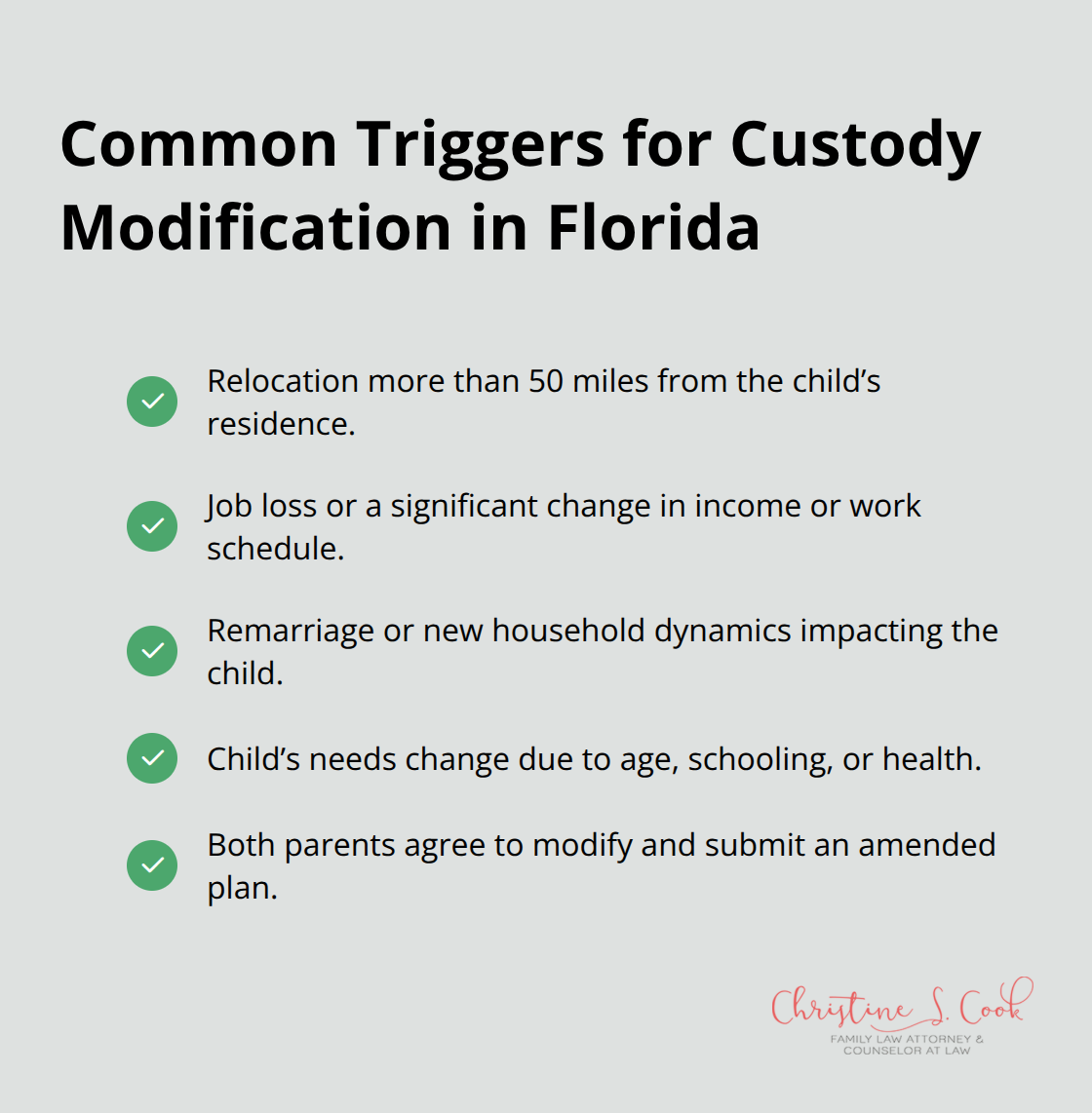
Circumstances change: a parent relocates more than 50 miles away, loses employment, remarries, or the child’s needs shift as they grow. Florida law allows modification of custody orders when there has been a substantial and material change in circumstances since the last order, but you cannot simply renegotiate because you want different terms. If you and the other parent agree to modify the arrangement, file an amended Parenting Plan and get the judge’s signature.
If they refuse to modify and you believe modification serves the child’s best interests, file a modification petition with the court and present evidence of the changed circumstances. Modifications typically cost less than initial custody cases because the court already has background information, but they still require attorney guidance to succeed. Christine S. Cook, LLC in Pensacola offers expert legal services in family law and can help you draft agreements, file orders, and navigate modifications with clarity and efficiency.
Florida child custody laws for unmarried parents have shifted significantly in your favor once you establish paternity through hospital acknowledgment, voluntary signing, or court order. You gain equal natural-guardian rights with the mother, which opens the door to negotiating custody terms that reflect your actual relationship with your child and your capacity as a parent. The sooner you formalize your legal status, the stronger your position in custody negotiations and the clearer your rights become.
Courts in Florida apply the best interests of the child standard consistently, meaning your documentation of stability, your relationship history with your child, and your ability to meet their needs matter more than gender. If paternity remains unresolved, prioritize establishing it quickly, especially if relocation or major custody changes are on the horizon. Gather evidence of your involvement in school, medical care, and daily parenting, then write down specific timesharing proposals before negotiating with the other parent.
An experienced family law attorney guides you through paternity establishment, helps you draft enforceable custody agreements, and represents you if disputes arise. Christine S. Cook, LLC in Pensacola specializes in family law and offers free consultations to discuss your situation without financial pressure. Whether you need help establishing paternity, negotiating terms, or modifying existing orders, having knowledgeable legal support protects your rights and keeps your child’s best interests central to every decision.