At Christine Sue Cook, LLC, we understand that creating a property division agreement sample can be a daunting task during divorce proceedings.
A well-crafted agreement is essential for ensuring a fair distribution of assets and debts between spouses.
In this guide, we’ll walk you through the key components and steps to create an effective property division agreement sample, helping you navigate this complex process with confidence.
Property division stands as a cornerstone of divorce proceedings. This process can significantly impact the outcome of a divorce settlement, making it essential to understand its intricacies.
In divorce cases, property falls into two main categories: marital and separate. Marital property encompasses assets acquired during the marriage, regardless of which spouse made the purchase. This includes homes, vehicles, retirement accounts, and even debts. Separate property belongs to one spouse individually, typically including assets owned before marriage, inheritances, or gifts received by one spouse during the marriage.
The distinction between marital and separate property isn’t always clear-cut. For instance, if a spouse uses marital funds to improve a separately owned property, that property may become partially marital. This complexity highlights the need for experienced legal professionals to ensure a fair division.
Courts weigh several factors when dividing property:
It’s important to note that “fair” doesn’t always equate to “equal.” Courts try to achieve an equitable distribution, which may not result in a 50/50 split.
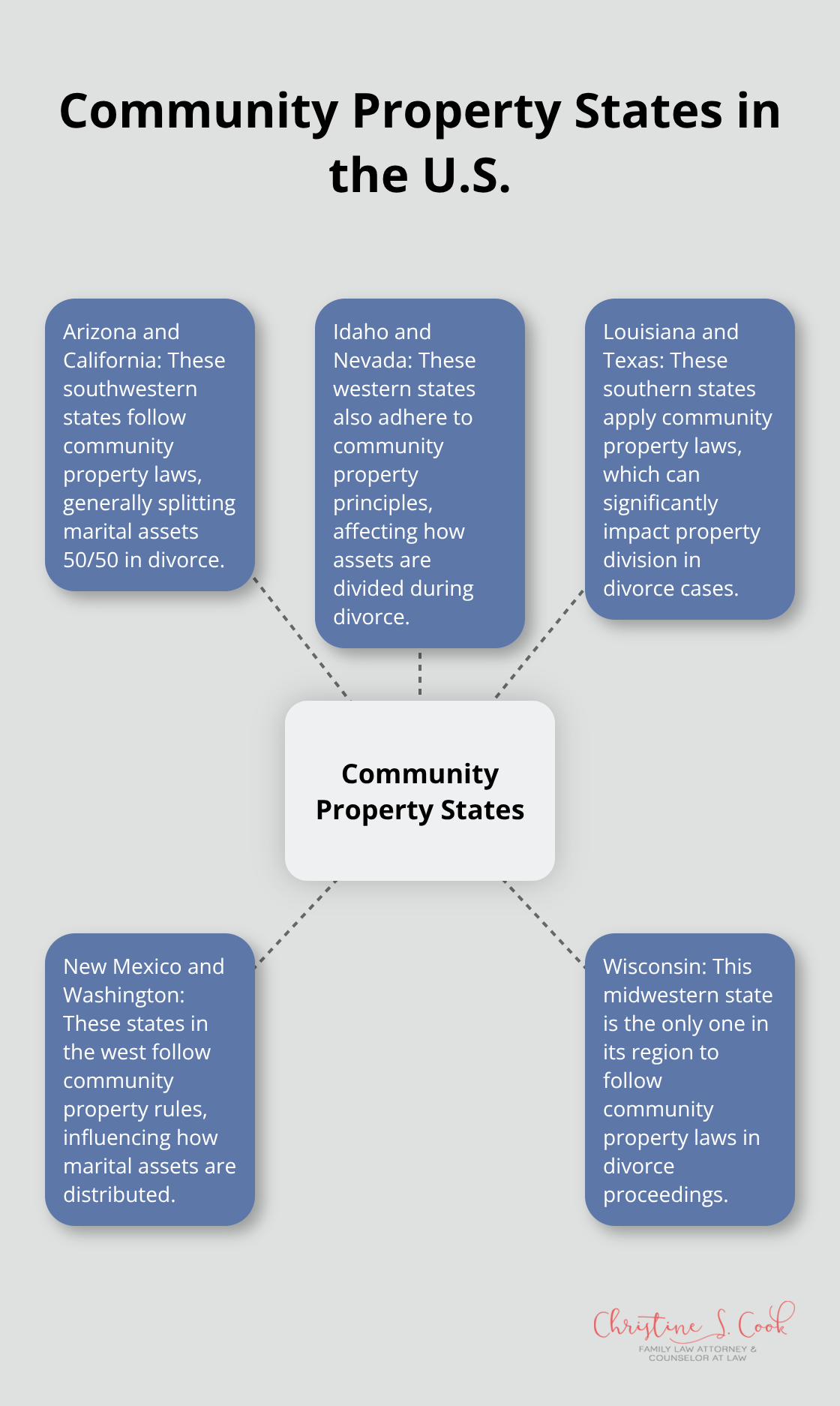
Different states handle property division in various ways. Most states follow equitable distribution laws, where property is divided fairly but not necessarily equally. Nine states (Arizona, California, Idaho, Louisiana, Nevada, New Mexico, Texas, Washington, and Wisconsin) use community property laws, which generally split marital property 50/50.
Florida, for example, follows equitable distribution laws. This means the court will consider all relevant factors to achieve a fair division. Legal professionals well-versed in Florida’s specific laws can help navigate this complex process.
While courts can decide property division, many couples prefer to negotiate their own agreement. This approach often leads to more satisfactory outcomes for both parties. Negotiation allows spouses to:
However, successful negotiation requires open communication and a willingness to compromise. In some cases, mediation (with a neutral third party) can facilitate this process.
Once spouses reach an agreement on property division, it’s crucial to document it properly. This documentation should include:
A well-drafted agreement can prevent future disputes and ensure both parties understand their rights and obligations.
Understanding these concepts forms the foundation for creating a comprehensive property division agreement. The next section will explore the key components that make up an effective agreement, preparing you for this vital aspect of divorce proceedings.
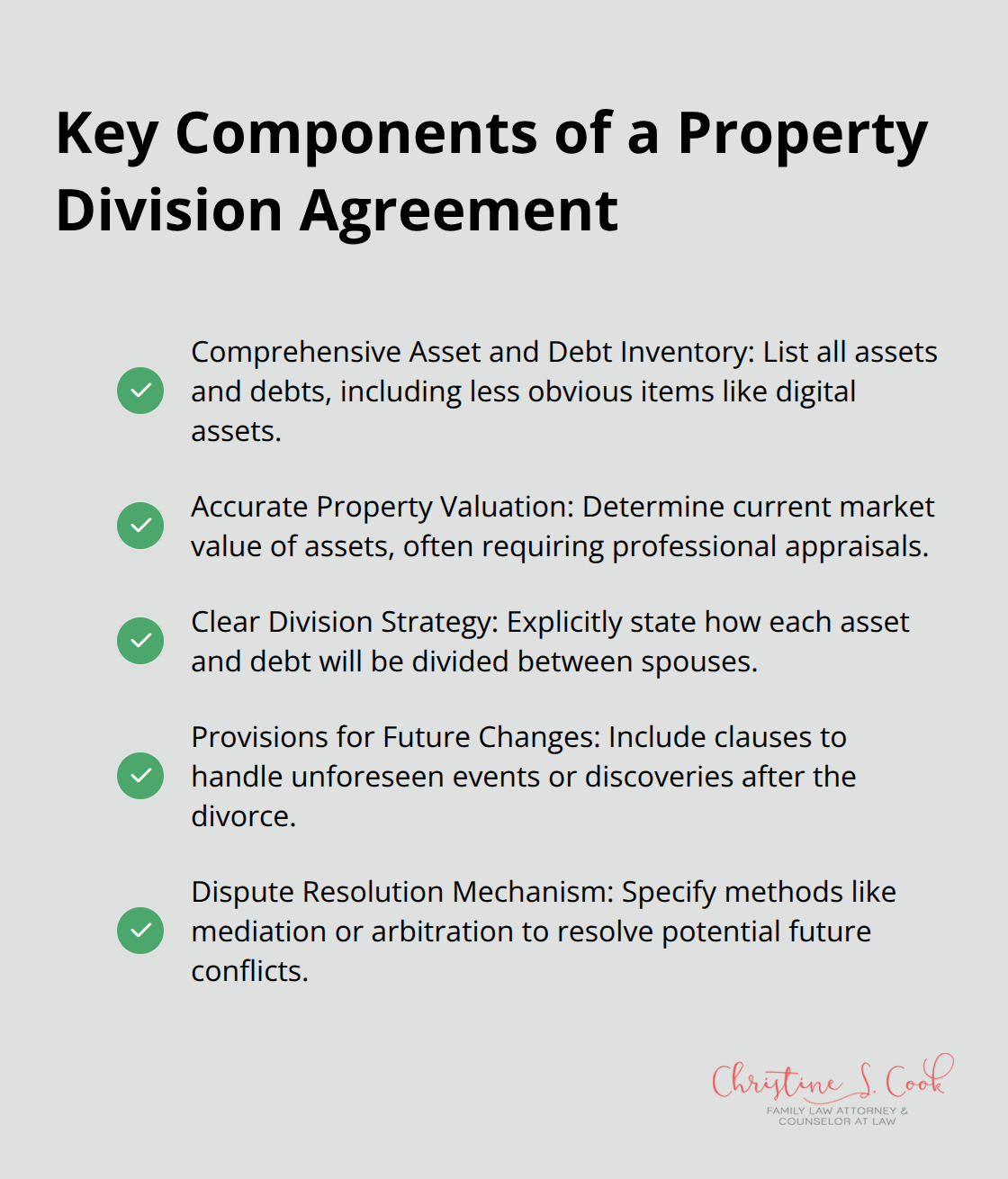
A thorough inventory of all assets and debts forms the cornerstone of an effective property division agreement. This inventory should encompass obvious items like houses and cars, as well as less apparent ones such as retirement accounts, investments, and digital assets (e.g., cryptocurrency). It’s essential to list all debts, including mortgages, credit card balances, and personal loans.
A comprehensive inventory should include passwords and account information for all digital accounts and assets. This can significantly reduce conflicts during the divorce process.
After listing all assets and debts, determining their current market value becomes paramount. This often necessitates professional appraisals, especially for high-value items like real estate or businesses. The National Association of Realtors indicates that home values can fluctuate by up to 10% annually in some markets, underscoring the importance of current valuations.
The agreement should explicitly state how each asset and debt will be divided. This goes beyond a simple “50/50 split.” Instead, it should detail which spouse receives specific assets and who bears responsibility for particular debts.
For example, if one spouse retains the family home, the agreement should outline how the other spouse will receive compensation for their share of the equity. This might involve a cash buyout, offsetting with other assets, or a plan to sell the property and split the proceeds.
Life continues after divorce, and circumstances can change. The agreement should include provisions for handling unforeseen events or discoveries. This might include clauses about how to divide assets discovered after the divorce or how to handle changes in asset values.
If you’re dividing a business, consider including a clause about how future profits or losses will be shared (especially if one spouse continues to operate the business post-divorce).
Including a dispute resolution mechanism in your agreement can save time and money in the long run. This could specify mediation or arbitration as the first step before resorting to court intervention.
While templates can provide a starting point, every divorce presents unique challenges. Working with an experienced family law attorney ensures your agreement is tailored to your specific situation and complies with local laws. This personalized approach can make a significant difference in protecting your interests and achieving a fair settlement.
As we move forward, let’s explore the step-by-step process of creating a property division agreement sample, which will help you navigate this complex aspect of divorce proceedings more effectively.
Start by collecting all relevant financial documents. This includes bank statements, tax returns, investment portfolios, retirement account statements, and property deeds. Don’t overlook digital assets like cryptocurrency wallets or online businesses. CPAs can trace assets to determine whether they are marital or separate property and provide an accurate valuation for equitable division.
Create a detailed inventory of all assets and debts. Categorize them as marital or separate property. This step often reveals overlooked assets. Be thorough and transparent to avoid future legal complications.
Accurate valuation is important. For real estate, get a professional appraisal. The National Association of REALTORS® provides the latest real estate research and statistics that affect the industry. For businesses, consider hiring a forensic accountant. They can uncover hidden assets and provide a fair market value. Undervaluing or overvaluing assets can lead to an unfair division and potential legal issues down the line.
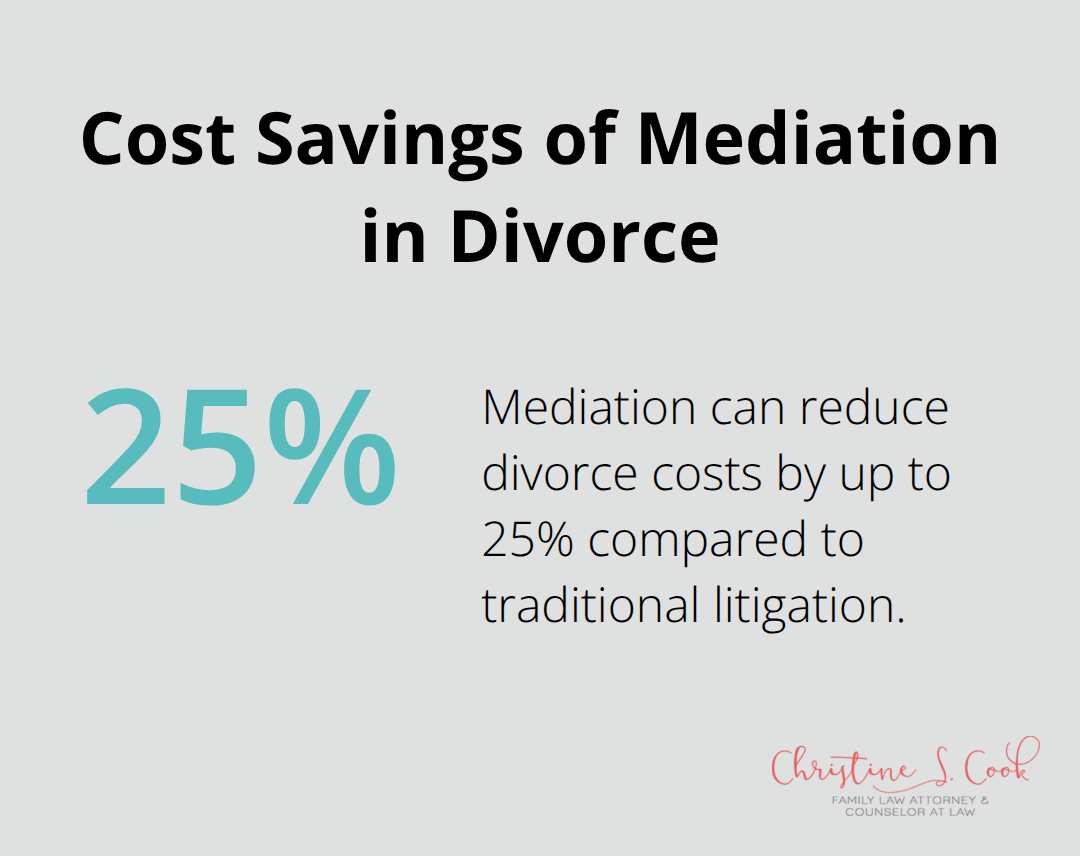
When negotiating with your spouse, focus on interests rather than positions. This approach, recommended by Harvard Law School’s Program on Negotiation, often leads to more satisfactory outcomes for both parties. If direct negotiation proves challenging, consider mediation. The American Bar Association reports that mediation can reduce the cost of divorce by 20-30% compared to litigation.
Use clear, specific language when drafting the agreement. Avoid ambiguities that could lead to future disputes. Include provisions for handling unforeseen circumstances, such as the discovery of hidden assets post-divorce.
While templates can provide a starting point, every divorce is unique. Working with an experienced family law attorney ensures your agreement is tailored to your specific situation and complies with local laws.
A property division agreement sample provides a roadmap for fair asset distribution during divorce. This document reduces conflicts and streamlines the separation process. A well-crafted agreement protects interests and sets the foundation for a smoother transition into post-divorce life.
Legal counsel offers invaluable benefits when creating a property division agreement sample. An experienced attorney provides insights into local laws, uncovers hidden assets, and ensures legal soundness. At Christine Sue Cook, LLC, we specialize in family law and guide clients through property division complexities.
A comprehensive property division agreement impacts the overall divorce process significantly. It reduces stress, saves time and money, and helps both parties move forward confidently. The agreement creates a foundation for financial stability after divorce (not just asset division).