
Make a Payment
850-572-3443
Divorce can be a challenging process, especially when it comes to financial matters. At Christine Sue Cook, LLC, we often hear the question, “Can I get spousal support after divorce?”
The answer isn’t always straightforward, but understanding the basics can help you navigate this complex issue. This guide will walk you through the key aspects of obtaining spousal support, from eligibility criteria to the steps involved in requesting it.
Spousal support (also known as alimony) is a financial arrangement where one spouse provides monetary assistance to the other after a divorce. This support plays a vital role in maintaining financial stability during the transition to single life.
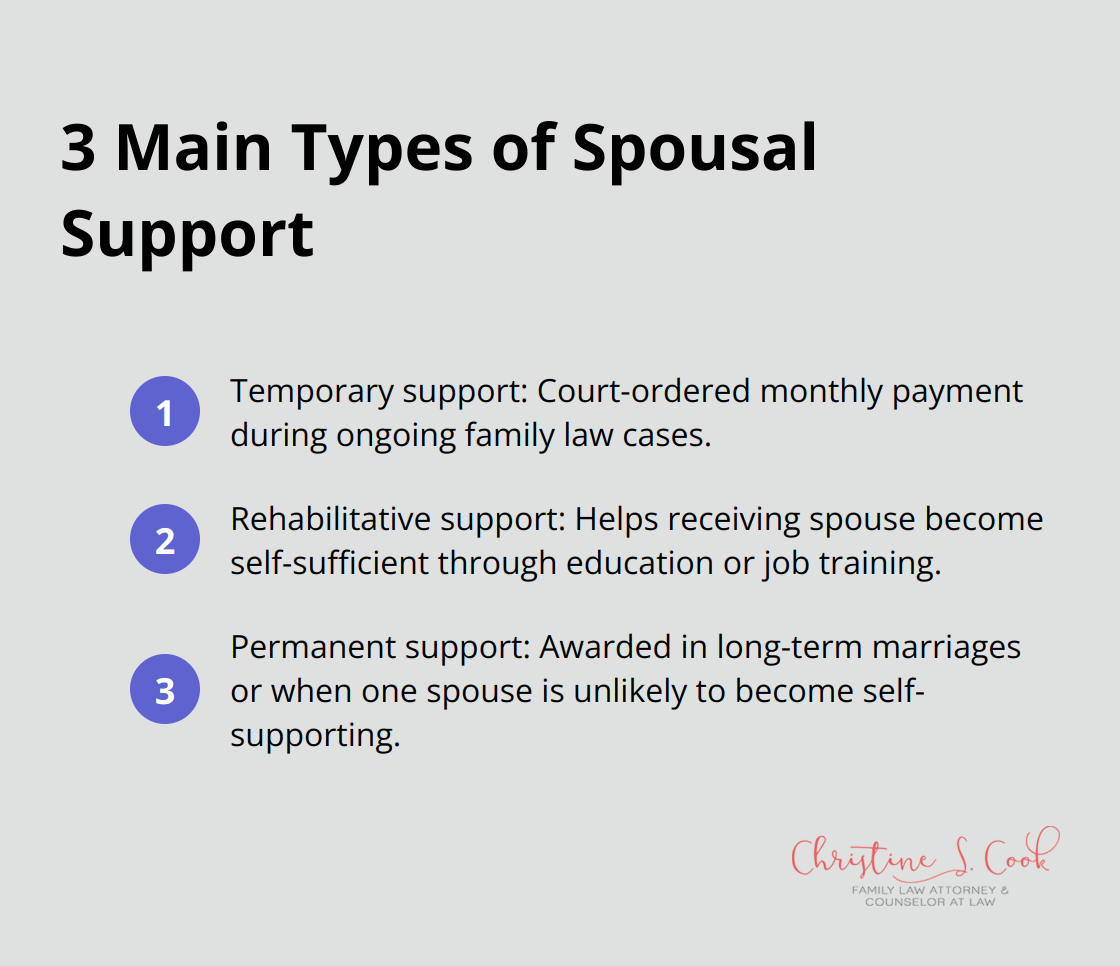
Courts typically award three main types of spousal support:
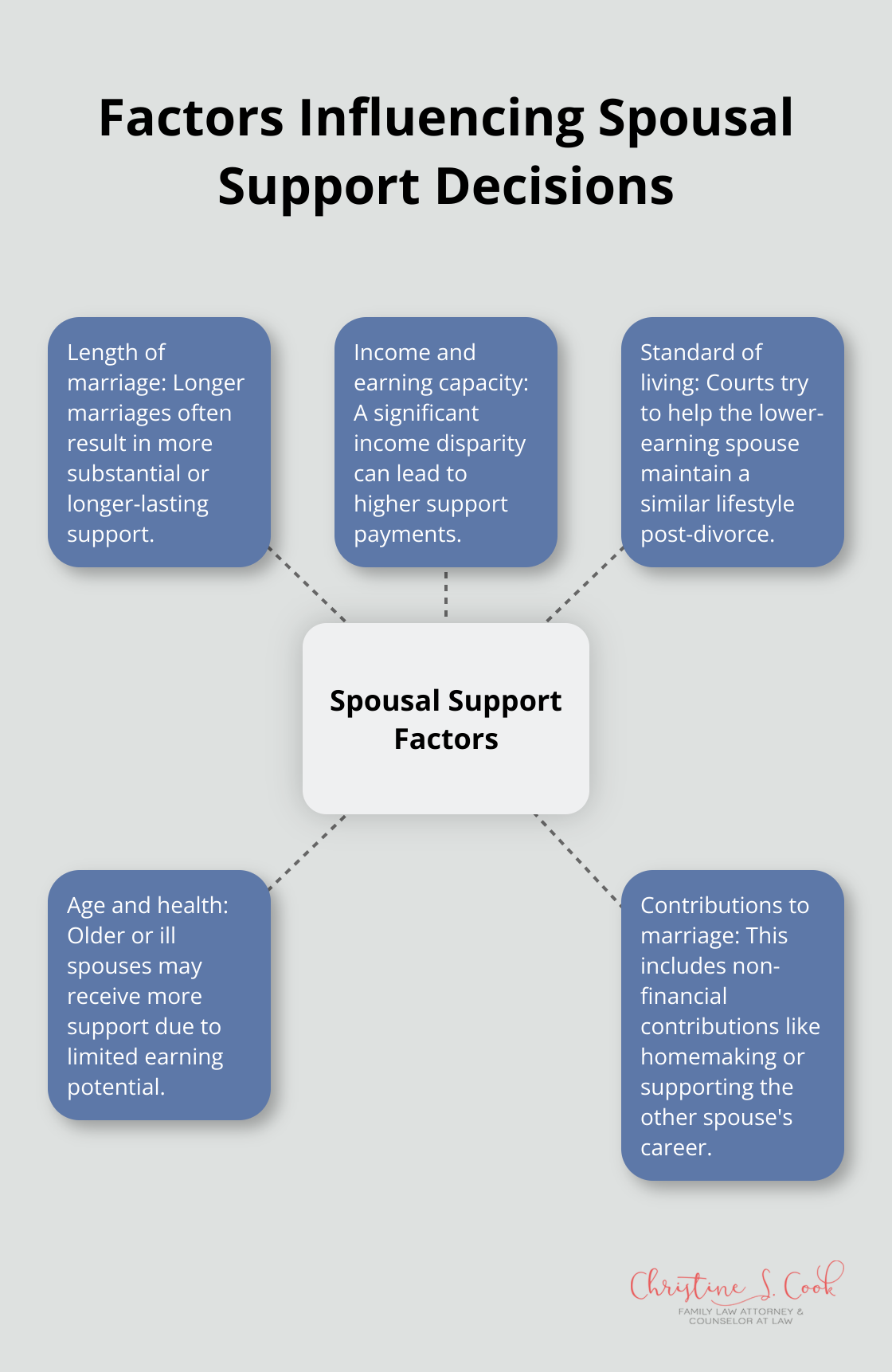
Courts consider various factors when they determine spousal support. These typically include:
Prenuptial agreements can significantly affect spousal support. If you have a prenup, review it carefully with your attorney. Some agreements may limit or even eliminate spousal support, while others might set predetermined amounts.
Experienced legal representation protects your interests and ensures a fair outcome in spousal support cases. Whether you seek support or the court asks you to pay, an attorney can guide you through the complexities of the process.
As we move forward, let’s explore the eligibility and qualification criteria for spousal support, which will help you understand if you might qualify for this financial assistance after your divorce.
The duration of your marriage significantly influences spousal support decisions. Courts consider several factors when determining spousal support: Need, ability to pay, length of marriage, standard of living, age and health of both spouses, and duration of spousal support. For example, Florida considers marriages lasting 17 years or more as long-term, which could lead to permanent alimony. However, shorter marriages might still qualify for temporary or rehabilitative support.
Courts meticulously examine the financial situation of both parties. A substantial income gap between spouses often results in the higher-earning partner paying support. This assessment includes:
Certain situations can bolster a claim for spousal support:
Prenuptial agreements can significantly affect your eligibility for spousal support. These agreements often include provisions about alimony, which courts generally uphold unless deemed unfair or unconscionable. It’s essential to have an experienced attorney review any prenuptial agreement to understand its implications.
While these factors provide a general framework, the specific circumstances of your marriage and divorce ultimately determine your eligibility for spousal support. An experienced family law attorney can help you navigate this complex process, understand your rights, and explore your options for spousal support after divorce. Generally, a request for alimony cannot be raised for the first time after a divorce is final, with two exceptions to this rule.
As we move forward, let’s explore the steps you need to take to request spousal support and build a strong case for your financial future.
The foundation of any spousal support case rests on thorough financial documentation. You must gather all relevant financial records, including:
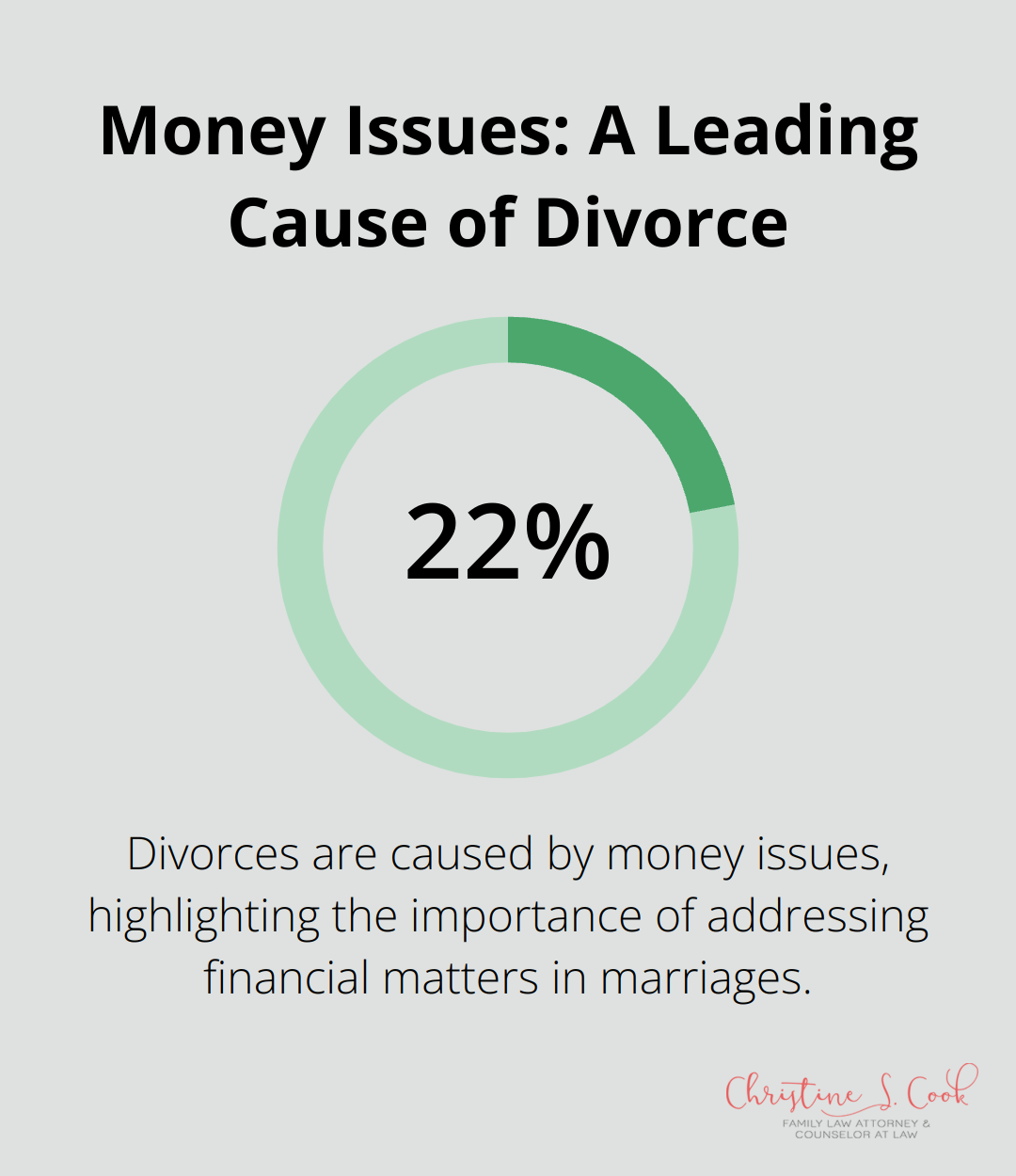
Meticulous record-keeping strengthens your position. A survey by the Institute for Divorce Financial Analysts reveals that money issues are one of the leading causes of divorce, accounting for 22% of cases.
When you file for divorce, you must explicitly include your request for spousal support in the initial paperwork. This step proves crucial, as failure to do so could potentially limit your options later. The American Academy of Matrimonial Lawyers reports a 44% increase in women paying alimony (as observed by attorneys), which highlights the importance of addressing support early in the process, regardless of gender.
Many spousal support agreements result from negotiation rather than court orders. During this phase:
If negotiations fail, you must present your case before a judge. This process involves:
Judges have significant discretion in spousal support cases. A survey by the American Bar Association revealed that 97% of family law attorneys believe judicial discretion plays a major role in support outcomes.
The process of requesting spousal support involves complex legal and financial considerations. You should consult with an experienced family law attorney who can guide you through the intricacies of your specific case. A knowledgeable lawyer will help you understand your rights, assess your eligibility for support, and develop a strong strategy to achieve the best possible outcome.
Spousal support after divorce depends on various factors unique to each case. Courts consider marriage length, financial disparities, and special circumstances when determining eligibility. Thorough preparation strengthens your position: gather comprehensive financial records, include your support request in the initial divorce filing, and prepare to negotiate or present your case in court.
Professional legal guidance proves invaluable in navigating the complexities of spousal support cases. At Christine Sue Cook, LLC, we offer expert family law services tailored to your specific situation. Our experienced team provides compassionate solutions to help you through this challenging process.
Don’t face this journey alone. Contact a qualified family law attorney to assess your situation and explain your rights. With proper guidance and preparation, you can work towards securing the financial support you need post-divorce. The question “Can I get spousal support after divorce?” requires personalized evaluation (and expert legal advice).