Divorce ranks among life’s most stressful experiences, with 73% of people reporting significant emotional distress during the process. The emotional divorce often proves harder to navigate than the legal proceedings themselves.
At Christine Sue Cook, LLC, we understand that healing requires more than time-it demands intentional strategies and professional guidance. This comprehensive guide provides evidence-based approaches to help you rebuild your emotional well-being and move forward with confidence.
Divorce triggers a predictable sequence of emotional stages that mirrors the grief process Elisabeth Kübler-Ross identified. Most people experience shock first, which lasts several weeks as your mind protects itself from overwhelming reality. This shifts into intense pain and guilt, followed by anger that can persist for months. The American Psychological Association reports that many individuals experience severe emotional distress, with depression, loneliness and isolation, and self-esteem difficulties often appearing during the divorce process. Recovery typically requires one year for every five years of marriage (according to clinical psychologists).
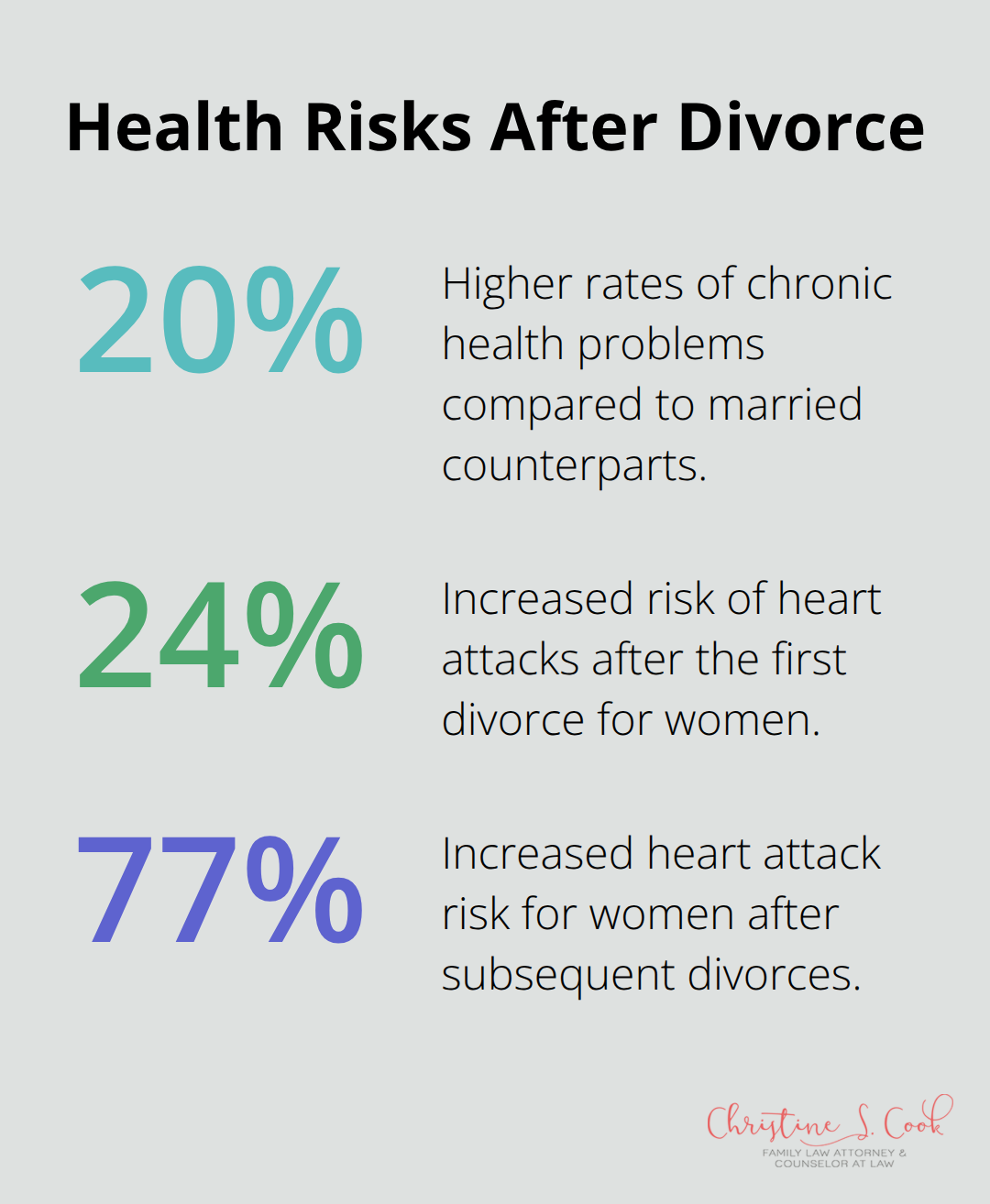
Your body responds to divorce stress with measurable health consequences. Research from the Journal of Men’s Health shows divorced individuals face 20% higher rates of chronic health problems compared to married counterparts. Women experience a 24% increased risk of heart attacks after their first divorce, which jumps to 77% after subsequent divorces according to Duke University researcher Matthew Dupre.
Men face mortality rates nearly 250% higher than married men. Your immune system weakens under chronic stress, which makes you more susceptible to infections and illnesses that can persist for years.
Divorce grief differs from death-related grief because your former spouse remains alive, which creates ongoing triggers and complications. You experience ambiguous loss – you mourn someone who still exists but is no longer part of your daily life. This type of loss remains unclear and has no resolution, leading to feelings of confusion, anxiety, and chronic sorrow. According to psychologists, our bodies go through withdrawal similar to a drug addict during this process. The grief intensifies when you encounter shared locations, mutual friends, or during holidays and anniversaries. Harvard Health Publishing research confirms that this type of grief often requires professional intervention to prevent long-term psychological damage.
These profound emotional and physical impacts make professional support essential. The next step involves building the right support system to help you navigate this challenging transition.
Recovery from divorce requires three strategic pillars: professional therapeutic support, a carefully selected support network, and evidence-based self-care practices. Research shows that individuals who engage professional counselors during divorce demonstrate improved outcomes compared to those who attempt to heal alone.
Cognitive Behavioral Therapy proves most effective for divorce recovery, with the National Institute of Mental Health documenting significant improvements in 78% of participants within six months. CBT helps you reshape negative thought patterns that divorce creates. Individual therapy sessions should occur weekly during the first three months, then bi-weekly as emotional stability improves.
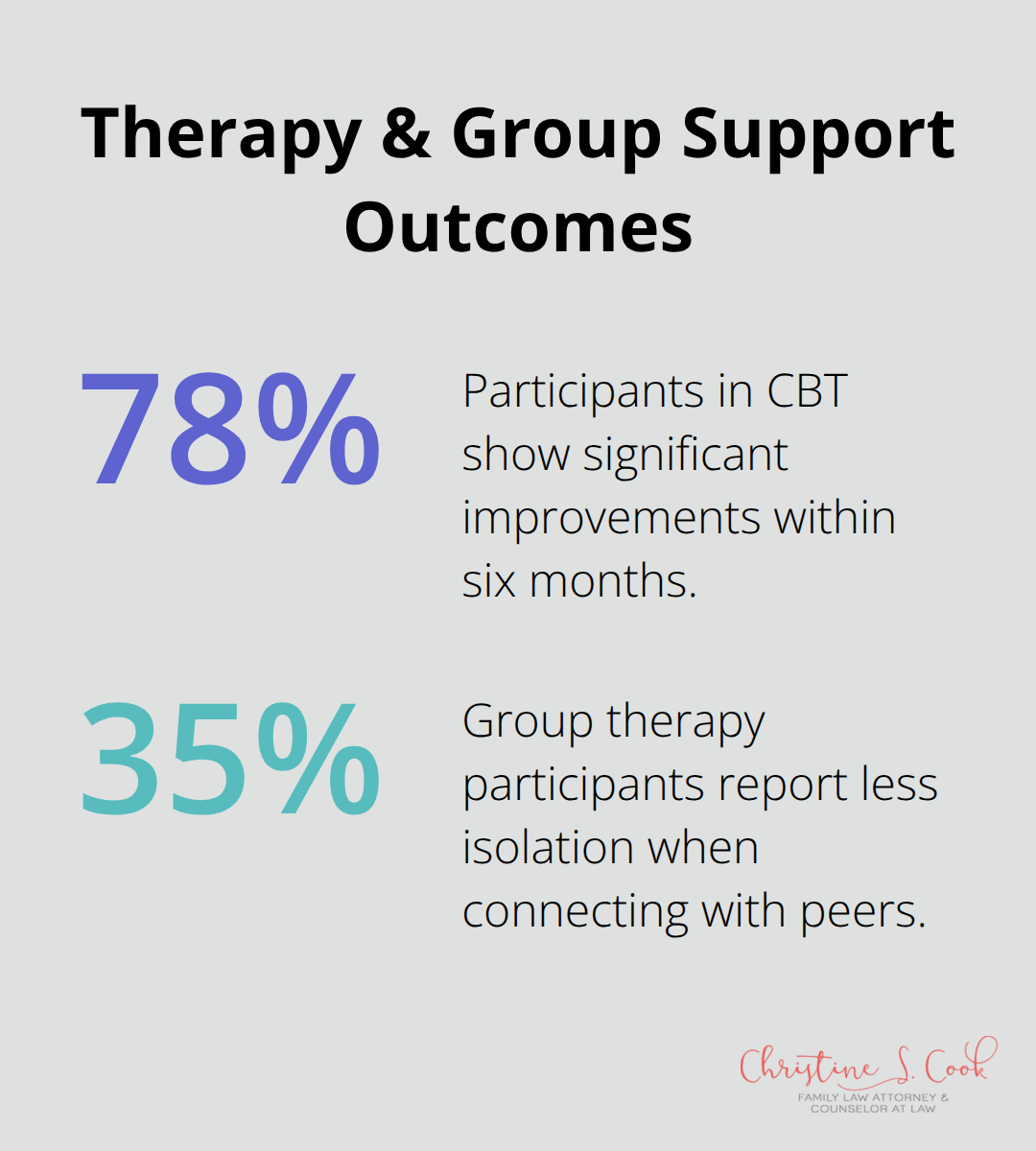
Group therapy provides additional benefits – participants report 35% less isolation when they connect with others who experience similar challenges. Interview three therapists before you select one, and focus on their specific divorce recovery experience rather than general counseling credentials.
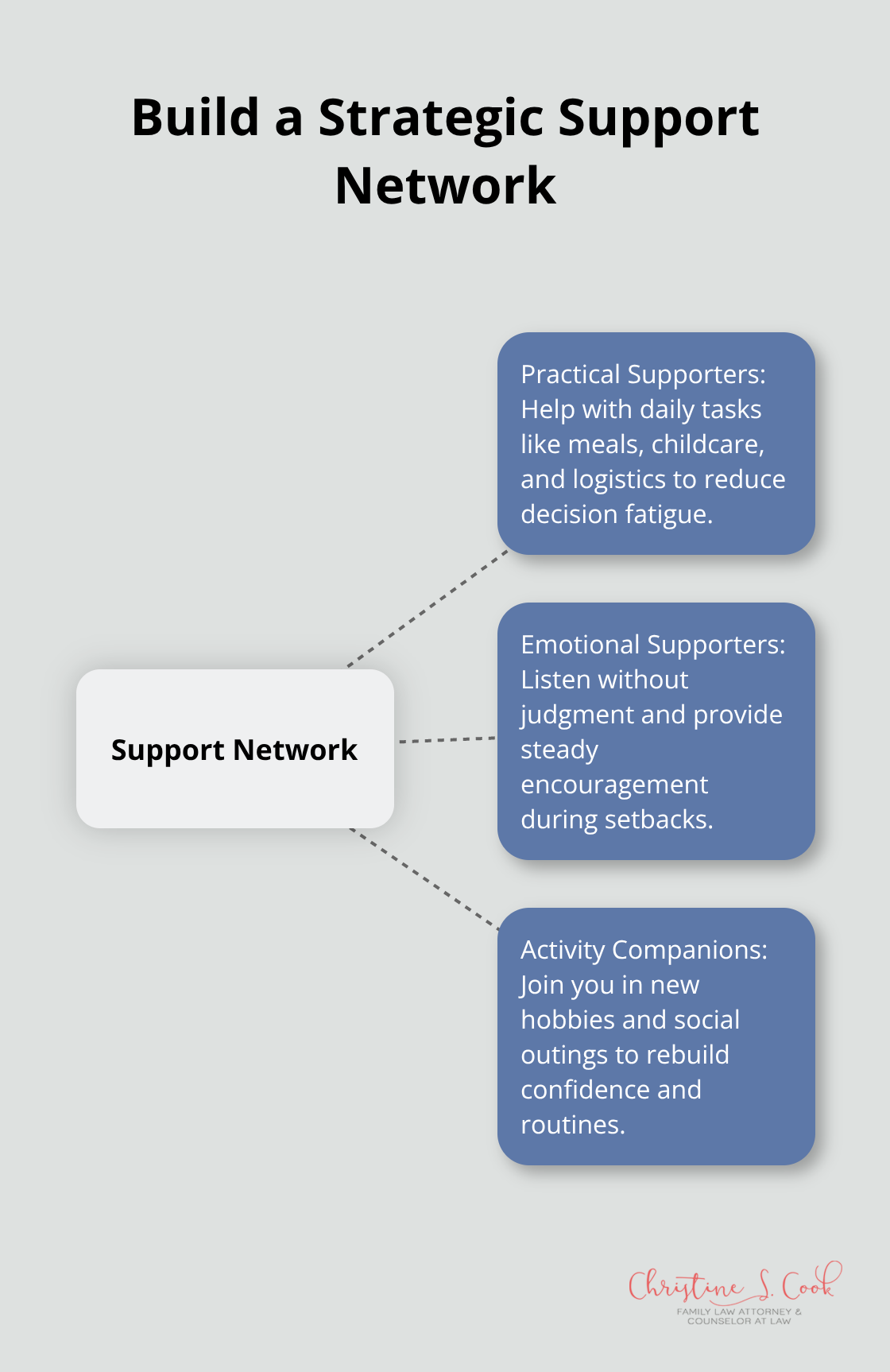
Your support network needs intentional curation, not random collection of well-meaning friends. Research demonstrates that social connections significantly impact recovery outcomes for divorced individuals. Identify three categories: practical supporters who help with daily tasks, emotional supporters who listen without judgment, and activity companions who engage you in new experiences. Harvard Health Publishing research indicates that social connections directly impact immune system strength during stress periods (which makes this step essential for your physical health). Limit contact with friends who knew you primarily as a couple – these relationships often trigger grief responses and slow your progress.
Physical activity delivers measurable mental health benefits during divorce recovery. Mayo Clinic studies show that 30 minutes of daily exercise reduces depression symptoms by 47% within eight weeks. Morning routines create stability when your life feels chaotic – wake at the same time, exercise, eat protein-rich breakfasts, and avoid phones for the first hour. Mindfulness practices like meditation reduce stress hormones by 23% according to Harvard Medical School research. Journal for 15 minutes daily to process emotions and track progress. Sleep hygiene becomes essential – maintain consistent bedtimes and avoid alcohol, which disrupts REM sleep patterns your brain needs for emotional processing (this directly affects your recovery speed).
These foundational strategies prepare you for the next phase: actively reconstructing your identity and life goals as a single person. Working with a recovery coach can provide additional guidance as you navigate this transformation.
Divorce demands strategic goal-setting that reflects your authentic self, not the person you became within marriage. Research shows that most people suffer mental health symptoms during and after a divorce, for a year or two, as it typically takes that long to adjust to your new life. Start with three specific areas: career advancement, personal interests you abandoned during marriage, and new social connections.
Write down measurable objectives with deadlines – complete a certification course within four months, join two new activity groups within eight weeks, or establish three new friendships by year’s end. Financial independence becomes paramount: create a detailed budget that accounts for your single-income reality and establish credit in your name alone. Research indicates that women experience disproportionate declines in household income after divorce, making financial planning essential rather than optional.
Effective boundaries with your former spouse require specific rules, not vague intentions. Communication should occur through one designated method – email for non-urgent matters, text for schedule changes only. Respond within 24 hours to co-parenting messages but never immediately to emotional outbursts.
The American Association for Marriage and Family Therapy research indicates that structured communication reduces conflict by 58% within three months. Block your ex-spouse on social media platforms completely – monitoring their activities delays your emotional recovery. Avoid discussions about personal life, new relationships, or financial struggles beyond legally required child support matters. Physical boundaries matter equally: establish pickup and drop-off locations that aren’t your home, preferably public spaces like schools or community centers.
Successful co-parenting requires business-like interactions focused solely on children’s needs. Create consistent rules across both households for bedtimes, screen time, and discipline – children thrive with predictable structure according to the American Academy of Pediatrics. Use co-parenting apps like OurFamilyWizard or Talking Parents to document all interactions and maintain professional communication tone.
Research from the National Child Traumatic Stress Network shows children adjust 65% faster when parents maintain neutral, respectful exchanges. Schedule weekly planning calls limited to 15 minutes maximum, focusing exclusively on logistics and children’s activities. Never discuss adult relationship issues during these conversations. When conflicts arise, postpone discussions until emotions cool – heated exchanges damage children more than the original divorce (according to longitudinal studies from the University of Virginia). Consider working with a recovery coach who can provide specialized tools for managing emotions and rebuilding self-esteem during this transition.
Emotional divorce recovery demands patience and strategic action. Most people need 12-24 months to feel emotionally stable again, with significant improvements typically appearing after six months of consistent therapeutic work and self-care practices. The American Psychological Association confirms that individuals who begin therapy within three months of separation show 40% faster emotional recovery rates compared to those who delay professional help.
Your recovery timeline depends on marriage length, support system quality, and professional intervention timing. Track your progress monthly rather than daily because healing happens gradually, not linearly. Weekly therapy sessions, daily exercise for mental health benefits, and firm boundaries with your former spouse remain non-negotiable priorities until emotional stability returns.
Professional legal guidance becomes essential when you navigate divorce complexities (both emotional and practical aspects require expert support). At Christine Sue Cook, LLC, we understand that divorce affects every aspect of your life and provide compassionate family law services in Pensacola. Christine S. Cook, LLC offers consultations to discuss your legal needs and help you rebuild with confidence. Recovery requires both emotional healing and proper legal protection to secure your future well-being.