At Christine Sue Cook, LLC, we understand that inheritance division of property can be a complex and emotionally charged process.
Navigating the legal landscape of inheritance laws, dealing with family disputes, and ensuring fair distribution of assets are challenges many families face.
This guide will provide you with practical strategies to handle property division effectively, from understanding state-specific laws to exploring mediation approaches.
Inheritance laws differ significantly across states, which affects property division and estate planning. At Christine Sue Cook, LLC, we’ve observed how these variations impact our clients’ situations.
Florida, where our firm operates, follows the common law system. This means assets acquired during marriage aren’t automatically split 50/50, unlike community property states such as California or Texas. This distinction can significantly influence how property is divided among heirs.
A recent study revealed that many Americans don’t understand their state’s inheritance laws. This knowledge gap often results in disputes and complications during property division.
Wills and trusts serve as powerful tools in property division. A well-crafted will clearly outlines asset distribution preferences, potentially preventing family conflicts. Trusts offer even more control, allowing you to set conditions on inheritances or protect assets from creditors.
A 2021 Gallup poll found that only 46% of Americans have a will. This low percentage often leads to lengthy probate processes and family disagreements.
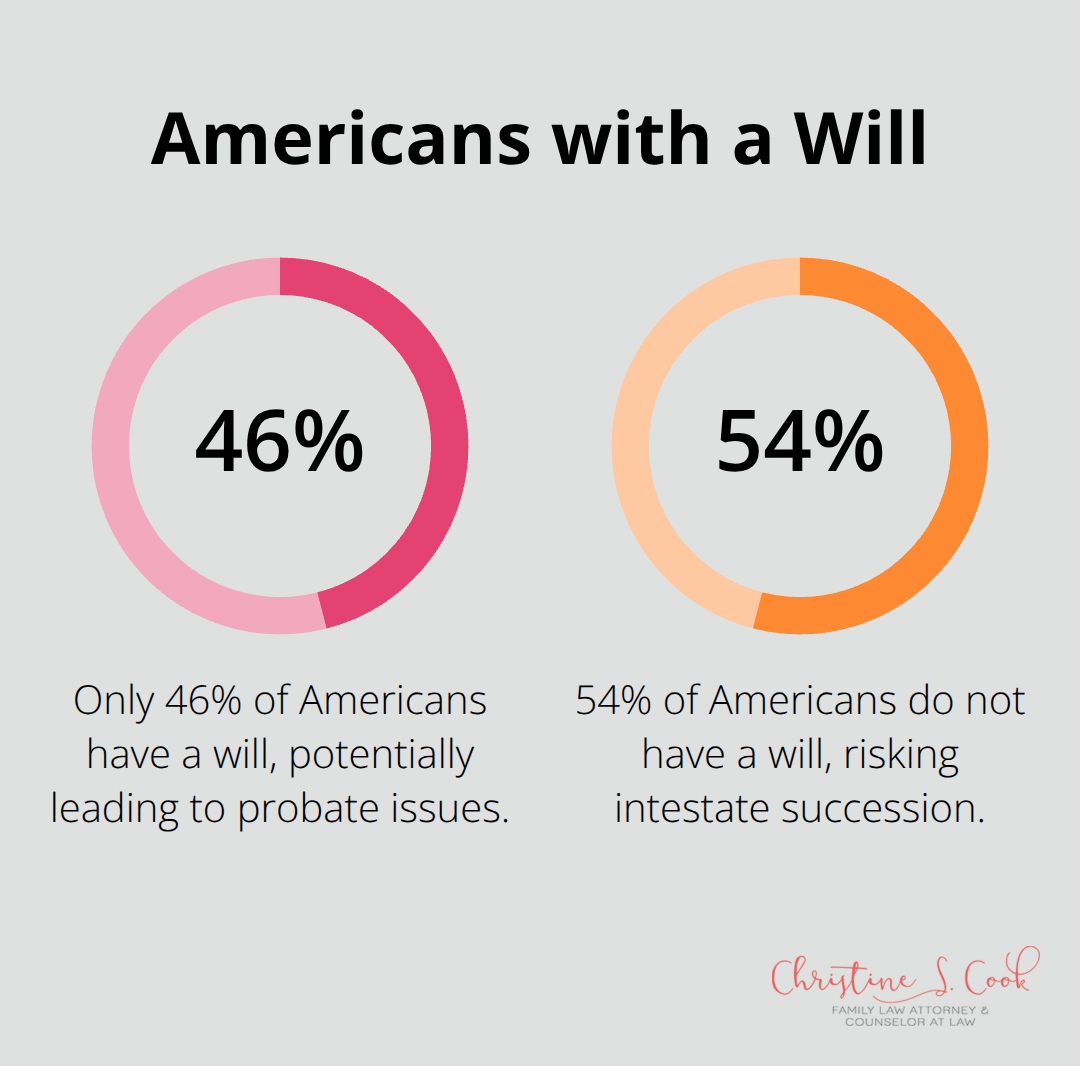
Dying without a will (intestate) means state laws determine property division. In Florida, for example, if you’re married with children from another relationship, your spouse receives half of your estate, and your children get the other half. This default distribution might not align with your wishes, underscoring the importance of proper estate planning.
A recent EstateExec study showed that intestate estates take an average of 18 months to settle, compared to just 9 months for estates with a will. This extended timeline can cause additional stress and financial strain on families.
Understanding these laws is essential for smooth property division. Legal professionals can guide you through the complexities of inheritance laws, ensuring your wishes are respected and your family is protected. They can help you create a comprehensive estate plan that aligns with your state’s specific laws and your personal preferences.
Approximately 2.6 million probate cases are filed annually in state courts across the U.S. This high number underscores the importance of proper estate planning and understanding inheritance laws.
As we move forward, let’s explore the common challenges that arise during property division and how to address them effectively.
Inheritance division often brings unexpected hurdles. Family disagreements over property division are unfortunately common. A study found that 58% of respondents have experienced family disputes due to lack of proper estate planning. These disputes often stem from perceived unfairness or emotional attachments to specific assets.
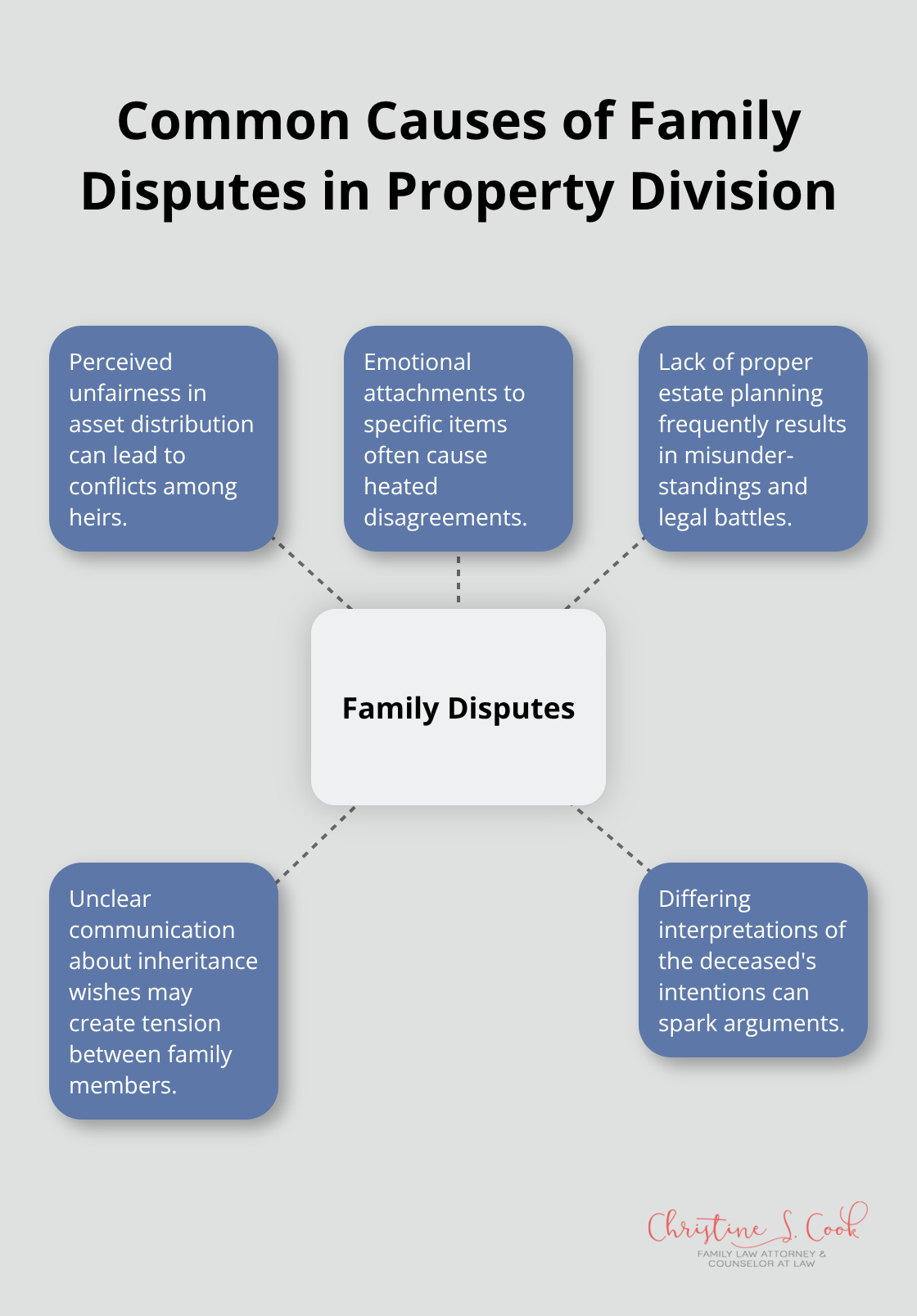
To mitigate conflicts, try these strategies:
Determining the fair market value of inherited assets can be a significant challenge.
To address this issue:
Family heirlooms and items of sentimental value often cause the most heated disputes. A study showed that 58% of respondents have experienced family disputes due to lack of proper estate planning, which can include issues with sentimental items.
We suggest the following approaches:
Legal professionals can provide invaluable assistance in navigating these challenges. They offer expertise in state-specific inheritance laws, mediation techniques, and strategies for fair asset distribution. Their guidance can often prevent costly and time-consuming legal battles.
Clear and open communication is key to resolving inheritance disputes. Establish regular family meetings to discuss the division process. This can help prevent misunderstandings and foster a spirit of cooperation. Encourage all family members to express their concerns and wishes respectfully.
As we move forward, let’s explore practical strategies for achieving fair property division, including mediation approaches and professional appraisal services.
Mediation and collaborative law offer powerful alternatives to traditional litigation. These approaches focus on open communication and mutual problem-solving, often leading to more satisfactory outcomes for all parties involved.
While mediation can be effective, it’s important to note that success rates may vary. The American Bar Association provides monthly webinars featuring panels of professors addressing recent cases and issues relevant to real estate practitioners and scholars.
Collaborative law involves a team of professionals, including attorneys, financial advisors, and mental health experts. This holistic approach addresses not just legal issues but also emotional and financial concerns, leading to more comprehensive solutions.
Accurate asset valuation plays a key role in fair property division. Professional appraisals provide unbiased, market-based valuations that can prevent disputes over asset worth. From minimizing tax burdens to preventing inheritance disputes, appraisals provide clarity and legal protection.

We recommend obtaining multiple appraisals for high-value or unique items. While it might seem costly upfront, it can save thousands in potential legal fees from disputes later on.
A detailed inventory of all assets forms the cornerstone of fair property division. This should include not just obvious items like real estate and bank accounts, but also personal property, digital assets, and even intellectual property rights.
Digital tools can streamline this process. Apps like Sortly or Memento Database help categorize and value items efficiently. These tools often allow for photo documentation and value tracking, which can prove invaluable during discussions or mediation sessions.
Tax considerations significantly impact the fairness of property division. Different assets carry different tax burdens, which should factor into the division process.
For instance, inheriting a traditional IRA comes with required minimum distributions and potential income tax implications, while a Roth IRA offers tax-free withdrawals. Understanding these differences can lead to more equitable distributions.
Consulting with a tax professional during the property division process can help identify potential tax pitfalls and opportunities for tax-efficient transfers, ensuring that the final division is truly fair when all factors are considered.
Inheritance division of property challenges many families. Clear communication among heirs prevents misunderstandings and conflicts. Families should express their wishes and concerns openly to work towards mutually beneficial solutions.
Legal counsel provides invaluable guidance and prevents costly mistakes. We at Christine Sue Cook, LLC offer expert legal services in estate planning and family law. Our team understands inheritance laws and can help create a comprehensive plan that aligns with your wishes.
Fairness and transparency should guide the property division process. Professional appraisals, detailed inventories, and tax considerations ensure equitable distribution. Mediation and collaborative law approaches (which we can assist with) achieve fair outcomes while preserving family relationships.