
Make a Payment
850-572-3443
Divorce can be one of life’s most challenging experiences, and supporting a friend through this difficult time is crucial. At Christine Sue Cook, LLC, we understand the complexities of divorce and its emotional toll on individuals.
This guide will provide practical advice on how to support someone through divorce, offering both emotional and tangible assistance. We’ll explore effective ways to be there for your friend while also maintaining healthy boundaries for yourself.
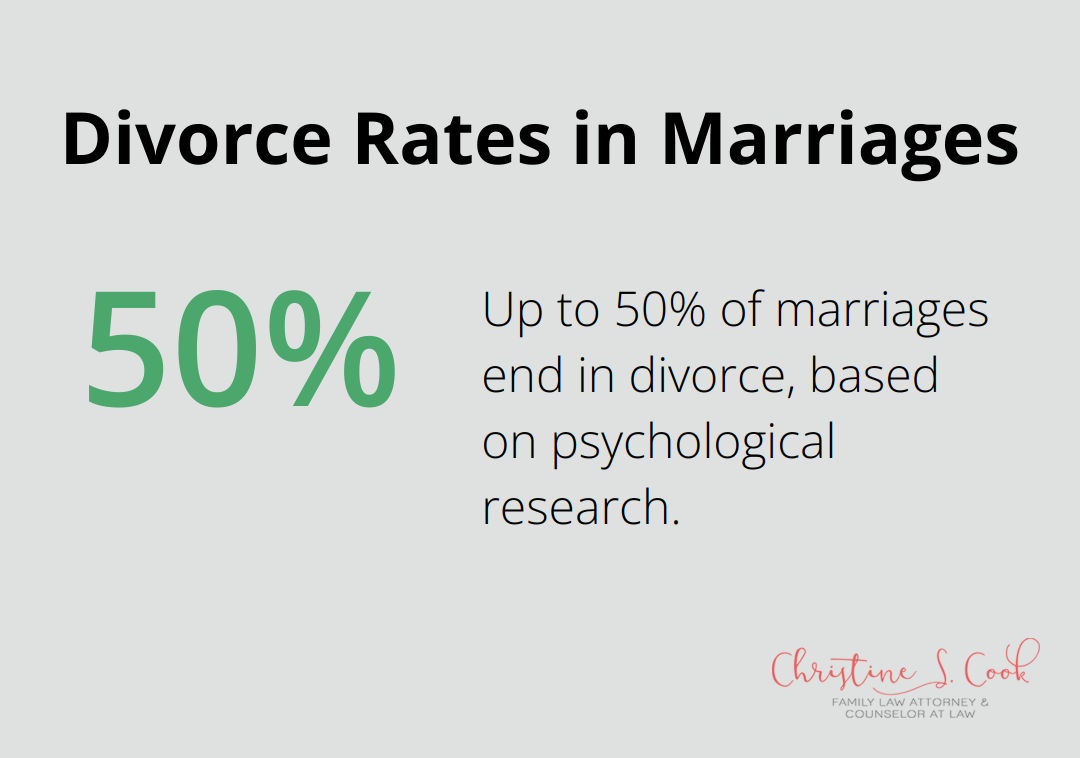
Divorce triggers a range of intense emotions. Your friend might experience anger, sadness, fear, and even relief – sometimes all in the same day. These feelings can overwhelm and become unpredictable. Up to 50 percent of marriages end in divorce, according to research by psychologists. Each individual goes through their own unique emotional process.
Many people don’t realize that divorce involves a grieving process similar to losing a loved one. Your friend may mourn the loss of their relationship, shared dreams, and the life they had planned. This grief can manifest in various ways (from crying spells to difficulty concentrating at work). It’s important to note that healing has no set timeline.
Beyond emotions, divorce brings practical challenges that compound stress. Your friend might deal with financial strain, custody arrangements, or the logistics of moving out. Money issues are among the leading causes of divorce, accounting for 22% of cases. These practical issues often exacerbate emotional distress.
Divorce can disrupt every aspect of a person’s routine. Your friend might struggle with changes in their living situation, social circles, and parenting responsibilities. Simple tasks like grocery shopping or attending social events can become emotionally charged experiences. Understanding these day-to-day challenges helps provide more targeted support.
While divorce marks the end of a marriage, it also opens the door to new beginnings. Many individuals find opportunities for personal growth and self-discovery through this process. However, the path to healing isn’t linear. Your friend might experience setbacks and moments of doubt. Patience and consistent support play vital roles in their journey towards emotional recovery and a new chapter in life.
As we explore how to offer effective support, it’s essential to keep these emotional and practical aspects of divorce in mind. The next section will provide specific strategies to help your friend navigate this challenging time.
Supporting a friend through divorce requires more than emotional comfort. Practical assistance can make a significant difference. Here are effective ways to offer tangible support:
One of the most valuable things you can do is to listen. Create a judgment-free zone where your friend can express their feelings openly. Avoid giving unsolicited advice or criticizing their ex-partner. Instead, validate their emotions and experiences.
Divorce often disrupts daily routines, making simple tasks feel overwhelming. Instead of saying “Let me know if you need anything,” offer specific help. This could include:
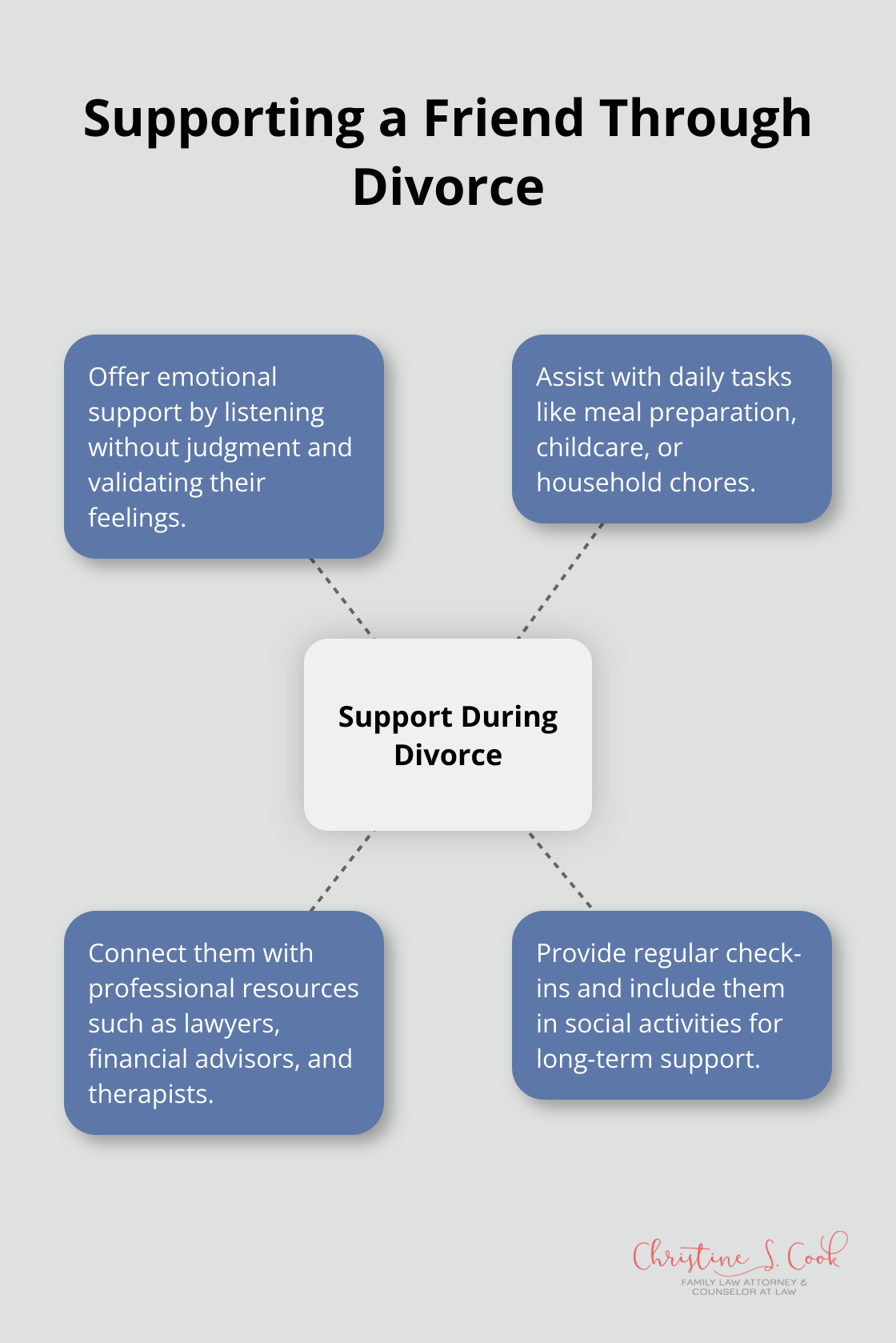
While you can’t be your friend’s lawyer or financial advisor, you can help them find professional support. Encourage them to seek legal counsel and offer to research reputable divorce attorneys in your area. If finances are a concern, look into low-cost legal aid options together.
Additionally, consider connecting them with:
Emotional support is just as important as practical help. Try to:
Divorce recovery is not a quick process. Your friend may need support for months or even years after the initial separation. Try to:
As we move forward, it’s important to consider how to balance supporting your friend while also taking care of yourself. The next section will explore setting healthy boundaries and maintaining your own well-being throughout this process.
Establish clear boundaries from the start. Define what kind of support you can offer and when you’re available. You might agree to be a listening ear during specific hours, but not take late-night calls. Be honest about what you can handle emotionally and practically.
Stay neutral regarding your friend’s ex-partner. Avoid speaking negatively about them, especially if children are involved. Your friend’s relationship with their ex may evolve over time, and taking sides can complicate matters.
Supporting a friend through divorce can drain you emotionally. Pay attention to signs of burnout, such as feeling overwhelmed, irritable, or exhausted. If you notice these symptoms, it’s time to step back and recharge.
Don’t hesitate to suggest professional help when needed. While you can provide emotional support, you’re not a substitute for a trained therapist or counselor.
Maintain your own routines and relationships while supporting your friend. Continue with your hobbies, exercise regimen, and social activities. This not only helps you stay balanced but also models healthy behavior for your friend.
Try joining a support group for friends of divorcees. These groups can provide valuable insights and coping strategies and offer a space to process your own emotions about your friend’s situation without burdening them.
If you find yourself struggling to balance support for your friend with your own well-being, consider seeking professional guidance. A therapist or counselor can help you navigate this challenging situation and provide tools to maintain your emotional resilience.
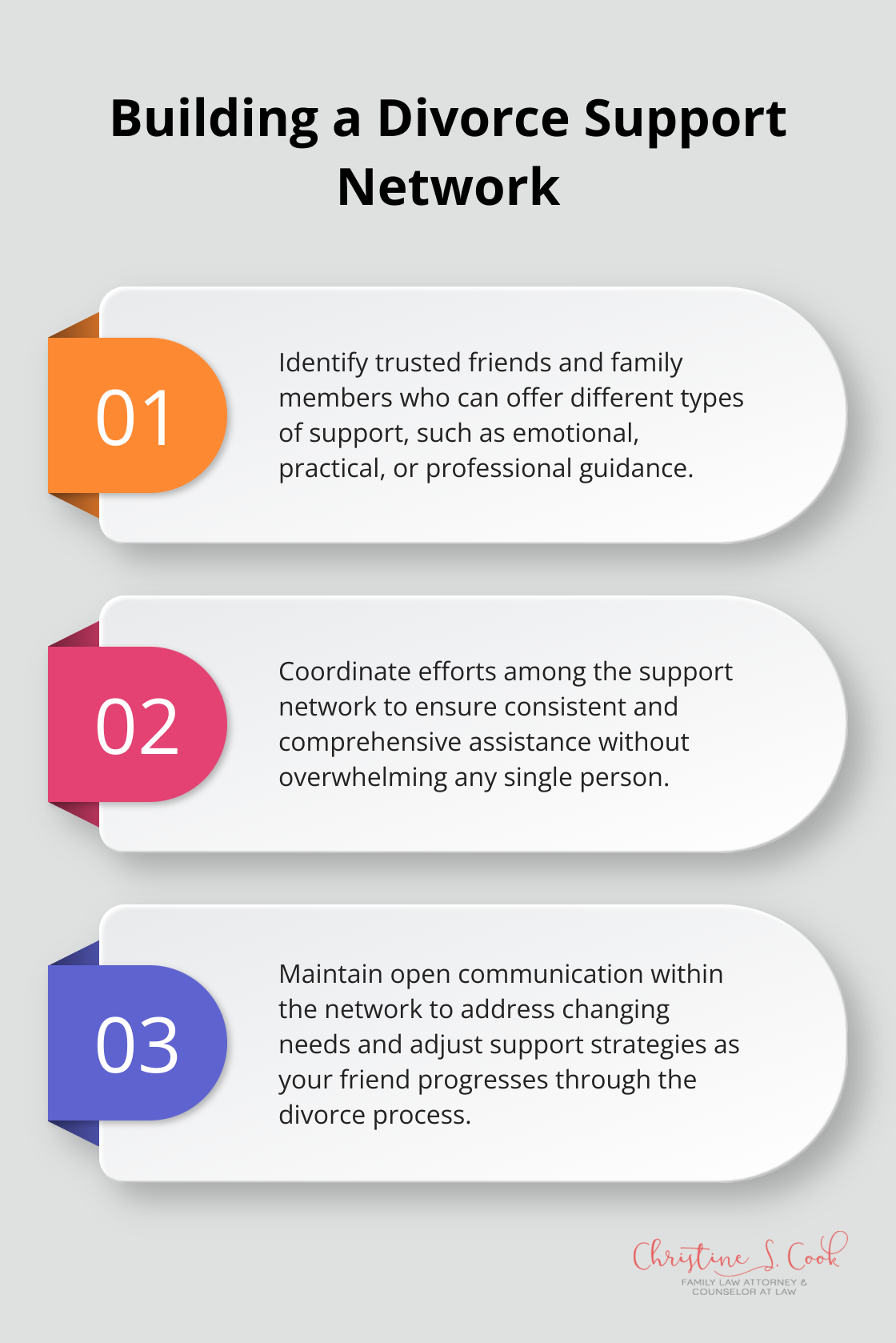
Don’t shoulder the responsibility alone. Create a support network for your friend by involving other trusted friends or family members. This approach (often called a “care team“) can distribute the emotional and practical support, preventing any one person from becoming overwhelmed.
Supporting a friend through divorce requires empathy, practical help, and long-term commitment. Your presence and willingness to listen without judgment can make a significant difference in their healing journey. Practical assistance, such as helping with childcare or household tasks, will alleviate some of the overwhelming burdens your friend faces.
Divorce recovery takes time, and your friend may need ongoing support for months or years after the initial separation. Regular check-ins, social inclusion, and patience with their healing process demonstrate your commitment to their well-being. It’s important to establish clear boundaries and prioritize your own self-care to provide sustained support without experiencing burnout.
At Christine Sue Cook, LLC, we understand the complexities of divorce and offer expert legal guidance for those navigating this challenging process. Our compassionate approach and innovative solutions provide valuable support to individuals facing divorce, child custody issues, or property division concerns. We stand ready to assist you or your friend in moving through this difficult chapter towards a brighter future.