When someone passes away in Florida, figuring out what their assets are worth isn’t just paperwork-it directly affects how much your family owes in taxes and how the estate gets divided among beneficiaries. Getting probate asset valuation wrong can cost your family thousands of dollars.
At Christine Sue Cook, LLC, we’ve seen families struggle with this process because they didn’t know where to start or which assets needed professional appraisals. This guide walks you through the exact steps to value everything from real estate to retirement accounts, so you can move through probate with confidence.
Florida law requires that probate assets be valued at fair market value as of the date of death. This isn’t optional, and it isn’t a rough estimate. The personal representative has 60 days from receiving Letters of Administration to file an inventory with the court listing every probate asset and its value. Inaccurate valuations create real consequences for your family. If the valuation is too low, the IRS may challenge it during a federal estate tax audit, potentially triggering penalties and interest that can reach tens of thousands of dollars.
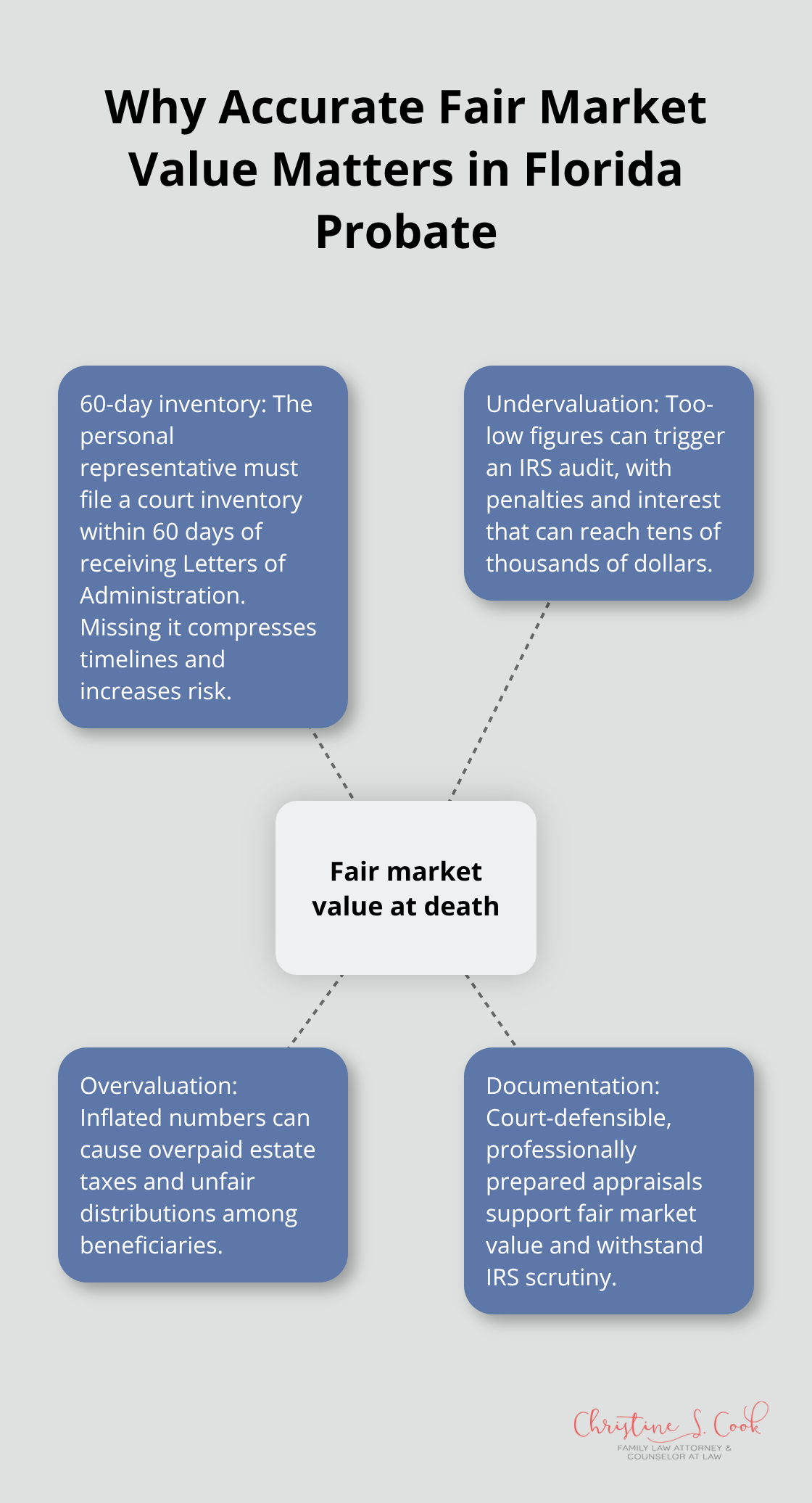
If the valuation is too high, beneficiaries may overpay estate taxes or face inflated valuations that distort how assets should be divided fairly among heirs.
The federal estate tax exemption sits at $13.99 million per individual as of 2025, meaning estates below that threshold typically avoid federal estate taxes entirely-but only if valuations are documented correctly. Many families miss this threshold by thousands of dollars because they relied on guesses instead of professional appraisals. In Florida, homestead property is excluded from the probate inventory under the state constitution, but all other assets must be valued with precision.
Real estate is almost always the largest asset in a probate estate, and it’s the asset most families undervalue or overvalue. A waterfront property in Stuart worth $650,000 requires a licensed appraiser’s report, not a real estate agent’s opinion. The difference between a market analysis and a court-defensible appraisal can easily cost $30,000 to $50,000 in unnecessary taxes or disputed distributions.
The most common valuation mistake families make is treating financial accounts as if they don’t need verification. Bank statements from the date of death require confirmation, especially if the account had recent deposits or withdrawals. Retirement accounts like IRAs and 401(k)s have specific valuation dates set by the financial institution, and these dates matter for tax calculations. Private business interests, art collections, and specialized equipment require appraisers with industry-specific credentials, not general appraisers. Hiring the wrong appraiser costs time and money because their report won’t hold up in probate court or withstand IRS scrutiny.
Start the appraisal process immediately after the personal representative is appointed. Delays mean rush fees from appraisers and compressed timelines that lead to incomplete research. The personal representative is personally liable if taxes aren’t paid correctly from probate assets, so accurate valuation protects them legally. Beneficiaries who receive inflated or undervalued asset information may later dispute the estate settlement, triggering expensive litigation that could have been prevented with proper documentation upfront. Understanding what assets need professional appraisals and which professionals to hire makes the difference between a smooth probate process and one that drains your family’s resources.
Real estate demands a licensed Florida appraiser with probate experience, not a real estate agent’s comparative market analysis. The appraiser must hold a Florida Real Estate Appraiser license and ideally certification from the Appraisal Institute or American Society of Appraisers. Schedule the inspection within two weeks of the personal representative’s appointment because delays compress your timeline for meeting the 60-day inventory filing deadline. The appraiser provides a written report that includes property photos, comparable sales from the past six months, adjustments for location and condition, and clear methodology. This report becomes your defense against IRS challenges and satisfies probate court requirements.
Bank statements alone do not constitute valuation. Pull statements dated exactly on the date of death, then verify them against the financial institution’s records because deposits or pending withdrawals can distort the true value. Stocks and mutual funds require valuation using the closing price on the date of death, available through your brokerage or financial advisor.
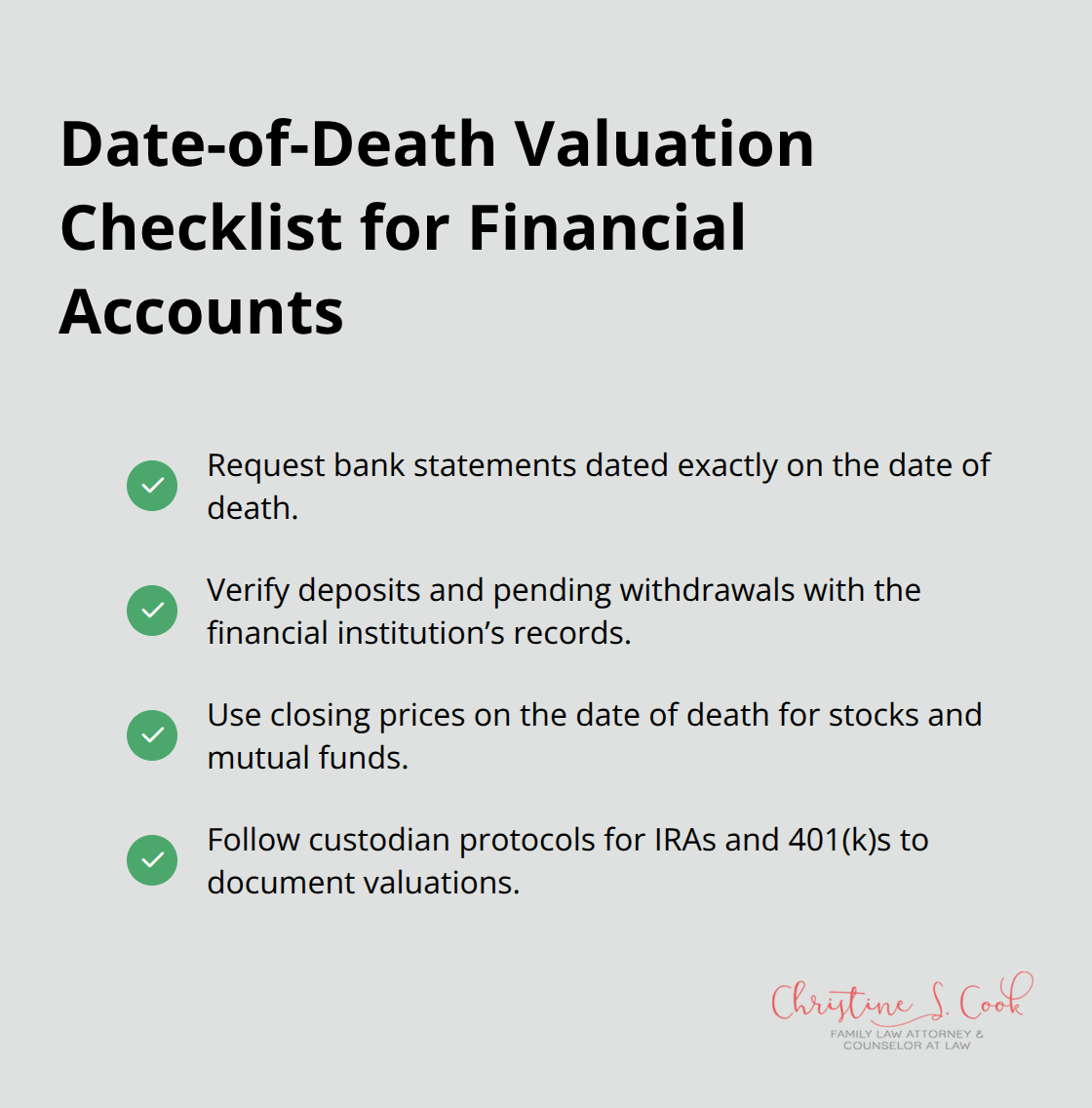
Retirement accounts like IRAs and 401(k)s have specific valuation protocols set by the custodian, and these dates matter for calculating required distributions and tax basis for beneficiaries.
Family businesses need valuation from a CPA or business valuation specialist certified by the American Society of Appraisers, not a general appraiser. Art, jewelry, and collectibles demand appraisers certified in gemology or art history through recognized bodies like the Gemological Institute of America. Firearms collections require appraisers familiar with federal transfer regulations and market values for specific makes and models. The IRS will not accept estimates for these assets on federal estate tax returns, so invest in detailed written reports with supporting documentation.
Start this process immediately because specialized appraisers often have longer wait times, and rushing leads to incomplete research that courts may reject. Many families delay hiring the right professionals because they’re unsure where to find them, but the American Society of Appraisers maintains searchable directories organized by specialization and location. Your estate attorney can recommend local appraisers with proven probate experience rather than leaving you to search alone. Once you’ve secured qualified appraisers for real estate, specialized assets, and financial accounts, the next critical step involves understanding when to bring in additional professionals-accountants, tax specialists, and estate attorneys-to coordinate the entire valuation process and ensure nothing falls through the cracks.
Handling probate asset valuation alone resembles trying to perform surgery on yourself-technically possible, but practically a terrible idea. The moment the personal representative receives Letters of Administration, they face a 60-day deadline to file a court inventory with accurate asset values. This compressed timeline means you cannot afford to hire professionals slowly or inefficiently. A licensed real estate appraiser takes two to four weeks for residential property reports, business valuation specialists need additional time to analyze financial records, and CPAs require documentation to prepare estate tax returns. Starting the hiring process within days of appointment prevents rushed work and ensures professionals have time to produce defensible reports. The personal representative carries personal liability if taxes aren’t paid correctly, so assembling the right team protects both the estate and the individual making these decisions.
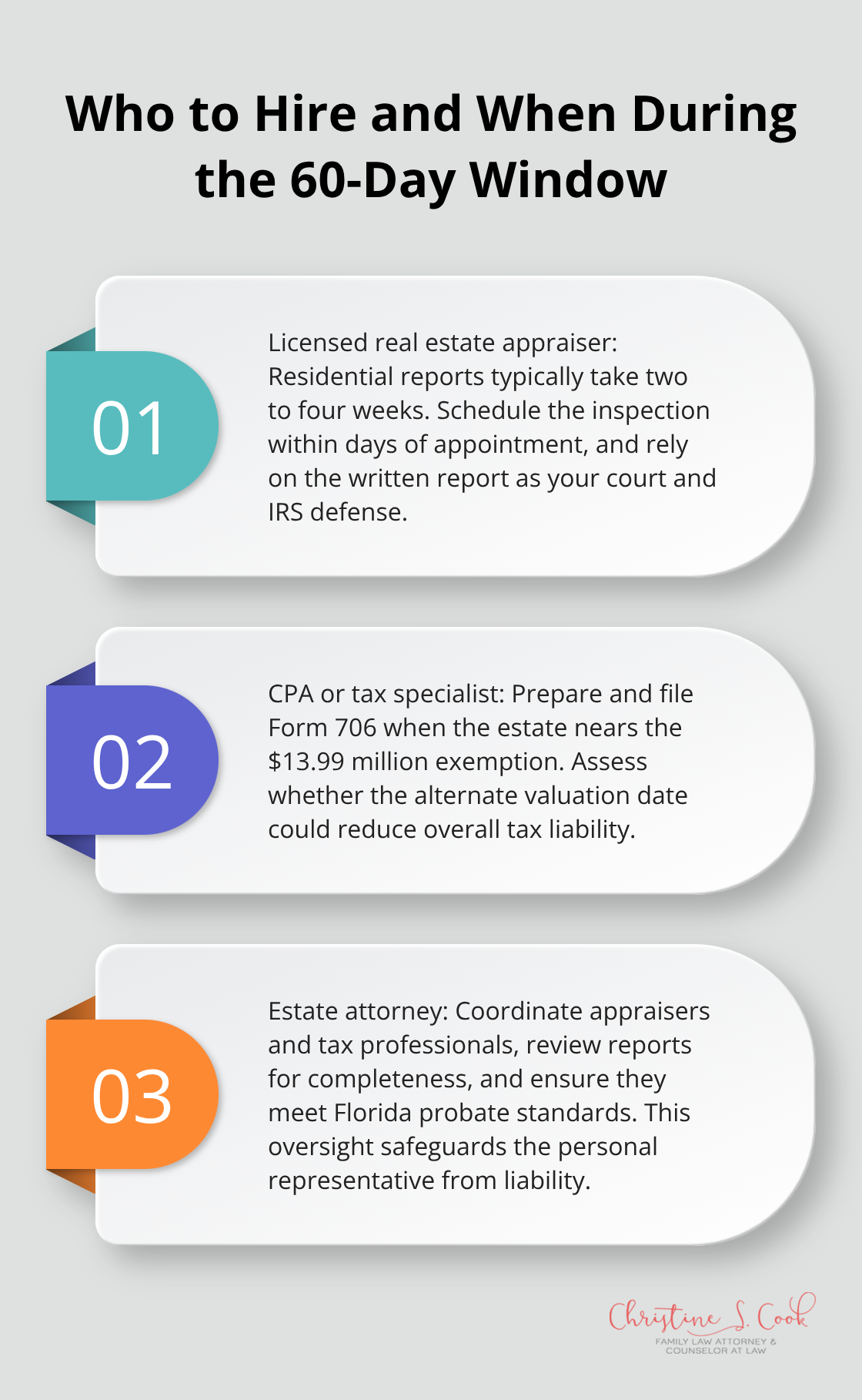
Real estate appraisers should be your first hire because property almost always represents the largest probate asset and the longest appraisal timeline. Demand a Florida Real Estate Appraiser license and probate experience-not agent opinions or online estimates. Schedule the inspection within two weeks of appointment to meet your 60-day inventory deadline without compression. The appraiser delivers a written report that includes property photos, comparable sales from recent months, adjustments for location and condition, and clear methodology. This report becomes your defense against IRS challenges and satisfies probate court requirements.
Next, engage a CPA or tax specialist experienced in estate tax returns, particularly if the estate approaches the $13.99 million federal exemption threshold. These professionals file Form 706 federal estate tax returns and determine whether an alternate valuation date six months after death would reduce tax liability. Your estate attorney coordinates these professionals, reviews their reports for completeness, and ensures valuations meet Florida probate court standards. This coordination prevents gaps in documentation and protects the personal representative from liability.
For specialized assets like family businesses or art collections, hire industry-specific appraisers certified through the American Society of Appraisers. Courts reject valuations from generalists who lack probate experience, forcing families to pay twice for appraisals. A CPA or business valuation specialist certified by the American Society of Appraisers values family businesses, not general appraisers. Art, jewelry, and collectibles demand appraisers certified in gemology or art history through recognized bodies like the Gemological Institute of America. Firearms collections require appraisers familiar with federal transfer regulations and market values for specific makes and models.
Financial institutions provide valuation statements for bank accounts and investment assets at no cost, but you must request them explicitly using the exact date of death. Retirement account custodians supply valuation documentation following their internal protocols, which differ by institution. The American Society of Appraisers maintains online directories searchable by location and specialty-use this resource to find certified professionals rather than hiring generalists who lack probate experience. Many families waste thousands hiring the wrong appraiser, then pay again for a second appraisal when courts reject the first report. Investing in qualified professionals upfront costs less than litigation over disputed valuations later.
Accurate probate asset valuation in Florida protects your family from costly mistakes that ripple through the entire estate settlement. When valuations are done right, beneficiaries receive fair distributions, the personal representative avoids personal liability for unpaid taxes, and your family moves through probate without disputes or IRS challenges. When valuations are done poorly, families face penalties, litigation, and years of uncertainty.
Within days of the personal representative’s appointment, contact a licensed Florida real estate appraiser with probate experience for your largest asset, request valuation statements from financial institutions using the exact date of death, and search the American Society of Appraisers directory for certified professionals in your area if you own specialized assets like family businesses or art collections. These early steps prevent the compressed timelines and rushed work that lead to rejected reports and costly do-overs. Your estate attorney coordinates these professionals and ensures their reports meet Florida probate court standards, so contact us at Christine Sue Cook, LLC to guide you through every step of probate asset valuation.
The 60-day inventory filing deadline arrives quickly, and professionals need adequate time to produce thorough, court-defensible reports. Start today by contacting your estate attorney and scheduling appraisals so your family’s financial security remains protected from the beginning.