Your family’s legacy deserves more than hope-it needs a solid plan. Without proper estate planning, your loved ones could face confusion, delays, and unnecessary costs when they need clarity most.
At Christine Sue Cook, LLC, we help Pensacola families protect what matters most through clear, practical guidance tailored to Florida law. The right documents and strategy today give your family peace of mind for decades to come.
Florida’s lack of state estate tax and inheritance tax sets it apart from nearly half the U.S. states, which means your heirs keep more of what you leave behind. However, this advantage only matters if your assets actually reach them without unnecessary probate delays.
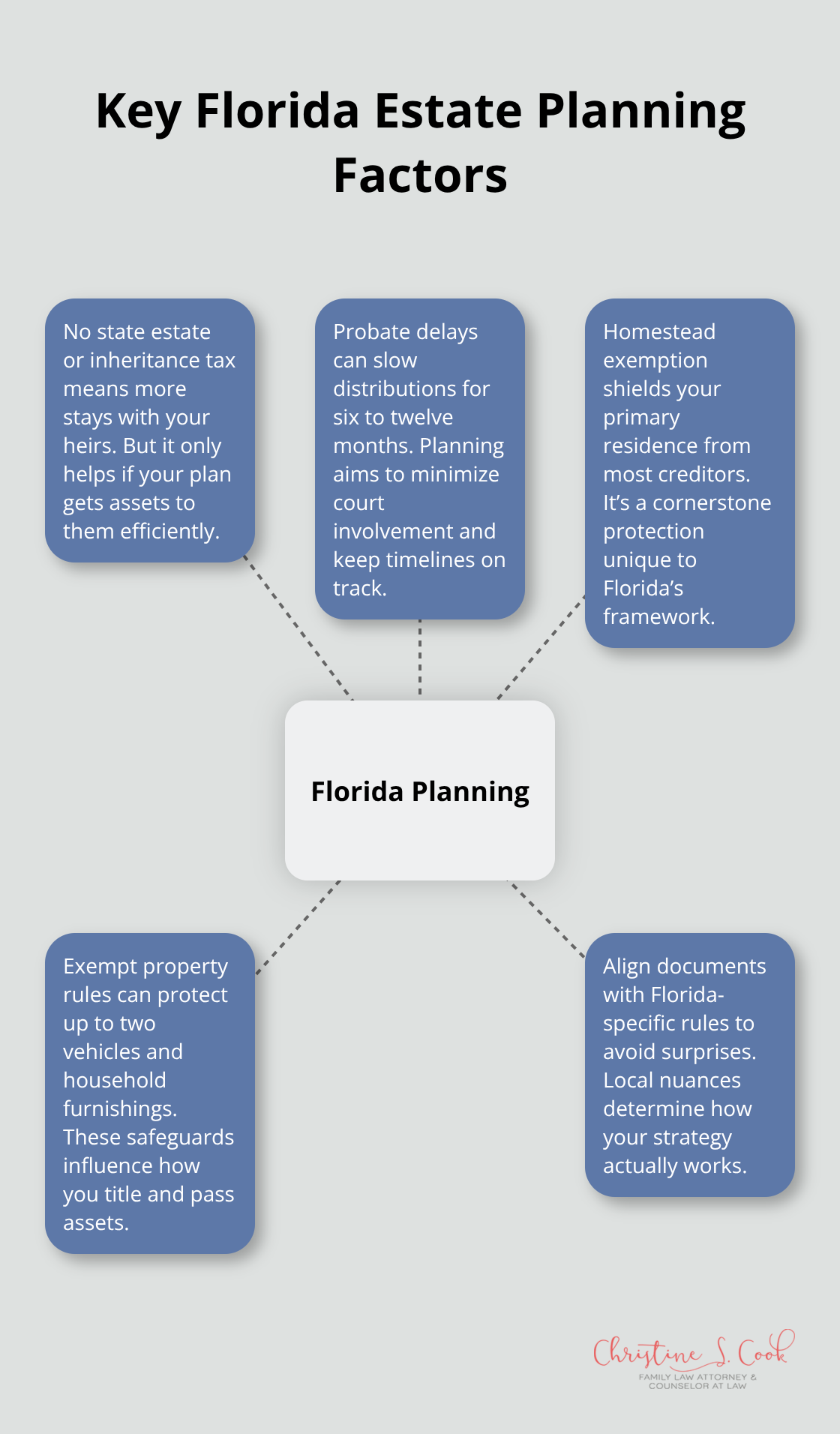
Florida law prioritizes certain protections that other states don’t offer-homestead exemptions shield your primary residence from creditors, and exempt property rules protect up to two vehicles and household furnishings from creditor claims. Understanding these specific rules matters because they shape how you structure your plan.
Many families assume federal estate tax won’t affect them, but with the federal exemption at $15 million per individual in 2026, even substantial estates may face exposure when the exemption drops back to roughly $7 million without congressional action. This is why knowing Florida’s framework and planning ahead beats reacting after death.
Most families make three critical mistakes that cost time and money later. First, they wait because estate planning feels overwhelming when it’s actually straightforward-starting now prevents your family from facing guardianship court battles or probate delays that can stretch six to twelve months or longer.
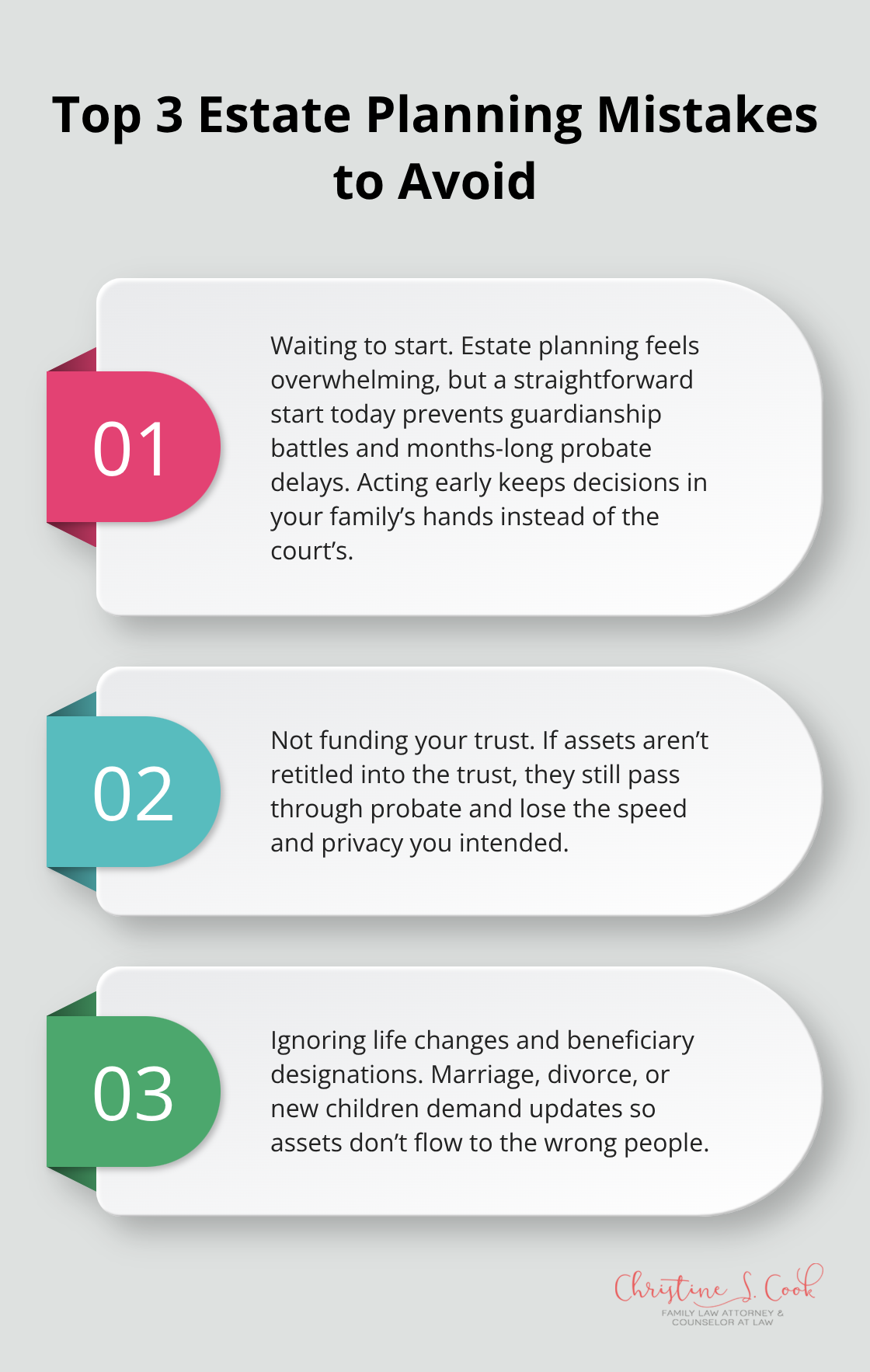
Second, they fail to fund their trusts, meaning assets sit outside the protection they intended and still go through probate anyway. Third, they ignore life changes like marriage, divorce, or new children, leaving outdated documents that don’t reflect who they want caring for their family. Florida law requires beneficiary designations on life insurance and retirement accounts to align with your overall plan, yet most people never review these after major events.
The cost of probate in simple cases runs $2,000 to $6,000 plus court fees around $345 to $405, but proper planning costs far less and protects your family’s privacy and timeline. Your plan grows with your life rather than scrambling to fix gaps when time is short. The documents you put in place today shape how your family navigates tomorrow’s transitions and challenges.
A will is non-negotiable, not because it’s fancy or complicated, but because Florida law requires a signed document with two witnesses to make your wishes legally binding when you die. Many Pensacola families think a will alone handles everything, then they’re shocked to learn their assets still drag through probate court for six to twelve months while creditors file claims and family members wait for distributions. The truth is blunt: a will gets probated, meaning a judge oversees the process, and your family’s financial details become public record. If you own real estate, multiple bank accounts, or anything of value, a will-only plan leaves your loved ones vulnerable to exactly the delays and costs you’re trying to avoid.
Trusts shift the equation entirely because they bypass probate altogether. When you fund a revocable living trust properly-meaning you retitle your bank accounts, real estate, and other assets in the trust’s name-those assets transfer to your successor trustee immediately upon your death, no court involvement required. Your family gets access to funds in weeks instead of months, and probate costs vanish. Families who own property, have substantial assets, or want privacy and speed benefit most from trusts. A revocable living trust gives you control during your lifetime and protects your family after you’re gone.
A durable power of attorney and healthcare directive complete the picture by naming someone you trust to handle financial decisions and medical choices if you become incapacitated. Florida law treats incapacity seriously, and without these documents, your family faces guardianship court proceedings that cost thousands and strip you of autonomy. The power of attorney costs nothing to create but prevents chaos when you need it most. These documents work alongside your will and trust to address every scenario your family might face.
Marriage, divorce, and children render most estate plans obsolete within months. When you marry, Florida law does not automatically update your beneficiary designations on retirement accounts or life insurance, which means your new spouse could be excluded entirely if you die without revising those documents. Divorce creates even greater risk because Florida law removes a former spouse from some documents after divorce is final, but only if those documents are structured correctly, and the timing matters enormously. If you have a will naming your ex-spouse as executor or guardian, that outdated designation stays active until you formally change it. New children present a different problem: Florida courts assume that if you have children but do not mention them in your will, you either forgot them or intended to exclude them, but that assumption does not always protect their interests.
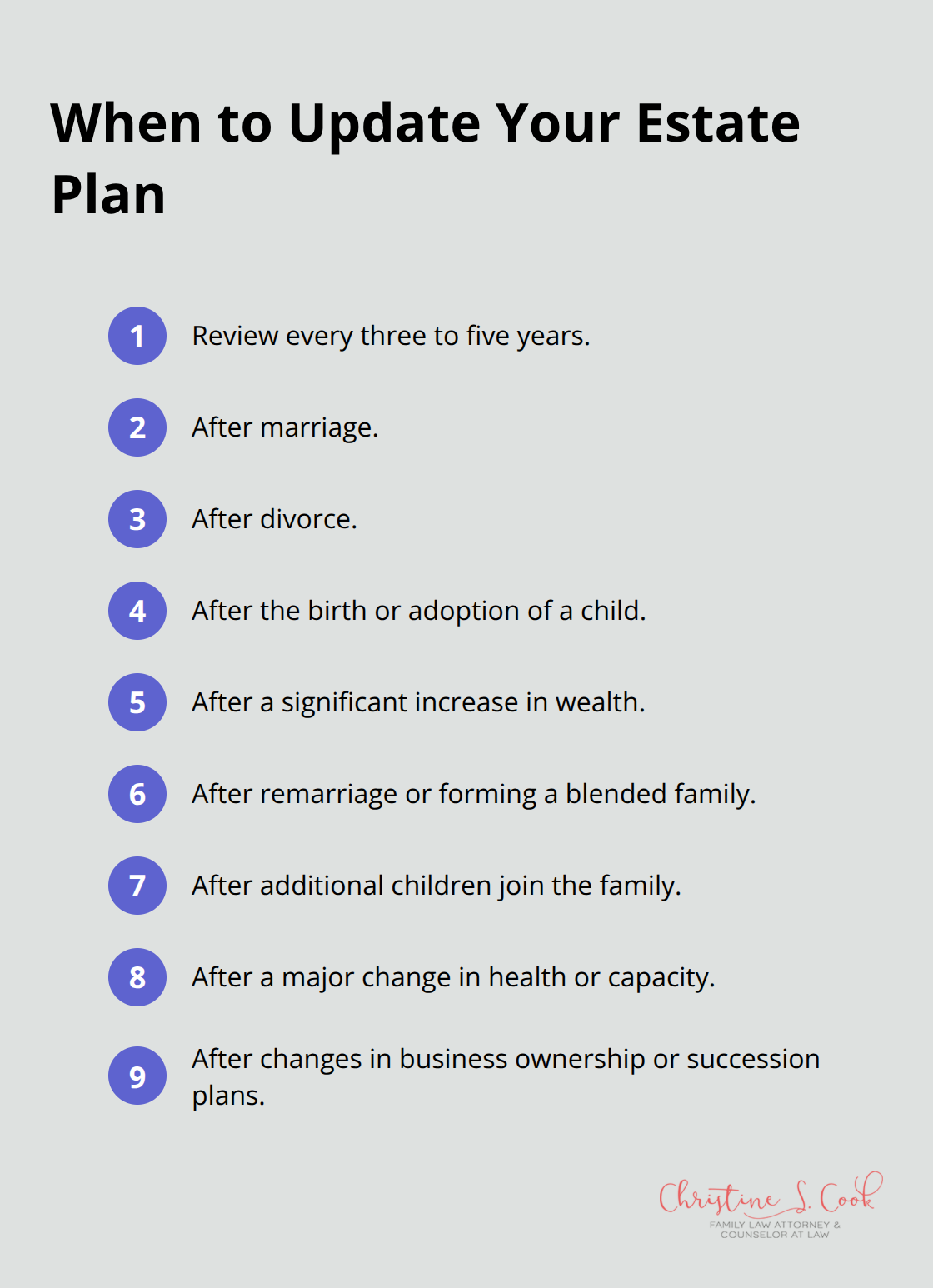
Treat your estate plan like a contract that needs renewal every three to five years or immediately after any major life shift. Updating beneficiary designations on life insurance and retirement accounts takes ten minutes and costs nothing, yet this single action prevents assets from flowing to the wrong people. When you remarry, your trust or will should reflect whether your new spouse inherits, whether children from a previous marriage receive protection, and how blended family assets are divided. If you have a second or third child, add them to your guardianship nominations and trust documents so your plan reflects your actual family structure.
Unexpected circumstances demand a different kind of planning because you cannot predict illness, disability, or financial crisis. If you become incapacitated tomorrow without a durable power of attorney in place, your family faces a guardianship filing that costs thousands and forces a judge to oversee your finances and medical decisions. The power of attorney costs nothing to prepare but eliminates that court process entirely. If you face a lawsuit or creditor claim, an improperly structured estate plan leaves your family’s inheritance vulnerable to those claims even after you pass away.
Asset protection matters now, not later: trusts structured under Florida law can shield assets from future creditors while still allowing you to control and use those assets during your lifetime. The federal exemption for estate taxes drops from $15 million per individual in 2026 to approximately $7 million without congressional action, which means families with substantial wealth face a ticking clock to implement strategies that lock in today’s higher exemption. If you own a business, a sudden health crisis without a succession plan means your family either loses the business entirely or scrambles to sell it at a discount during crisis mode.
Schedule a review of your documents every three to five years and immediately after marriage, divorce, birth of a child, significant increase in wealth, or any major change in your family structure or health status. These reviews catch outdated provisions before they create problems for your loved ones.
Protecting your family legacy in Pensacola starts with one decision: to act now rather than wait. The documents you create today determine whether your loved ones inherit smoothly or face months of probate delays, court costs, and public exposure of your financial details. A will, trust, powers of attorney, and healthcare directives tailored to Florida law and your family’s actual situation transform uncertainty into clarity.
At Christine Sue Cook, LLC, we guide Pensacola families through this process with genuine care and practical solutions. We listen to what matters most to you-whether that’s protecting minor children, preserving assets for a blended family, or keeping your business intact for the next generation-then we build a plan that reflects your values and goals. Our approach is collaborative, not intimidating, and we explain Florida law in plain language without pressure.
The next step is simple: contact Christine Sue Cook, LLC and schedule a conversation about your family’s future. Whether you’re starting from scratch or updating documents that no longer fit your life, we handle the details so you can focus on what matters. Your family’s security and peace of mind are worth the time it takes to plan properly.