Collaborative divorce creates a foundation built on cooperation rather than conflict. This approach naturally leads to more effective co-parenting relationships after the legal process ends.
At Christine Sue Cook, LLC, we see how parents who choose collaborative methods develop stronger co-parenting strategies. These families often experience smoother transitions and better outcomes for their children long-term.
Traditional divorce operates on a win-lose mentality where attorneys fight to get the best deal for their individual clients. This adversarial system escalates conflict between parents and makes future co-parenting relationships toxic from the start.
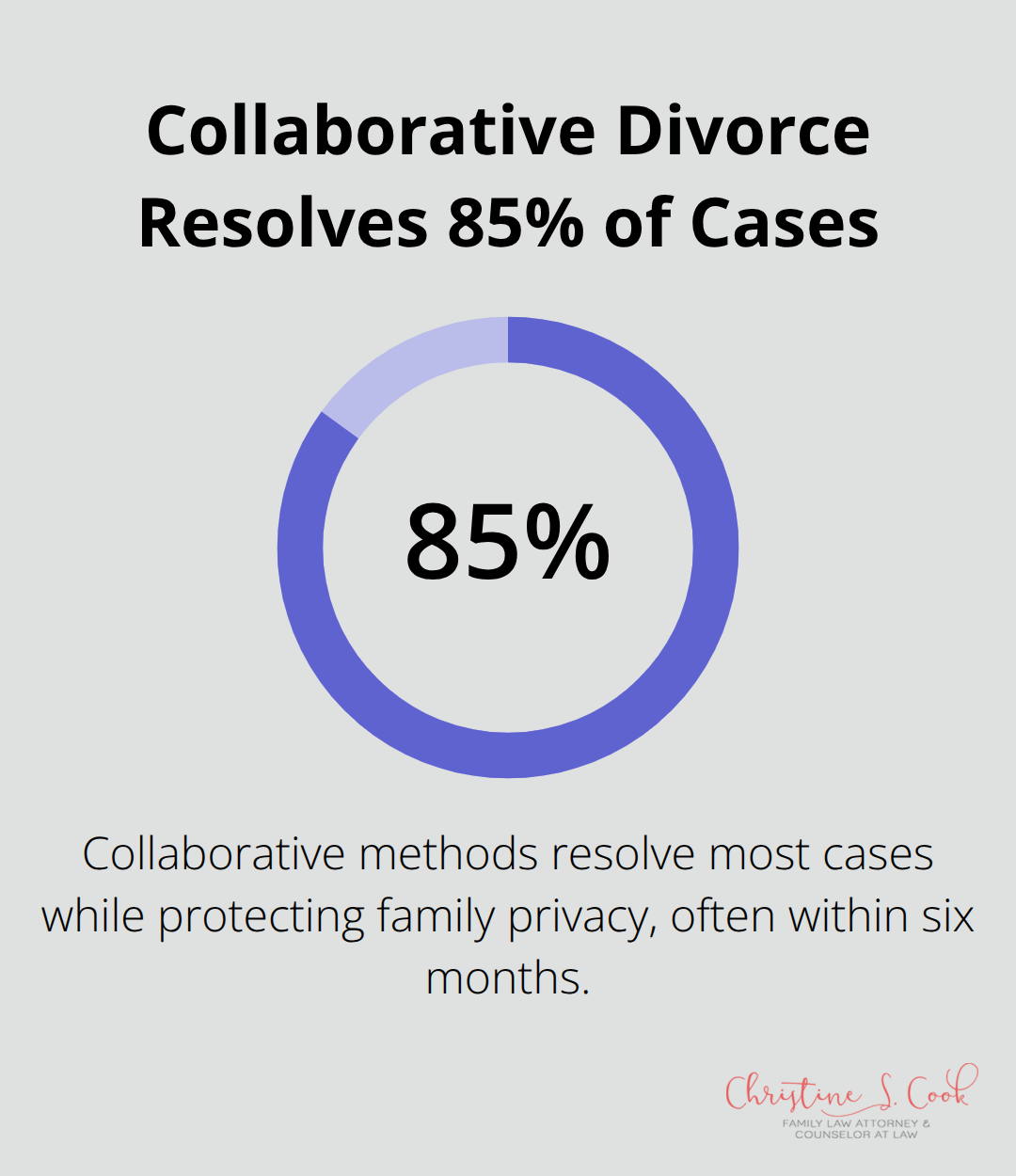
Research shows that collaborative methods resolve 85% of cases, often within 6 months, while protecting families’ privacy, compared to significantly higher rates of conflict in litigated cases.
The courtroom environment forces parents to air grievances publicly and positions them as enemies rather than co-parents who work toward their children’s best interests. Attorneys in traditional divorce focus on victory rather than solutions (often at the expense of family harmony). This approach creates lasting damage that extends far beyond the legal proceedings.
Collaborative divorce transforms the entire process when both parents and their attorneys sign agreements that prevent litigation. This commitment forces everyone to focus on problem-solving rather than battles. Parents work with neutral experts like child specialists and financial advisors who help create comprehensive plans without children in the middle.
The International Academy of Collaborative Professionals received a Nobel Peace Prize nomination for these healthier divorce practices. Studies reveal that children of parents who used litigation face higher likelihood of divorce in their own marriages compared to children from intact homes. Collaborative approaches protect children from parental conflict and create frameworks for respectful communication that continue long after the divorce ends.
Children whose parents choose collaborative divorce experience dramatically better outcomes across multiple areas. Research indicates these children show significantly lower overall health outcomes when parents divorce, with divorced families representing 3.8% of young children in recent studies. They also face reduced risks compared to traditional litigation approaches.
The collaborative process keeps children out of meetings while still prioritizing their needs through neutral child specialists who advocate for their interests. This protection from conflict reduces adverse childhood experiences that contribute to negative outcomes among adult children of contentious divorces. These foundations create the groundwork for effective co-parenting strategies that benefit families for years to come.
Collaborative divorce provides the framework, but successful co-parenting requires specific daily practices that protect children from ongoing conflict. Research from the American Psychological Association shows that divorce may significantly influence well-being, with many individuals experiencing depression, loneliness and isolation, or self-esteem difficulties, yet most divorced families struggle with implementation without clear strategies.
Children adapt faster when both households follow similar daily structures. Research has documented that parental divorce/separation is associated with an increased risk for child and adolescent adjustment problems, making consistent routines across homes essential. Create shared calendars that track these schedules with apps like OurFamilyWizard, which allows both parents to update information in real-time.
Set identical rules for screen time limits, chores, and curfews. When one parent allows different standards, children learn to manipulate situations and experience confusion about expectations. Document these agreements in writing to prevent future disagreements about household rules (this documentation becomes invaluable during conflicts).
Treat co-parent conversations like professional meetings focused solely on children’s needs. Keep discussions short, factual, and documented through written communication rather than phone calls that can escalate emotions. The International Academy of Collaborative Professionals reports that less than 20% of divorced parents who use collaborative approaches experience high conflict relationships compared to traditional litigation cases.
Use neutral language that avoids blame or personal history. Schedule regular check-ins monthly rather than reactive communication during crises (proactive planning prevents most emergency situations).
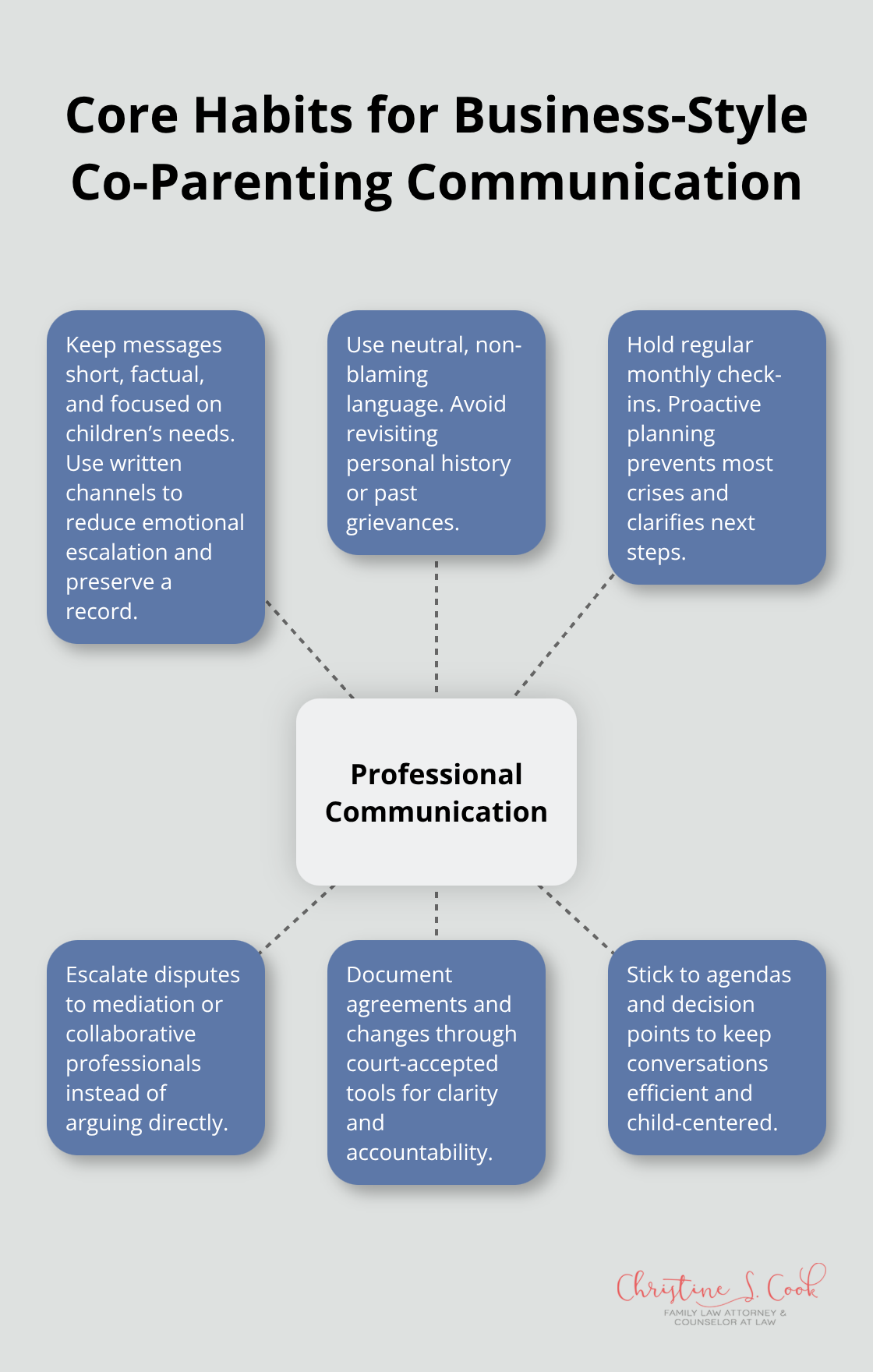
When conflicts arise, address them through mediation or collaborative professionals who helped during your divorce process rather than allow disagreements to affect children directly.
Children often struggle most during transitions between homes, which makes advance preparation essential. Create consistent pickup and drop-off routines that minimize stress for everyone involved. Pack comfort items like favorite toys or blankets in both homes to help children feel secure regardless of location.
Prepare children for transitions by discussing upcoming schedule changes several days in advance. This preparation helps reduce anxiety and gives kids time to process the change emotionally. The next step involves understanding how legal frameworks and practical tools can support these daily co-parenting strategies.
Your parenting plan serves as the roadmap for co-parenting decisions, but many parents treat these documents as suggestions rather than binding agreements. North Carolina recognizes collaborative law as an alternative to court divorce, yet families often struggle with plan implementation without proper tools.
Your parenting plan should specify custody arrangements with exact percentages like 50-50 or 60-40 schedules, transportation protocols for school pickups, backup childcare options, and decision-making authority for medical and educational choices. Document every detail including holiday rotations, extracurricular activity participation, and technology permissions to prevent future disputes.
Include provisions for both parents’ involvement during significant events to foster co-parenting collaboration. Address age-appropriate media and technology permissions to prevent disagreements as the child matures. Safety measures such as internet usage restrictions and curfews should be codified in the parenting plan to protect the child.
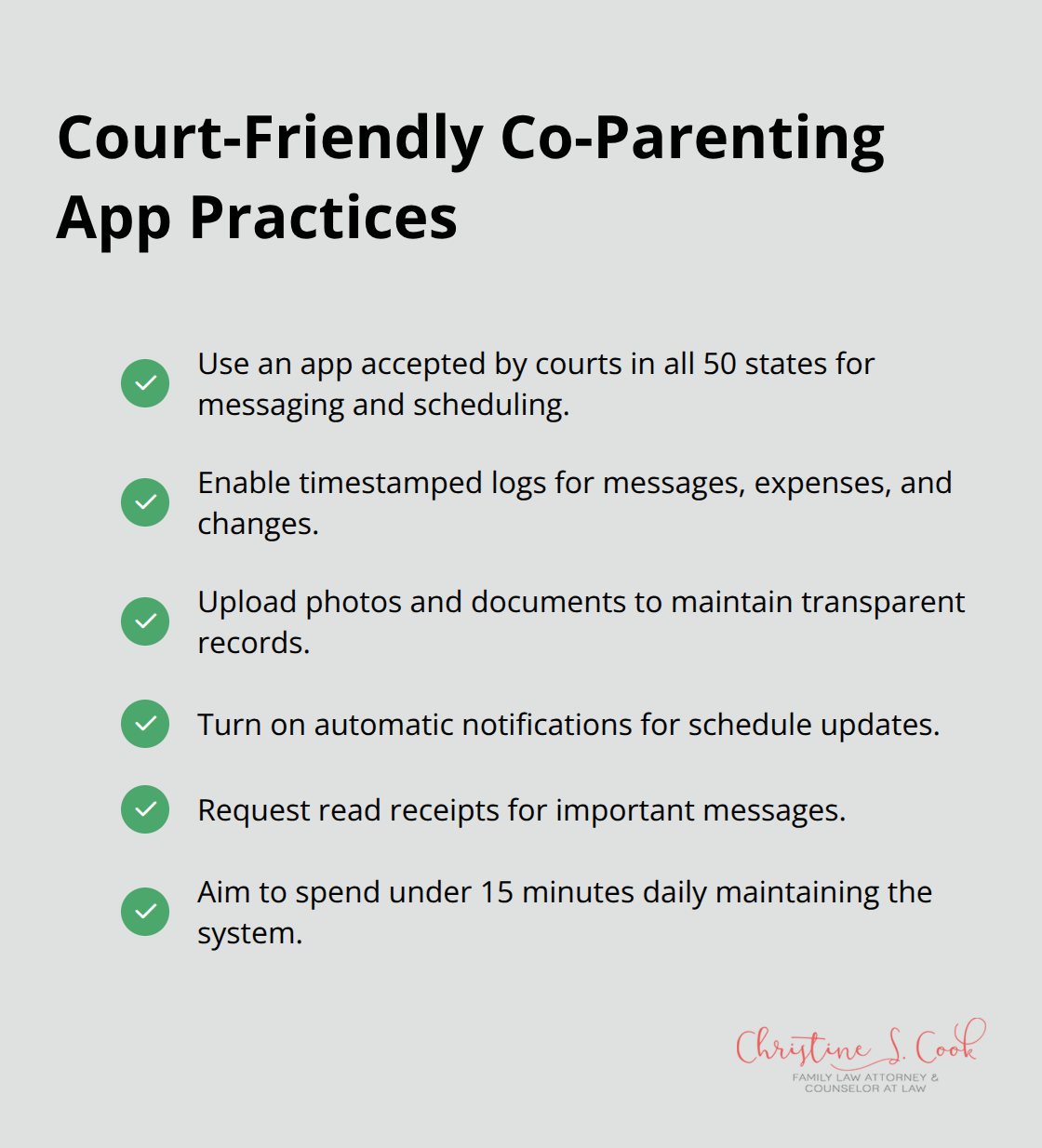
OurFamilyWizard is the leading co-parenting app among families living separately and is accepted by courts in all 50 states. This platform tracks all messages, schedules, and expenses with timestamps that protect parents from false accusations. Alternative apps like Cozi or Google Calendar lack legal documentation features that become essential during conflicts.
Upload photos of injuries, report cards, and medical appointments directly through these platforms to maintain transparent communication. Set up automatic notifications for schedule changes and require confirmation receipts for important messages (most successful co-parents spend less than 15 minutes daily updating these systems).
Parenting plans require modifications when children’s needs change significantly or when one parent relocates more than 100 miles away. Financial circumstances that affect child support trigger automatic review requirements in most states. School changes, medical diagnoses, or remarriage situations often necessitate plan adjustments that require legal guidance.
Contact collaborative professionals who handled your original divorce rather than start fresh with new attorneys who lack your family’s history. These modifications typically cost less than original divorce proceedings when handled through collaborative methods rather than court battles (this approach maintains the cooperative foundation established during your initial divorce process).
Collaborative divorce creates the foundation for successful co-parenting, but daily implementation determines long-term outcomes for your family. Parents who maintain consistent routines, professional communication, and detailed documentation through apps like OurFamilyWizard experience significantly less conflict than those who rely on informal arrangements. The co-parenting strategies established during collaborative divorce continue to pay dividends years later.
Children from these families show better emotional adjustment, stronger academic performance, and healthier relationship patterns in their own adult lives. Research demonstrates that families who prioritize cooperation through collaborative methods face dramatically lower rates of future legal disputes. Your parenting plan requires ongoing attention as children grow and circumstances change (professional guidance helps families navigate modifications while preserving the cooperative foundation).
We at Christine Sue Cook, LLC understand that collaborative divorce creates frameworks for family success, but implementation challenges arise regularly. The investment in collaborative approaches and structured co-parenting strategies protects your children from adverse childhood experiences that affect development. These methods require commitment from both parents, yet the long-term benefits for your family’s emotional health and stability make this effort worthwhile for generations to come.