Most Pensacola families put off estate planning because it feels overwhelming or distant. The truth is, without a solid plan in place, your loved ones could face unnecessary stress, delays, and expenses when they need support most.
At Christine Sue Cook, LLC, we’ve helped countless local families create estate plans that actually work for their situation. These Pensacola estate planning tips will show you exactly what you need to do to protect what matters most.
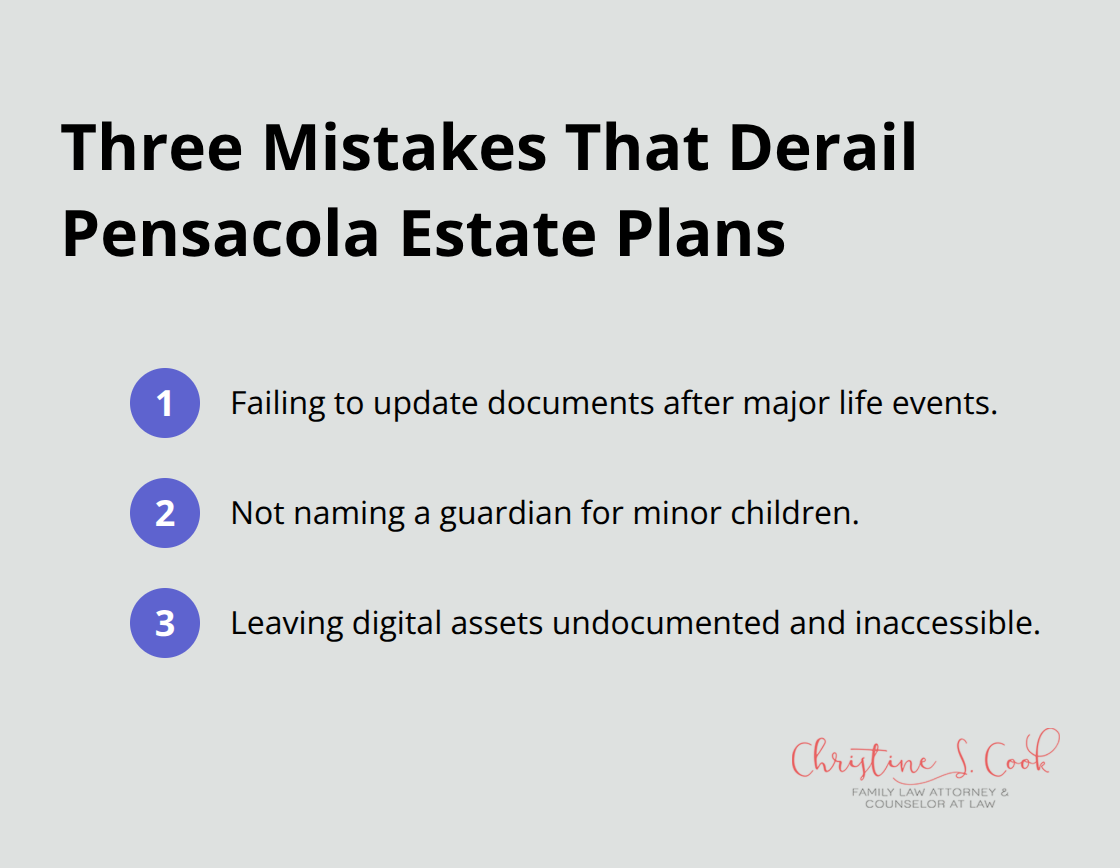
Most Pensacola families create an estate plan once and then ignore it for years. Life changes, but the documents stay frozen in time. A will written when your children were toddlers won’t reflect their needs as teenagers or adults. Florida law requires you to keep pace with major life events-marriage, divorce, the birth of children or grandchildren, significant financial changes, or health concerns. Without updates, outdated documents create confusion, unintended consequences, and family conflict exactly when your loved ones need clarity most. You should review your estate documents every three to five years or immediately after any major life event. This isn’t extra work; it’s the difference between a plan that protects your family and one that creates problems.
Another critical oversight is failing to name a guardian for minor children. Many Pensacola parents assume the court will choose someone suitable, but that’s a dangerous assumption. Florida law gives the court authority to appoint a guardian if you don’t, and the court may select someone you would never have chosen. Your preference for who raises your children matters far more than hoping a judge agrees with your values.
Leaving digital assets unaccounted for leaves your family scrambling after your death. Bank accounts, email, social media, cryptocurrency, photos stored in the cloud, and subscription services all represent real value and personal history that your heirs won’t access without explicit instructions. You should create a simple document listing your digital assets, usernames, password managers, and where to find them. This single step prevents your family from losing access to important accounts or discovering financial surprises months later.
The cost of neglecting these three areas-outdated documents, missing guardianship designations, and undocumented digital property-far exceeds the modest investment in getting them right the first time. Once you understand what mistakes to avoid, the next step is knowing which documents your family actually needs.
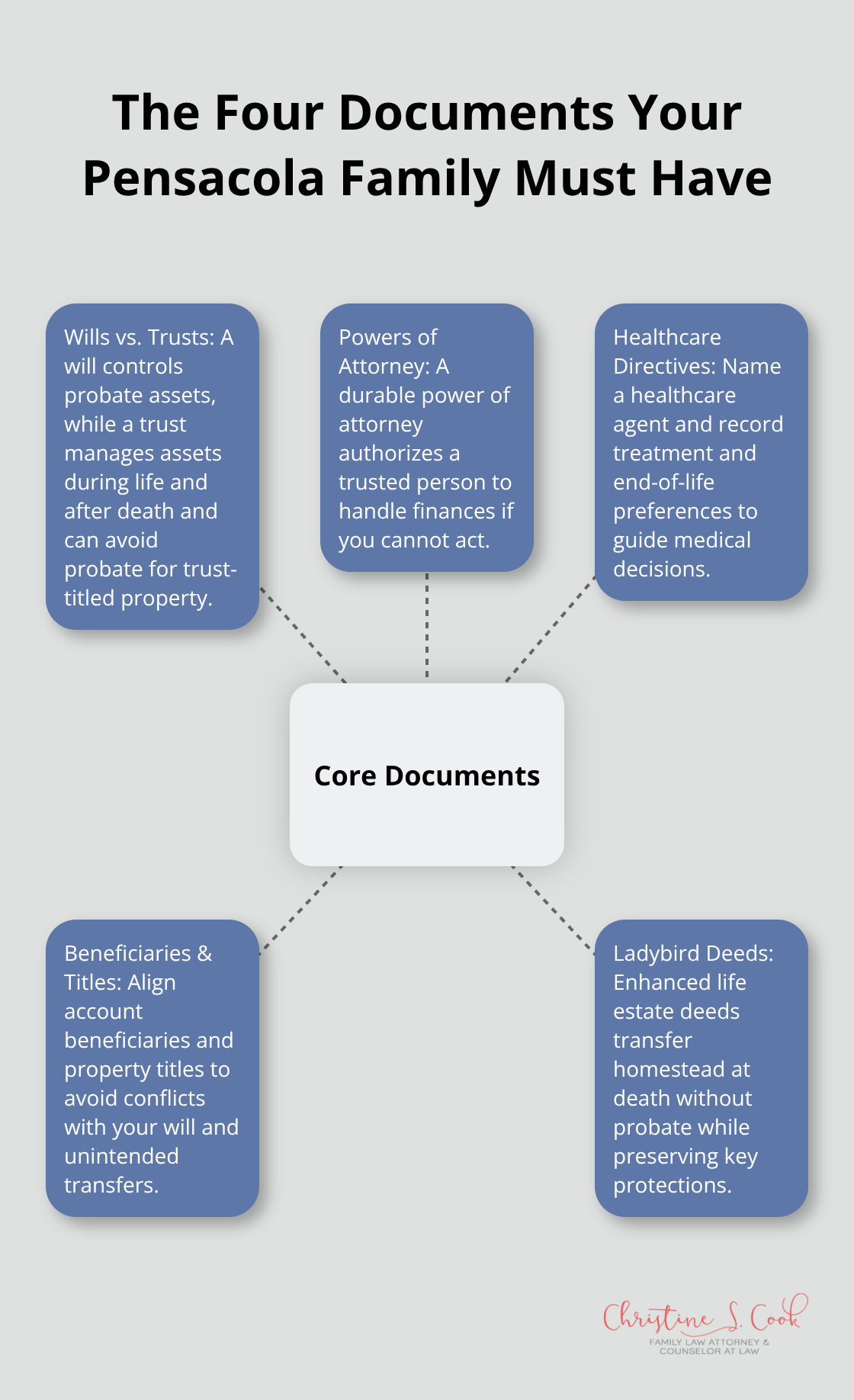
A will tells people what happens to your assets after you die, but it only controls property that flows through probate. A trust, by contrast, holds your assets during your lifetime and after death, giving you far more control over how and when your beneficiaries receive money. The practical difference matters enormously: if you own a home titled in your name alone and die without a trust, that home goes through probate, which costs money, takes months, and becomes public record. If the same home is held in a revocable living trust, it passes directly to your beneficiary without court involvement. For Pensacola families with a home, savings accounts, or retirement funds, a trust-based plan typically saves thousands of dollars and protects privacy.
A will alone is incomplete for most families because it does not address what happens if you become incapacitated before death. A durable power of attorney lets you name someone to handle your finances if you cannot act, while a healthcare directive names someone to make medical decisions and tells doctors your end-of-life wishes. Without these documents, your family faces court proceedings to gain authority over your affairs, costing time and money exactly when you need decisive action.
Florida law requires these documents to be notarized and properly executed, so DIY templates often fail to meet legal standards.
Property titles and beneficiary designations work differently than wills and trusts, yet most Pensacola families overlook them. Your bank account, life insurance policy, and retirement accounts typically have named beneficiary fields that bypass your will entirely. If you name your ex-spouse as a beneficiary on your life insurance policy and never update it after divorce, that policy pays your ex, not your current family, regardless of what your will says. The same applies to how you title your home and vehicles. If you own property as joint tenants with survivorship, it passes automatically to the surviving owner without probate, which is efficient but creates tax complications and creditor exposure.
Ladybird deeds (also called enhanced life estate deeds) allow property to pass automatically to one or more designated recipients at death without the need for probate, while preserving homestead protections and stepped-up tax basis. You should review every account title and beneficiary designation now, not after death, because misaligned designations represent one of the fastest ways to accidentally disinherit your intended heirs or trigger costly family disputes. Once you understand which documents your family needs, the next step is figuring out how to actually start the process without feeling lost or overwhelmed.
Assessing what you own takes less time than most Pensacola families expect. Gather statements from your bank accounts, retirement funds, investment accounts, and life insurance policies. Note the title on your home and any vehicles. List your digital assets-email accounts, cloud storage, cryptocurrency wallets, and subscription services. Write down who you want to receive each asset and who you trust to manage things if you cannot. This inventory typically takes two to four hours and forms the foundation of every decision that follows.
Many Pensacola families discover during this process that their current beneficiary designations do not match their actual wishes, or that their home is titled in a way that triggers unnecessary probate. Once you see what you have and who depends on you, the right strategy becomes straightforward rather than abstract.
Your estate plan strategy depends on three concrete factors: your net worth, your family structure, and whether you want to avoid probate. If you own a home in Pensacola, have minor children, or want privacy after death, a revocable living trust paired with a will handles most situations far better than a will alone. If your estate is smaller and you have no minor children, a straightforward will with properly aligned beneficiary designations may suffice, though you still need powers of attorney and healthcare directives regardless of your assets.
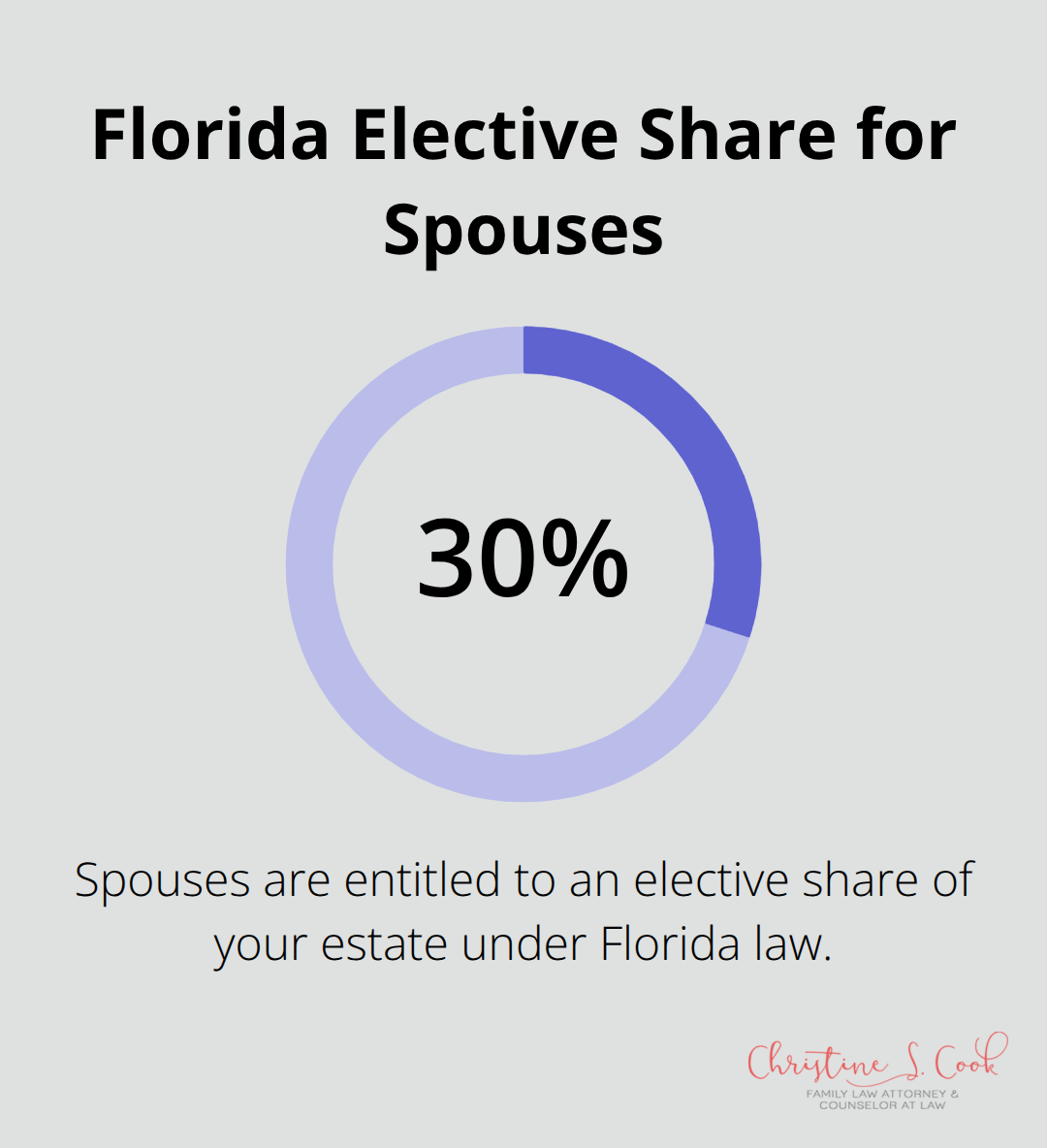
Blended families almost always need a trust because a will cannot prevent an ex-spouse or unintended heirs from receiving assets through oversight. Florida law gives spouses an elective share of 30 percent of your estate that cannot be easily disinherited without a valid agreement, so if you want different outcomes in a remarriage, planning matters enormously.
A qualified estate planning attorney in Pensacola listens to your specific situation, explains which documents actually protect your family, and avoids selling you unnecessary complexity. Christine S. Cook, LLC offers free consultations where you can discuss your assets and concerns without financial pressure, allowing you to understand your options before committing to a plan.
Estate planning protects the people you love and the assets you’ve worked hard to build. When your Pensacola estate planning tips translate into action, your family avoids probate delays, unnecessary costs, and the stress of guessing what you would have wanted. Your children know who will care for them, your spouse and heirs receive what you intended, and your digital life remains accessible to those who need it.
Families who plan ahead sleep better at night because their wishes are documented, their assets are protected, and their loved ones won’t face court battles or financial surprises when they’re grieving. Start this week by reviewing your current documents and beneficiary designations, then make a list of your assets and who depends on you. Identify which documents you’re missing and reach out to a local attorney who understands Florida law and your family’s specific needs.
We at Christine Sue Cook, LLC are here to help you move forward with confidence. Contact us for a free consultation where you can discuss your situation without pressure or obligation, and we’ll explain which documents actually protect your family.