An amicable divorce doesn’t eliminate the challenges of starting over. Even when both parties agree on terms, rebuilding requires intentional planning and emotional resilience.
We at Christine Sue Cook, LLC understand that your post-divorce life demands practical strategies across multiple areas. From managing finances independently to co-parenting effectively, each aspect needs careful attention.
The path forward involves creating new systems while maintaining stability for everyone involved.
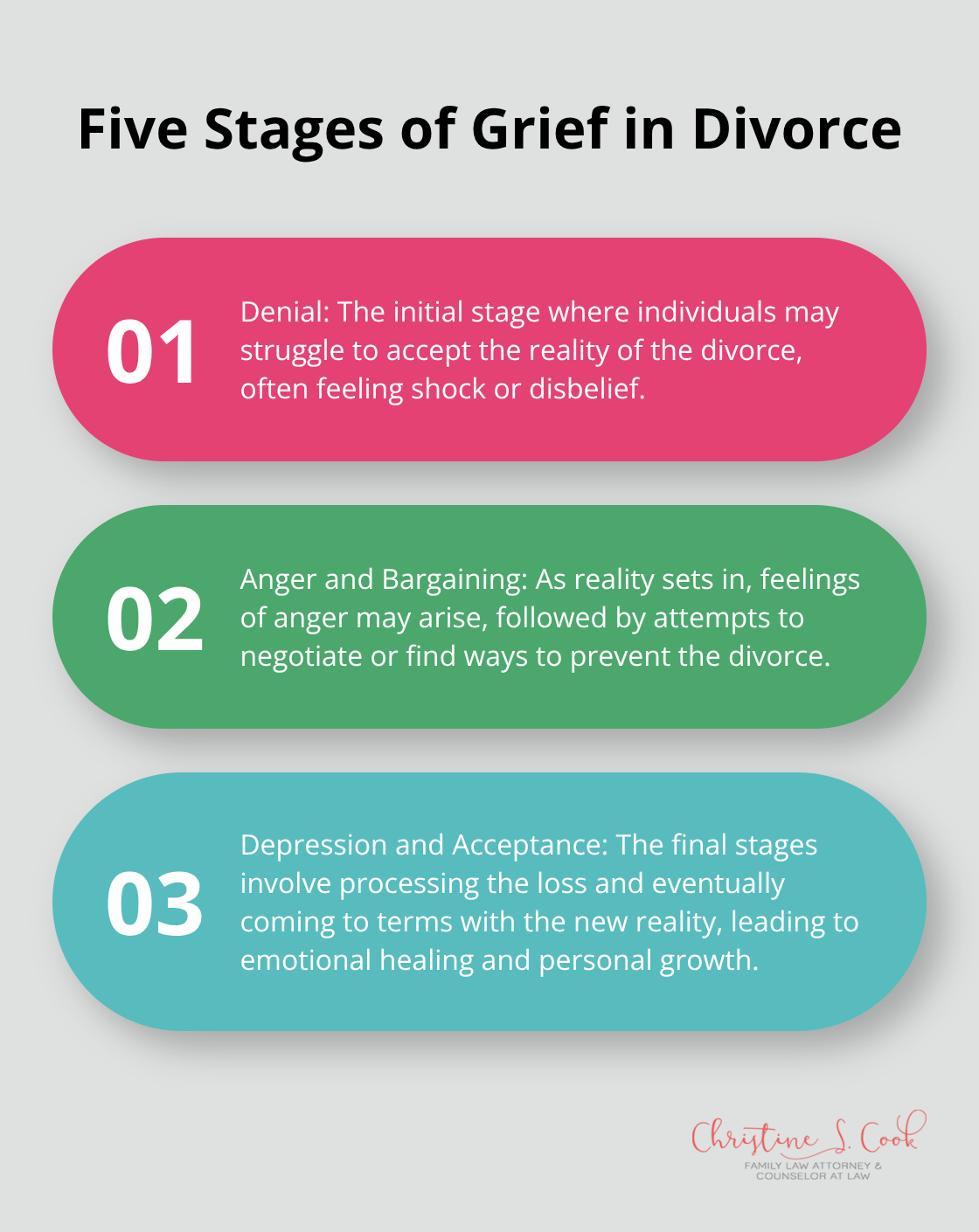
Emotional healing after divorce follows predictable patterns that most people experience, regardless of how amicable the split appears. Research from the American Psychological Association shows that divorced individuals typically experience five distinct grief stages: denial, anger, bargaining, depression, and acceptance. This process takes an average of two years to complete, though many people feel significant improvement within six months of new routine establishment. The key lies in acceptance that grief over lost dreams and shared experiences is normal, even when you initiated the divorce or felt relief about the marriage’s end.
Your emotions will fluctuate dramatically during the first months after divorce finalization. Allow yourself to feel sadness about the relationship’s end without judgment or artificial timelines. Write in a journal for 10 minutes each morning to process complex feelings that surface unexpectedly. Clinical studies demonstrate that expressive writing reduces stress hormones within four weeks of consistent practice. Avoid major life decisions (like relocating or career changes) for at least six months while your emotional state stabilizes.
Your brain craves predictability during major life transitions, which makes consistent routines essential for emotional stability. Start with three non-negotiable daily activities: wake up at the same time, eat meals at regular intervals, and exercise for 20-30 minutes at least three times per week. Studies indicate that regular physical activity is an effective treatment for depression. Replace couple-based activities with individual pursuits that align with your interests before marriage. Join local clubs through platforms like Meetup.com or take evening classes at community colleges to rebuild social connections while you maintain structure.
Therapy accelerates emotional recovery and provides tools that friends and family cannot offer. Cognitive behavioral therapy shows the highest success rates for post-divorce adjustment and helps clients develop healthier thought patterns within three months. Schedule your first appointment within two weeks of divorce paper finalization, before negative thought patterns become entrenched. Many insurance plans cover mental health services, and sliding scale fees make therapy accessible regardless of your new budget constraints (online therapy platforms offer convenient scheduling for busy single parents who struggle with traditional office visits). A divorce recovery coach provides specialized guidance to help you develop coping mechanisms for managing stress and anxiety during this transition.
Financial stability forms the foundation for your new independent life, and smart money management becomes even more important after divorce.
Your financial picture changes dramatically after divorce and requires immediate action to establish stability. Start by calculating your new monthly income and expenses within the first 30 days post-divorce. The National Endowment for Financial Education found that women experience an average 45% decline in income after divorce, while men see a 21% decline. Track every expense for four weeks with apps like Mint or YNAB to identify patterns you might have overlooked during marriage.

Create separate accounts immediately, as joint accounts can complicate financial recovery. Financial experts recommend three to six months of expenses in emergency savings (though this goal may take 12-18 months to achieve after divorce).
Your credit score likely dropped during divorce proceedings due to shared debt complications or missed payments. Order free credit reports from all three bureaus through AnnualCreditReport.com to identify accounts that need immediate attention. Remove your ex-spouse as an authorized user on your accounts and request removal from their accounts within 60 days of divorce finalization. Pay down credit card balances to below 30% of available limits, as this single action can improve your score by 20-50 points within three months according to FICO data. Consider a secured credit card if your score dropped below 600, which helps rebuild credit history faster than waiting for negative marks to age off your report.
Divorce resets your retirement timeline and makes aggressive wealth strategies necessary. Increase 401k contributions by at least 2% annually if your employer offers match funds, as this provides immediate 100% returns on invested money. Research shows that divorced women face significant retirement challenges compared to their married counterparts. Open a Roth IRA and contribute the maximum $6,500 annually ($7,500 if over 50) to catch up on lost investment years. Real estate investment through house hacks or rental properties generates passive income that replaces spousal support over time, though this requires 20-25% down payments that take 2-3 years to accumulate after divorce.
Co-parenting success depends on clear systems that prioritize your children’s emotional wellbeing while you maintain boundaries with your ex-spouse.
Successful co-parenting requires structured communication systems that protect your children from adult conflicts while you maintain necessary information flow. Use text messages or co-parenting apps like OurFamilyWizard for all logistics discussions. Keep conversations brief and child-focused. When parents communicate cooperatively, children experience better adjustment outcomes, as contentious divorces with hostility between parents can result in high stress levels and physiologic changes in children. Schedule weekly 15-minute phone calls to discuss upcoming events, medical appointments, and school issues without your children present. Never discuss adult relationship problems, financial disputes, or your personal life through these channels.

Children thrive on consistency, especially during the upheaval of family restructure. Create identical bedtimes, meal schedules, and homework routines across both households within 30 minutes of each other. Children living with their married, biological parents consistently have better physical, emotional, and academic well-being, making consistent routines across households even more crucial during divorce transitions. Plan transitions around school pickup times or extracurricular activities to minimize emotional disruption for your children. Share detailed calendars through Google Calendar or similar platforms. Mark important dates like school events, medical appointments, and activity schedules at least two weeks in advance. Both parents should attend school conferences, sports events, and performances whenever possible to demonstrate unified support for your children’s achievements.
Holiday schedules become your biggest co-parent challenge, but advance plans prevent last-minute conflicts that stress everyone involved. Create a two-year holiday rotation schedule immediately after divorce finalization. Alternate major holidays like Christmas, Thanksgiving, and birthdays each year. Split school breaks equally, with one parent takes the first half and the other takes the second half of longer vacations (this approach works better than daily switches that confuse children). Plan birthday celebrations separately rather than attempt joint parties, which often create tension that children absorb. Start new traditions with your children that belong exclusively to your household, like special movie nights or weekend adventures that give them positive experiences to anticipate during your parenting time.
Your post-divorce life begins with intentional choices that compound over time. The strategies you implement today determine your emotional stability, financial security, and family dynamics for years ahead. Research shows that most divorced individuals report higher life satisfaction within three years when they actively work on reconstruction rather than simply wait for time to heal wounds.
Strong social connections reduce depression rates by 30% according to Harvard Medical School studies (reconnect with friends you lost touch with during marriage and join community groups that align with your interests). Maintain professional relationships that can advance your career goals. Your children benefit most when they see you thrive independently through new hobbies, education, or career changes that demonstrate how major life transitions can lead to positive outcomes.
We at Christine Sue Cook, LLC help you navigate complex family law issues while you focus on creation of your new life. Our compassionate legal services provide the support you need during this transition. The foundation you build now determines whether your divorce becomes a setback or a launch point for your best years ahead.