Florida divorce laws property division follows an equitable distribution system that can significantly impact your financial future. Unlike community property states, Florida courts don’t automatically split assets 50-50.
We at Christine Sue Cook, LLC see many clients surprised by how complex property division becomes, especially with high-value assets like businesses and investment properties.
Florida’s equitable distribution system operates fundamentally differently from the nine community property states like California and Texas. While community property states automatically divide marital assets 50-50, Florida courts follow an “equitable distribution” model that doesn’t guarantee a 50-50 split but considers specific circumstances. According to Florida Statute 61.075, judges have broad discretion to award unequal distributions when justified. This flexibility means spouses often receive vastly different asset portions – sometimes 60-40 or even 70-30 splits (depending on the case factors).
Equitable distribution translates to fair division, not equal division. Florida courts examine each marriage individually and weigh factors like marriage duration, economic circumstances, and contributions to marital assets. A spouse who sacrificed career advancement to support their partner’s education or business may receive a larger asset share. Courts also consider homemaking contributions equally valuable to financial contributions. The practical result: property division becomes highly fact-specific, which makes thorough documentation of contributions and circumstances vital for favorable outcomes.
Florida courts evaluate specific factors when they divide property. Marriage length significantly impacts distribution – longer marriages typically result in more equal splits, while shorter marriages may favor the higher-earning spouse. Economic circumstances of each party matter considerably; a spouse with limited earning capacity often receives additional assets for financial security. Intentional waste of marital assets before filing can trigger punitive unequal distribution against the wasteful spouse. Courts also examine contributions to the other spouse’s career, education, or business success (potentially awarding larger shares to supportive spouses who enabled their partner’s financial growth).
These distribution principles directly affect how courts classify different types of property, which brings us to the fundamental distinction between marital and non-marital assets in Florida law.
Florida law defines marital property as assets acquired during marriage, regardless of whose name appears on the title. This includes obvious items like the family home purchased after marriage, but extends to less obvious assets that catch many people off guard. Your spouse’s 401k contributions during marriage become marital property, even if only their name appears on the account. Stock options granted to one spouse during marriage are marital assets.
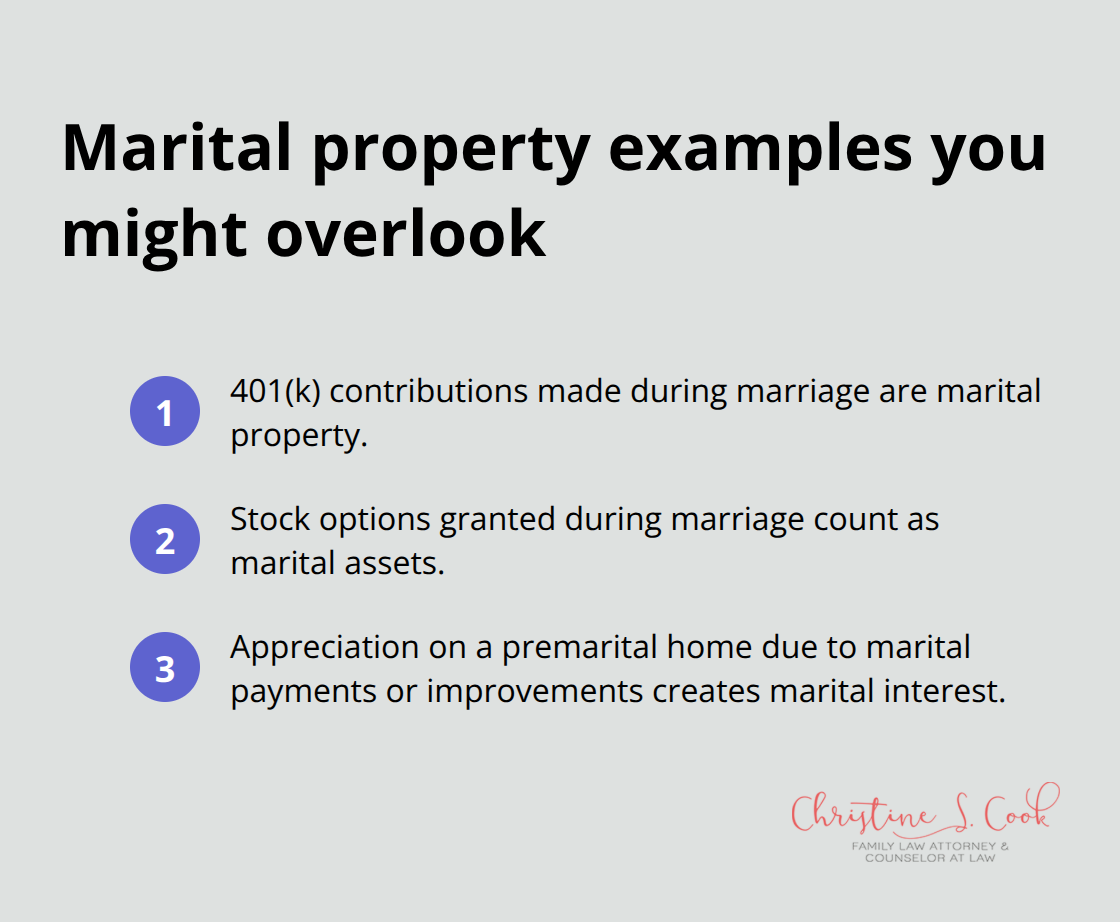
According to Florida Statute 61.075, the enhancement in value and appreciation of nonmarital assets resulting from the efforts of either party during the marriage becomes marital property. A house owned before marriage that increases in value due to mortgage payments or renovations made during marriage creates marital interest in that appreciation.
Non-marital assets include property owned before marriage, inheritances, and gifts from third parties to one spouse only. The key to protection of these assets lies in the avoidance of commingling. Keep inherited money in separate accounts that never mix with marital funds. Maintain detailed records that show the source of non-marital property. Use separate property to pay for separate property expenses only.
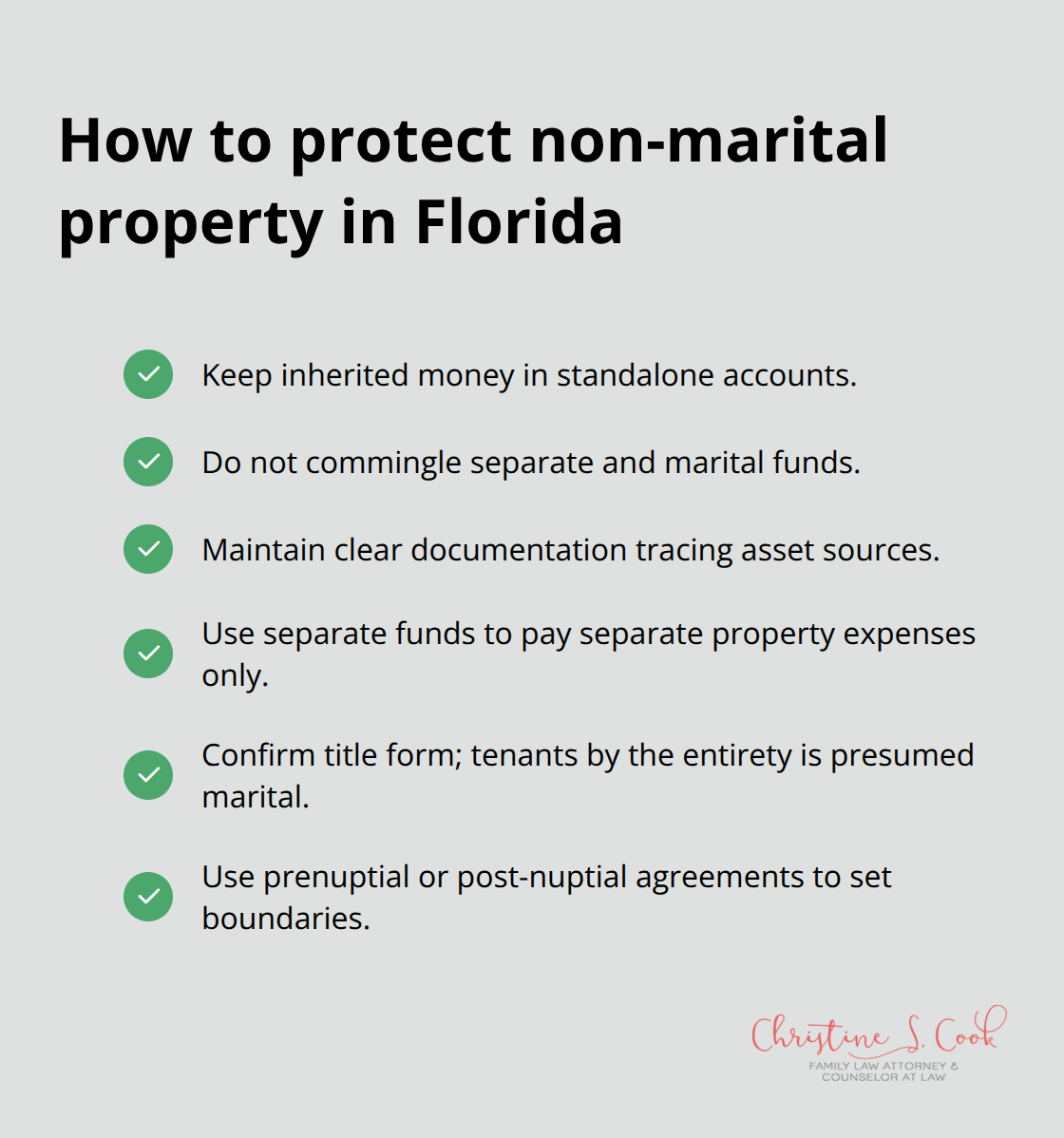
Florida courts presume property titled as tenants by the entirety is marital, so you must prove otherwise with clear documentation. Prenuptial agreements provide the strongest protection for non-marital assets, but post-nuptial agreements can also establish separate property boundaries.
Commingling creates the most complex property division issues. Use of a pre-marital savings account for household expenses transforms separate money into marital property. Deposit of both spouses’ paychecks into an account that contains pre-marital funds makes the entire account marital property. Business ownership presents particular challenges when one spouse owns a company before marriage but both spouses contribute to its growth. Florida courts examine the degree of marital contribution to determine what portion becomes marital property, often requiring detailed financial analysis to determine a business’s value. Real estate titled in one spouse’s name before marriage can become partially marital if mortgage payments come from marital income or if the non-owner spouse contributes labor or materials for improvements.
These classification challenges become even more complex when courts must divide high-value assets like businesses, investment properties, and retirement accounts that require specialized valuation methods.
Business interests and professional practices create the most complex valuation challenges in Florida divorce cases. Courts require formal documentation and proper procedures for asset division, and these valuations can vary dramatically based on the chosen methodology. Asset-based approaches typically yield lower valuations than income-based methods, which creates 30-50% differences in final settlement amounts.
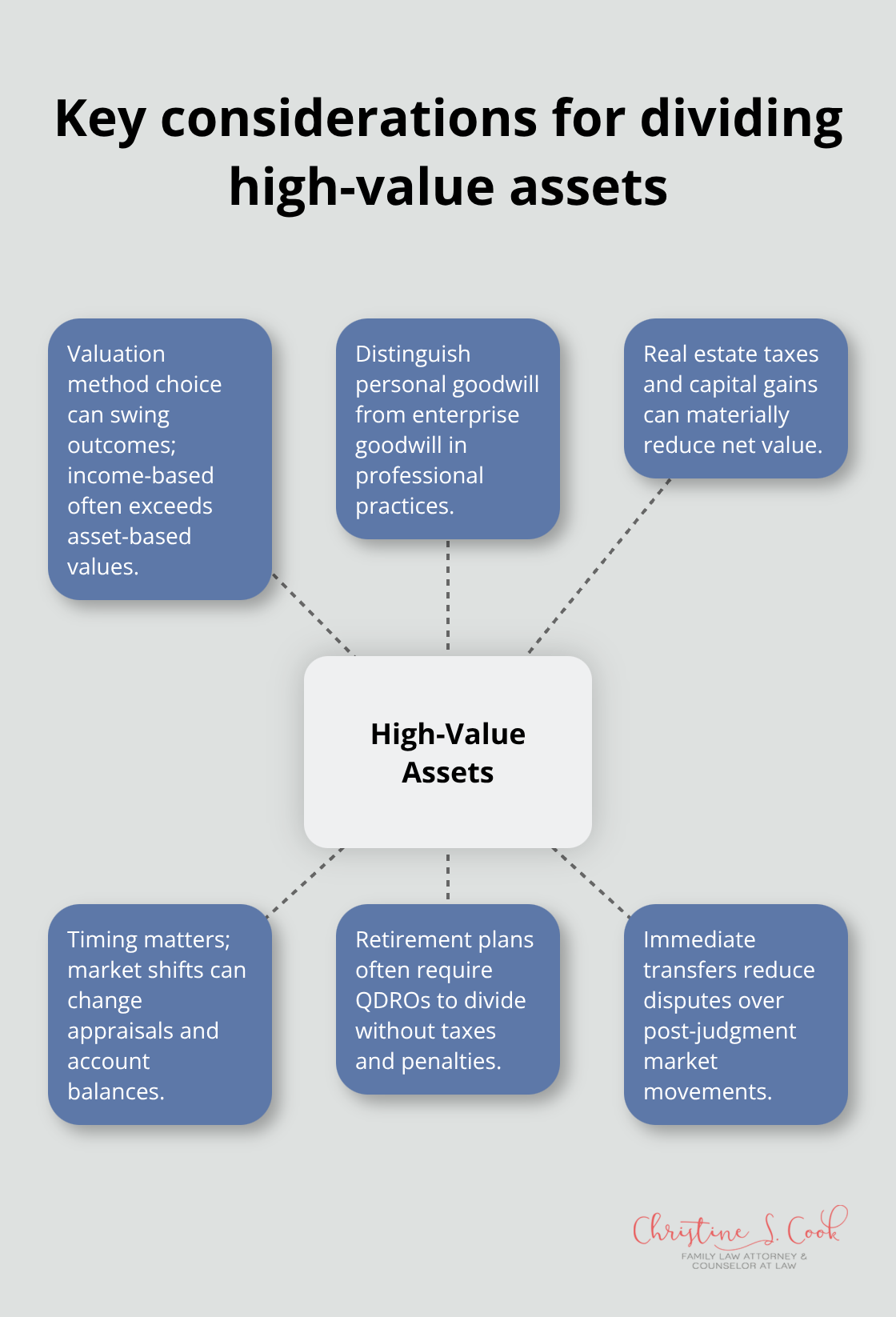
Professional practices like medical offices or law firms face additional complications because courts must distinguish personal goodwill versus enterprise goodwill. Personal goodwill tied to the professional spouse’s reputation cannot be divided, while enterprise goodwill that would transfer to a buyer becomes marital property subject to division.
Investment properties need current market appraisals and consideration of tax implications that many couples overlook. Capital gains taxes on appreciated real estate can reduce the actual value by 15-20% for the spouse who receives the property, which makes direct asset swaps potentially unfair without adjustment. Courts often order professional appraisals to establish fair market value, but timing matters because real estate markets fluctuate significantly. A property appraised in January may have different value by the time the divorce finalizes in June (especially in volatile markets like South Florida).
Retirement accounts present unique challenges because 401k plans, pensions, and IRAs each require different division methods. Qualified Domestic Relations Orders are mandatory for most employer-sponsored retirement plans, and these orders must be drafted precisely to avoid tax penalties and early withdrawal fees. The timing of retirement account division matters significantly because market fluctuations between the divorce decree and actual transfer can shift values by thousands of dollars. Courts prefer immediate division to delayed transfers because it eliminates uncertainty about final values and prevents disputes over market changes.
Florida divorce laws property division demands strategic preparation and expert guidance to protect your financial interests. The equitable distribution system grants courts significant discretion, which means outcomes depend heavily on proper asset classification, thorough documentation, and skilled legal representation. Property division mistakes can cost you thousands of dollars and impact your financial security for years.
Asset commingling, failure to document contributions, or acceptance of unfavorable settlements without proper valuation can devastate your post-divorce finances. High-value assets like businesses and investment properties demand specialized expertise that most people lack. Professional legal guidance becomes essential when you deal with complex assets, suspected hidden property, or significant wealth disparities between spouses.
We at Christine Sue Cook, LLC understand that every divorce presents unique challenges that require personalized strategies. Our experience with Florida’s equitable distribution laws helps clients achieve fair outcomes while they minimize conflict and costs (without compromising their financial future). Christine Sue Cook, LLC offers free consultations to discuss your specific situation without financial pressure.