
Make a Payment
850-572-3443
Divorce can be a complex and emotionally challenging process. At Christine Sue Cook, LLC, we understand the importance of having the right legal support during this difficult time.
Knowing the right questions to ask your divorce attorney can make a significant difference in the outcome of your case. This blog post will guide you through essential inquiries to help you navigate your divorce proceedings effectively.
At Christine Sue Cook, LLC, we believe in transparency and encourage clients to ask probing questions about our practice. Selecting the right divorce lawyer can significantly impact the outcome of your case. This chapter will guide you through essential inquiries to help you evaluate a potential attorney’s experience and approach.
The duration of a lawyer’s practice in family law often indicates their level of expertise. The American Bar Association suggests that lawyers with at least five years of experience in family law typically possess a more comprehensive understanding of complex divorce issues. When meeting with a potential attorney, ask about their specific experience with cases similar to yours.
It’s important to inquire about the percentage of cases that are divorce-related in the lawyer’s practice. A higher percentage often suggests more specialized knowledge. The National Association of Divorce Professionals reports that attorneys who dedicate over 75% of their practice to divorce cases are more likely to stay current with evolving family law trends and legislation (a valuable asset for clients).
Understanding your lawyer’s preferred approach is essential. Collaborative divorce, which aims to resolve issues without court intervention, has gained popularity in recent years. Studies reveal that couples opting for collaborative divorce save approximately 40-60% in legal costs compared to traditional divorce methods. However, some cases require litigation, especially when dealing with complex assets or high-conflict situations (more on this later).
High-conflict divorces demand a specific skill set. Ask about strategies for managing difficult personalities and protecting your interests. The High Conflict Institute recommends lawyers who are trained in mediation and have experience with personality disorders for these challenging cases.
Effective communication between you and your attorney is paramount. Ask potential lawyers about their preferred methods of communication (e.g., email, phone, in-person meetings) and their typical response time. This information will help you determine if their communication style aligns with your needs and expectations.

As we move forward to discuss financial considerations in divorce, it’s important to remember that your lawyer’s expertise and approach will play a significant role in navigating these complex matters.
Financial considerations play a pivotal role in divorce proceedings. Understanding these aspects will help you protect your interests and secure your financial future. This chapter explores key financial elements you should discuss with your divorce lawyer.
Florida adheres to the principle of equitable distribution, which doesn’t always result in a 50/50 split. Courts consider various factors, including:
Alimony in Florida isn’t guaranteed and depends on several elements:
Provide a comprehensive financial picture to your attorney to ensure fair alimony determinations.
If you own a business, take steps to protect it during divorce proceedings:
Divorce can trigger significant tax consequences that many overlook:

This statistic underscores the importance of professional guidance.
As we transition to discussing child custody and support, it’s important to note that financial decisions often intertwine with these matters. Your lawyer should help you understand how financial arrangements might impact custody agreements and vice versa. In some cases, a collaborative divorce approach can help couples navigate these complex issues more smoothly.
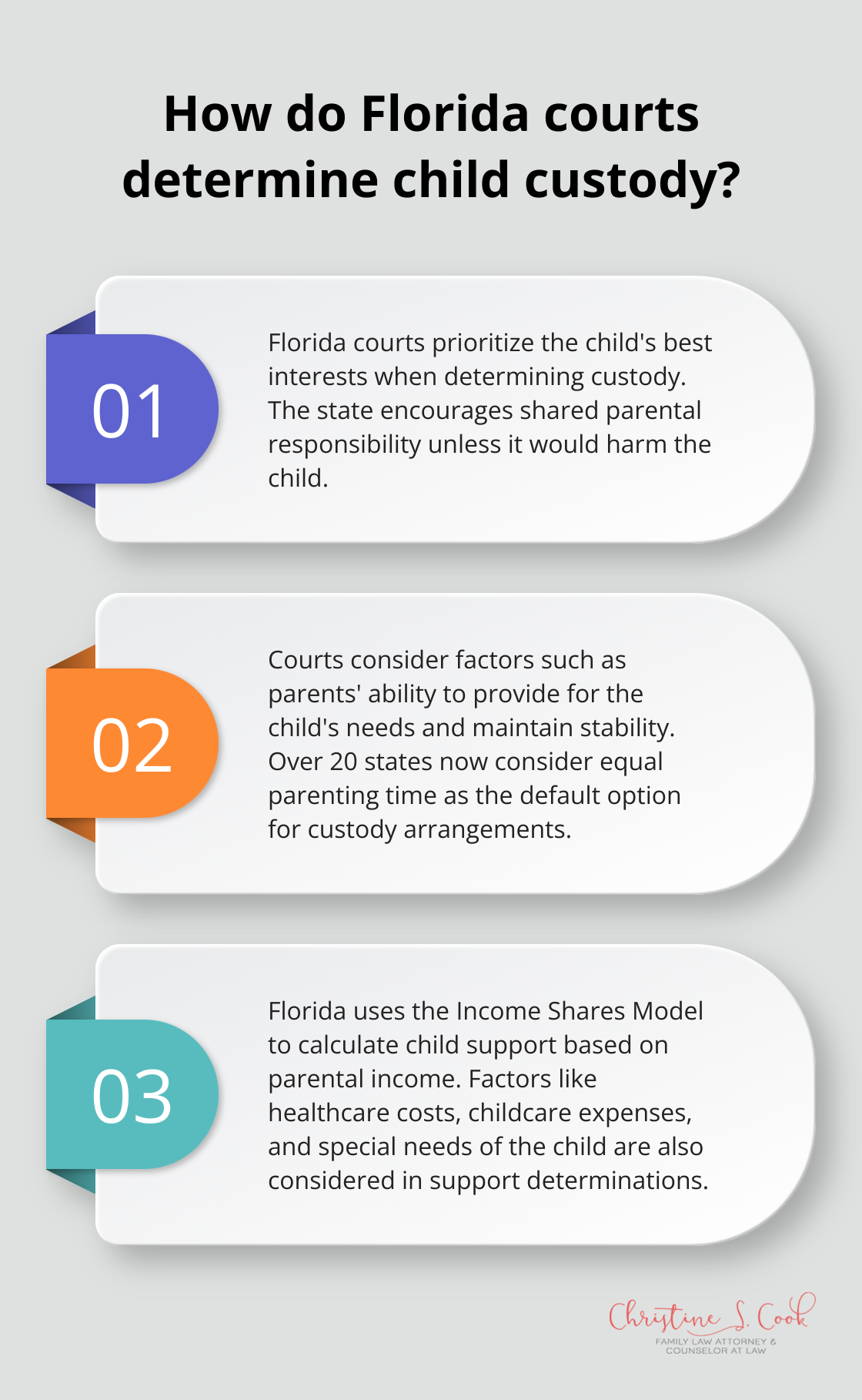
Florida courts prioritize the best interests of the child when determining custody arrangements. The state encourages shared parental responsibility unless it would harm the child. Courts consider numerous factors, including each parent’s ability to provide for the child’s needs, maintain a stable environment, and foster a relationship with the other parent. The American Academy of Matrimonial Lawyers reports that courts increasingly favor joint custody arrangements (with over 20 states considering equal parenting time as the default option).
Florida calculates child support using the Income Shares Model. This approach is grounded in the notion that a child should benefit from the same financial contributions of parental income. The Florida Department of Revenue states that other factors include healthcare costs, childcare expenses, and any special needs of the child. Accurate financial information ensures fair support determinations.
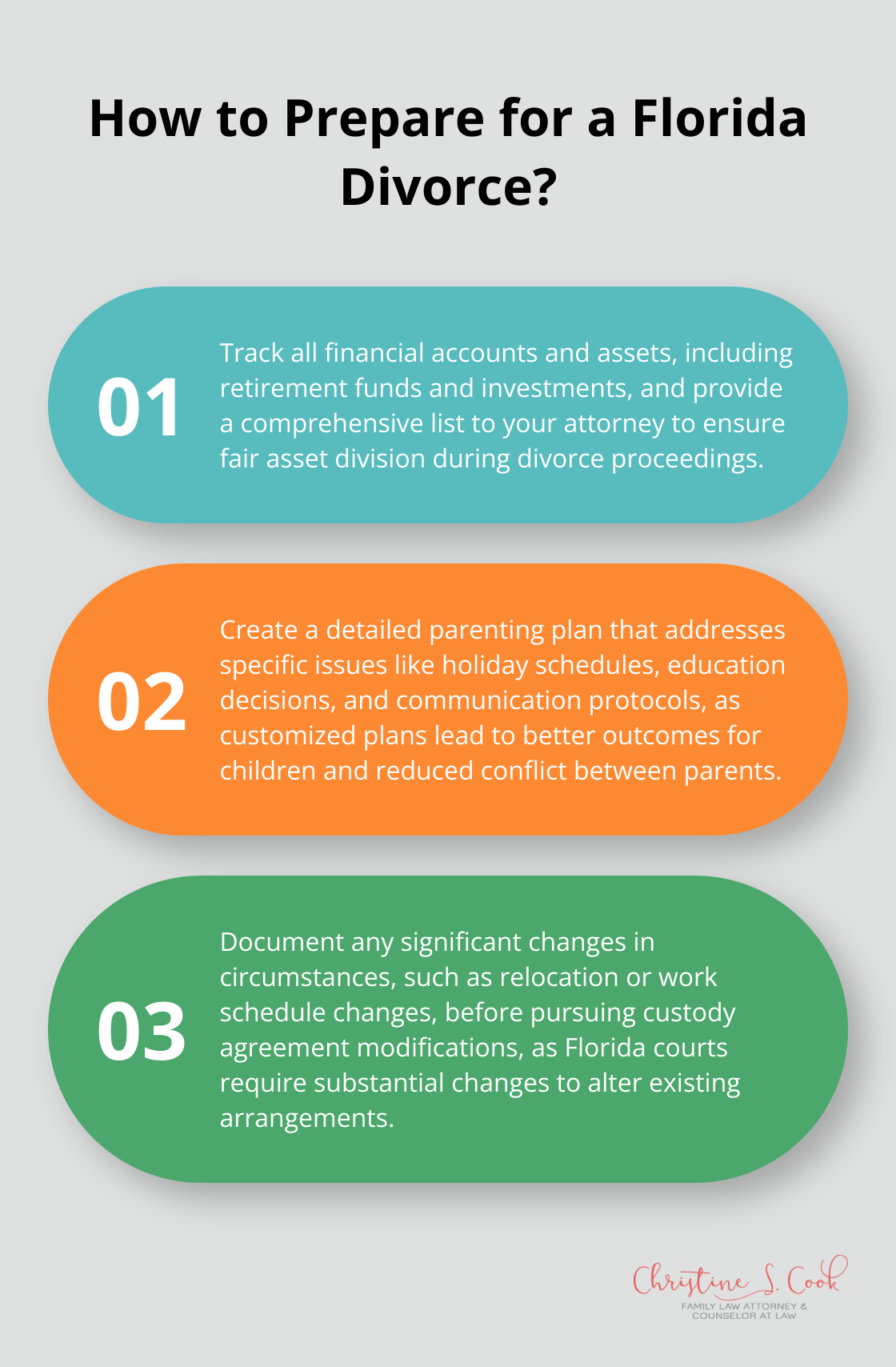
While Florida provides a standard parenting plan, many families benefit from customized plans tailored to their unique needs. A study by the Journal of Family Psychology found that personalized parenting plans lead to better outcomes for children and reduced conflict between parents. These plans can address specific issues such as holiday schedules, education decisions, and communication protocols.
Florida requires demonstrating a substantial change in circumstances to modify custody agreements. This could include relocation, changes in work schedules, or concerns about the child’s safety. The Florida Bar notes that courts exercise caution about frequent modifications to maintain stability for the child. Parents should document any significant changes and consult with an attorney before pursuing modifications.
Child custody matters often become emotionally charged aspects of divorce. Working with a lawyer who understands the nuances of Florida family law can help advocate for your parental rights while prioritizing your child’s well-being. Christine S. Cook, LLC strives to achieve custody arrangements that serve the best interests of children while respecting parental rights.
Asking the right questions to your divorce attorney empowers you with knowledge and sets the foundation for a smoother legal process. Open communication with your lawyer ensures you understand every aspect of your case and can make informed decisions. This knowledge reduces stress and anxiety, enabling you to focus on rebuilding your life post-divorce.
At Christine S. Cook, LLC, we understand the intricacies of Florida family law and the emotional toll of divorce. Our experienced team provides compassionate and innovative legal solutions tailored to your unique situation. We utilize collaborative law techniques when possible to achieve amicable settlements, while also offering aggressive court representation when necessary.
From asset division and alimony considerations to child custody arrangements, we guide you through every step of the divorce process. Our client-centered approach ensures that your voice is heard and your interests are protected. Take the first step towards a brighter future by scheduling a free consultation to discuss your legal needs (without financial pressure).