Divorce doesn’t have to be a battle. When both spouses commit to working together, the process becomes faster, less expensive, and far less damaging to everyone involved-especially children.
At Christine Sue Cook, LLC, we’ve seen firsthand how amicable divorce transforms outcomes. This guide walks you through the practical steps, communication strategies, and professional resources that make a cooperative separation possible.
An amicable divorce is a separation where both spouses make a deliberate choice to cooperate rather than fight. This doesn’t mean you’re best friends or that the divorce is painless-it means you’ve decided to resolve disagreements through negotiation instead of courtroom battles. The distinction matters because it shapes every decision ahead. Research shows that amicable divorces reduce stress and support a smoother transition after separation. When both parties commit to this path, the process typically costs less, takes less time, and produces outcomes both sides can actually live with long-term.
The emotional toll on children drops significantly when parents choose cooperation over conflict. Courts across the country now recognize this approach, with many states actively encouraging alternative dispute resolution before litigation.
The path to amicable divorce splits into three distinct routes, each with different costs and timelines. Mediation brings in a neutral third party who helps you and your spouse negotiate property division, custody arrangements, and support payments without attorneys present initially-this approach generally requires less time and money than courtroom battles.
Collaborative divorce involves both spouses hiring separate attorneys trained in collaborative methods, plus potentially a financial specialist and child specialist, all committed to reaching settlement without court involvement. Litigation remains the traditional route where disagreements get resolved by a judge, which typically costs significantly more and takes longer.
The collaborative approach works best when both parties genuinely want to cooperate but need professional guidance on complex assets or custody issues. Mediation suits couples who communicate reasonably well and need help organizing their settlement. Litigation becomes necessary only when one spouse refuses to negotiate or when serious issues like domestic violence exist.

Your choice of path determines not just the timeline and cost, but also how much control you retain over the final outcome. Understanding which option fits your circumstances-rather than defaulting to courtroom battles that drain resources and leave lasting damage-sets the foundation for what comes next.
Effective communication with your spouse forms the backbone of any amicable divorce. Start by establishing clear ground rules before serious negotiations begin: agree on meeting times, designate which topics you’ll discuss in person versus through attorneys, and decide whether you’ll involve a neutral third party from the start. Open, respectful communication prevents misunderstandings and keeps discussions focused on resolution rather than rehashing past hurts. Set boundaries around timing-avoid late-night conversations or discussions when either party is stressed or exhausted. Use business-like language even if emotions run high, and frame requests around what you need rather than attacking your spouse’s position. When disagreements surface, pause the conversation immediately if voices rise, then schedule a follow-up meeting once both parties have cooled down. This deliberate approach reduces the likelihood of decisions you’ll regret later.
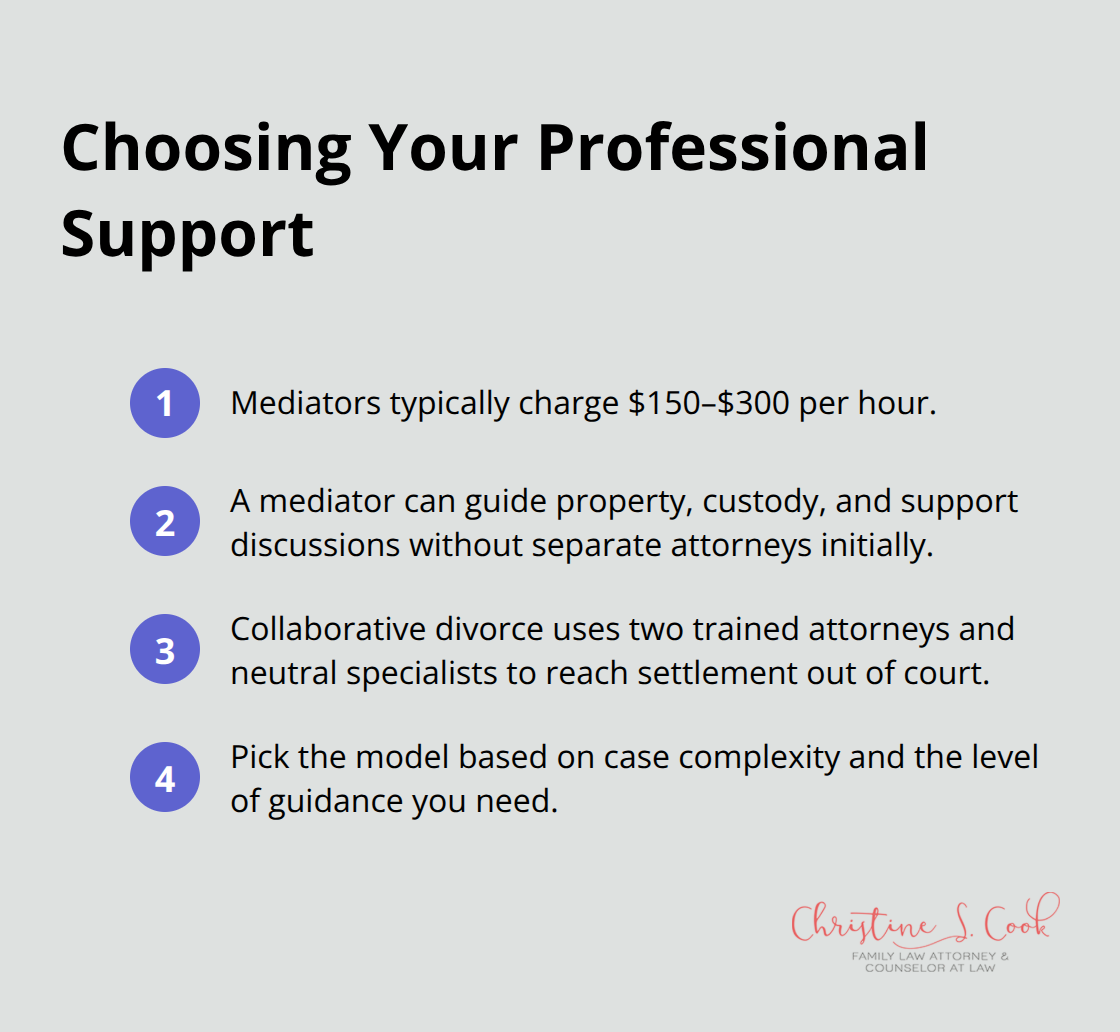
Working with a mediator or collaborative attorney accelerates progress toward settlement while keeping costs manageable. A mediator typically charges between $150 and $300 per hour and can guide you through property division, custody arrangements, and support calculations without either party hiring separate attorneys initially. In collaborative divorce, both spouses hire trained attorneys who commit to settlement without court involvement-this approach works particularly well for couples with significant assets, business interests, or complex custody situations. Each professional brings different expertise to the table, so your choice depends on the complexity of your situation and how much guidance you need.
Transparent financial disclosure matters enormously; courts in multiple jurisdictions have shown that hidden assets discovered later can invalidate agreements entirely, forcing expensive litigation to reopen cases. Gather documentation now: tax returns for the past three years, bank statements, retirement account statements, property valuations, and a complete list of debts. Assign one person to organize these records chronologically so negotiators can reference them quickly. This preparation removes obstacles that derail negotiations and demonstrates good faith to your spouse and any professionals involved.
When negotiating property division, understand that matrimonial assets acquired during your marriage typically follow different rules than assets brought into the relationship before marriage. Support arrangements hinge on income, custody arrangements, and length of marriage-longer marriages generally result in longer maintenance obligations. Both spouses should understand their state’s guidelines for child support and spousal support calculations before sitting down to negotiate, removing surprises and allowing realistic proposals from the start. With this foundation in place, you’re ready to address the emotional challenges that inevitably arise during settlement negotiations.
Emotions spike during divorce, and that’s when bad decisions happen. Collaborative divorce practitioners report that couples who abandon their amicable approach typically do so within the first three months. They allow anger over past behavior to dictate settlement positions, demand concessions unrelated to the actual separation, or weaponize custody arrangements to punish their spouse. When emotions drive negotiations, you end up with agreements that don’t serve your long-term interests. The settlement that feels satisfying in a moment of rage often becomes a source of regret within months.
Courts have repeatedly seen this pattern: agreements reached under emotional duress get challenged later, reopening cases and doubling legal costs. Your job is to recognize when feelings are speaking instead of reason, then pause the conversation until you can think clearly. If you notice yourself making demands based on hurt rather than fairness, that’s your signal to step back. One practical tactic is to avoid proposing anything in writing during emotional conversations. Wait 48 hours, review your position with your attorney or mediator, then submit formal proposals. This simple delay catches most emotion-driven mistakes before they become official positions.
Financial non-disclosure destroys amicable divorces faster than almost anything else. Courts have shown in cases like Sharland v Sharland that hidden assets discovered after settlement can completely invalidate agreements, forcing expensive litigation to reopen the case. When one spouse discovers the other concealed income, business interests, or property, the entire cooperative process collapses into adversarial court battles.
The cost difference is staggering: transparent divorces using mediation or collaborative methods typically run $5,000 to $15,000 per person, while litigation over hidden assets easily exceeds $50,000 per person. Beyond cost, judges view financial dishonesty as fraud, which affects how they calculate support and asset division going forward. Your spouse’s attorney will request full financial disclosure, and attempting to hide assets puts you in legal jeopardy.
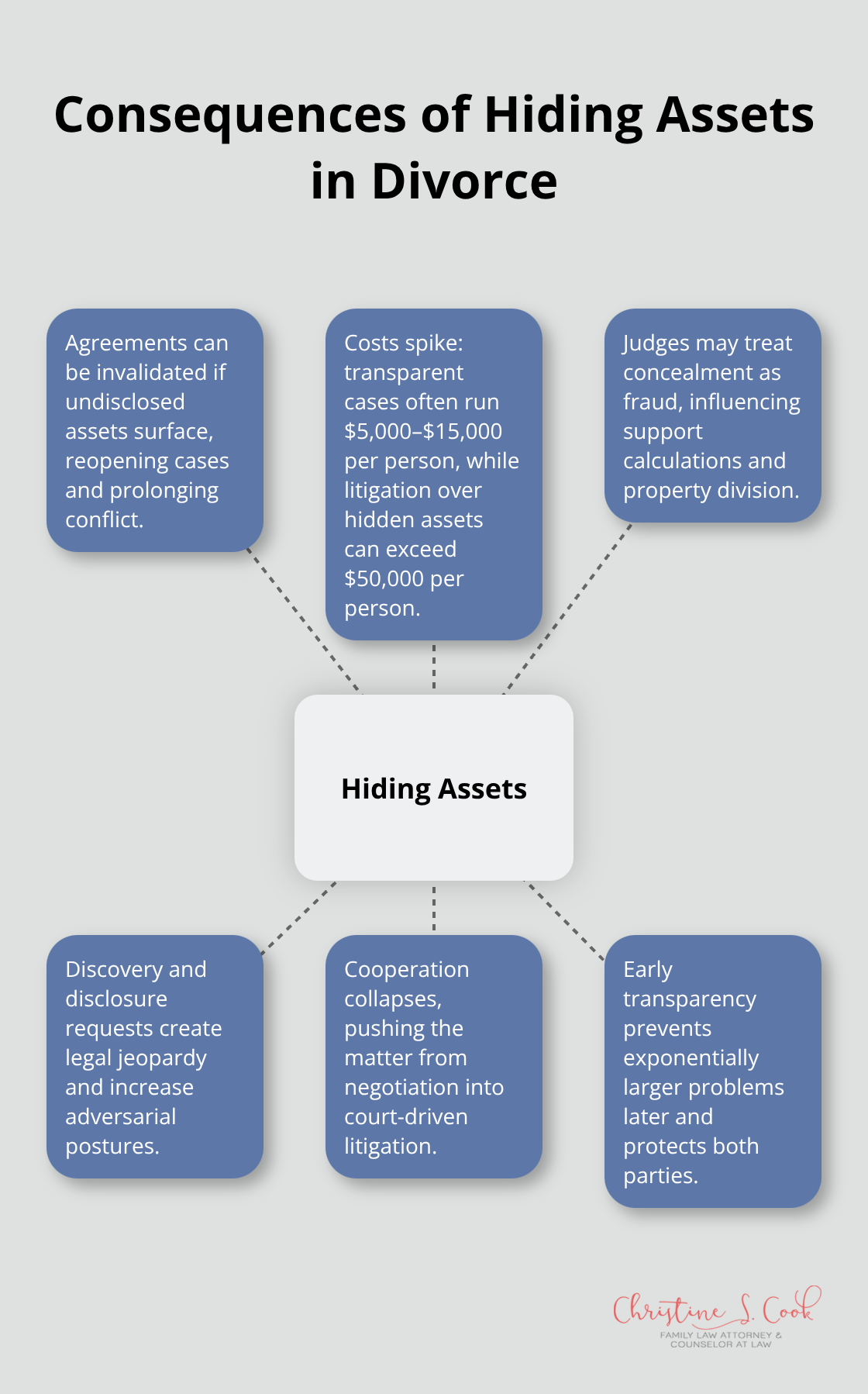
The practical reality is that complete transparency now prevents exponentially larger problems later. If you’re unsure whether something counts as a marital asset, ask your attorney before settlement discussions begin rather than discovering the question during court proceedings.
Skipping professional legal guidance is the third critical mistake, and it’s surprisingly common among couples who feel they can negotiate fairly on their own. Without an attorney or mediator reviewing your settlement, you risk missing tax implications of asset division, overlooking how retirement accounts should be divided, or failing to structure child support in ways that protect both parents’ interests.
Many couples negotiate agreements that technically divide property equally but create unfair tax burdens for one party. Others agree to support arrangements that don’t align with state guidelines, making them vulnerable to modification requests later. Even in highly amicable situations, at least one attorney should review any settlement before you sign. The cost of a consultation-typically $200 to $500-is negligible compared to fixing a flawed agreement later. Professional guidance isn’t about creating conflict; it’s about protecting both parties from mistakes neither one intended to make.
An amicable divorce produces measurable benefits that extend far beyond the settlement itself. Children experience less anxiety and depression when parents cooperate through separation rather than fight in court, and adults move forward faster while retaining control over outcomes that matter most. The financial difference alone justifies the effort-amicable approaches cost a fraction of litigation while producing settlements both parties can sustain long-term.
Healing after settlement requires intentional action. Give yourself permission to process real grief, anger, and uncertainty without judgment, maintain your daily routines where possible, and lean on trusted friends or professionals for support. Avoid major life decisions during the immediate aftermath, and resist coping through alcohol or other substances that delay your recovery. If children are involved, establish consistent routines across both households, communicate about major decisions through respectful channels, and keep your kids out of adult conflicts entirely.
The settlement agreement you’ve negotiated represents a foundation, not a final word. Life shifts, income changes, and children grow, so agreements that worked perfectly at signing may need adjustment within a few years. When you need help structuring your settlement or understanding how to have an amicable divorce tailored to your situation, our team in Pensacola, Florida offers free consultations without financial pressure and specializes in collaborative techniques that keep you in control of outcomes.