
Make a Payment
850-572-3443
Divorce doesn’t have to mean courtroom battles and bitter disputes. The collaborative law definition centers on a team-based approach where both parties work together with trained professionals to reach mutually beneficial agreements.
We at Christine Sue Cook, LLC have seen how this process transforms what could be a destructive experience into a constructive one. This method prioritizes communication, respect, and shared problem-solving over adversarial tactics.
Collaborative law operates on three fundamental principles that separate it from traditional divorce proceedings. First, both parties sign a participation agreement that commits them to resolve their dispute without court intervention. Second, if either party threatens litigation, both collaborative attorneys must withdraw from the case entirely. Third, all participants agree to complete financial transparency and good faith negotiations.

Research findings suggest that most Collaborative lawyers have been in practice and the collaborative process shows positive outcomes. This success stems from the interdisciplinary team model that includes specially trained collaborative attorneys, mental health professionals, financial consultants, and child specialists when needed.
Each professional brings specific expertise to address different aspects of your divorce. Mental health professionals manage communication and stress, while neutral financial consultants analyze long-term settlement impacts. Child specialists advocate specifically for children’s needs in custody arrangements (particularly important in complex family situations). This team structure provides comprehensive support rather than relying solely on legal advice.
Traditional litigation follows court schedules and judicial timelines that can stretch cases for years. Collaborative law allows you to schedule meetings at your convenience and progress at your own pace. The process typically completes in just a few sessions for straightforward cases, while complex matters still resolve faster than court battles.
You maintain complete control over outcomes instead of leaving decisions to a judge who knows nothing about your family dynamics. Participants in mediation report higher satisfaction rates than people who go to court, with many citing the personalized approach as a key factor.
The collaborative process requires full disclosure of all financial information from both parties. This transparency eliminates the costly discovery process that traditional litigation demands. No hidden assets or surprise financial revelations can derail negotiations when both parties commit to honest disclosure.
This approach builds trust between separating spouses and creates a foundation for fair settlements. The next phase involves understanding how these collaborative meetings actually work in practice.
The collaborative process starts with a four-way meeting where both spouses and their collaborative attorneys gather to sign the participation agreement. This document establishes ground rules, commits all parties to transparency, and formally disqualifies the attorneys from court representation if the process fails. The collaborative process offers a new way for parties to seek amiable resolutions with the aid of legal knowledge and representation.
Each subsequent meeting follows an agenda that you and your spouse create together, not one that a court schedule imposes. Typical cases require three to six meetings spaced two to four weeks apart, which allows time between sessions to gather financial documents or consult with specialists. Complex financial situations or high-conflict custody issues may require additional sessions, but the process still moves faster than traditional litigation. Your collaborative attorneys coordinate schedules around your work and family commitments (this gives you control over the pace of your divorce).
Financial specialists join meetings when asset division or support calculations require expert analysis. Child specialists conduct separate interviews with your children and report their needs directly to the team. Mental health professionals facilitate communication when emotions run high or help develop parenting plans that work for your specific family structure. Each professional bills separately, but their combined expertise often prevents costly mistakes that traditional divorce attorneys might miss.

The team approach addresses every aspect of your separation simultaneously rather than handles issues piecemeal through court motions.
Negotiations focus on interest-based problem solutions rather than positional demands. Instead of insisting on specific outcomes, you discuss underlying needs and work toward creative solutions that benefit your entire family. The collaborative attorneys draft your settlement agreement as decisions are made (this creates a legally binding document that reflects your negotiated terms). Once signed, this agreement can be submitted to court for approval without a trial or contested hearing required.
The benefits of this structured approach extend far beyond the process itself and impact your financial future, privacy, and family relationships in ways that traditional litigation simply cannot match.
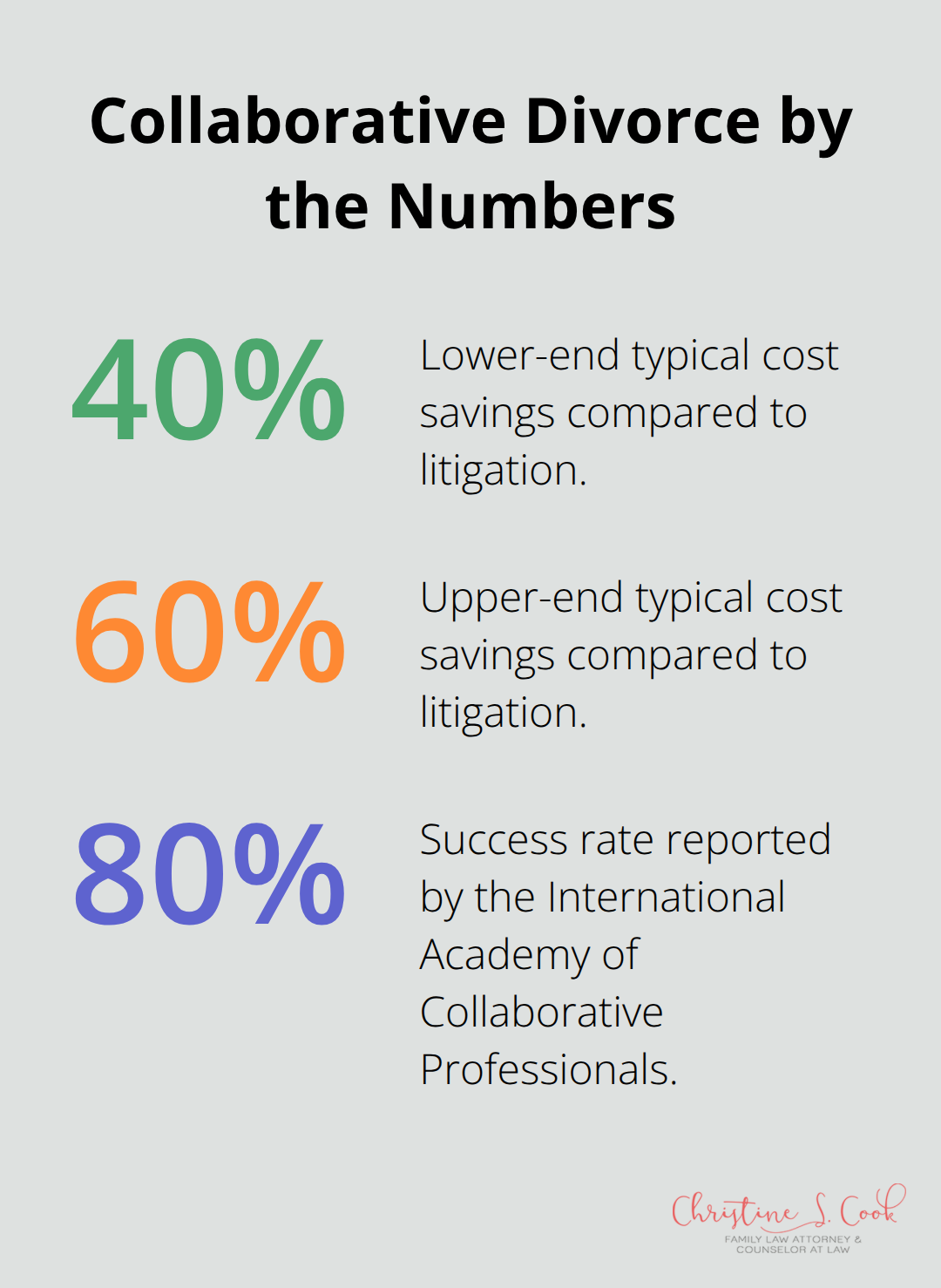
Traditional divorce litigation costs average $11,300 according to Martindale-Nolo research, with contested cases that reach $50,000 or more. Collaborative law typically costs 40-60% less because you avoid court fees, lengthy discovery processes, and multiple court appearances. The International Academy of Collaborative Professionals reports that most collaborative cases resolve in 4-7 sessions over 3-6 months, compared to litigation that drags on for 12-18 months minimum.
Expert witnesses in court battles charge $300-500 per hour for testimony, while collaborative financial specialists and child experts work as neutral parties who serve both spouses. This shared cost structure cuts professional fees in half. Court reporters, motion practice, and various court fees add thousands more to litigation expenses that collaborative law eliminates entirely.
Court records become public documents that anyone can access online forever. Your financial details, custody disputes, and personal conflicts get documented in permanent legal files that remain accessible indefinitely. Collaborative law discussions remain completely confidential under attorney-client privilege and participation agreements. No transcripts exist, no public court appearances occur, and no media can access your family information.
This privacy protection extends beyond the divorce process itself. Future employers, business partners, or your children’s friends cannot search court databases to find embarrassing details about your separation. The collaborative process shields your reputation and maintains your family’s dignity throughout the entire transition period.
The American Bar Association found that collaborative divorce participants maintain better co-parent relationships compared to those who litigate. Children of collaborative divorce parents show fewer behavioral problems and less academic disruption because their parents model cooperation rather than conflict. The process teaches communication skills that benefit your family long after the divorce becomes final.
Collaborative law prevents the winner-loser mentality that litigation creates between former spouses. Both parties work toward solutions that benefit everyone (especially children who need both parents actively involved in their lives). This foundation supports successful co-parent relationships that last for decades through graduations, weddings, and grandchildren.
Collaborative divorce offers more flexibility and control during the divorce process. Traditional litigation forces you into an adversarial mindset that damages your mental health and creates lasting resentment. The collaborative approach focuses on problem-solving rather than blame, which reduces anxiety and depression commonly associated with divorce proceedings.
Mental health professionals integrated into the collaborative team provide immediate support when emotions run high. This real-time assistance prevents conflicts from escalating and helps you make better decisions for your family’s future (rather than react from anger or fear).
The collaborative law definition encompasses a revolutionary approach that transforms divorce from a destructive battle into a constructive process. This method delivers measurable benefits: 40-60% cost savings compared to litigation, complete privacy protection, and preserved family relationships that benefit children for decades. The 80% success rate reported by the International Academy of Collaborative Professionals demonstrates this approach’s effectiveness for most couples.
Collaborative law works best when both spouses commit to transparency and good faith negotiations. The process may not suit cases that involve domestic violence, substance abuse, or situations where one party refuses to disclose financial information honestly. Hidden assets or deliberate deception can undermine the collaborative framework entirely (particularly when trust becomes impossible to establish).
Mental health support, financial expertise, and child advocacy create comprehensive solutions that traditional litigation cannot match. If you consider divorce and want to protect your family’s future while you maintain control over outcomes, we at Christine Sue Cook, LLC offer collaborative law services in Pensacola, FL. Schedule a consultation to explore whether collaborative divorce aligns with your family’s needs and goals.